
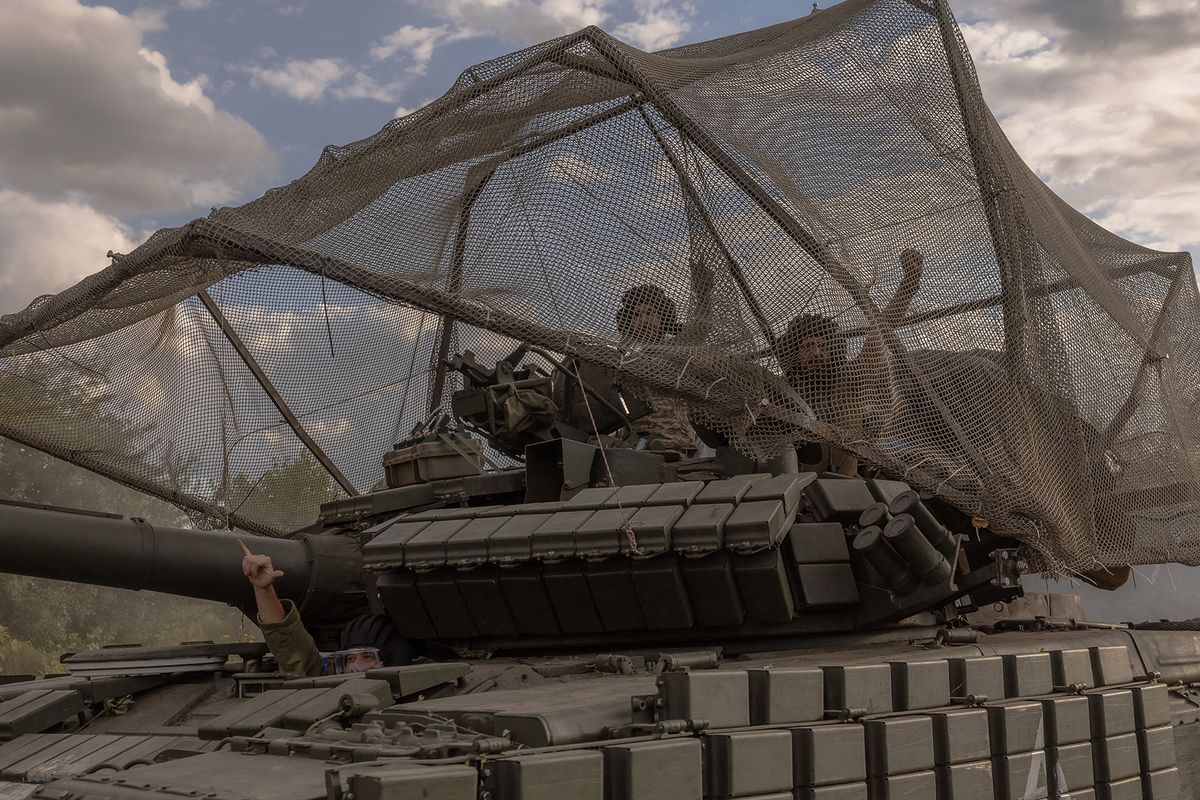

KHARKIV — According to President Vladimir Putin, Russia is not at war.
So it may have been a surprise to many Russians living near the Ukrainian border when they were invaded by foreign soldiers.
“Dear Vladimir Vladimirovitch [Putin], we the residents of the Russian Federation, Kursk Oblast, Sudzhansky District, we are contacting you,” pleads a middle-aged woman standing amid a crowd of dozens of civilians, in a video circulating on Russian social media. “On the 6th, foreign troops with NATO equipment entered our land… Our relatives, husbands and neighbors are defending Donbas [in Ukraine]. We lost our lands, we lost our homes. Please help us… Please send someone… Please help us get our lands back.”
In a surprise attack begun in the early hours of Aug. 6, Ukrainian forces crossed the border and seized territory in Kursk Oblast — the first time Russian land has been occupied by a foreign army since World War II.
For months, Russia has been inching forward across eastern Ukraine in what it calls a “special military operation,” sacrificing tens of thousands of soldiers to grind out territorial gains against their outnumbered foes. Meanwhile, far from the frontlines, daily life for Ukrainians has become ever harder as the Kremlin’s missiles, bombs, and drones target infrastructure, while Kyiv mobilizes tens of thousands of additional soldiers and cracks down on those seeking to dodge the draft.
But war by any name is an unpredictable beast. Few expected Ukraine had the ability or desire to invade Russia — apparently not even Moscow.
Kursk sits along Ukraine’s northern border, about 300 miles south of Moscow, and much of what is happening there remains shrouded in the fog of war.
“As of now, we control about 1,000 square kilometers [about 390 square miles] of the territory of the Russian Federation,” said Gen. Oleksandr Syrskyi, Ukraine’s top military commander, in a video briefing posted on Telegram by President Volodomyr Zelenskyy. “The troops are fulfilling their tasks. Fighting is ongoing actually along the entire front line. The situation is under our control.”
“The Kyiv regime has undertaken yet another large-scale provocation,” declared Russian President Vladimir Putin in a moment of irony, given it was he who ordered the invasion of Ukraine, and whose military is now two-and-a-half years into an operation originally projected to take three days.
Russia’s Chief of the General Staff Valery Gerasimov said in a cabinet meeting on Aug. 7 that a cross-border attack by about 1,000 Ukrainian soldiers had been stopped, and that his forces were “continuing to destroy the adversary in areas directly adjacent to the Russian-Ukrainian border.”
Throughout the war, Ukrainian special operations forces have crossed into Russia, in small-scale hit-and-run attacks played up for their propaganda value. That’s not what is happening now.
“It’s not a raid. This is something different,” former Ukrainian defense minister Andriy Zagorodnyuk told reporters. Independent analysts estimate the operation in Kursk is something different, and may involve substantial forces — portions of seasoned mechanized and air assault brigades, and piecemeal battalions equivalent to somewhere around 10,000 soldiers.
The Russian government, seemingly caught flat-footed by the invasion, has declared a “counterterror operation” to stop it, and is rushing reinforcements to the scene. These forces have been placed under the control of the FSB, or Federal Security Service.
“They’ve subordinated the militarily sound, effective response to political considerations,” George Barros, the Russia team lead at the Institute for the Study of War, a non-profit research organization based in Washington, D.C., tells Rolling Stone. The FSB, responsible for internal security, “lacks the requisite organization and experience to conduct efficient combined arms operations,” Barros says.
This may complicate Moscow’s efforts to dislodge the Ukrainians. It is, after all, difficult to simply arrest a battalion of unfriendly mechanized infantry.
For operations in Ukraine, Moscow has relied on professional soldiers, mercenaries, and draftees who “volunteer” to take part in the “special military operation.”
But Putin has resisted using conscripts outside of Russia, a political decision aimed at placating popular opinion amid the war’s extreme casualties — some estimates put Russian losses at nearly half a million since the war began. Even an autocrat has constituents, and while Moscow is unperturbed about spilling the blood of volunteers, Putin is wary of the political backlash that may ensue if tens of thousands of teenage conscripts are sent to their deaths.
As a result, conscripts have generally been assigned relatively safe tasks inside Russia.
Like guarding the border.
This is why veteran Ukrainian fighters are now capturing large groups of surrendering Russian conscripts in Kursk.
“The first enemy forces that the Ukrainians ran into were FSB border guards. And then conscript units serving within Russian territory, according to Russian law,” Barros says.
Quickly bypassing the lightly manned defensive lines along the international border, Ukrainian reconnaissance units have now been seen as far as 20 miles inside Russia.
Ukrainian forces have released videos indicating they may be in control of Sudzha, a town of about 5,000 people on the road to Kursk, the provincial capital. They have also shown drone footage of columns of hapless Russian reinforcements being destroyed by long-range precision artillery.
There is evidence of Ukrainian soldiers and equipment being destroyed in Kursk, as well.
The ultimate goal of Ukraine’s operation is unclear. If it was intended to relieve pressure on Ukrainian forces defending against Russian advances elsewhere, that already appears to be working. One example, Barros says, is Russia redeploying an elite paratrooper unit to Kursk from the Kherson front, on the far southern end of the frontline in Ukraine. A Ukrainian defense official also told Politico that Putin had ordered some troops to be pulled out of Ukraine to defend Kursk.
Ukraine may also hope to seize territory for use in eventual negotiations, although to do this will require more substantial forces than are already involved. Or it may be a strategically symbolic move.
By Aug. 12, Russian officials said that more than 150,000 civilians had fled the fighting in three regions bordering Ukraine while it conducts the “counterterror operation.”
This would be a familiar experience on the other side of the border.
Unlike Russia, Ukraine is at war.
Here, no corner of daily life is untouched by the conflict. It’s been a difficult year, and there are signs everywhere that Ukrainian morale is flagging.
Shortly before the 11pm curfew in Kharkiv, the power is out. The streets of Ukraine’s second-largest city are ink-dark and eerily quiet. The air-attack warning siren just finished sounding, but it lingers in the mind beside visions of shattered high-rises and pock-marked concrete, spattered with the telltale scars of explosive fragmentation.

Small spheres of illumination float across uneven curbs and cobblestones as a handful of revelers navigate home from now-shuttered bars by the dim light of their phones, rushing to beat curfew. On one corner, the headlights of a turning car flash across the pavement, and a surreal sight springs from the darkness.
It’s an elderly woman standing silently with a bouquet of flowers.
Her name is Galina Viktorovna, 72 years old, and in her buttoned-up raincoat, dress, and tight bun, she is the embodiment of the archetypical babushka. She’s been selling flowers in the street for seven years. Neither bombs nor blackouts will stop her.
Isn’t she afraid to stand on a dark street during an air alert, curfew just minutes away?
“Not really,” Galina says, clutching fresh-cut irises, a bucket at her feet. “I live nearby, and will stay until the last minute. Someone may still come along and buy the last of my flowers.”
It seems unlikely. But life is anything but normal in Kharkiv these days, and Galina says she needs the money to make ends meet.
This is just 20 miles from Russia’s border, and in mid-May, Russian forces began a massive attack threatening the city. Ukraine rushed thousands of soldiers north to hold the line, and stopped Russian forces cold by July. It’s the second time the Russians tried to encircle Kharkiv during the war, and it’s the second time they’ve failed.
The renewed fighting brought dozens of villages back into the fighting. In the weeks preceding the assault, as Russian forces were building, authorities ordered mandatory evacuations in areas surrounding the city. That meant tens of thousands of villagers had to leave their homes, most moving into temporary shelters set up in Kharkiv proper — where they joined more than 200,000 internal refugees already in the city.
Understandably, not everyone wants to leave their home, even when ordered to do so.
“It’s terrifying, the term ‘mandatory evacuation,’” says Natalia Serhiyenko, the founder of the non-profit Unity and Strength, which works to fill in gaps in essential services being provided to families in frontline areas. “People think that soldiers and police are going to come and take them away, and just drop them off somewhere. But it’s not the case. There are established evacuation routes, shelters, and support.”
Russia stepped up its air attacks in concert with its ground offensive. On some days, the air alerts could last as long as 16 hours. The attacks destroyed an electricity plant — one of Ukraine’s largest — that powered the city. Officials estimate it will take upwards of a year to repair and bring back online. Kharkiv is known for its engineering, machinery, and electronics industries. The power loss brought the city’s economy to a standstill.
“Kharkiv is dangerous, but it’s still infinitely safer than many of the frontline villages,” Serhiyenko says. Volunteers from her group regularly travel to areas near the frontlines providing basic medical services, food and charging stations. “Here we are prepared. Things are quite efficient now” she says, despite the rolling power outages.
Russia’s goal this year has been to complicate the strategic picture for Ukraine. Despite the successful surprise in Kursk, the situation is grim not just in Kharkiv, but also in the eastern region known as Donbas where Russian forces have advanced within a few miles of Pokrovsk — a key road-and-rail hub that Ukrainian forces use to supply their forces.
Since the beginning of the year, Russian strategic air attacks have been dismantling Ukraine’s economy. Central to that has been the methodical destruction of energy infrastructure. The result has been a summer of tribulation.
Power outages are common. During the worst periods of the summer, it wasn’t unusual to spend 12 hours or more per day without power in major cities like Kharkiv, Odesa, and Kyiv
Ukrainians have had to adjust to living without air conditioning amid heat waves, to working without internet and electricity, and to cellular towers being overloaded with demand. Smartphones are often reduced to little more than e-readers with flashlights, thundering diesel generators blot out conversation on the street as restaurants and cafes try to carry on their trade, and shops are often cash-only, their contactless payment terminals and card readers useless without power.
Streets that were already perilous with aggressive drivers have become lethal with unpowered traffic lights. In the wake of one egregious accident involving a motorcyclist racing through an intersection with unlit traffic signals, locals joked the rider was just trying to avoid mobilization.
And mobilization is a hot topic. Last month, life became even more restrictive for males under 60 who had not updated their information at the local draft office. Under martial law, there have long been checkpoints to verify draft documents, and police regularly visit houses to deliver military summonses. These efforts have increased as Kyiv seeks to mobilize as many as 200,000 additional soldiers. For any male over the age of 25, failure to produce valid draft registration can land you a seat on a bus, taking you straight to an army training camp.
Mykola — not his real name — is a 21-year-old student at the Odesa Maritime Academy. He has wanted to become a merchant seaman and travel the world since he was a boy. He’s already started on his tattoos; two full sleeves of traditional sailor’s ink stand in contrast to the barista’s apron he wears making coffee at a kiosk, to earn spending cash. He will graduate in a year, and is ready to pack his bags and go to sea.
Except he can’t. Men under 60 are not allowed to leave the country.
“I don’t know what the war will be like next year,” Mykola says. “Maybe I will have to join the army if I stay. Or maybe I can get someone to smuggle me across the border, and can find work on a ship somewhere.”
Maybe. The word on the street is that you can pay someone to get the right papers to go abroad. It seems unlikely. Men leaving the country officially are rare enough that males automatically get pulled off of buses and trains at border checkpoints, their documents examined in detail, and Ukraine has a relatively advanced electronic immigration system.
The word on the street is also that you can pay as much as US$10,000 to get smuggled out of the country. That seems more likely. Certainly in Odesa, corruption and smuggling networks existed before the war. But it’s risky: The SBU, Ukraine’s national security service, regularly posts videos of men getting arrested trying to flee the country.
Revised regulations tightened loopholes, and draft-dodging is now much harder than it was at the start of the war. Military-aged males cannot renew passports overseas without special exemptions, and every male was required to update their mobilization status by July 16. Failure to do so means, among other things, your bank accounts can be frozen and it is illegal to employ you. It also means if you are stopped by one of the draft patrols, you run the risk of being summarily sent to the military.
Still, there are some who take the chance: Maksym — a pseudonym — works in IT for an overseas company. He says he’s trying to stay off the books and lay low — but not so low he can’t be found hanging out on the patio of a restaurant in Odesa, drinking beer with friends in the sweltering evening.
“I’m a patriot, but I don’t want to go into the army and have these corrupt bastards put me in some unit full of losers where I am doing something useless until I get killed,” Maksym says, his English honed by long days talking to foreign clients on the phone. “I give money to military units. I help them buy drones. I donate to wounded soldiers. I’m more useful here than I would ever be in the military.”
He shows off a draft exemption for a falsified medical condition that he says he purchased for about US$3,000. “If they decide to examine me, it probably won’t work. But it should be enough that they leave me alone on the street.”
While it’s hard to say how many “Maksyms” are out there, enthusiasm for mobilization isn’t especially high — one study by a public broadcaster said 60 percent of Ukrainians have a negative perception of draft offices. A major issue is that soldiers who have already been mobilized have no guarantee about when they will be demobilized.
But the vast bulk of Ukrainians have complied with the new regulations, some selflessly and others fatalistically.

Back in Kharkiv, Viktor Viktorivich, who is probably in his 80s but says he is “always 16,” sits in a public square in front of a new shopping mall. With a long flowing white beard, clad in white clothes and a flat cap, he is surrounded by pigeons as he plays a music box. He spent his life in the Soviet Army as a medic; many of his friends died in Afghanistan. He has relatives in Moscow. He hasn’t spoken to them since the war started.
“I sit here and play this music box to bring people joy,” Viktor says, slowly turning the crank on the box while feeding the pigeons around him. “We all need something to brighten these dark times, and this is something I can do.”
His son is serving in the Ukrainian military. Viktor hasn’t seen him in months, but hopes he will be granted leave soon.
Soldiers who do get to go home find cities transformed by war.
Moscow says Kharkiv is a Russian city. Lately Russia started using glide bombs — some with warheads as big as 3,000 pounds — to prove their point. These are dropped by aircraft operating deep behind Russian lines, and are a fraction of the price of a ballistic or cruise missile. With a small radar signature and no propulsion system to hone in on, they are extremely difficult to intercept.
In the lead-up to the May offensive, Kharkiv suffered more than 200 aerial attacks in six months, killing more than 149 people. Now the bombs and missiles fall even more frequently. In July alone, Ukraine experienced the most monthly air attacks in two years, with 219 killed and more than 1,000 wounded, according to the UN. About a quarter of Kharkiv’s buildings have been damaged or destroyed.
But somehow, life goes on. Kharkiv, with many well-regarded universities and a strikingly beautiful city center, always had a reputation as a party town. That hasn’t changed.
P’yana Vyshnia — the name means “Drunken Cherry” — is a bar located near the entrance to an underground walkway. It’s part of a chain based in Lviv that sells a cherry-based liqueur, sort of like a fortified sweet red wine. There are locations across the country. On a summer night, the scene at the one in central Kharkiv is more like a festival than a pub.
Musicians play guitars and sing on the steps to the underground. There’s dozens standing outside, talking, laughing, and drinking in small groups. Drunks and homeless people weave through the crowd caging cigarettes or asking for change. Babushkas hopefully peddle their wares: DVDs and trinkets. A Roma boy of maybe 12 waits beside the door, trying to convince patrons to buy woven bracelets in blue and gold, the colors of Ukraine.
There is a feeling of desperation in the merry-making. It’s easy to party like tomorrow will never come, when missiles and bombs can drop out of the sky at any moment. It doesn’t come across as defiance, or even hopefulness — just a survival mechanism.
Groups of teenage girls take selfies, capturing moments of manufactured joy and sending them out into the ether as if to say: We’re young, beautiful, and having a good time. To hell with the war.
Two middle-aged drunks pester a young girl. She’s in a flowered blouse that leaves her shoulders bare, out on the town, waiting alone for her friends. The drunks can barely stand, their words to her a slurry of incomprehensible innuendo.
A 20-something off-duty soldier with a buzzcut and tight jeans revealing hours spent in the gym watches the scene unfold, growing visibly angry. His shirt says “California,” with the number 86 on it — a portent perhaps, if you’ve worked in a bar. He’s sober, clean, and strong, and he’s not having it.
Buzzcut walks over and pushes one of the drunks off the girl. The other suddenly awakens to the danger, and drags his friend away. The soldier checks with the damsel he’s rescued, seeking moral license to teach the drunks a lesson. She laughs nervously, shaking her head.
Buzzcut departs slowly, glaring defiance and shouting a profane quip at the drunks. A wave of laughter rolls through the scene. The drunks don’t notice.
Not everyone’s a Galahad in skinny jeans.
Another soldier is on medical leave. He proudly shows a scar from a head wound, saying he was almost killed by a sniper. The wounded soldier is many drinks into his evening, and it doesn’t take long for him to get out of control. He switches rapidly between aggression toward random strangers, and openly weeping while trying to relate his experiences — a whirlwind of emotion and commotion.
Word gets around that the wounded man is just back from the front, and the patrons tolerate his behavior with a surprising degree of patience. No one will countenance taking a swing at a soldier with a head wound, no matter how boorishly drunk.
A police patrol arrives, with three hard-looking men carrying battered wooden batons. A goon squad. The burly cops immediately clock the dynamo of trouble. They move to confront the wounded soldier. The staff intervenes, placating the fuzz while the troublemaker is physically carried away from the scene by his friends.
The power is cut, and the street is bathed in darkness.
A generator kicks in, and lights come back on at Drunken Cherry, to the cheers of the crowd — a beacon of life in a sea of darkened, empty buildings with boarded-up windows.
The wine flows, and life goes on into the night. Until curfew anyways.
It’s good the party is so close to an underground shelter. The merrymakers may need it if the missiles come.
The war is still here.

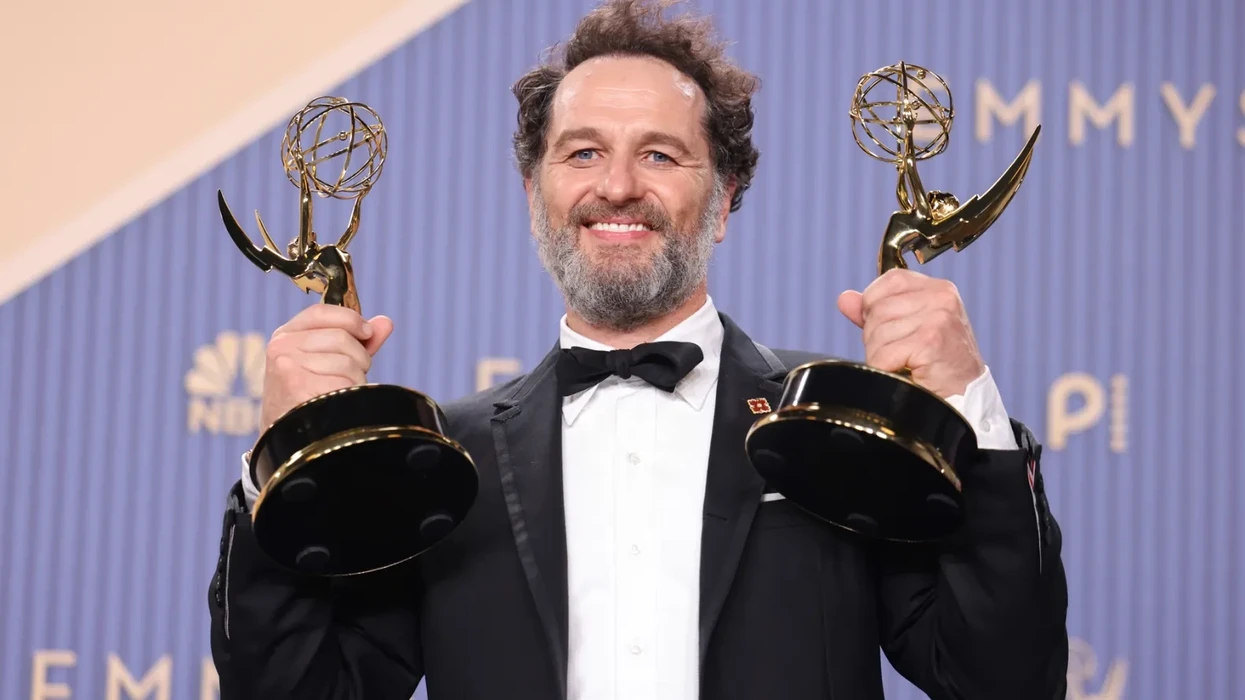


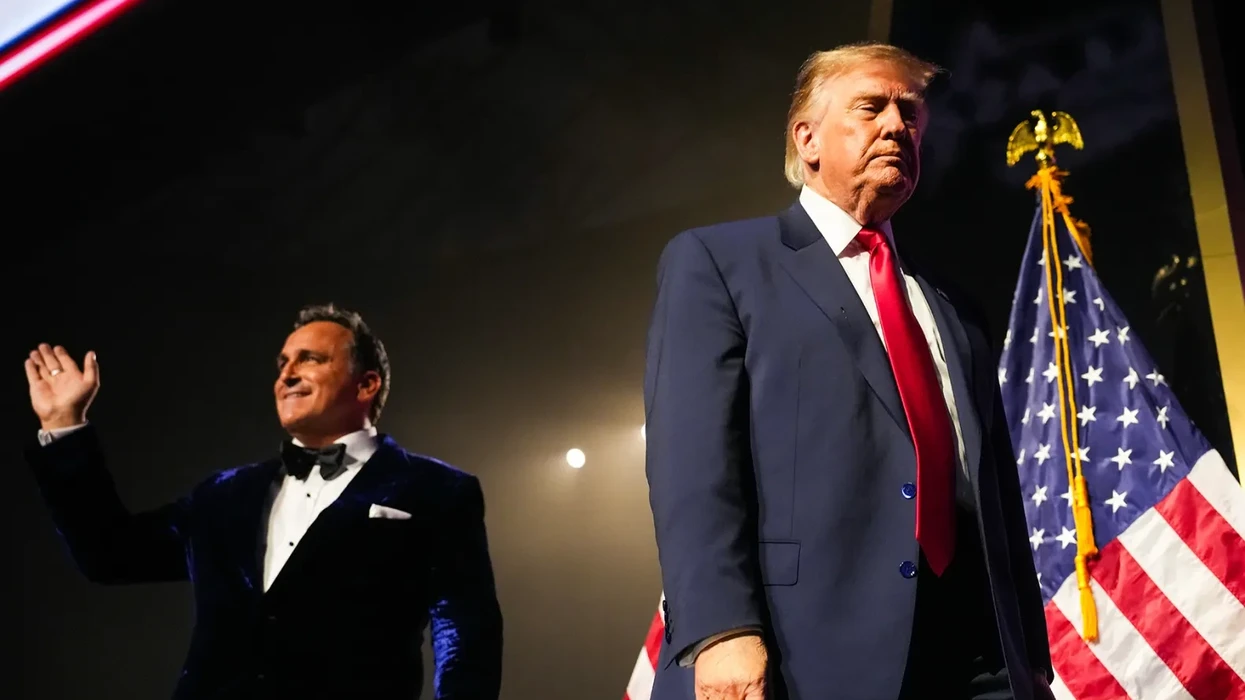
 The first day of the 2026 Republican National Convention at the American Airlines Center, on Sept. 9, 2026 in Dallas, Texas.
 People of all colors listen as Donald Trump speaks on the first day of the Republican midterm convention.
 Trump supporters at the Republican midterm convention.

 A Canadian flag flies along the waterfront of Lake Ontario, on Aug. 27, 2026. Cole Burston/AFP/Getty Images

It’s Been 25 Years Since 9/11. Did the Terrorists Win?
I once had a conversation with Barack Obama about the nature of terrorism. This was during his second term, and he’d been going on for a few minutes about how Islamic terrorism wasn’t actually an existential threat to Americans, but rather a chronic and manageable risk. I was all too familiar with this argument, having conducted the interview with John Kerry in 2004, in which he said terrorism could be reduced to the level of a “nuisance” — a quote that blew up on him during the final weeks of the campaign. I found Kerry’s answer problematic then, and I had the same reaction when Obama said it. I asked him pointedly: What would have to happen for him to decide that terrorism was, in fact, existential? How about a suitcase nuke on a subway car? Then would he concede that terrorists were more than criminal gangs?
Obama didn’t hesitate. Terrorism would only reach the level of an existential threat, he told me, if Americans responded by abandoning their own values and turning on one another. There was nothing a bunch of homicidal zealots could do to destroy the most powerful country on Earth, but we could certainly destroy ourselves if we abandoned our constitutional protections in a fit of panic.
At the time, this struck me as something you might expect to hear from a constitutional-law professor, but not necessarily from the president of the United States. There was an intellectual fatalism about Obama I sometimes found disconcerting — a sense that he saw himself as a twig in the river of history, and it was up to the rest of us to change the current. I doubt he would dispute that assessment. But I thought often of that conversation a few years later, as the country careened into the Trump era. And as we pause now to reflect on the 25 years that have passed since the attacks of Sept. 11, I find myself thinking about it again.
Alternative histories are a tricky business, best left to novelists and sci-fi filmmakers. As a friend of mine in politics likes to say, mockingly, whenever such theories get floated: What if Hitler had won the Civil War? And yet, it’s hard not to see a direct line between the events of 2001 and where we are today — and to wonder how different the country might have looked had it never happened. On the eve of the devastating attacks on the World Trade Center and the Pentagon, George W. Bush’s young presidency seemed to be wobbling. Absent those attacks, he might well have been a one-term president, and he almost certainly would not have invaded Iraq. Nor would Democrats become backed into defending the entrenched war in Afghanistan as the “good war” — a way of differentiating their own response to 9/11 from Bush’s without sounding reflexively pacifist.
Without the economic shock of 2001, it’s unlikely that desperate policymakers would have looked the other way while lenders, underwritten by the government, turned the housing market into a casino, leading to the second massive blow of the decade: the market collapse of 2008. All of these things, in quick succession, destroyed what remained of the public’s faith in its governing establishment, leading directly to Obama’s stunning takeover of the Democratic Party and, later, to the election of Donald Trump.
The Trump I met in the late 1990s, while he was flirting with an independent run for president, held himself out as a centrist reformer, in the mold of Ross Perot. By 2015, when he started running as a Republican, Trump had fully embraced a reactionary, white-nationalist movement — a response to Obama, yes, but also to Bush, whose instinct in the months after 9/11 had been to speak out forcefully in defense of Muslim Americans, and whose support for liberalized immigration infuriated much of his party’s base. Trump’s core appeal then, as it is now, was rooted firmly in the nativist, anti-globalist backlash that emerged in 2001. (According to Pew Research, roughly 42 percent of Americans believe Muslims are having a negative impact on the country.) The animating idea of Trump’s second term is that white, English-speaking Americans are the only authentic Americans. It shouldn’t be controversial to say that he will twist or shred any page of the Constitution to enact this vision, since he really makes no effort to conceal it.
Nor is America’s hard turn away from pluralism and liberal democracy happening in a vacuum — far from it. In the past decade, similarly reactionary, anti-immigrant movements have rocked Britain and taken over Italy, and they now seem poised to wrest power in France and Germany. Maybe some of this would have happened without 9/11; the hollowing-out forces of globalization and automation were already fueling plenty of economic fury here and in Europe by the turn of the century, and the revolution in social media wasn’t far off. But there’s little doubt that the “War on Terror,” which became the first real foreign policy framework since the end of the Cold War, focused all of that anxiety toward an identifiable enemy, fracturing societies that had been held together by a 50-year consensus around personal liberties. If Obama were being honest, he’d probably say he told me so, and he’d be right.
IN THE MONTHS after 9/11 and before the invasion of Iraq, it was hard to get much perspective, and genuine patriotism mixed — as it always does — with a series of mindless gestures and clichés. Flag pins became mandatory even for reporters, peace songs were effectively banned, Republicans brought “freedom fries” and “freedom toast” into the lexicon to protest French misgivings about war. It became rote for politicians to say that the terrorists hated our way of life and we would never let them win. (To this day, when my dog snarls at some terrified Shiba Inu for no reason, I ask her why she hates freedom.)
Twenty-five years on, though, with the benefit of distance and experience, we can ask some questions we couldn’t ask then. And one of them is what the violent extremists who sent those suicide planes into our buildings really hoped to achieve. Did Osama bin Laden think he could win a holy war with America? Did we ultimately frustrate his script for the downfall of the West, or did we simply play our part?
Terrorism is, by its nature, asymmetrical. Whether it’s the Viet Minh under the French, or the IRA in Britain, or Al Qaeda, there’s an inherent understanding that the terrorist can’t win a conventional war against an obviously superior military force. What the terrorist seeks is destabilization of the status quo. His desperate act is an igniter in search of fuses; the goal is to set off a chain reaction inside the fortress that can’t be controlled, to disrupt order with chaos and see what shakes out. The terrorist knows this will likely cause his own people suffering in the short run, but that’s part of the point. He believes the occupier to be a soulless monster, and by reducing it to its basest instincts, he hopes to bare its nature to the world.
We’re seeing this play out, in real time, in Israel. The leaders of Hamas, their military options exhausted and their political goals slipping away, could not have been under any illusion that they would drive out the Israeli occupiers by savagely killing and mutilating more than a thousand innocent people. They must have hoped that Israel would react with blind fury and cruelty, resorting to the instinct for all-out annihilation that its leaders had long managed to suppress. Nearly three years later, Israel has tumbled from legitimatized power to international pariah, its politics riven by disunity, its moral authority in shambles. Do we think Hamas really cares that more than 70,000 of its own people have died in the carnage? Its repugnant leaders almost certainly consider that a cost worth paying in the broader context of history. What they have achieved, in political terms, has exceeded their most feverish dreams.
The Israelis should have looked across the Atlantic and learned something from our own experience. America on Sept. 10, 2001, was an unchallenged superpower at peace — vexed by social and economic divisions, yes, but still stable enough to survive a disputed election with its political consensus intact. A quarter century later, we find ourselves fighting a third unsuccessful war in the Middle East, our society more divided and our politics more poisoned than any time since the 1800s, a foundation of laws imperiled after 250 years of durability, immigrants hunted down like animals by masked agents, violence and extremism on the rise from both right and left, truth and intellectualism in retreat. This is not solely the fallout from Sept. 11, 2001, but it is the result of a series of events that, were you able to hit a rewind button and live it all again in reverse, would lead you directly back to that day. If bin Laden meant for his attack to be the first in a series of similarly epic crimes, then he was soundly defeated — no small achievement for American soldiers and spies. But if his goal was to destabilize America and bring out the worst of our nature, then he may have pulled off the most successful terrorist attack in history.
Over and over we told ourselves, in that agonizing moment, that the terrorists would never win. A quarter century later, it’s getting hard to argue they didn’t.