
This article was produced by Capital & Main. It is co-published by Rolling Stone with permission.
On Oct. 10, 2017, a fresh-faced J.D. Vance was direct and pragmatic about America’s energy future when asked whether the U.S. “should protect the coal and steel industries.”
The then-33-year-old author of Hillbilly Elegy was talking about his hardscrabble upbringing in southern Ohio and Kentucky, where coal mines were closing and poverty was endemic. “I think that the story of the American industry has been one where some industries go away and then some industries arise to take their place. It’s been this constant disruption/innovation cycle,” he told an audience at New York’s 92nd Street Y, the city’s renowned cultural and spiritual center.
And he emphasized, “I don’t think that we should be trying to just protect industries for the sake of protecting them.”
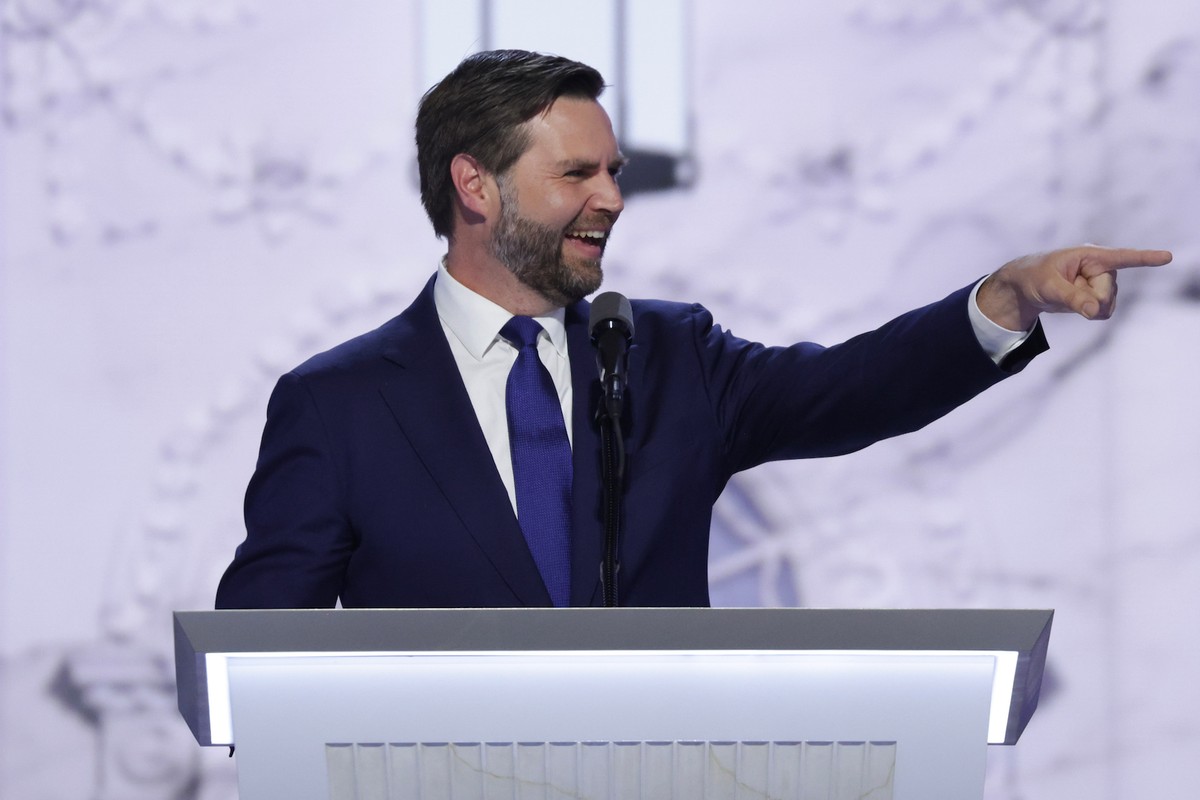
Six years later, as a U.S. senator, he flip-flopped on that belief, co-sponsoring a resolution to protect coal-fired power plants. It’s just one of numerous examples of Vance’s shifting stances on climate change and energy that are being highlighted in the wake of his selection as Donald Trump’s vice-presidential running mate — a 180-degree turn that seems almost unprecedented even in the topsy-turvy world of politics, where opportunism is a natural instinct.
In 2020, Vance told a crowd at the Ohio State University that “we, of course, have a climate problem in our society.” He added that using gas as a source of energy “isn’t exactly the sort of thing that’s gonna take us to a clean energy future.”
As a venture capital investor, Vance put his money where his mouth was, investing in two microgrid developers and an electric vehicle charging technology startup and leading a fund that invested $10 million in a renewable energy tech company, Heliogen, which says on its website that it’s “unlocking the power of sunlight to replace fossil fuels.” He also sat on the board of AppHarvest, a sustainable agriculture company that was committed to “seeking to accelerate a zero-carbon energy future.”
During that time, climate change has accelerated — the last seven years have been the hottest on record due to heat-trapping fossil fuel emissions, global average sea levels have risen about four inches since 1992, both droughts and heavy rain are becoming more frequent in Vance’s home state of Ohio.
His recent positions directly contradict his previous assertions. Once a climate change believer, he now claims there isn’t a climate crisis. In 2022, he told the American Leadership Forum, “I’m skeptical of the idea that climate change is caused purely by man.” He added: “It’s been changing, as others pointed out, it’s been changing for millennia.”
Once fiercely opposed to protecting industries such as coal and steel, Vance has supported bills to protect coal-fired power plants. Once an investor in electric vehicle charging companies and startups that adhere to ESG (environment, social, governance) principles, he now fiercely denounces both, even introducing a bill last year to repeal the federal tax credit for EVs and instead offer tax credits for gas-fueled vehicles made in America.
He’s also fiercely criticized President Biden’s landmark Inflation Reduction Act, the biggest climate initiative in U.S. history, despite the fact that it’s expected to invest more than $12 billion in Ohio’s clean-energy economy and create thousands of jobs. And that some of the companies in Vance’s portfolio have benefited from incentives in the law.
He said the Inflation Reduction Act is “dumb” and has “made our economy less energy independent.” And in a recent op-ed, he called for expanding production in the Utica Shale oil and gas basin that lies under Ohio. In the piece, he denounced the Biden administration for its “harassment of fossil fuel companies” and its “war on traditional American energy.”
Neither Vance nor his aides responded to Capital & Main’s request for an explanation for his shift on climate change.
Vance’s flip-flop has raised eyebrows among investors, political observers and climate advocates. A former clean-energy investor who has worked with Vance, and did not want to be named for fear of retribution, said while all politicians are “chameleons to one degree or another,” it’s an unusual shift when it comes to climate science.
“It’s one thing for an ignorant person to learn the facts, but the opposite is kind of perverse,” the former investor said. “How do you unlearn something?”
Political calculation is a commonly cited reason for Vance’s transformation: “It’s pretty clear what’s going on,” said Nick Abraham of the League of Conservation Voters, which gave Vance a zero in its rating of politicians on their environmental and climate policies. “Right now, at the top of the ticket for Republicans, there is no other route except climate denial and gutting clean energy.”
Vance has also raised a lot of money from the oil and gas industry, which contributed more than $283,000 to his 2022 campaign — only 18 members of Congress raised more from the sector, according to campaign finance data group Open Secrets.
The industry was certainly pleased with the selection of Vance — he’s “somebody who understands kind of what we do and how we do it,” Ohio Oil and Gas Association spokesperson Mike Chadsey told E&E News.
“He’s gonna continue to be an advocate for the industry, and energy investment, helping make sure that those issues stay at the forefront; those concerns become voiced in the White House” if Trump wins, Chadsey said.
Meanwhile, climate activists have expressed alarm at the elevation of Vance.
“J.D. Vance will sell out to the highest bidder, whether that’s Trump or the fossil fuel industry,” said Stevie O’Hanlon, communications director of the climate group Sunrise Movement, in a statement. He added: “J.D. Vance will empower Donald Trump to enact even worse damage on our planet in a second Trump administration.”