
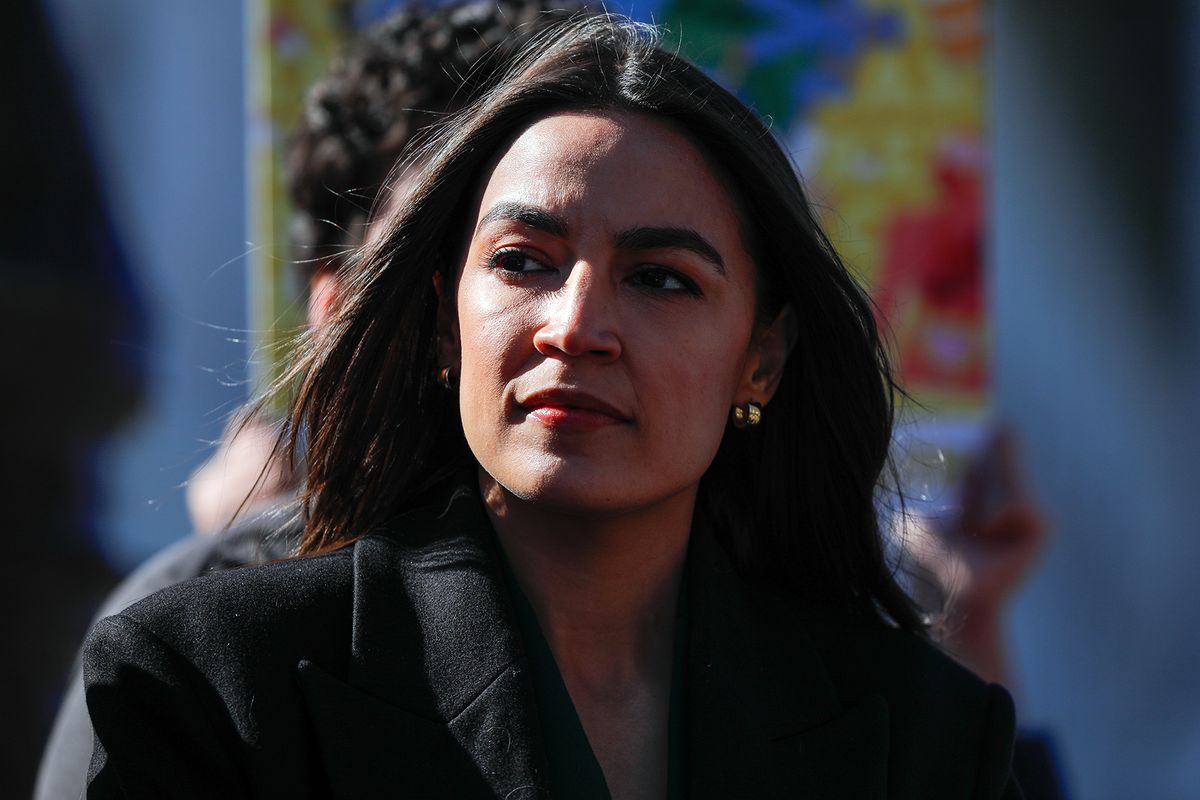

Rep. Alexandria Ocasio-Cortez (D-N.Y.) has been the subject of AI deepfake imagery for years, and she’s ready to fight against non-consensual, sexually-explicit, AI-generated imagery.
Ocasio-Cortez reveals to Rolling Stone that she will be leading the House companion of the Disrupt Explicit Forged Images and Non-Consensual Edits (DEFIANCE) Act of 2024 with a bipartisan group of representatives. The bill is her first move since being named to the House of Representatives’ bipartisan task force on AI, which was announced last month.
The legislation amends the Violence Against Women Act (VAWA) so that people can sue those who produce, distribute, or receive the deepfake pornography, if they “knew or recklessly disregarded” the victim did not consent to those images.
“How we answer these questions is going to shape how all of us live as a society, and individually the things that are going to happen to us or someone that we know, for decades,” Ocasio-Cortez tells Rolling Stone. She says there is an “urgency of the moment because folks have waited too long to set the groundwork for this,” so we need to contend with it and come to answers about how to regulate deepfake technology in a way to protect victims. “But there’s also the necessity to think deeply and take very seriously the conclusions and the actions that we come to.”
“How we answer these questions is going to shape how all of us live as a society.” — Alexandria Ocasio-Cortez
Ocasio-Cortez says when working on the bill, it was crucial to her and her team that they work intimately with abuse survivors. “It’s just a different way of legislating around this where you’re really centering the people that have been most affected by this,” she says.
More than 25 organizations have endorsed the bipartisan legislation, including the National Women’s Law Center, the Sexual Violence Prevention Association, the National Domestic Violence Hotline, and UltraViolet.
Ocasio-Cortez is co-leading the bill with Sens. Dick Durbin (D-Ill.) and Lindsey Graham (R-S.C.). The Senate introduced the DEFIANCE Act on Jan. 30, about a week after several AI-generated sexually-explicit deepfakes of Taylor Swift went viral on X. Today, the House is introducing a companion bill, which is a bill with similar or identical language that makes it so both chambers of Congress can consider the legislation simultaneously.
The bill defines “digital forgeries” as visual depictions “created through the use of software, machine learning, artificial intelligence or any other computer-generated or technological means to falsely appear to be authentic.” Any digital forgeries that depict the victims “in the nude or engaged in sexually-explicit conduct or sexual scenarios” would qualify. Victims would be able to sue “individuals who produced or possessed the forgery with intent to distribute it; or who produced, distributed, or received the forgery” if the individual knew the victim didn’t consent.
The rise of generative AI is making it easier than ever for the public to create realistic images. A 2019 study by cybersecurity company DeepTrace Labs, which builds tools to detect deepfakes, found that 96 percent of deepfake videos are non-consenual pornographic, all of which contained women. As UN Women reports, women who face multiple forms of discrimination, including Black and indigenous women and other women of color, LGBTQ people and women with disabilities are at heightened risk to experience technology-facilitated gender-based violence.
If the bill passes the House and Senate, it would become the first federal law to protect victims of deepfakes, providing a civil recourse for them.
That’s not to say there haven’t been previous efforts to curtail deepfakes, although so far no action has been taken on the past bills targeting them. Rep. Yvette Clarke (D-N.Y.) introduced a DeepFakes Accountability Act in June 2019 and again in September 2023, in an attempt to establish criminal penalties and provide legal recourse to deepfake victims. In May 2023, Rep. Joe Morelle (D-N.Y.) introduced the Preventing Deepfakes of Intimate Images Act, which would have criminalized the sharing of non-consensual and sexually-explicit deepfakes.
Despite these previous efforts, current federal law does not provide any protections for the specific harms victims of deepfakes face.
“We’ve been working on this legislation before I even knew that I was going to be named to the bipartisan AI task force,” says Ocasio-Cortez. “It’s a really, really big deal.”





War Is Peace: Trump’s Regime-Change Reversal
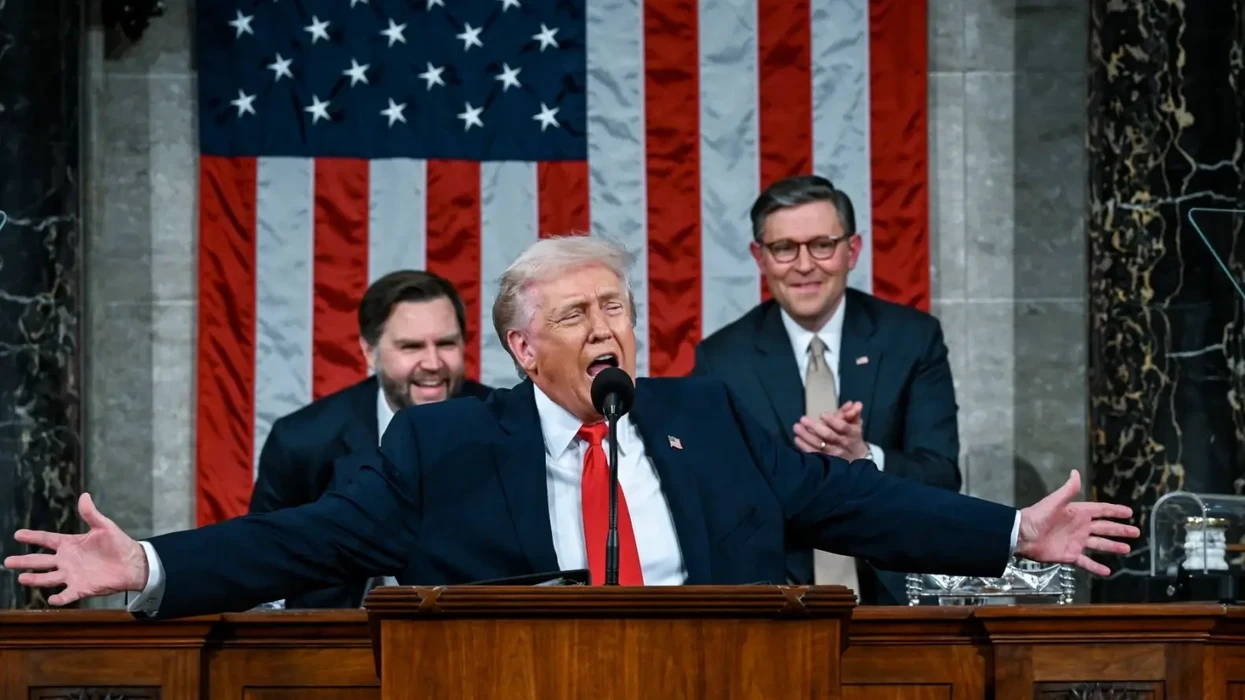
As American and Israeli rockets fly into Tehran, with the stated goal of regime change, anyone who bought into the self-evidently absurd idea of “Donald the Dove” ending America’s forever wars ought to be suffering from a bloody form of buyer’s remorse.
It was always bullshit. But that’s what the Trump team was selling hard. Take human ghoul Stephen Miller’s tweet days before the election: “Kamala = WWIII. Trump = Peace.”
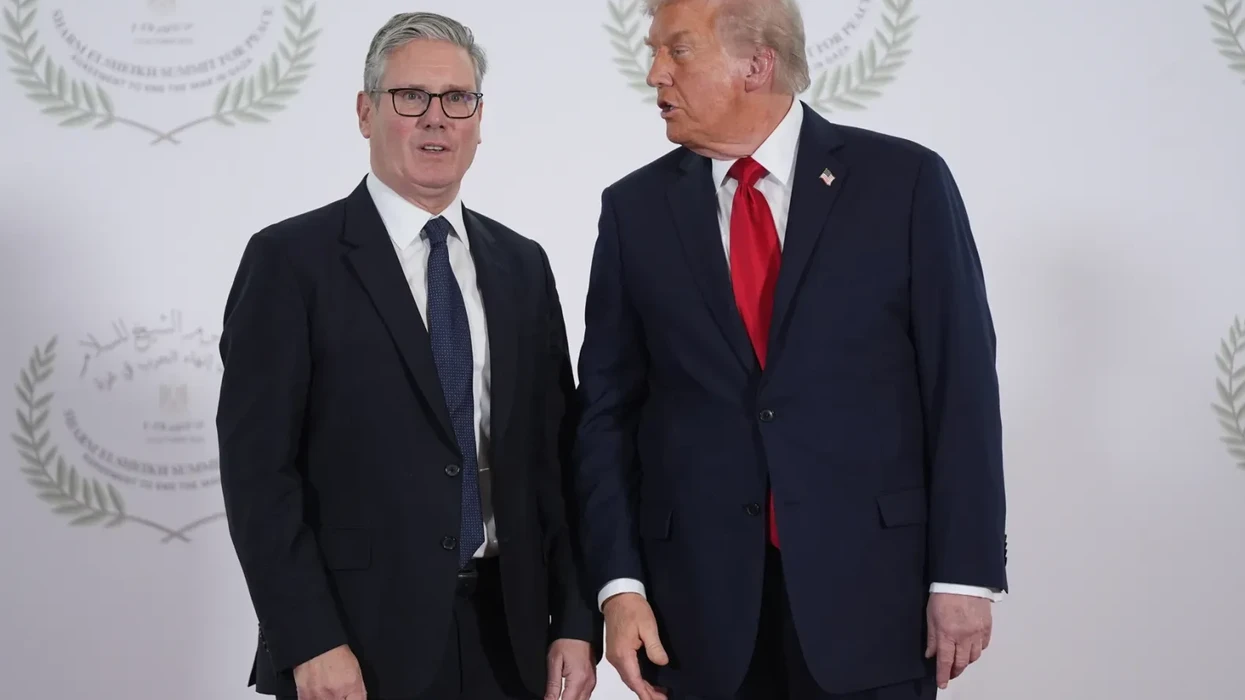
The Trump team reads George Orwell’s 1984 like an owner’s manual and so of course “war is peace.” Their undermining of NATO and the dismantling of American alliances in favor of a “might makes right” foreign policy executed by a sycophantic kakistocracy is a guarantee of more war amid autocratic power grabs worldwide, with a side order of corrupt crony capitalism to profit from the chaos.
If you voted for Trump and believed him, this is on you. And that includes self-styled Palestinian peace activists who thought that Biden and Harris were the worst of all possible worlds and stayed home. We will no doubt see protests for the innocent lives lost in these strikes — but I’d have a lot more time for those folks if they were also seen protesting the estimated 20,000 to 30,000 Iranian lives snuffed out by murderous mullahs in the last few months alone.
The Islamic Republic of Iran has been despotic and dangerous from its inception. The Iranian people have been oppressed and denied basic freedoms for decades. But this is an extreme example of a war of choice. The American military strikes against Iran’s nuclear weapons facility last year were justified because Iran cannot be trusted with a nuclear weapon. That is true. But the much trumpeted total obliteration of those facilities is apparently not true — or so goes the justification for this war. And don’t forget that it was Trump who pulled the U.S. out of an Obama-era deal to stop Iran from developing weapons — arguing absurdly that the imperfect anti-nuke deal needed to be blown up to stop Iran from developing a bomb. Iran’s subsequent progress toward a bomb then created the rationale toward these strikes. This is a self-inflicted state of emergency. Peace is war and war is peace.
Pity the willful dupes in Congress who deluded themselves into thinking that Trump deserved the Nobel Peace Prize. They’ll probably rationalize that he would’ve been peaceful if he got the honor. Now it will be read as a cautionary tale for not sucking up. The chairman of the Board of Peace is now bored of peace. While Rand Paul remains admirably consistent, it’s Lindsey Graham who is pirouetting around the Senate floor while the Gimp Speaker Mike Johnson is unable to speak for the basic constitutional principles of separation of powers let alone authorization to go to war.
If you’re feeling shell-shocked trying to keep up with Operation Epstein Distraction, get ready for the inevitable next crisis — regime change without a plan for replacement. This is what the Trump administration did in Venezuela — kidnapping the socialist dictator Maduro but keeping his regime in place in exchange for crude oil access. The opposition is still in exile and its leader María Corina Machado gave her Nobel Peace Prize to Trump in exchange for exactly nothing.
One of the clear lessons of history is that if you don’t win the peace, you don’t win the war. The Saudis and their Sunni allies will back the U.S. and Iran because they hate the Shia Iranians (who, incidentally, are not Arabs), but beyond removing the Iranian regime, the plans for replacement and stabilization seem TBD — and with Trump’s inability to stay focused on anything beyond his immediate self-interest, solid plans are unlikely to emerge. Maybe a leader will come from the underground opposition; maybe it will be the Shah’s son, who has been living in the U.S. waiting for a restoration like many members of the diaspora. The upside is that Iran has a distinguished history and an accomplished Persian culture: The Islamists don’t represent the entirety of the people of Iran and never have.
But the path ahead will be messy at best. It will require concerted effort and civil commitment, not just an open call for private investment from Mar-a-Lago members. If the United States is now kidnapping and killing dictators without direct provocation, it establishes a dangerous precedent which will come back to bite us after demolishing our moral authority in the world.
It is the unexpected effects, the cascades of consequence where we cannot always plan ahead, that cause most responsible statesmen to try to keep the peace. But Trump has the carelessness of a rich-boy bully who can always buy or bluster his way out of trouble. He’s a con man who has found his ultimate mark in his followers, who fool themselves into thinking that a reflexive liar is the one man with the courage to tell the truth.
Perhaps the most prominent example is the vice president himself — a bright guy who not that long ago compared Trump to Hitler and a deadly narcotic but then convinced himself that careerism demanded an abrupt conversion. After all, he endorsed Trump less than two years ago with this very serious column headlined “Trump’s Best Foreign Policy? Not Starting Any Wars,” explaining, “He has my support in 2024 because I know he won’t recklessly send Americans to fight overseas.”