
Skip to content
Search

Concert Industry Is ‘Broken,’ Prosecutor Says as Live Nation-Ticketmaster Trial Begins

The DOJ has accused the live-entertainment giant of wielding outsized control over the industry, but the company’s lawyers claim it “did not have monopoly power” during opening statements

Concert Industry Is ‘Broken,’ Prosecutor Says as Live Nation-Ticketmaster Trial Begins

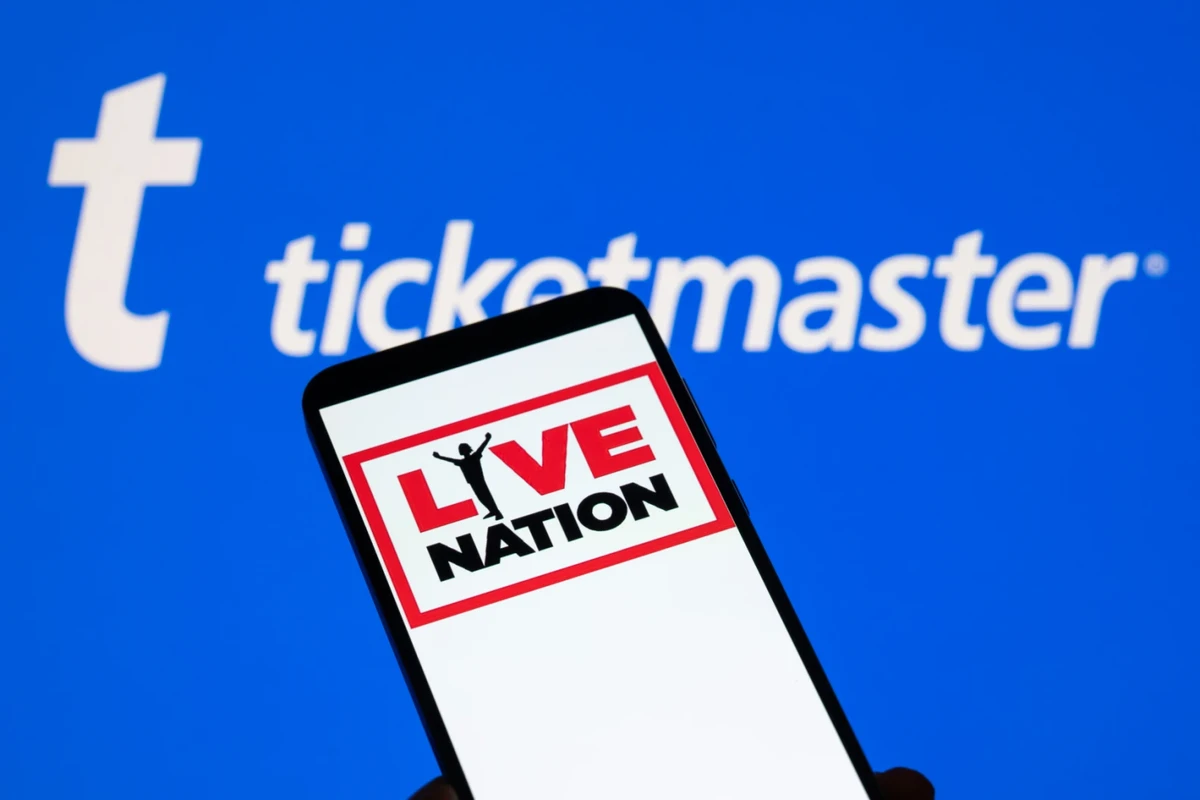
Live Nation and Ticketmaster “illegally used their monopoly power to help themselves,” a DOJ prosecutor said during opening statements.

Jonathan Raa/NurPhoto/Getty Images

Federal prosecutors said Live Nation and Ticketmaster “illegally used their monopoly power to help themselves” instead of artists, fans, or venues during opening statements for the blockbuster antitrust trial.

The case, which has the potential to completely reshape the live-entertainment industry, officially kicked off Tuesday, March 3, following jury selection yesterday. The federal government has accused Live Nation of using its network of venues to cajole artists into using its promotion services, while also forcing venues to sign exclusive, long-term contracts with Ticketmaster (which it acquired in 2010).


“Today, the concert ticket industry is broken, in fact the concert industry itself is broken,” U.S. attorney David Dahlquist said during his opening statement (via The Guardian). “It is controlled by a monopolist. It is controlled by Live Nation.”

Live Nation has denied the allegations, and a lawyer for the company, David Marriott, insisted it “did not have monopoly power” during his opening statement. He argued instead that the live-entertainment “marketplace is more competitive than ever it has been before,” and asserted, “Every customer we get is a hard-fought battle in a competitive market” (via Law360).

The Department of Justice filed its lawsuit, and insisted Live Nation and Ticketmaster be broken up, in May 2024. In the nearly two years it’s taken for the case to reach trial, the government has skirted Live Nation’s efforts to toss the suit. But the scope of the DOJ’s claims has narrowed, thanks in large part to a pre-trial ruling in February. In that summary judgment, Judge Arun Subramanian dismissed claims that Live Nation has a monopoly over the concert promotion industry, and that its conduct has led to higher ticket prices.

But the judge did allow the DOJ’s two most significant claims to remain. First, that Live Nation illegally “ties” access to its myriad amphitheaters to its promotion services, meaning any artist that wants to play one of those venues has to use the company as a promoter. Second, the DOJ alleges that Live Nation illegally forces venues to sign long-term contracts with Ticketmaster, as opposed to other ticketing services, in part by threatening to keep popular tours from hitting venues that don’t use Ticketmaster.

In laying out the government’s case, Dahlquist referred to Live Nation’s so-called “flywheel,” a self-reinforcing business model that forces artists to engage with it at the level of venues, ticketing, and promotion. As for how Live Nation’s alleged monopoly affects fans, Dahlquist referenced the chaos that engulfed the on-sale for Taylor Swift’s Eras Tour. Regarding the latter, he argued that Ticketmaster faced so little healthy competition, it had not bothered to make significant improvements to its technology.

The prosecutor also brought up Ticketmaster’s infamous fees, which he called “the highest they have ever been in the Untied States.” Dahlquist further told the jury that it would even see internal Live Nation messages mocking concertgoers, including one that stated Ticketmaster was “robbing them blind, baby.”

In setting up its counter to the government’s claims, Marriott insisted that Ticketmaster takes approximately five percent of ticket prices, and said it only owns a fraction of the more than 20,000 venues in the United States (many of which, especially arenas and stadiums, are owned by sports teams). As for ticketing, Marriott insisted there are “more ticketing options today” than ever before.

“We’ll let the numbers do the talking. We do not have monopoly power,” Marriott said (via The Associated Press). He later added that the company is “all about bringing joy to people’s lives.”

The Live Nation trial is expected to last about five to six weeks. The list of witnesses includes a pair of high-profile artists, including Kid Rock and Mumford & Sons’ Ben Lovett, as well as numerous high-powered execs, such as Live Nation CEO Michael Rapino.

More Stories

Jack White Performs the White Stripes’ 1999 Track ‘Cannon’ With Daughter Scarlett

Jack White and his daughter Scarlett performed the White Stripes' song "Cannon" at the Brooklyn Paramount this past Saturday.

John Nacion/ Getty Images

Jack White Performs the White Stripes’ 1999 Track ‘Cannon’ With Daughter Scarlett

Jack White made it a family affair during his performance at the Brooklyn Paramount this past Saturday. The musician brought out his daughter Scarlett to play bass during his crushing delivery of the White Stripes’ 1999 track “Cannon.”

The budding artist took to the stage in a black dress and kept it cool while her father rocked out to the single from the White Stripes’ titular debut album, which interpolates the gospel blue song “John the Revelator.” Jack and Scarlett also played fan favorite “Black Math” from the band’s fourth studio album, Elephant.

Keep ReadingShow less
Britney Spears Dismisses Odd Behavior on L.A. Highway: ‘Nothing Is What It Seems’

Britney Spears

Valerie Macon/AFP via Getty Images

Britney Spears Dismisses Odd Behavior on L.A. Highway: ‘Nothing Is What It Seems’

Britney Spears dismissed headlines about her bizarre behavior on a Los Angeles highway this week, writing on social media, “Nothing is what it seems.”

Earlier this week, video of the singer emerged that appeared to show Spears standing through the moonroof of an SUV that was driving on the 101 Freeway. At one point, Spears arched her back and sprawled atop the Mercedes while the car traveled at 45 mph, Page Six reported.

Keep ReadingShow less
Jack White’s ‘Frozen Charlotte’ Is a Rage for These Times

Jack White’s ‘Frozen Charlotte’ Is a Rage for These Times

“I got one rule/I don’t start nothing/Nothing I can’t finish,” Jack White announces early in this album’s nonstop cannonade of martial-blues stomp and guitar-army theater, summing up his moral code in the chopped stride and soprano-distortion seizures of “Derecho Demonico.” And there’s more. “What I do/And how I do/And why I do it/It’s all none of your business,” he warns, firing each line like he’s spitting bullets. Still don’t get his drift? The song’s title is Spanish for “demonic law.” Cross this cat at your peril.

Frozen Charlotte is White’s eighth solo album, fourth in as many years, and his most sustained maximalist-garage studio party in the eternity since the White Stripes’ breakthrough rager, 2003’s Elephant. There was more room to catch your breath in the swagger and density of Led Zeppelin II than you get in White’s serial rush out of that devilry in “Derecho Demonico” into the rockslide riffing and Hammond organ afire of “There’s Nobody There”; the hard rain of tribal drumming and shouted incantation of “Raising the Grain”; and the 1968-Motor City helter-skelter of “You’ll Never Fix Me.” In that last blast, White and his current killers on the road — bassist Dominic Davis (one of the leader’s original Buzzards), drummer Patrick Keeler (the Greenhornes, the Raconteurs) and B-3 wrangler Bobby Emmett (formerly in Detroit ravers the Sights) — get down like they’re on a Saturday-night bill at the Grande Ballroom with SRC and the MC5, with an extra touch of Emmett’s closing, ghostly trail of mellotron.

Keep ReadingShow less
L7 Bassist Jennifer Finch Diagnosed With Brain Cancer, Launches GoFundMe

L7 bassist Jennifer Finch*

Jennifer Finch

L7 Bassist Jennifer Finch Diagnosed With Brain Cancer, Launches GoFundMe

Jennifer Finch, the musician, artist, and photographer best known as the bassist for rock outfit L7, is undergoing treatment after being diagnosed with an aggressive form of brain cancer, per a statement released by her representative.

When Finch was first diagnosed, it was believed her condition would be easily treated with radiation, but complications have since required her to undergo multiple surgeries. These have left her with severe physical limitations, and she requires extensive medical care.

Keep ReadingShow less
Record Industry Proposes Adding Labels to AI-Generated Music

Proposed labels for AI-Generated and AI-Assisted songs

RIAA

Record Industry Proposes Adding Labels to AI-Generated Music

Over 35 years after the introduction of the Parental Advisory sticker, the record industry is now weighing whether to place labels on music that utilizes AI.

In a joint announcement from the Recording Industry Association of America (RIAA), the Grammys, SAG-AFTRA and other organizations in the music community, the groups declared “a unified approach to voluntary track labeling to give fans clearer information about the use of generative AI (GenAI) in sound recordings.”

Keep ReadingShow less