
Skip to content
Search

Weezer’s 20th Album Is Good as Gold

With its looser feel and top-shelf songs, it’s hard to imagine a better record from this band this far down the line than the 'Gold Album'

Weezer’s 20th Album Is Good as Gold
Brendan Walter

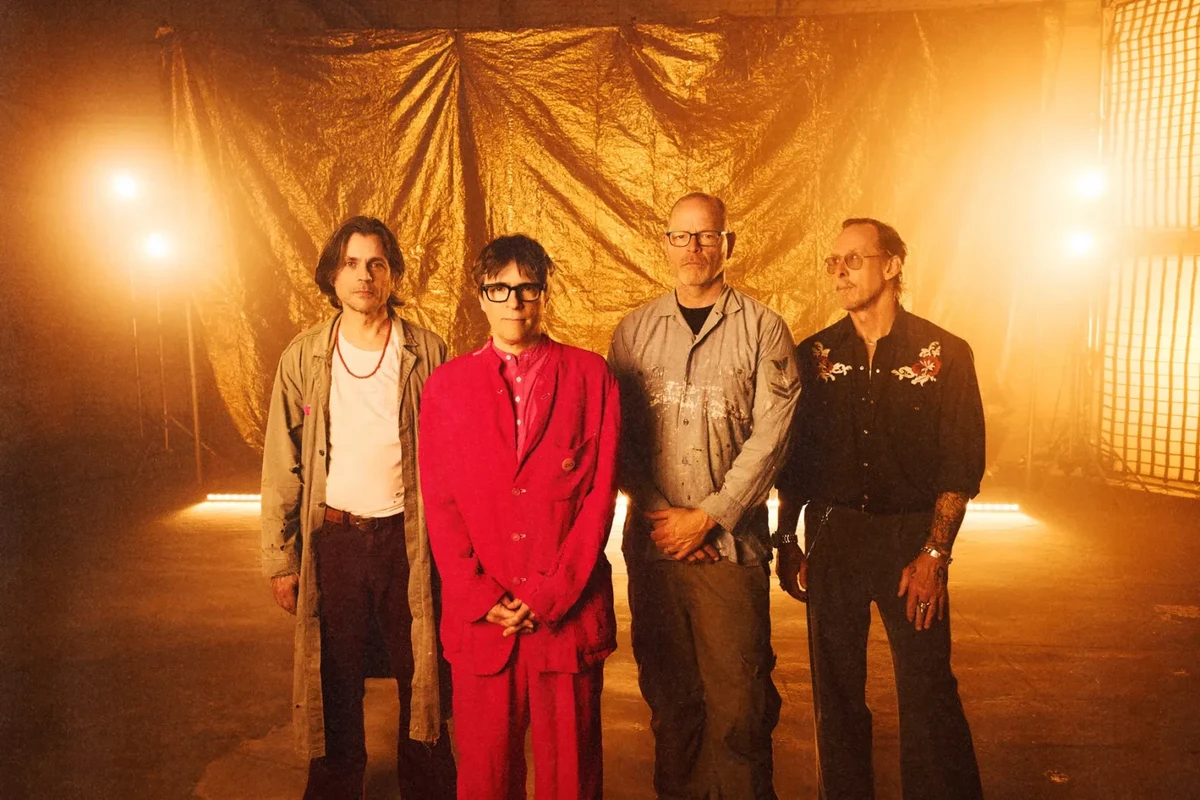
Weezer has always had a thing for concept records, whether they’re imagining “the Beach Boys gone bad” (2017’s Pacific Daydream), doing a set of beloved old radio hits (2019’s The Teal Album), getting in touch with their quasi-sensitive side (2021’s OK Human) or paying tribute to the Eighties metal greats (that same year’s Van Weezer). For their 20th LP, technically self-titled but also known as The Gold Album, the concept is at once highly ironic and gloriously straightforward: a Weezer record that sounds like a classic Weezer record. “There’s something special about your early shit,” Rivers Cuomo intones — simultaneously tongue-in-cheek and heart-on-sleeve — at the opening of “C.E.O.,” a highlight anthem that sounds unmistakably indebted to their own 1994 classic “Undone (The Sweater Song).” The sentiment set the table for a record that often suggests what might’ve happened if the band had released a transitional album in 1995, between their debut 1994 alt-rock smash The Blue Album and their 1996 emo-adjacent masterpiece Pinkerton. Weezer’s Gold is, in fact, Weezer gold.


The band described the organic process behind the album as “less talk, more rock.” You can hear the poker-faced detachment that often defines their music falling away on the album opener, “Say Yes,” which shares a title with a 1997 tune by indie-folk icon Elliott Smith. Cuomo starts off in a malaise of cynical self-doubt. “Everybody here’s gonna make me feel so afraid/So I only think about how my ass is getting paid,” as the rest of the band underscores his uncertainty with a drolly ominous lurch. But the song takes off into a chorus as catchy as great Weezer oldies like “Buddy Holly” or “The Good Life,” with lyrics about turning the ritual of cranking out yet another automatic alt-rock banger into an affirmation of joy.

That freewheeling feeling is all over The Gold Album. Working with producer Kenny Beats (whose credits include Rico Nasty, Vince Staples, and Geese’s Getting Killed), the band sounds more garage-rock-y than usual, often rooting its songs in thick, bottom-heavy guitars that are more desert-rock than power-pop. So when they switch from growling riff to golden chorus on “Don’t Make It Weird” or “Shine Again,” the visceral payoff hits deeper than it would on a more run-of-the-mill Weezer disc. On the feelings-first “We Might as Well Be Strangers,” the guitars burn and wail as Cuomo rhymes “debating Nietzsche” with “how much I need ya,” and shouts it out alongside ace belter Karly Hartzman of Wednesday, one of the bajillionty bands who grew up in Weezer’s long shadow.


Cuomo spends a lot of the album chewing over a middle-aged indecisiveness that mirrors the journey of his fans, adding a drolly poignant tinge to a warmly familiar sound. “Hoops” is an agro complaint that begins “Bought a toaster just to make some toast/First I had to scan a QR code.” Preach, brother. On “Nowhere,” Cuomo proffers the NIMBY protest “Why did they clear the trees just to put up some shitbox condo?” over a churning, fuzzbomb riff, coming up with one of the best Cali-rock combos of his vaunted career: the anti-sprawl spirit of Joni Mitchell’s “Big Yellow Taxi” set to the wide-open sludge of Kyus.

Naturally for a band that’s often made poker-faced self-awareness its emotional safe space, the album’s centerpiece moments are about how tapping their bedrock sound can trigger feelings about rock itself — does it still feel real? Are we just going through the motions? Does that difference even really matter? “C.E.O.” contrasts innocent images of tinkering with his guitar in his teenage bedroom with the honest reality of cranking out the same old Nineties tunes for his corporate paymasters, navigating the tension between his “mad professor” indulgences and the need to “keep the rocket in the sky.” (The everyday fan listening along at home is invited to insert “kids’ college fund” or “401(k)” for “rocket in the sky.”) He’s not the first guy to make this observation, but the song’s gilded-grunge charm makes the sentiment stick.

The album-closing “The L.A. Sound” is The Gold Album’s nostalgic coup de grace. Written by guitarist Brian Bell, it’s a sweet remembrance of what it’s like to be a baby band grinding out long overnight van drives from crappy club to crappy club, winning over new fans one tiny little show at a time. “We came to melt your face/We’re gonna torch this place,” the band sings over the kind of candied alt-rock chug Weezer blew up with more than 30 years ago. This band has been putting its own sidelong spin on rock rituals since “In the Garage,” back in the Blue days, and they do it with real affection here too. Turns out, after all of these years, Weezer being Weezer is still a good look.


More Stories

Hear Dolly Parton’s First Posthumous Song — From a New Stanley Brothers Tribute Album

Dolly Parton's rollicking version of "Bound to Ride" is her first new track to be released posthumously

John Byrne Cooke Estate/Getty Images; Jason Kempin/Getty Images

Hear Dolly Parton’s First Posthumous Song — From a New Stanley Brothers Tribute Album

Almost all of the tracks on the years-in-the-making, all-star tribute album Where the Soul Never Dies: Celebrating 80 Years of The Stanley Brothers, due Oct. 16, were recorded live in the studio, but the album’s producers made an exception for Dolly Parton. During a Covid surge circa 2022, Parton was taking no chances, so she recorded her vocal for the traditional song “Bound to Ride” (which the Stanley Brothers helped popularize with a 1964 recording) alone at her own studio. The virtuoso musicians known as the First Ladies of Bluegrass earlier laid down a backing track for her on their own, though you’d never know it by the playful vibrancy of her performance.

Keep ReadingShow less
Bootsy Collins Is About to Reveal All in Upcoming Memoir

Bootsy Collins, 1970s.

Michael Ochs Archives/Getty Images

Bootsy Collins Is About to Reveal All in Upcoming Memoir

In his 74 years on this planet, funk bass hero Bootsy Collins has survived James Brown’s frivolous fines, kept it on the one with George Clinton in Parliament and Funkadelic, and, as a solo artist, become the avatar for a whole genre since his influence echoes in the music of Prince, Dr. Dre, and Red Hot Chili Peppers. The title of his upcoming memoir, due March 23, is a nice summary of his existence: Funked Around, Found Out. But Collins says the book goes way deeper than that.

“Alright y’all pay attention, because here’s the key change: You’ve heard the records, but it’s finally time to tell my story — the whole truth, nothin’ but the truth, straight up, real deal,” he said in a statement. “If I’m lyin’, I’m dyin’ — ­and I ain’t ready to go yet.”

Keep ReadingShow less
Hundreds of Fans Potentially Scammed With Fake Céline Dion Tickets

Hundreds of Fans Potentially Scammed With Fake Céline Dion Tickets

As thousands of fans prepare to descend on Paris for Céline Dion’s long-awaited concert comeback, fraudulent websites and social media accounts are targeting people desperate to get inside. The Plenitude Arena, where Dion begins her sold-out run this weekend, is preparing for potentially hundreds of fans to arrive with tickets that look legitimate but are in fact couterfeit, the Associated Press reports.

More than nine million people reportedly entered the ticket lottery for Dion’s initial Paris shows, with the 16-date residency selling out within hours, making it a great opportunity for scammers. Another 10 concerts have been added for 2027.

Keep ReadingShow less
Nate Amos Is an Acclaimed Songwriter. He’s Not Sure How That Happened, Either
Eve Alpert*

Nate Amos Is an Acclaimed Songwriter. He’s Not Sure How That Happened, Either

The first time Nate Amos refers to himself as a songwriter in conversation, he uses air quotes. “Now that I’m a songwriter, quote unquote….” Amos says offhand during a recent interview. Why does one of the most widely hailed songwriters of recent years — the guy whose originals have been covered by Waxahatchee, Cameron Winter, Hayley Williams, Jeff Tweedy, and MJ Lenderman in the last 18 months alone — feel that those quote marks are needed?

“I always thought of myself much more in terms of composition, production, and conceptual art,” says Amos, who records as This is Lorelei. “I kept bouncing off the bottom of the rabbit hole, and at a certain point it seemed like the most creatively aggressive thing I could do would just be to rubber-band all the way back to the most bare-bones type of songwriting I could muster. Leaning into the songwriter thing was almost like a conceptual exercise. So I guess the quotes are because I didn’t expect to make my in-character singer-songwriter album and have a bunch of people go, ‘singer-songwriter Nate Amos.’ That took a little while to get used to.”

Keep ReadingShow less
There Are Now Four Kinds of Bugs Named After Taylor Swift

Taylor Swift has had many honors, but this appears to be the first bug named for her.

Taylor Hill/FilmMagic

There Are Now Four Kinds of Bugs Named After Taylor Swift

Taylor Swift has become so popular that she is no longer confined to the human species. A rising star entomologist at the University of California, Riverside, Sarah Schroeder, has named not one but four species of insects after Swift, critters so distinct that they have been put in their own genus, Swiftiephylus.

The insects are named “in recognition of her show-stopping talent, heart-wrenching lyrics, and the joy and comfort she has brought to so many,” Schroeder writes in her new study, published today in the scientific journal Insect Systematics & Evolution.

Keep ReadingShow less