

SXSW 2024 kicked off its first full day of music on March 12 with a smattering of must-see shows around town, plus some tension in the air thanks to the festival’s relationship with the U.S. Army. (When Texas Gov. Greg Abbott chimed in on social media, it was the kind of noise that no one needs.) While a number of acts cancelled their official showcases, many of them continued to play unofficial shows for the audiences that SXSW brought to town, and several spoke out in support of the Palestinian people and against war. There was folk music, alt-rock, R&B, classic hip-hop, pedal-steel New Wave covers, and more. These are the best things we saw.
The Righteous Return of Kathleen Edwards
“I played this song at South by Southwest 23 years ago,” Kathleen Edwards told the intimate crowd at Empire Control Room, introducing “Six O’Clock News.” “You know what’s great about that? When you survive in the business long enough and you take a lot of breaks and you come back, all the assholes are gone! ‘Cause you outlived them!” In 2014, Edwards quit music and opened a coffee shop in her native Ottawa, which only intensified her cult following. She returned in 2020 with the devastatingly great Total Freedom, and she sprinkled those tracks (“Glenfern,” “Hard on Everyone”) into her set, along with beloved favorites (“One More Song the Radio Won’t Like”) and new gems she described performing as “terri-fucking-fying.” She recruited musician Lauren Morrow onstage for a gorgeous cover of John Prine’s “Hello in There,” while somehow finding the time to make cracks about moving to Florida (“All the Canadians are like, ‘She’s a fucking Republican now’”) and wishing her hair looked like Working Girl-era Sigourney Weaver. SXSW’s standard 30-minute sets can either magically fly by or feel like an eternity. Watching Edwards tonight, we were almost angry it was over. —A.M.

Yaya Bey Speaks Her Mind
Appearing late in the afternoon on the second day of Politics House, a multimedia rally presented by the Working Families Party at Parish, Yaya Bey embodied many of the group’s ideals. Namely, Bey adhered to the idea that politics follows downstream from culture, a stance conveyed not through combativeness but elegance. Supported only by a keyboardist called Colin Chambers, Bey summoned ghosts of soul-jazz past, often evoking Nina Simone; when her accompanist switched to the electric funk of a Fender Rhodes tone, her similarities to Roberta Flack were accentuated. Although Bey made no attempts to disguise her debts to the past, she’s hardly a nostalgia act: The elliptical melodies not only showcased her range but allowed her to take spoken-word detours, dabbling in hip-hop phrasing. The music felt intimate, heightened by her natural rapport with the crowd; there was a dialogue between the singer and the audience, creating a nightclub atmosphere in the daylight. That bond allowed Bey to make pointed barbs at SXSW itself — she mentioned the “bullshit” surrounding the festival’s military ties, and took a pro-Palestinian stance. “I’m not going to congratulate you for doing the right thing,” she said. “But thank you for doing what you should be doing.” —S.T.E.
Welcome Back, Slick Rick the Ruler
Slick Rick hasn’t released an album in 25 years, but his catalog of classics was more than enough for a good-natured, well-hyped crowd at Mohawk Outdoor on Tuesday night, part of the Take Action showcase to support music education. Clad (at first) in sunglasses, what appeared to be a sleeveless sweater, baggy pants, and a chain with a giant sparkly pendant, the Ruler blitzed through tracks like “Midas Touch” and “Street Talkin’,” his 1999 collaboration with Outkast. “La Di Da Di,” Rick’s 1985 collab with Doug E. Fresh, came mid-set, but really it was everywhere — it’s one of hip-hop’s most sampled (and referenced) songs ever, and one that Rick quoted throughout the evening. Some randomness ensued: A partial cover of House of Pain’s “Jump Around” (“This is for Irish descendants”), an odd, jokey Joe Biden story, an outfit change to a sparkly white sleeveless tee preceded by a sort of in-memoriam segment for bygone MCs. Rick, who’s rumored to be working on a new album, did dip into the 21st century with “Auditorium,” a fabulous 2009 track with Yasiin Bey in which Rick raps from the vantage point of a soldier in Iraq (“This one is for the troops….This one is for the Arabs,” he said by way of introduction). He finished, naturally, with “Children’s Story,” the hugely influential 1989 hit that helped pave the way for storytelling rap to come. Still sounds fresh. —C.H.
Arny Margret Brings the Northern Lights
More than 16 minutes into Arny Margret’s tranquil acoustic set, the Icelandic singer gazed through her tortoise-shell eyeglasses and formally addressed the crowd. “All right,” she said. “I don’t really talk much.” She kept the audience gripped anyway, flowing through tracks off her recent EP Dinner Alone, her 2022 debut They Only Talk About the Weather (including the excellent title track), and “Raddupptaka_001,” sung entirely in Icelandic. Margaret is just 22, but she carried herself like a veteran performer, often strumming her guitar and leaning her head alongside the instrument’s neck with her eyes shut tight. “Left my wallet on the table/Hoping someone would remember me,” she sang on the introspective “Sometime.” We already have. —A.M.
Teezo Touchdown Is the Future
In recent years, Teezo Touchdown has marked himself as one of the most daring and original voices in music, earning cosigns from the likes of Drake and Tyler, the Creator, and landing a digital cover story as part of Rolling Stone’s upcoming Future 25 list. At the Moody Theater, where he headlined the first night of Rolling Stone‘s second annual Future of Music SXSW showcase to a capacity crowd of 2,700 just a few hours after that story’s publication, he made a slamdunk case for exactly why he belongs there.
He made a striking figure onstage: black leather boots, pants, jacket, and gloves, and lots of his signature nails in his hair. But it wasn’t just the clothes. It was his physicality, the way he moved deliberately and then wildly, running with the bouquet-mic in his hand, demanding attention like the rock star he is. After telling a story about busking at SXSW in 2018, Teezo performed the majority of How Do You Sleep at Night? in order, from the anthemic pop-punk of “OK” to the alternate-universe Eighties balladry of “UUHH” to the motivational synth jam “Impossible” and more. He made all of these sounds completely his own with a kinetic, theatrical performance that made it hard to take your eyes off him. —S.V.L.
Pedal Steel Noah Makes New Wave Classics Feel New
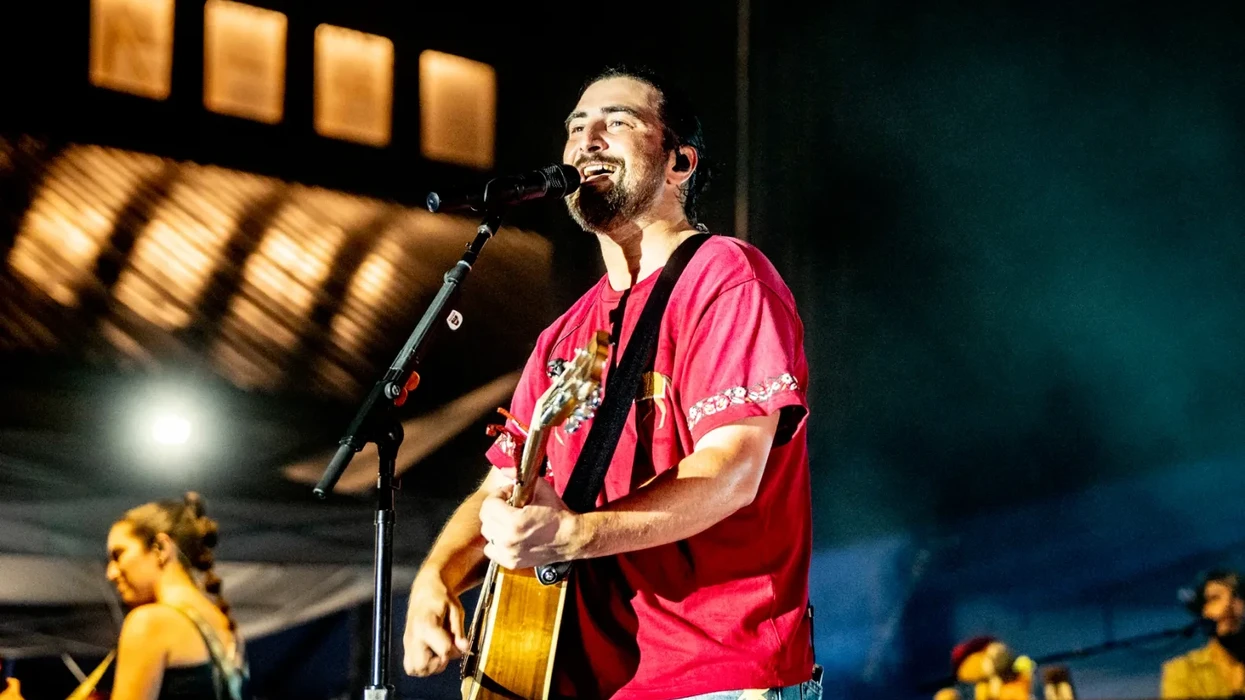
Local teen Noah Faulkner officially kicked off the Music segment of SXSW with his early Tuesday evening appearance at the Music Opening Party, held at the Palm Door, just a few blocks away from the festival’s epicenter at the Austin Convention Center. Over the last year or so, Noah has garnered an online following with his reinterpretations of 1980s classics, each recorded with his younger brother Nate. At SXSW, supported by seasoned pros — the difference between the grizzled drummer and the baby-face bassist Nate was startling — Pedal Steel Noah offered fresh spins on Duran Duran’s “Hungry Like the Wolf,” New Order’s “Bizarre Love Triangle,” and Joy Division’s “Love Will Tear Us Apart,” among other NewWave perennials. The trick that keeps Pedal Steel Noah from descending into either nostalgia or irony is how he favors textures and mood over melody. There’s enough of a recognizable hook to satiate an audience, but the band prefers to lay back, finding different ways to explore the moods lurking within a well-known tune. —S.T.E.

Veeze Brings Detroit to Austin
At Rolling Stone‘s Future of Music showcase, Veeze rocked a very sparkly diamond chain and a hoodie with various corporate logos collaged to spell out the name Satoshi Nakamoto, the pseudonymous inventor of Bitcoin — a fashion choice that mirrored the kind of sly, creative references he’s made a fine art of. The Detroit MC was an understated but engaging presence as he performed songs from his studio debut, Ganger, making you listen close for his sneaky punchlines. Many of them were about how other artists are constantly trying to bite his style. “I’m the one that taught ’em how to walk on them beats, they should bring me an apple,” he scoffed on “GAIG.” “Feel like a proud dad when I watch YouTube,” he quipped on “Lick.” He delivered these lines casually, knowing he had the crowd on his side; not mad, just amused. “Shout out to Rolling Stone for having me here,” Veeze said at the end of his set. “I am the future of music!” —S.V.L.
Shakey Graves Pays Tribute to Austin Old and New
Toward the end of his opening set at Ray Benson’s Birthday Bash — an annual party benefiting the Health Alliance for Austin Musicians (HAAM) — local troubadour Shakey Graves recalled his attempts to engage the crowds he encountered at the Hole in the Wall, a legendary dive on the campus of the University of Texas. Graves places those early days in the early 2010s, by which time HAAM already was an Austin institution. Like so many staples in Austin, Ray Benson, the gregarious leader of the Western Swing revival outfit Asleep at the Wheel, could be found lurking somewhere on centerstage. Benson’s status in the community was acknowledged by Austin’s mayor Kirk Watson, who granted the singer a key to the city at the start of the show, but even with such pomp and circumstance, Shaey Graves managed to cut a memorable impression. Representing a certain strand of modern Austin — stylish and rootless, aware of the past but looking to the future — he sang with a subdued flair, emphasizing mood as much as songs. Stark and almost spooky, Graves cast a spell that lingered long after he left the stage. —S.T.E.

Mariangela Feels It All
The first time Mariangela performed at SXSW was a couple of years ago, holding a showcase in 2022, the year the festival returned to active duty after the rise of Covid-19. Onstage at Rozco’s —a comedy club east of Austin’s downtown, converted to a music venue for SXSW — the Mexican-born singer-songwriter struck an arresting blend of professionalism and enthusiasm, demonstrating a skill for songcraft and an emotionalism that prevented the music from ever seeming slick. It was a shift from her recently-released album Sensible, which happily embraces a variety of modern pop idioms. Supported by no more than an electric guitarist who luxuriated in the languid effects of his pedal boards, Mariangela chose to deliver her songs with an open heart that was too earnest to be corny. The bones of her songs stood out, as did her charisma. —S.T.E.
(Full disclosure: In 2021, Rolling Stone’s parent company, P-MRC, acquired a 50 percent stake in the SXSW festival.)

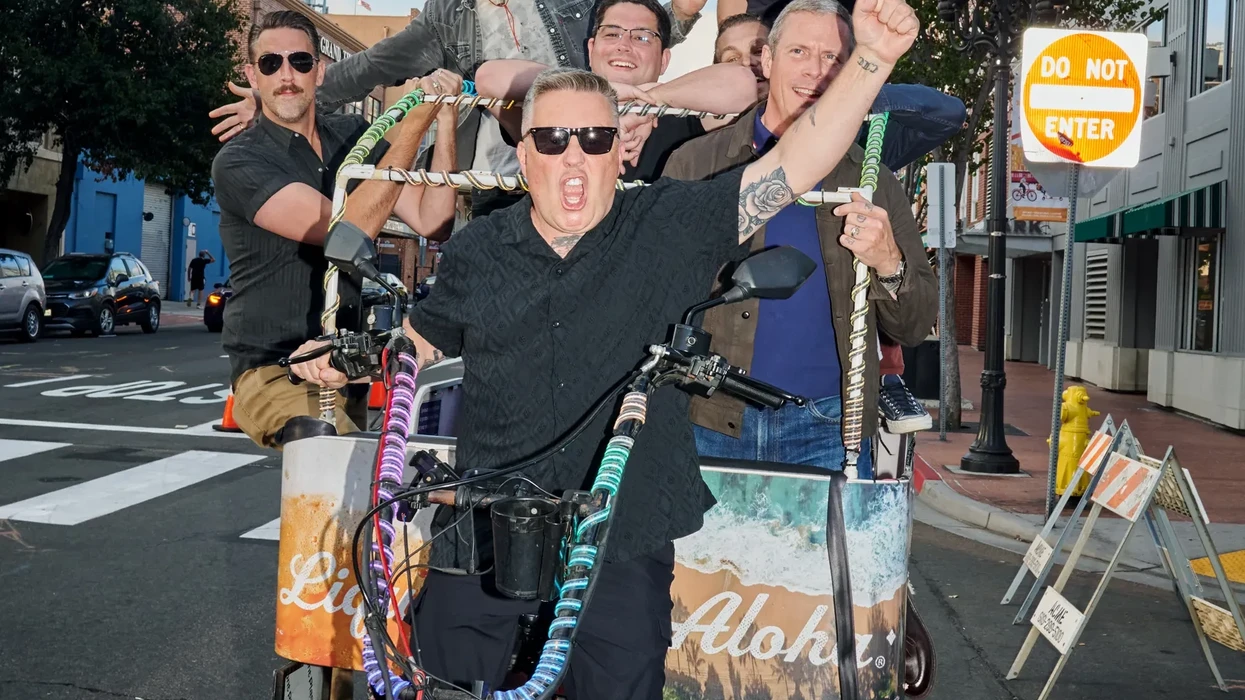
 Ken Casey stuck around after the show in San Diego, California, talking to members of the International Brotherhood of Electrical Workers.John Francis Peters for Rolling Stone
 Some of the challenge-coin haul.
 The band started as a bet. “My band has a show in three weeks,” Casey’s coworker told him in 1996. “I dare you to open for us.”John Francis Peters for Rolling Stone
 Dropkick Murphys (from left): Casey, DaRosa, Webster, Kelly, Rheault, Brennan, and Lynch John Francis Peters for Rolling Stone
 Casey is largely the voice of the band, but the other members back him up. “We’re so lucky he’s the mouthpiece,” says Brennan, left. John Francis Peters for Rolling Stone
 “Only the Irish can take a song about death and destruction, famine, alcoholism, and raise a glass like it’s an anthem,” says Casey. John Francis Peters for Rolling Stone
 “Anytime it feels like things are about to plateau for us, something gives us a little bump,” says guitarist Lynch. “It feels exciting. It feels dangerous. It feels like doing something.” John Francis Peters for Rolling Stone

Jay-Z performing at the Stade de France in Saint-Denis in Paris.
Jay-Z Deserves the Super Bowl Halftime Gig
Where’s the love? Jay-Z asked that question 25 years ago, in the chorus of one of many songs in his catalog that still move audiences today. If he performs “Heart of the City” as part of his Super Bowl halftime show next February, those indignant bars are sure to be a highlight: “First the Fat Boys break up, now every day I wake up, somebody got a problem with Hov…” It would be an appropriate choice, too — because then as now, any time Jay-Z notches a new achievement, people find a way to complain.
The jokes and nonsense started almost as soon as the first rumors trickled out that Jay, whose company Roc Nation has executive-produced the Super Bowl halftime show since 2019, might be choosing himself to headline next year’s show. “Jay-Z just Dick Cheney’d himself for the Super Bowl,” Puck‘s Matthew Belloni quipped on X last week, alluding to the time that the late prince of darkness, who’d been asked to run the vice-presidential search committee for George W. Bush’s 2000 campaign, put himself on the ticket. (Super hip and current reference, and not at all apples-and-oranges.) Others pointed to TMZ reports that pop stars like Harry Styles and Justin Bieber had been asked first. “How are they the frontrunners, and he end up in the front?” Cam’Ron, who’s delighted in trolling Jay for many years, wondered aloud on his podcast. “Out of all the people on the roster, they couldn’t pick nobody else?” asked Cam’Ron‘s co-host, Ma$e.
These critiques miss the point, which is that Jay-Z is one of the best choices for a high-profile gig like this. He’s a superstar with a comparable level of name recognition to any other A-lister in music. He has a deep stack of classic songs going back decades. And he’s a highly skillful live performer who knows his way around a stadium stage, as he’s spent this year reminding people on his Jay-Z 30 tour. He tore down Yankee Stadium three nights in a row this summer; just last week, he rocked SoFi Stadium, which happens to be the same place where the 2027 Super Bowl is being held. He held the crowd’s attention with ease at all of those shows, and though there were plenty of glittery guests — that’s a given at a Jay show, and it will surely be true at the Super Bowl, too — he did it mostly through the force of his own magnetic energy. Let’s state the obvious here: Jay-Z is really, really good at rapping. We’re talking about one of the slickest, sharpest talkers in the history of words, someone who made it to the top through a sustained act of myth-making, then kept going. Are we seriously asking whether he can handle a 15-minute televised performance?
And yeah, there’s a touch of self-congratulation in the way he appointed himself. So what? Praising his own gifts is arguably Jay-Z’s greatest talent of all. He made a fine art out of self-applause. He told his story again and again, retracing the steps from Marcy Projects to the corner suite, and he made us believe. It would almost be insulting to the audience if he didn’t give himself the gig at some point.
Pop culture observers in recent years surely remember the backlash to Super Bowl headliners like Kendrick Lamar and Bad Bunny — all of it at least culturally conservative, and much of it frankly just racist. The blowback to Jay’s announcement is mostly coming from other quarters, at least for now (let’s just wait to see what the right-wing swamps make of this one). But it’s disappointing in a different way. Jay-Z has spent his career expounding hip-hop as a mainstream commercial force. He’s not a businessman, he’s a business, man. But he’s also an artist. He’s made huge amounts of money, and gotten himself into the rarefied rooms where he even has the ability to give himself a gig like this, by spinning his experiences into compelling narrative art, one verse at a time. Let’s not lose sight of how impressive his life’s work really is. Jay-Z is not some random C-suite bro, and he’s definitely not Dick Cheney. He’s one of the greatest rappers of all time, by any measure. He’s earned that Super Bowl spot.