
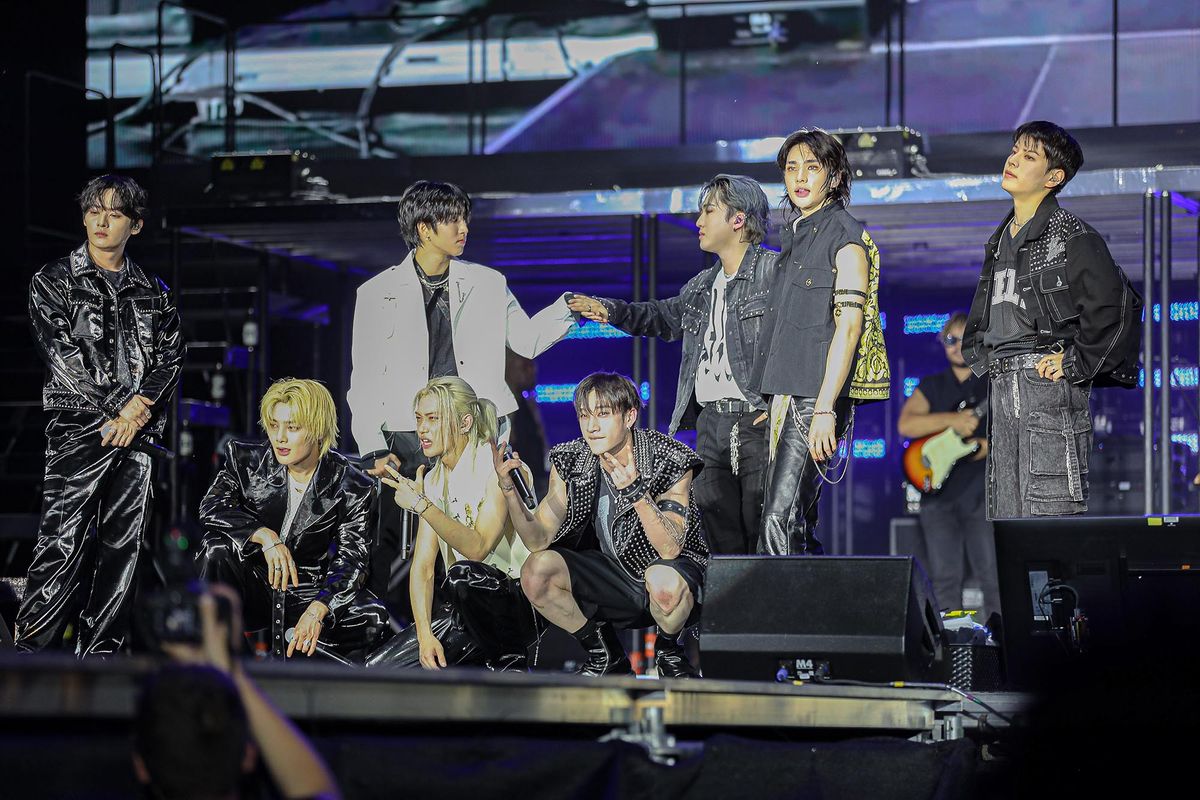
While Chappell Roan and politics ruled Day One of Lollapalooza 2024, the second day of the Chicago festival held in Grant Park featured new song debuts from headliners SZA and Zedd, and a top billing from the chart history-making Stray Kids. It also featured surprise guests, including Chance the Rapper, Remi Wolf, and Bobby Shmurda. Raye, Victoria Monét, and Laufey’s sets were also among the highlights from Day Two.
Stray Kids Inject a Punk Attitude Into K-pop
Hot off their fifth Number One album on the Billboard 200 thanks to ATE, Stray Kids were eager to entertain at their headlining set. While fans literally barked in support, the K-pop group rapped their way through hard-rock renditions of their catalog, courtesy of a live band, next to pyrotechnics, lasers, and fireworks. More striking than the drum-and-bass-inspired “Domino” or funk-laced “Back Door” was the octet’s angular choreography. Their dance moves aligned with punk jostling, giving them the aura of cinema’s suave bad boys. That deviousness reappeared later: butting against the city curfew (“Should we break the rules?”), Stray Kids snuck in “Haven” for one last sugar rush to last all night. – N.C.
SZA Debuts “Cry Baby”
For SZA fans, the wait between 2017’s CTRL and her sophomore album, SOS — which topped Rolling Stone’s best album of the year list last year — felt like an eternity, but she didn’t wait long to treat those at Lolla to a new number partway through her set. “This song is ‘Cry Baby.’ It’s not out, but it will be,” she said, before launching into the lovesick song that dovetailed well into her repertoire of lyrics that traverse heartbreak and longing. Sitting astride a giant ant prop, she and her guitarist intertwined melodies on the new track. She also delivered the hits from both albums, which included SOS’ “Snooze” and “Kill Bill” as well as CTRL’s “Love Galore” and “The Weekend.” Another standout was “Kiss Me More,” SZA’s collab with Doja Cat, which included snippets of Prince’s “Kiss.” Her lush vocals and fantasy backdrop — complete with an icicle-flanked cave and giant tree trunk — was a fitting way to cap off the fest’s Night Two. – A.L.
Zedd’s Drone Performance Stole the Show
Zedd, the electronic music veteran known for party anthems “Stay,” “Middle,” and “Clarity,” closed the festival’s second night with a rapturous performance. Though he remixed Martin Garrix’s “Animals,” the DJ stuck to his catalog during his set, putting the crowd into a trance with a sped-up version of the theme song of Netflix’s Squid Game and “Break Free,” a synth-heavy track featuring Ariana Grande. Alt-pop star Remi Wolf made a surprise appearance to announce their high-energy, dance-pop track “Lucky.” If fireworks, laser pointers, and flames weren’t enough, by the end of the show dozens of drones flew to the sky to remind the crowd of Zedd’s larger-than-life persona, replicating his emblem and providing the release date for “Lucky,” which arrives Aug. 9. – K.R.
Raye’s Triumph Is a Win for Us All
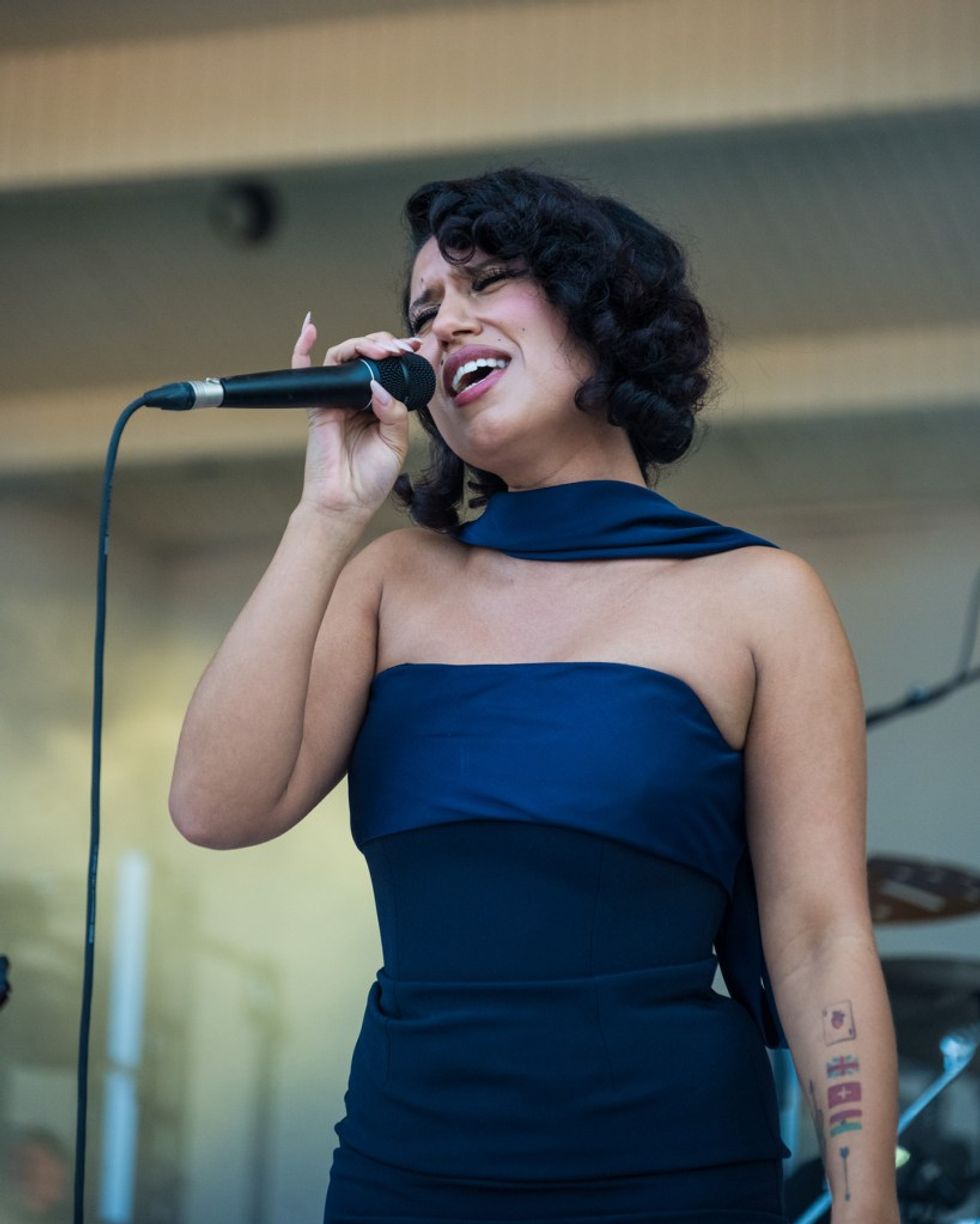
Raye has been on a roll, and she kept it going on stage at Lolla. Earlier this year, she made history at the 2024 Brit Awards when she took home six wins from seven nominations. At the festival, she proved she deserved all the kudos, and then some. Performing songs from her long-awaited debut album, My 21st Century Blues, which arrived in 2023, she was a study in elegance, honesty, and class. With supple vocals that vaulted to whistle range and a visceral delivery that found her dropping to her knees to deliver songs, such as the smoldering “Mary Jane” and the goose-pimple-inducing cover of “It’s a Man’s Man’s Man’s World,” her set that spanned multiple genres was thoroughly engrossing. Introducing “Ice Cream Man,” a raw and powerful song about sexual assault, she explained how it makes her physically sick to sing but that it’s important as “music is meditative.” As she spoke of music’s healing powers, some in the packed audience needed assistance, and she made sure they were helped before launching into the song. Later, she asked for support while delivering “Genesis,” her seven-minute experimental pop to jazz opus, to which fans happily obliged. – A.L.
Victoria Monét Is Victorious
On a day that included other artists who’ve been making a splash for years before getting their well-deserved due, like Raye’s hard-won debut and SZA’s held-up sophomore release, Victoria Monét earned every minute of her spot on the main stage with material from her long-awaited debut, Jaguar II. Appearing in a fedora and overcoat, she opened with “Alright” as she and her dancers delivered precise choreography. Later, sans coat and dressed in an orange two-piece, she advocated for women who rock their natural bodies (“Ass Like That”) and weed (“Smoke”) during her playful set. Embracing R&B that hearkened to the classics while putting her own spin on the genre, she also weaved those elements together; “Cadillac (A Pimp’s Anthem)” touched on Aaliyah’s “Are You That Somebody,” she married Supremes’ “Stop! In the Name of Love” into her “Stop (Askin’ Me4Shyt),” and “Party Girls” featured nods to Sister Nancy’s “Bam Bam” and Beyoncé’s “Baby Boy.” – A.L.
Laufey Gets Classy With the Chicago Philharmonic
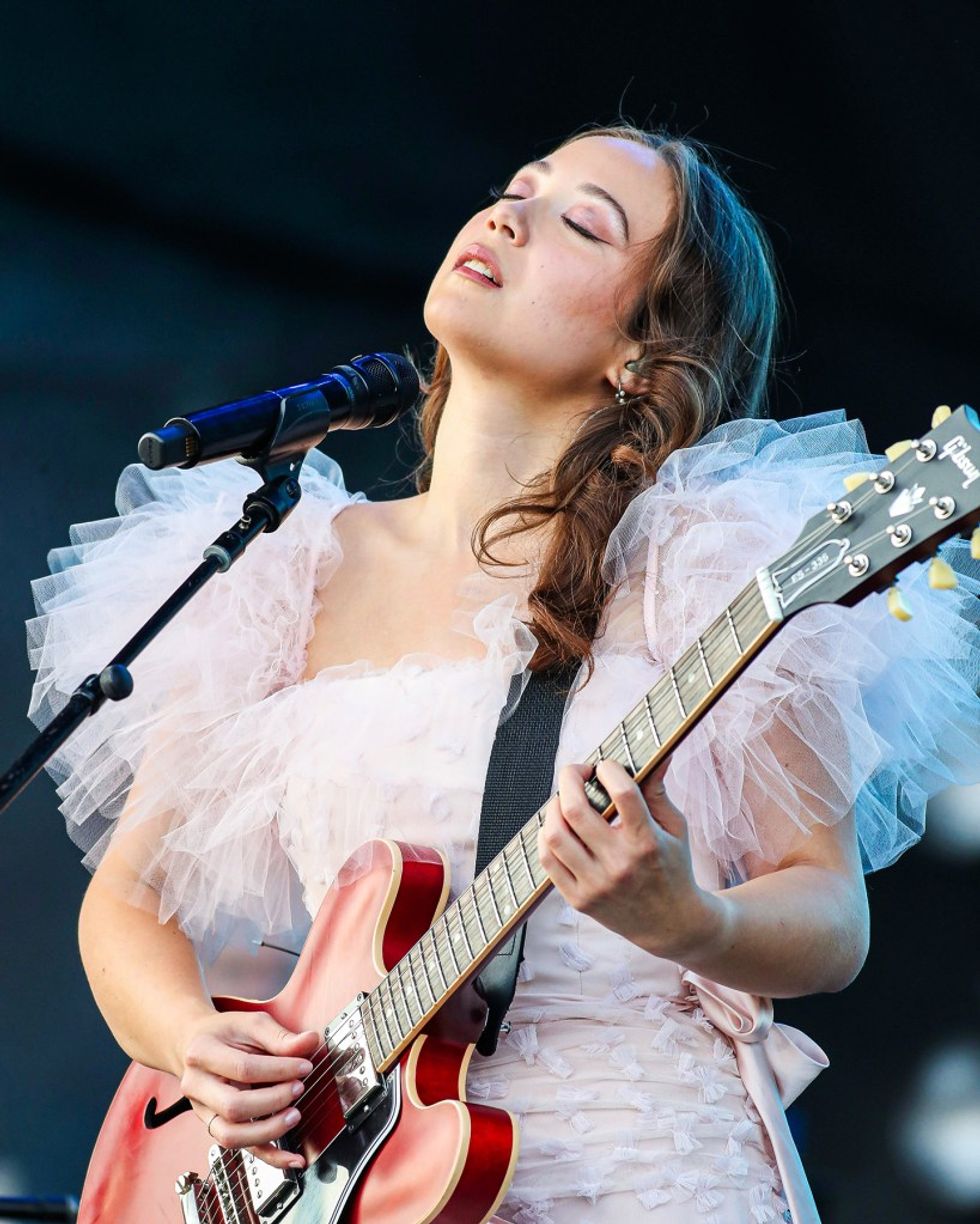
“Welcome to the symphony,” Laufey greeted fans, curtseying in a regal dress of tulle and silk. The Icelandic 25-year-old was all charm and grace live, showing a demure humility despite her lovesick songs warranting the presence of the Chicago Philharmonic. As if subbing in on electric guitar, cello, and piano while singing wasn’t enough, Laufey brought out Raye to duet “It Could Happen to You.” One of the classiest sets of the day, it was a romantic, transfixing showcase of Grammy-winning traditional pop that earned mid-song cheers when cameras zoomed on an oboist. Based on the crowd, the next generation’s appetite for this old genre is only just beginning. – N.C.
Sexyy Red Makes a Presidential Campaign Stop
All rise for the president of sexy. Escorted onstage by faux secret service, Sexyy Red delivered her own state of the union address, summoning even the most upright prudes to get wild. Twerking by an inflatable MAGA hat knockoff, which was stamped “Make America Sexy Again,” the St. Louis sensation led rap-alongs of “U My Everything,” “Get It Sexyy,” and a brief karaoke interlude that included the band fun. and Miley Cyrus. Half the thrill was hearing her rearrange “coochie,” “dick,” and “titties” like a salacious pack of Mad Libs. As Hood Hottest Princess promised, Sexyy Red was here to have a good time: “Bitch, you know I do it big.” – N.C.
Faye Webster Offers Sprawling Folk-Rock for Sprawled Fans
Faye Webster knew what she was doing opening with “But Not Kiss,” an ode to falling asleep in a lover’s arms. The Atlanta singer-songwriter churned out jammy folk-rock that sounded like a dream state; as the sun descended, yawning slide guitar and woozy bass serenaded a field of listeners sprawled on their backs. Peppered around tracks from her new album, Underdressed at the Symphony, were old favorites “Kingston” and “Right Side of My Neck,” showcasing Webster’s consistency as a subtle songwriter. Don’t conflate that with predictability, though; right when she lulled you into a comfortable high, she would let out a sharp, surprise scream. — N.C.
Kevin Abstract Keeps it Candid
Kevin Abstract, dressed in a plaid-patterned hoodie, doesn’t disguise when he goes off script. The Brockhampton founding member put the crowd first, running to each side asking, “Is everybody feeling alive tonight?” while subsequently performing two unreleased tracks. He continued to keep things candid, asking the crowd, “Is anyone out there in love with me?,” and later described his type as the Disney channel star Ross Lynch. Despite the “infinite hiatus” of Brockhampton, Kevin Abstract headbanged to Saturation’s “Star” and Saturation II’s “Gummy” before launching into guitar-revving tracks “Georgia” and “Baby Boy,” off of his second album Arizona Baby. Before he left the stage, he asked one more favor from the crowd: to form a mosh pit. Fans listened, creating a hole in the crowd in time for the yelping track “Blanket,” the title song off his latest album. – K.R.
Reneé Rapp Rocks With Chance the Rapper
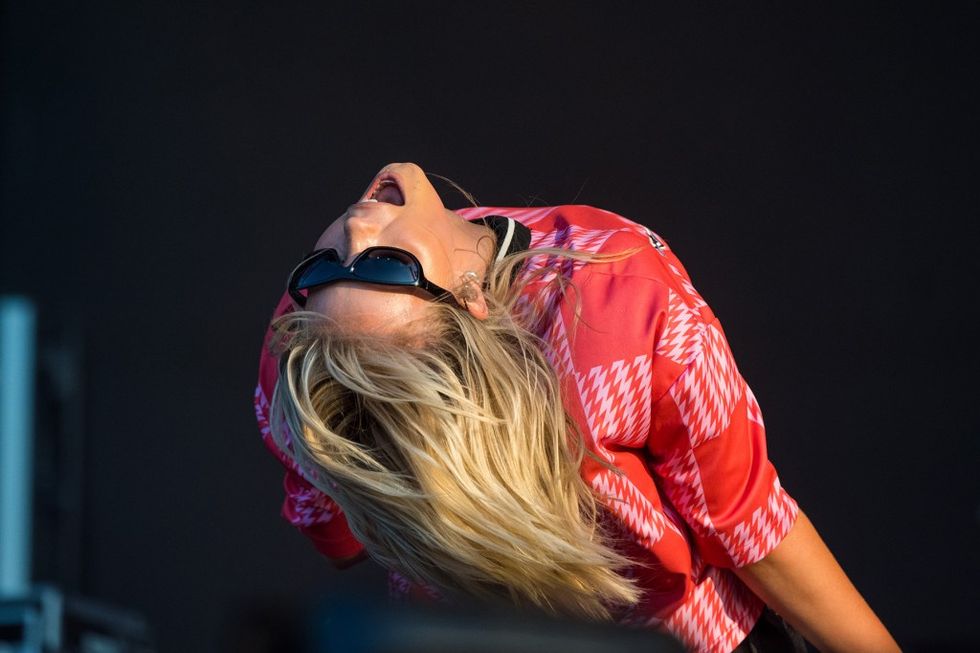
Singer-actress Reneé Rapp commanded the stage as someone who was born to do it, and she was as the Mean Girls/Sex Lives of College Girls star has confidently balanced her singing and acting career. Armed with songs from her debut album, Snow Angel, “Pretty Girls” was among the highlights during her set. She also brought out a surprise guest. Noting she has been a fan of Chance the Rapper since 2016, when Coloring Book arrived, he joined her on stage to perform “No Problem.” – A.L.
Wisp Brought Wistful Shoegaze to Her First-Ever Festival Set
Virality is surreal to experience firsthand, but Natalie R. Lu, the 19-year-old behind Wisp, handles it with humility. Last year, her shoegaze project exploded with only a few songs out, earning bragging rights. During her first-ever festival performance, however, she admitted she was nervous. Wisp’s droning guitars washed over the crowd (dressed in baggy pants, oversized shirts, and sporting dyed hair, fans mirrored the band’s alt aesthetic) at full volume as heavy singles “Tangled Dreams” and “Your Face” wove through songs from her debut EP, Pandora. “I know you guys may not be the moshing type, but let’s move a little,” Lu laughed meekly — as much a request of them as a reminder for herself. – N.C.
Militarie Gun Do It Faster (Twice)
Like any band formed during the pandemic, Militarie Gun performed like they’ll never take touring for granted again. Hardcore musician Ian Shelton created the band to channel pop-minded songwriting, but live, their alt-rock songs took on a gruffer edge. Despite the peak UV rays timeslot, Militarie Gun kept the energy high — Shelton climbed into the crowd to cover Blur’s “Song 2,” and swapped places with a guitarist to play “Do It Faster” twice — as did the crowd, which spontaneously sat in the field to mimic a rowing team. Collectively, everyone played it fast and loose, sweating it out as proud stalwarts of the midday block. — N.C.
Loud Luxury Turn Up the Volume
The crowd at Loud Luxury, the Canadian-born dance-pop duo, couldn’t keep still. The audience clapped their hands to “Sunroof,” the laidback Loud Luxury remix to Nicky Youre and Dazy’s pop track. Andrew Fedyk and Joe De Pace kept the crowd fist-pumping to “Love No More” and “Aftertaste” as hypnotic visuals and flames were projected from the Perry stage. It felt reminiscent to the duo’s nighclub residencies in Las Vegas. The band’s bubbly house set reached a peak when surprise guest Bobby Shmurda took the stage to perform their unreleased single “Cool Like That,” before the crowd-rumbling hit “Body.” It’s been five years since the duo’s last Lollapalooza set and they made sure to leave a memorable performance. – K.R.
Blu DeTiger Brings the Bass
Blu DeTiger, the 26-year-old bassist who went viral on TikTok for her bass guitar skills and covers of Ariana Grande and Cardi B, played an effortlessly cool show at the Bacardi stage Friday. Wielding an electric blue bass guitar, DeTiger assembled a fan-pleasing mashup of Lorde’s “Ribs” and Icona Pop’s “I Love It” before crash-landing into hit single “Cotton Candy Lemonade.” To a swaying crowd, Blu DeTiger ushered in the weekend with tracks such as “Hey You,” which she co-wrote with Chappell Roan and laidback alt-track “Figure it Out.” – K.R.
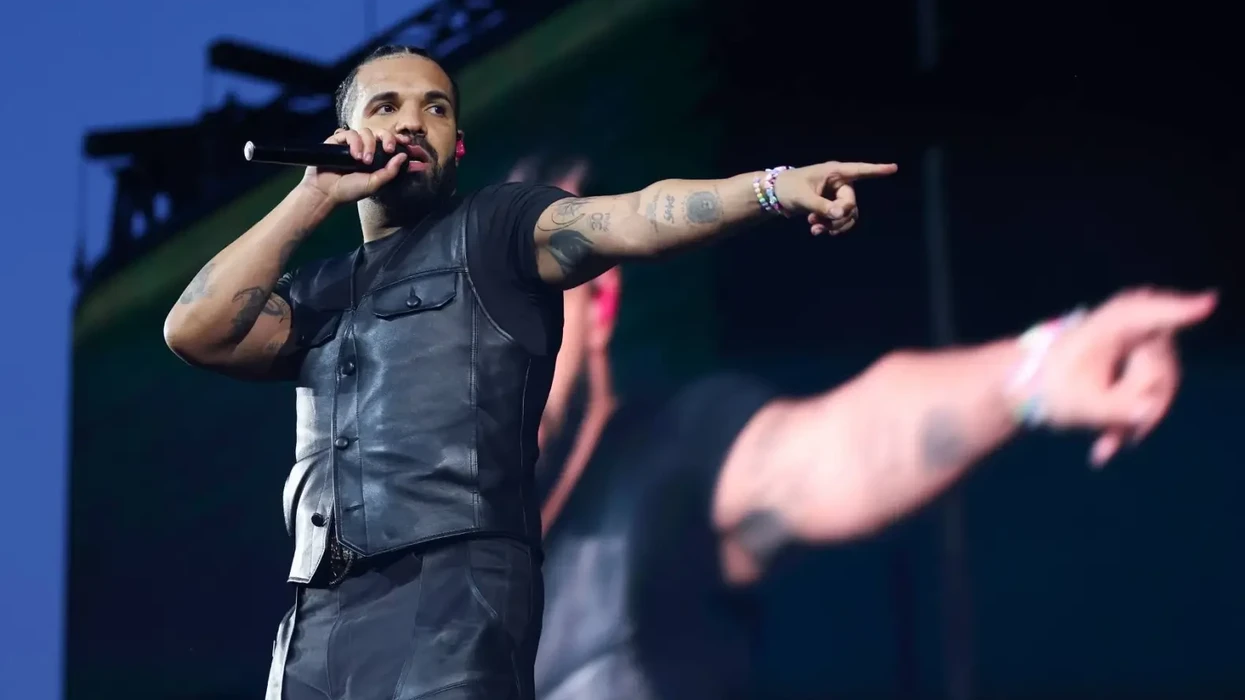
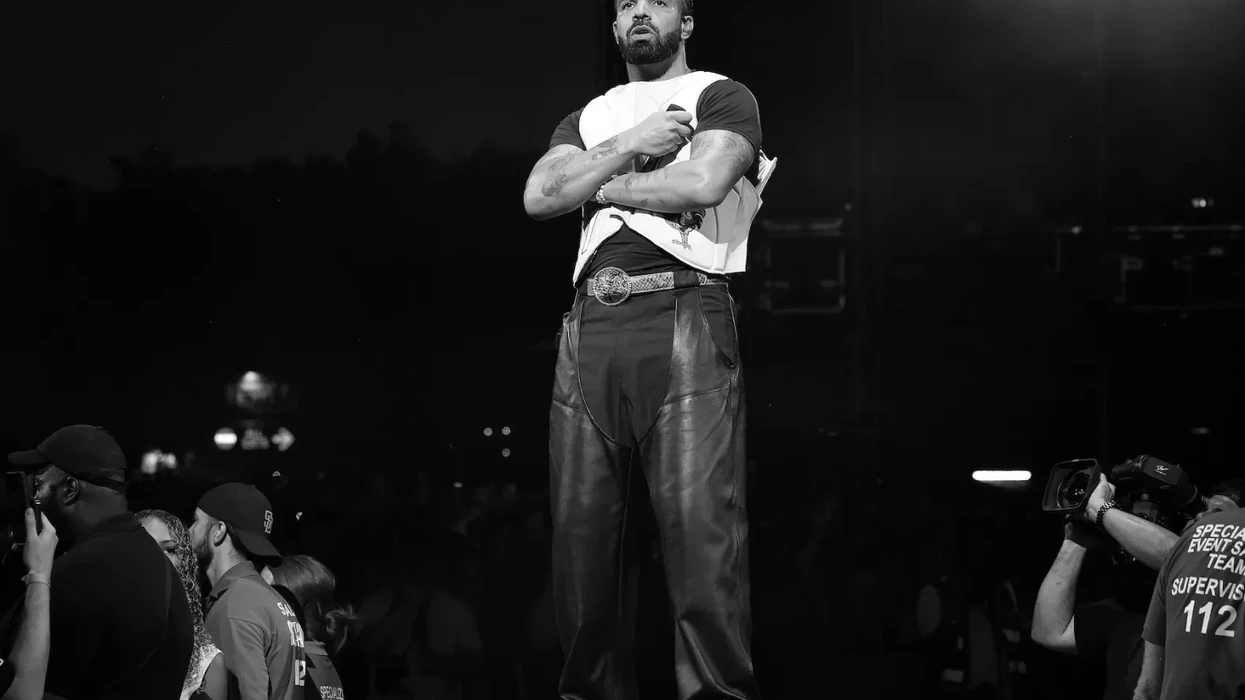


Drake onstage in Toronto last year
Everybody Likes Drake Again. That Means We’re Healing
Not to be dramatic or anything, but not too long ago, listening to people talk about Drake, you’d think he would never top the charts again. But here we are: With Iceman, he’s broken his own record, earning a 13th week atop Billboard’s Top R&B/Hip-Hop Albums chart on Sept. 5, surpassing Take Care’s 12-week run more than a decade ago. The achievement comes after the great rap civil war of 2024, which was framed as everything from a referendum on Drake’s character as a human being to a cleansing of what popular radio host Ebro would describe, in February 2025, as “a sickness in the game.”
Again, not trying to be dramatic, but even if you were skeptical of the discourse circa 2024, it is a bit shocking to hear the public’s recent re-embrace of Drake. Consider how far the frenzy around the most salacious allegations on Kendrick Lamar‘s “Not Like Us” extended. There was Christopher Alvarez, a disabled journalist, being dragged into conspiracy theories. There was the woman from the resurfaced concert footage, now 31, having to publicly dispute the creepy significance strangers had assigned to an onstage kiss from when she was 17. Drake said in his lawsuit against UMG that the threats had forced him to pull his seven-year-old son out of school.
What now feels like the absurdity of the moment registered as something deathly serious at the time. By September 2024, Lamar was releasing the ominous “Watch the Party Die,” just days after his Super Bowl halftime performance was announced. Oh, also, a major talking point in American culture a year and a half ago was whether one of the biggest superstars in the world would be publicly branded a pedophile during the Super Bowl.
In what world would any celebrity recover from that?
Except, with time, the online frenzy surrounding the Drake and Lamar feud reads more like a mass-psychosis event than a cultural reckoning. The music, oddly enough, often seemed secondary to the certainty of everyone discussing it. “Not Like Us” was a veritable hit, absolutely. But its cultural dominance became bound up in a widespread vilification of Drake that curdled online, where the most damning interpretation of anything could quickly become the accepted one. For a while, even putting on a Drake song could feel like something you had to explain, as if listening amounted to taking a position on the allegations.
That this all happened in 2024 is meaningful. This was right in the peak of Elon Musk’s reconstruction of Twitter, privileging rage bait and engagement tactics that helped misinformation disseminate like fact. It was also the beginning of AI tools becoming sophisticated enough to produce convincing-sounding tracks. Even before Drake released his first response, “Push Ups,” AI-generated response tracks were circulating across social media. And so, in many ways, the well of public opinion was already poisoned.
Listeners’ recent embrace of Drake feels settled in a broader cultural shift brewing since 2024. The beef, in hindsight, feels like a dying vestige of whatever people want to call “Woke 1.0”: a particular faith that exposing the right person could amount to a cultural transformation. For a moment, defeating Drake seemed to promise something about the future of hip-hop, about who would belong in it and what it would tolerate.
There were obvious holes in the argument, namely who exactly these arbiters of culture were and why they were uniquely qualified to speak for the entirety of Black people, questions that Drake pokes at on “Ran to Atlanta” from Iceman. Still, these were never even supposed to be binding philosophical truths in the first place. To hear levelheaded commentators discuss it, this was all simply entertainment — two of the genre’s greats duking it out. Even one of the beef’s catalysts, Metro Boomin, echoed the sentiment, lamenting how online fans had turned the battle into something sinister. Hell, even Jay-Z said something similar before himself tossing a few jabs at Drizzy in a freestyle at the Roots Picnic this year. But the artists themselves supplied the allegations. The ability to raise those stakes and then retreat into “simply entertainment” was part of the dynamic, too.
Even so, how it all devolved into a pseudocultural reckoning says more about the environment fans exist in today than it does about either Drake or Lamar. In the years around the beef, shocking revelations about Diddy as well as the global elite’s ties to Jeffrey Epstein have become folded into the background, alongside a sense that accountability remains selective. This atmosphere of collective powerlessness offers one explanation for the conspiratorial thinking at the heart of Lamar versus Drake. A frustration with an increasingly degraded world and dwindling resources to change it means outrage can mobilize an enormous number of people very quickly, with little holding them together once the moment passes.
The language of exploitation and cultural extraction gave the battle a purpose that seemed to extend well beyond either rapper. But even if you took the least charitable opinion imaginable of our Canadian hitmaker, what was supposed to happen after Drake was defeated? The industry whose supposed wickedness Drake allegedly embodied carried on selling the spectacle itself.
What everyone was caught up in was an appetite with a longer history than the social media platforms now feeding it. Lance Oppenheim’s new film, Primetime, returns to Chris Hansen and To Catch a Predator, a television format that made public humiliation feel like a public service. The connection is in the experience offered to the audience. The viewer could enjoy the confrontation with the reassuring sense that watching served some larger good. Never mind if anything that was unfolding on screen amounted to justice.
In the historian Anton Jäger’s book-length essay Hyperpolitics, published earlier this year in English, he describes how the past decade’s surge of political feeling has coincided with a continuing withdrawal from communal life. More isolated digital environments can fuel extraordinary mobilization without the actual community organizations that might turn it into something tangible. Negating Drake, then, became a gesture in itself. A means of signaling a broader dissatisfaction with the direction of hip-hop culture. Where the problems extend to technology and the demoralizing margins of streaming music, for a while it felt good for people to just wrap it all up in one word: Drake.
But on Iceman, it’s hard to take the idea of Drake as an evil force within hip-hop very seriously, even as he himself makes an effort to lean into the role of the villain. Drake’s music is most potent when it’s aimed at the masses, even if he swears his nice-guy days are over. This is the Degrassi kid turned global superstar rivaling Taylor Swift, after all.
Now, with Fear of Missing Out, Drake’s cryptically announced project slated for release this week, we’ve entered a second kind of Drake Renaissance. However delusional it seems, there was a moment when it felt somehow wrong to play Drake. His return to the top of the charts suggests a good deal of people were eager to get back to listening.