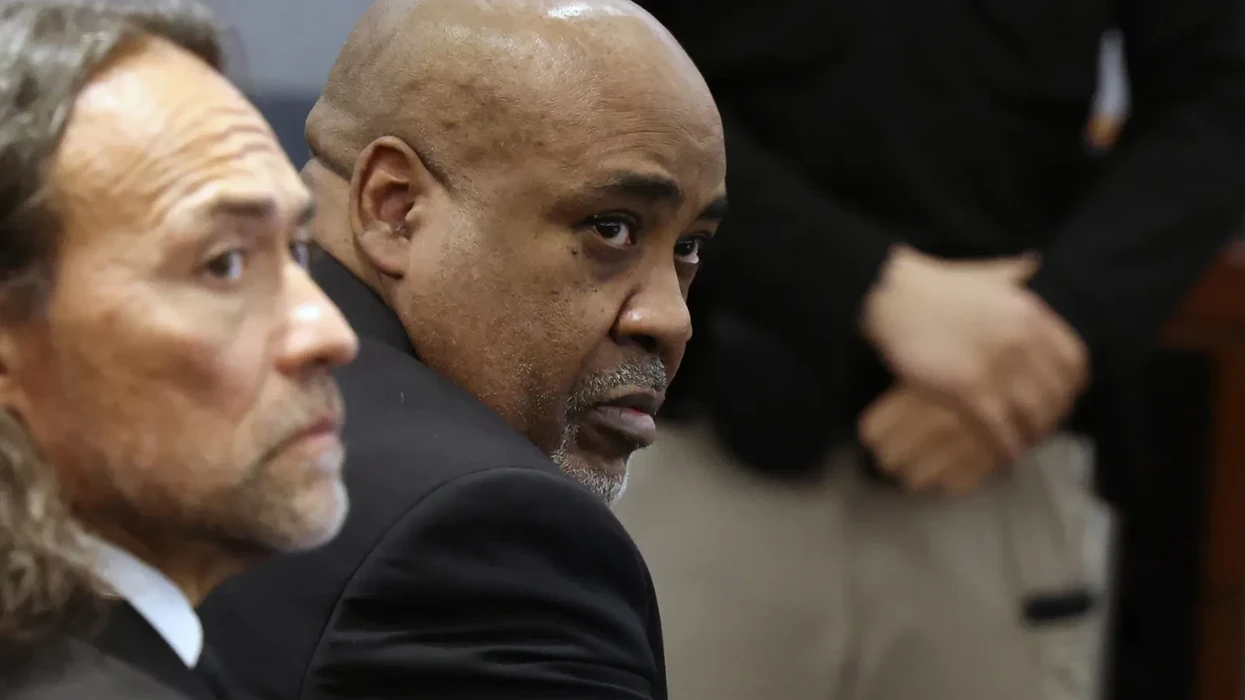
Kanye West took the witness stand at a copyright trial in downtown Los Angeles on Wednesday, and the artist now known as Ye showed visible signs of irritation.
When the plaintiffs’ lawyer, who claims Ye owes more than half a million dollars for alleged infringement tied to his Grammy-winning track “Hurricane,” greeted him after the lunch break with, “Good afternoon, Ye,” the artist stared back silently without responding. Asked whether he repeatedly changed lawyers and licensing representatives in 2022 and 2023, making him difficult to reach, Ye answered in a flat monotone, repeatedly saying, “I don’t recall” and “I don’t remember.”
Ye noticeably loosened up when his own lawyer took over questioning. Asked what first inspired him to make music, he said it was “seeing Michael Jackson on TV.”
Describing his creative process, Ye said inspiration “could come from me just singing in the shower,” or from a sample sent by another producer. He said he endlessly reworks his songs, cycling through countless versions before he’s satisfied.
“It’s hard, but it’s therapeutic, because I want to deliver the best product to the audience and to my fans,” he testified, wearing a dark taupe suit and matching dress shirt with an iridescent sheen. He arrived at the federal courthouse with multiple bodyguards wearing all black who positioned themselves inside and outside the courtroom.
Rolling Stone was in the room for a portion of Ye’s testimony, while Billboard was on hand when the rap star insisted he and his team “went through the normal process” to clear the “MSD PT2” sample used in the early version of “Hurricane” played at his listening event attended by tens of thousands of fans at the Mercedes-Benz Stadium in Atlanta on July 22, 2021. He denied stonewalling or failing to fairly compensate the four musicians behind “MSD PT2,” saying he viewed himself as highly collaborative. “I pride myself on giving people what they deserve,” he testified.
“I feel like a lot of people try to take advantage of me,” Ye told the jury, according to Billboard. “As I sit in this courtroom today, I just think people are trying to make more than they otherwise would because it’s me.”
Ye was called to the stand on the third day of a trial pitting him against a company called Artist Revenue Advocates (ARA), a Texas company formed to fight on behalf of the four “MSD PT2” composers. During opening statements, the lead plaintiff’s lawyer claimed Ye owes $564,046 in damages for unlicensed use of the recorded sample at the Atlanta stadium. The figure comprised a percentage of ticket sales, merchandise sales, Ye’s streaming deal with Apple Music, and a portion of the revenues from the jacket he wore on stage and then released a day later through his Yeezy collaboration with Gap.
The four musicians — Khalil Abdul-Rahman, Sam Barsh, Dan Seeff, and Josh Mease — agreed to transfer their copyrights to ARA, “so that they could seek some justice,” their lawyers wrote in court filings. ARA initially sued over both the sampled sound recording of “MSD PT2” played at Ye’s Atlanta listening event and the underlying composition of the one-minute instrumental track, which it claimed was improperly interpolated into the final version of “Hurricane,” released in August 2021.
In February, however, the judge dismissed the potentially more lucrative composition claims, ruling the musicians had previously signed contracts assigning away their composition royalty rights under agreements that remained in effect. The musicians tried to argue those agreements had been waived through oral deals with former business partners, but the judge ruled any such changes had to be made in writing.
Britton Monts, an ARA manager, testified Tuesday that the company was formed to “acquire copyrights from working musicians” who are “unable to enforce their rights” because “they can’t afford it.” He said ARA hoped to pursue additional cases, but he acknowledged the lawsuit against Ye was the company’s only one so far.
In his opening statement, Ye’s lead lawyer, Eduardo Martorell, suggested ARA was being financed by a backer trying to hide their identity. “Who’s behind it?” Martorell asked jurors. “We don’t know who owns it, because they won’t tell us. Why not sue under your own name?”
Martorell also told jurors the four musicians ultimately did receive songwriting credit on the final version of “Hurricane.” He said they were listed among the song’s 27 writers on Spotify and Apple Music, and that their combined share of the composition royalties was around 30 percent. After splitting those royalties with publishers, each musician received a writer’s share of 3.85 percent, he said.
When Seeff testified Tuesday, he claimed he had received only “some small payments” tied to the song despite its commercial success. He also told jurors it was standard in the music industry for composers of instrumental music to receive 50 percent of a song’s composition publishing, with the remaining 50 percent divided among the writers of the melody and lyrics.
The trial resumes Thursday.
 Sharon at Back to the Beginning Oliver Halfin