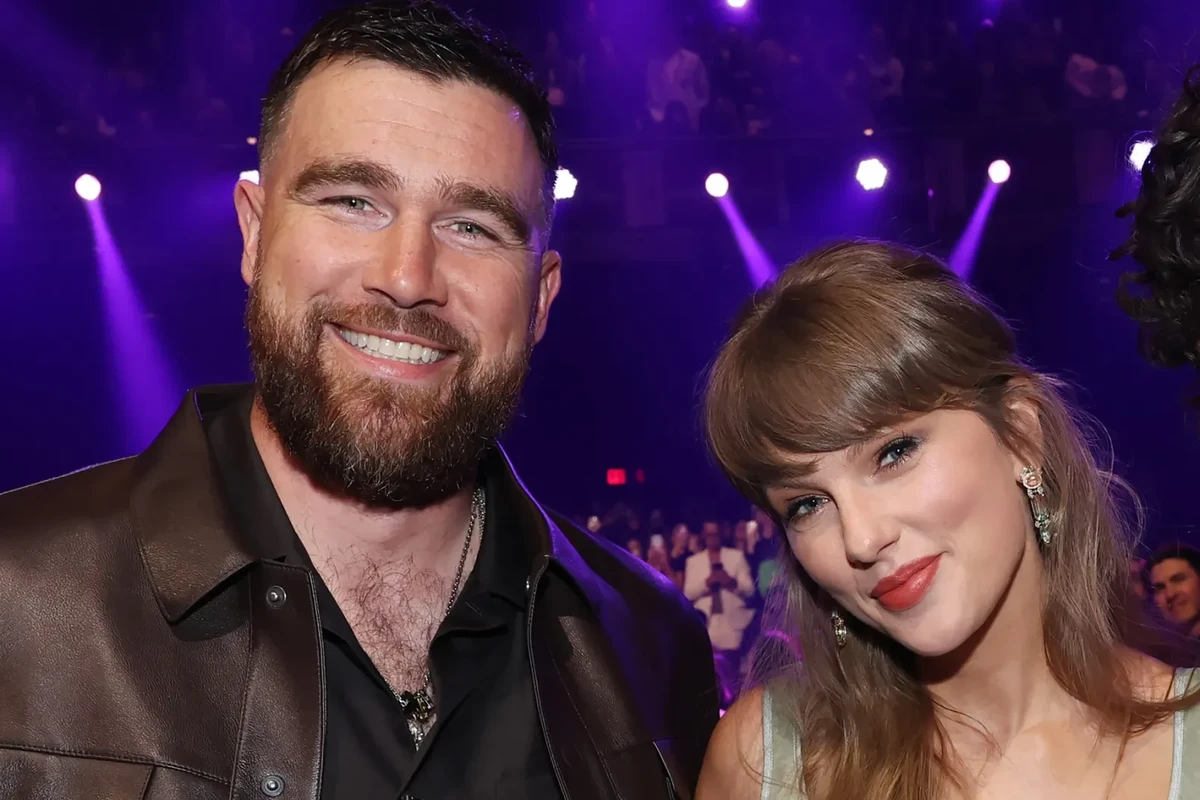
Taylor Swift is not the kind of girl who is going to pick just any song at her wedding. So when it comes to the big first dance, you know it will be deeply meaningful and meticulously planned out. “You would think that I had been the type of person who would have obsessed over the idea of a wedding my whole life,” she said last year after her engagement, “but I actually never thought about what I would ever do or what I would want until I met the person.” Sure, Taylor, sure.
As a pop superstar, she can practically guarantee a live rendition of whatever classic she wants from just about any living musician. She’s also been a huge fan of several songbooks, showing love for everyone from Carole King to the National. There’s still a lot up in the air about the wedding of the decade century, and we’ve got burning questions about all of it, including if it’s even happening this weekend. But as we presumably get closer to the big day, we compiled a list of top song selections we think could make the first dance cut.
Stevie Nicks, ‘Landslide’
 Kevin Mazur/Getty Images
Stevie Nicks will be in the room, so it’s a safe bet that the night will not end without her singing “Landslide,” her most beloved song. “Stand Back” might suit the Swift/Kelce story, but it’s too much of a rocker for a first dance, and for damn sure nobody’s in the mood for anything from Rumours tonight. Count on Stevie to deliver “Landslide,” and to work all the drama in “snow-covered HIIIIIIIILLS” like it’s never been worked before. —Rob Sheffield
Paul McCartney, ‘Maybe I’m Amazed’
 Jim Dyson/Getty Images
If Paul McCartney makes it to the wedding, as is rumored, he’ll surely sing a not-so-silly love song for the bride and groom. “Maybe I’m Amazed” would be the ideal choice. We know Swift is into the fine details of the 1970s Paul-and-Linda love story, ever since she took their “what a mind” anecdote and turned it into her own song, “Sweet Nothing.” We also know how much Stella McCartney loves this song, and Swift is the self-proclaimed “Tennessee Stella McCartney.” Plus, “Maybe I’m Amazed” has one of the greatest bridges ever — and there’s nothing the bride appreciates like a bridge. —R.S.
Kenny Chesney ‘You Had Me From Hello’
 Astrida Valigorsky/WireImage
Kenny Chesney cancelled a concert to be at this wedding, so don’t be surprised if he’s got something up his sleeve. He was one of the first major country stars to give her a break when she was just a kid starting out. She’s never forgotten that — 10 years later, she surprised him by showing up on his birthday to sing a duet on “Big Star.” Maybe he’ll do one of his beloved first-dance standards like “You and Me,” or “You Had Me From Hello,” which really fits their story, even if it could be retitled “You Had Me From Begging Me To Date You on Your Podcast.” —R.S.
Tim McGraw, Faith Hill, ‘It’s Your Love’
 Andrew Lipovsky/NBCU Photo Bank/Getty Images
Tim McGraw is one of the stars confirmed for the guests list, according to Page Six, which also reported that the country singer will perform at the wedding. If that’s the case, there’s a big chance he brings up his superstar wife Faith Hill along for the ride of a lifetime. We know Swift loves Hill’s crossover hit “This Kiss,” but it’s admittedly too saccharine and upbeat for a first dance feeling. No worries, the mom and dad of country music have more than a handful of collaborations together, though nothing beats out their first duet “It’s Your Love.” The 1997 hit is a perfect ballad and makes even more sense as Swift leans back into her country roots. —Maya Georgi
Ed Sheeran, ‘Thinking Out Loud’
 Steve Jennings/Getty Images
The only musician who loves a wedding more than Swift might be Ed Sheeran. He’s written sweet melodies tailor-made for walking down the aisle, depicted a Persian wedding for one of his music videos, and literally just crashed a wedding this week to perform his latest release. As his close friend, Swift also knows this fact about Sheeran very well. “It would be hard to keep him from it, I think,” she said when asked if he would perform on her big day. “It’s like, ‘Ed, if there’s a stage you know that you’ll be on it.’ He knows what people want, and he wants to give people what they want,” she added. Well, the people want Sheeran trying his hand at his Swift collab “Everything Has Changed” but the (solo version) or even that song mashed up with “End Game” — it is the perfect opportunity to sing “somethin’ was born on the 4th of July” after all. But a Sheeran wedding classic like “Thinking Out Loud” would be just as sweet, maybe even more so coming from such a longtime pal. —M.G.
Lana Del Rey, ‘Young and Beautiful’
 Gareth Cattermole/Getty Images
Swift is a huge Lana Del Rey fan; she’s gushed about the singer time and time again, and even called her “one of the best musical artists ever.” So it’s not out of the realm of possibility that the singer would not only be in attendance, but might even perform one of her cinematic cuts at the wedding. Sure, there’s always the Taylor-Lana 2023 collaboration “Snow on the Beach,” but those mellotron notes sound much more disquieting than the ones on “Strawberry Fields.” Plus, Del Rey has a plethora of romantic, slow-dance songs to pick from. There’s “Video Games,” of course, but the devotional “Young and Beautiful” feels like the obvious choice here. —M.G.
Taylor Swift, “Mary’s Song (Oh My My My)”
 John Shearer/Getty Images
Admit it: Her wedding would be a pretty bad-ass place to announce the long-awaited Taylor’s Version of Debutation. “Mary’s Song,” from her debut, is the first wedding song she ever recorded when she was just a teenager. But it has the prophetic line, “I’ll be 87, you’ll be 89,” prescient since 87 is Travis’ uniform number and 1989 was one of her biggest albums. True, it’s a little tricky to have the bride try to sing at the same time she’s hitting the dance floor, but Taylor does specialize in trying things that have never been done before. As for Rep, though, we can feel very, very, very sure the bride is not singing “Getaway Car” tonight. —R.S.
A New Taylor Original
 John Shearer/Getty Images
Picture this: Swift and Kelce share their first dance to a soft, finger-plucked song that no one recognizes until a familiar voice comes in. It’s Swift singing a brand new release that swells with the beauty of the “Eldest Daughter” bridge and the hopeful feeling of “Begin Again.” All 1,000 guests are too stunned to speak. The track is titled “Something New” because that is simply the most Swiftian thing that could happen at Swift’s wedding. Go big or go home type of vibe. There’s absolutely no indication that this will happen, but it would be the first dance song of our wildest dreams. —M.G.
Foreigner, ‘I Want to Know What Love Is’
 Steve Jennings/Getty Images
A week after Swift and Kelce announced their engagement, the classic-rock dudes in Foreigner decided to shoot their shot. They issued a public plea, volunteering to play the wedding. “Dear Taylor Swift and Travis Kelce,” their Instagram post began, “We know what love is. We spent 40 years figuring it out…and now you guys have too. Please accept this as our formal offer to be your wedding band.” As far as we know, Swift never said yes — but she never publicly said no, either. So maybe they’ll play, or maybe Selena Gomez will belt “I Want to Know What Love Is” Or Cara Delevingne singing “Waiting for a Girl Like You”? Phoebe Bridgers doing “Hot Blooded”? —R.S.





 Matt Collyer of The Planet Smashers