
Skip to content
Search

Our Lady Peace, 30 Years On, Are Gearing Up to Fight the Machines

The Canadian alt-rock band look back on their prescient 2000 LP Spiritual Machines

Our Lady Peace, 30 Years On, Are Gearing Up to Fight the Machines

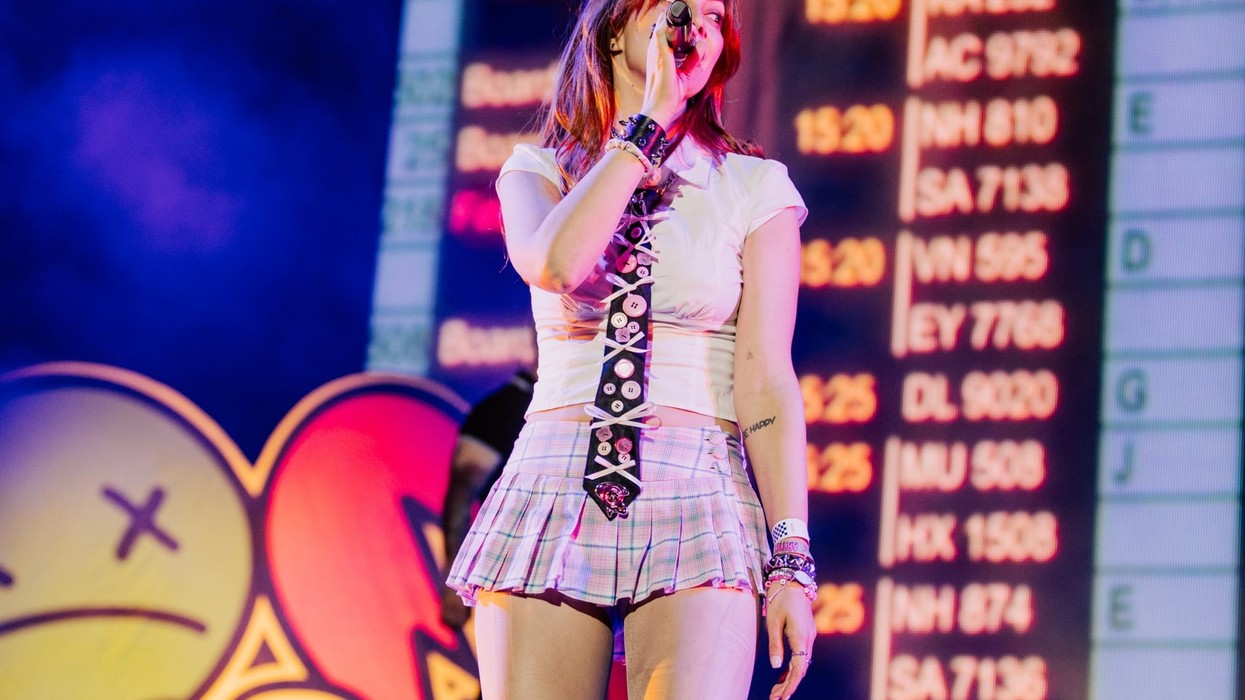
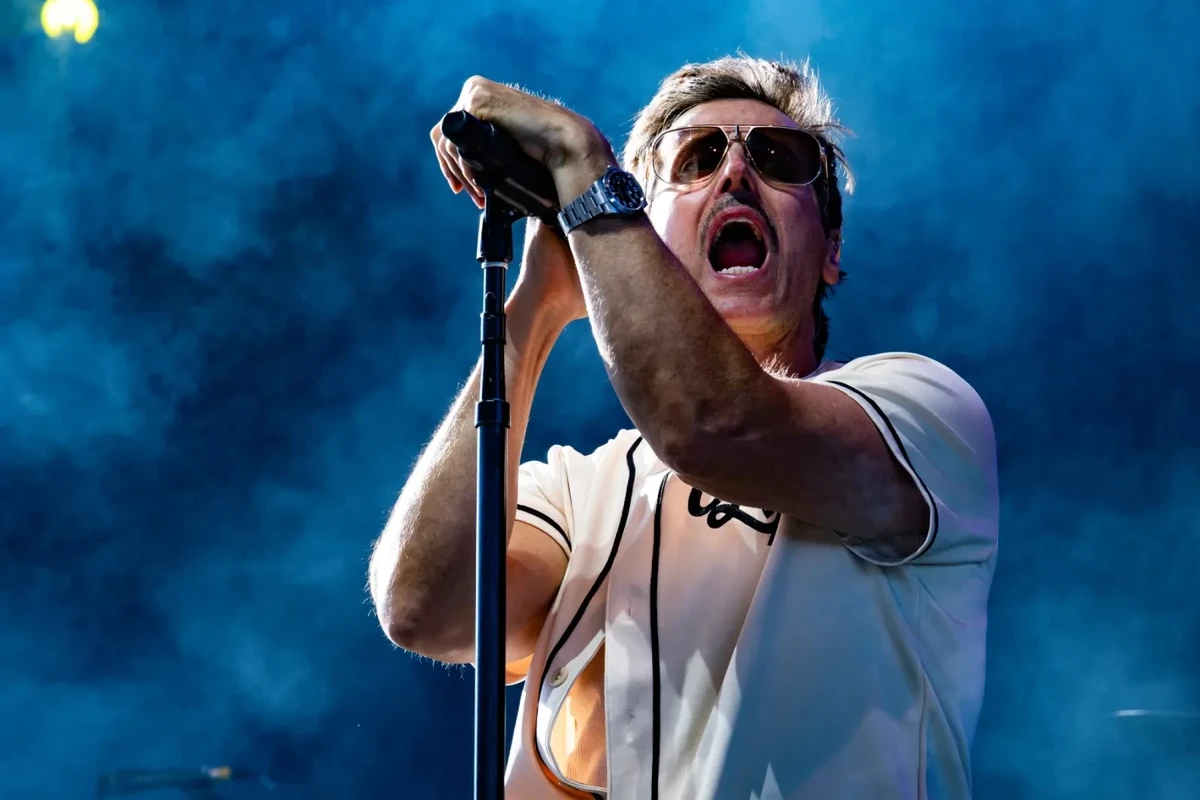
Raine Maida of Our Lady Peace onstage in 2025. The Canadian alt-rock band are on the road to mark a pair of album anniversaries.

Scott Legato/Getty Images

Much like their 1990s grunge and alt-rock contemporaries in America, Canada’s Our Lady Peace were writing and recording murky, sorrowful songs about youthful frustration and adult rage, love lost and societal alienation. But there was always an underlying theme of hope throughout the larger message.

Thirty-plus years since their debut album, 1994’s Naveed, the band is soldiering on, and celebrating their three-decade longevity. On this particular night, it’s onstage at Plaza Live in Orlando, Florida, where Our Lady Peace are playing a sold-out show some 1,300 miles from their hometown of Toronto.


“I don’t think music is defined in years or numbers,” Raine Maida, the band’s lead singer, tells Rolling Stone. “I think it’s defined in energy, and in energy around the band. Right now is some of the best energy we’ve ever had.”

With Maida’s soaring, high-pitched voice and the band’s arena-filling sound, Our Lady Peace pulled off that rare feat for a Canadian group: making a dent across the border in the U.S. market. Singles like “Starseed,” “Clumsy,” and “Somewhere Out There” all cracked the Top 10 of Billboard’s alt-rock chart in the late Nineties and early Aughts, fueled in part by the band’s commitment to never lean too far into the dour.

“As heavy as we get, as dark as we get musically, I think there’s always this hopefulness and this light within it,” bassist Duncan Coutts says.

Onstage in Orlando, Our Lady Peace open with 1997’s hit “Superman’s Dead,” giving the crowd, many longtime fans now sporting gray hair and with their own kids in tow, a jolt back to the past. But don’t dare call it “nostalgia.” “That word makes me want to throw up,” Maida scoffs.

To be sure, Our Lady Peace have always been forward looking, especially at the tail end of the Nineties, when Maida’s lyrics became more cerebral. The songwriter grew skeptical of, even alarmed, by the increasing presence of the internet and big tech. While reading 1999’s The Age of Spiritual Machines, by futurist/scientist Raymond Kurzweil, he became concerned by where society was headed and channeled his anxieties into a new OLP album, 2000’s Spiritual Machines.


“It was this incredible thought-journey on what technology could do, what AI could do,” Maida says of Kurzweil’s book. “But no one knew. I don’t even know if Ray knew. I don’t think he had confidence in the exponential power of technology.”

Five of the tracks on Spiritual Machines were spoken-word excerpts from Kurzweil himself, including the ominous “R.K. 2029.” “The year is 2029,” Kurzweil’s monotone is heard saying on the LP. “The machines will convince us that they are conscious, that they have their own agenda worthy of our respect. They’ll embody human qualities and claim to be human, and we’ll believe them.”

“That’s going to happen in the next three years,” Maida says. “Live music and live sports — that’s what’s going to survive, that communal moment people just run to.”

Although this current U.S. tour is honoring 30 years of Our Lady Peace’s Naveed, Maida is more focused on the recent 25th anniversary of Spiritual Machines. He can’t help but worry if what Kurzweil wrote about, and what he and the band recorded on the album, is all coming true.

“I have teenage kids. I’m seeing in their psyches what [technology] is conjuring up, and it’s stressful,” Maida says. “The juxtaposition of us getting to go celebrate onstage every night with people, and see them crying in the audience and living through those older songs — that’s when art is great, when it’s a reflection of what’s happening in society.”

In May, the four-piece — rounded out by guitarist Steve Mazur and drummer Jason Pierce — released a concert album that aimed to capture the moments that Maida is talking about. OLP30 is a 23-song snapshot of a still vital band with 10 studio albums under its belt. Coutts says they’re already writing for another.

“There’s musical conversation going on, which is important for the life of a band. If you’re not growing, you’re dying,” he says. “[Throughout] our career, we didn’t have the recipe for Coke, we didn’t make the same thing over and over.”

That musical diversity prepared Our Lady Peace for their battle with the machines that Kurzweil warned about. While Maida and the band didn’t start out with such high stakes in mind, he’s embraced the mission — and is sure that the live music experience, like the one in Orlando and on upcoming dates of their tour, will keep us human.

“It’ll be this euphoric experience that’s elevated, because of everything else changing around us,” Maida says. “That is so precious, and we’re starting to feel like that’s why we want to protect it.”
More Stories

Tay Keith Was an Architect of Modern Hip-Hop Whose Blueprints Will Last Forever
Maria-Juliana Rojas for Rolling Stone

Tay Keith Was an Architect of Modern Hip-Hop Whose Blueprints Will Last Forever

The first time I heard BlocBoy JB’s “Look Alive,” Tay Keith’s now-famous producer tagline simply sounded like background noise, hidden in the shadow of Drake’s star power. I was a college student far away from home, and the song was a little piece of my birthplace to take pride in: “901, Shelby Drive, look alive…” The biggest rapper in the world at the time was singing my area code and the name of a street I’ve driven down several times, a Memphis rapper was being newly hoisted onto the Hot 100, and a producer who would be the foundation of all the hip-hop I’d dance to for the next decade was being put on the map.

Keep Reading Show less
The Best Songs of 2026 So Far

The Best Songs of 2026 So Far

Here’s our soundtrack to yet another tumultuous year in the making. Springsteen offered up a protest rallying cry against Trump fascism, Charli XCX gave us a droll, doom-ridden 2026 time capsule, Luke Comb cried in his beer, Olidia Rodrigo got her “Just Like Heaven” on, Lana Del Rey celebrated domestic bliss, and hip-hop legends T.I. and Juveline came through with lordly new hits. This list of our favorite songs of the year so far includes silky bangers, intimate pop maximalism, dance floor epiphanies, indie poetry, and much more. And you can hear them all in this playlist.


Keep Reading Show less
‘Karma’s a Bitch’: Boy George on Why Culture Club Recreated Their Biggest Hit With AI
Dean Stockings*

‘Karma’s a Bitch’: Boy George on Why Culture Club Recreated Their Biggest Hit With AI

More than 40 years after its original release, Boy George and Culture Club have rerecorded their chart-topping hit, “Karma Chameleon,” using AI to recreate the vocal characteristics of the original 1983 recording. Alongside digital formats, the release will be available on vinyl in red, gold and green, the colors referenced in the song, featuring reimagined cover art. The rerecord marks the launch of Artist Included, a music technology company co-founded by Boy George’s manager, Paul Kemsley, and entertainment attorney and film producer Jeremy Rosen. Boy George serves as creative director.

Asked why he decided to recreate the song, Boy George has a simple answer: “Control!,” he tells Rolling Stone. “Having some say over where it goes. ‘Karma Chameleon’ is a secret weapon. It’s a song you starve the audience for because they want to hear it, and live, it’s always been a real pleasure to sing it. But in terms of what it does commercially, it’s like having something really powerful with your name on it, and you have no say about where it goes.”

Keep Reading Show less
Olivia Rodrigo Tells a Beautiful, Crushing Love Story
Illustration by Bijou Karman

Olivia Rodrigo Tells a Beautiful, Crushing Love Story

Proust called love reciprocal torture, Bukowski said it was stranger than grass on fire, and Olivia Rodrigo admitted it was fucking embarrassing. Yet on “Drop Dead,” the opening cut from her new album, here she is in free fall, heart on her sleeve, ready to risk everything as hope and possibility flicker over a magical night — poets, philosophers, and past lessons be damned. The song is a pure dopamine rush, built on heart-thudding percussion and glowing synths, the thrill of romance and anticipation ramping up with each euphoric line: “Kiss me, and I might drop dead.”

This could well be the giddiest we’ve ever heard Rodrigo, who wasn’t afraid to pack her blockbuster albums Sour and Guts with punky, pissed-off energy and wildly relatable, angst-filled anthems. For her third release, it might have seemed like she was ready for a simpler, googly-eyed lover-girl era — except, come on, we all know she’s too witty, too self-aware, and just too talented a songwriter to go with rose-colored confessions about a new relationship.

Keep Reading Show less
The Best World Cup Songs — And the Ones You May Have Forgotten

Ron Galella/Ron Galella Collection/Getty Images; Stuart Franklin/Getty Images; Jean Catuffe/Getty Images

The Best World Cup Songs — And the Ones You May Have Forgotten

Over the years, the songs that provide a soundtrack to the World Cup have become a significant part of the tournament, almost as important as the games. Some anthems have reached far beyond the field to offer a true moment of unity (“Cup of Life,” anyone?) As the 2026 games kick off, we surveyed all of the official FIFA songs and anthems (not soundtrack singles) since 1990, and highlighted the most inescapable bops, along with some that may have gotten lost to time. Check them out below.

‘The Time of Our Lives,’ Il Divo feat. Toni Braxton (2006)

Multi-Grammy Award winner Toni Braxton (C) performs "The Time of Our Lives," the official song of the 2006 FIFA World Cup Germany, at the opening festivities at Munich's World Cup Stadium ahead of the opening 2006 World Cup match between host Germany and Costa Rica, 09 June 2006. Germany went on to win the opening match 4-2. AFP PHOTO / ROBERTO SCHMIDT (Photo by ROBERTO SCHMIDT / AFP via Getty Images)ROBERTO SCHMIDT/AFP/Getty Images

For the 2006 tournament, held in Germany, European classical group Il Divo and R&B icon Toni Braxton leaned into their strengths as musicians with a ballad-like entry into World Cup anthems, switching up the format of hype-up tracks. Against the swell of an orchestra, their voices unite to sing about the “glory and the pain” of making it to the big game.

Keep Reading Show less