
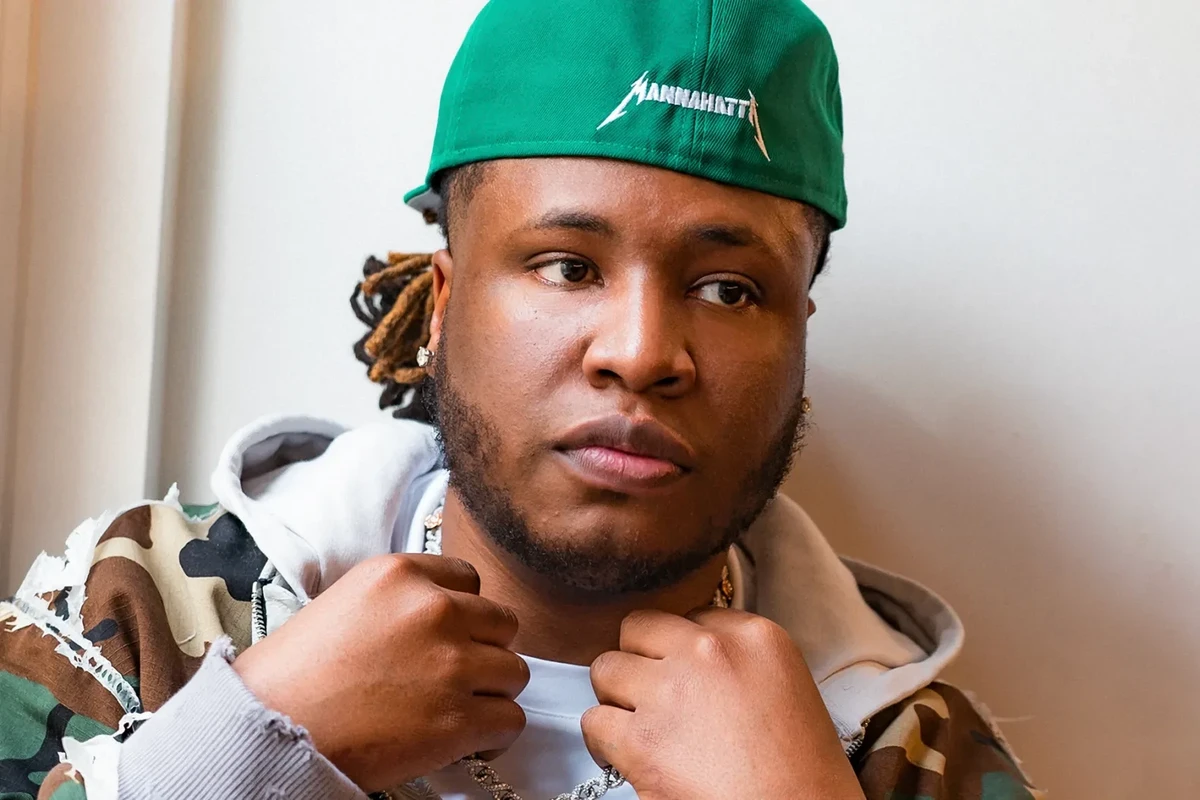

The first time I heard BlocBoy JB’s “Look Alive,” Tay Keith’s now-famous producer tagline simply sounded like background noise, hidden in the shadow of Drake’s star power. I was a college student far away from home, and the song was a little piece of my birthplace to take pride in: “901, Shelby Drive, look alive…” The biggest rapper in the world at the time was singing my area code and the name of a street I’ve driven down several times, a Memphis rapper was being newly hoisted onto the Hot 100, and a producer who would be the foundation of all the hip-hop I’d dance to for the next decade was being put on the map.
Just as J Dilla’s syncopated rhythms helped define much of the best hip-hop and R&B of the late Nineties, and the Neptunes’ bubbly sounds helped carry those genres into the 2000s, Tay Keith was building a time capsule of hip-hop’s late-2010s streaming era before his untimely death on June 18. Police found the 29-year-old producer in his Nashville apartment just hours before his imprint was to be heard again throughout fellow Memphian Key Glock’s latest album, Project X.
Music taste is often formed by one’s surroundings. Tay Keith was born and raised by a single mother in South Memphis, a neighborhood that became an incubator for hitmakers such as Moneybagg Yo, Glock, Blac Youngsta, Pooh Shiesty, producer Hitkidd, and the late Young Dolph. The same Bluff City that held the sound of Stax Records’ buttery soul artists like Isaac Hayes and Otis Redding also held the sharp snares and innovative triplet flow of Three 6 Mafia and their record label Hypnotize Minds. Encapsulated in his tag, “Tay Keith, fuck these niggas up,” is a city often overlooked in the annals of hip-hop; however, his speaker-shattering bass and quick, sharp, staccato snare, reminiscent of Memphis City Schools lunch-table beats made with Number Two pencils, became the secret formula for the genre’s success leading into 2020.
Tay Keith’s signature sound came into mainstream focus with his work on “Sicko Mode,” a song that gave Travis Scott his first Number One hit and took the young producer to the Grammys just months after receiving his bachelor’s degree from Middle Tennessee State University — a feat that he didn’t need for his success, but a feat he wanted for his legacy. “It was important for history, not just the history of my family, but the history of the rap game. People gon’ remember that,” he told Huff Post in 2019.
Months after the awards show, his tagline was brought to an even bigger audience as he and Beyoncé defied the cardinal rule of “don’t fix what ain’t broke” by remixing Frankie Beverly and Maze’s 1981 classic “Before I Let Go.” The Black community’s staple song for every graduation, cookout, wedding, and sometimes funeral was given new life with the heartbeat of South Memphis and Houston’s Third Ward. In an interview with On the Radar Radio, Tay Keith said the record, which he made in a hotel room, was one of his favorites. “It showed the world that I could be versatile,” he said.
Showing the world his versatility was only half of Tay Keith’s intention in his work; the other half was to be a vessel to bring others who grew up like him to the top of the music game, like Sexyy Red. In crafting her 2023 hits “Pound Town” and “SkeeYee,” and flipping Hurricane Chris’ “Halle Berry” to create “Get it Sexyy,” he brought the Midwest rapper to the top of the charts in nearly a year’s time. He talked to Rolling Stone about their musical relationship and how they bonded over listening to the same music from their vantage points in Memphis and St. Louis: “A couple of weeks ago we was in the studio and she played this song…It’s this song called ‘Gutta Bitch’…. I couldn’t believe it. I’m like, ‘Oh, my fucking God, how does she know this shit?’ We just had that chemistry [from] a lot of old songs and shit that we just grew up to.”
With Sexyy Red’s ride to the top came a lot of criticism. The tattooed rapper, who doesn’t mince words and has been known to rap about “coochie” and “booty hole,” didn’t fit into the idea of respectability politics often applied toward famous Black women. Tay Keith, already established at the top of the music game, made sure to protect her throughout her ascent. “I feel like just me embracing Sexyy in spite of people, how people really feel or felt about her… just me being behind her 110 percent shows I really care for her,” he said in that same RS interview.
In his final years, Tay Keith was expanding his range and working with artists in different genres, namely country, as well as building up the next generation of producers with his label, Drumatized. Despite just finishing production on a Jack Harlow and Doja Cat song, his work with budding talent was the bullet point he was most proud of when we met for the first time last March during an office visit. The well-known producer had a shy demeanor, allowing his label partner Cambrian Strong to take the lead in explaining what they were working on next. Tay Keith spoke up the most before playing unreleased music from artists including Key Glock and country star Reyna Roberts, ensuring that his art was shared on a secure network safe from leaks.
In a pinned Instagram post from 2021, Tay Keith wrote a tribute to his mother, Toya, who died that year after battling cancer. In the caption, the producer proclaimed that his mom would live forever through him, a vow that feels eerie now that he has also left this physical world. But it is a promise that still holds true. Tay Keith’s name will take on eternal existence in the music that will close out the best parties of our lives; it will live in the producers who will rise to the top because of the foundation he built for them; it will live in the achievements of Drake, Travis Scott, Key Glock, and Sexyy Red; and it will live in the streets of Memphis, where he crafted a new blueprint of success for those who walked similar journeys.






 Anthony Orosz*
 Jeff Yeager*
 Jeff Yeager*
 Brett Murray*
 Brett Murray*
 Jeff Yeager
Tay Keith Was an Architect of Modern Hip-Hop Whose Blueprints Will Last Forever
With the catchiest producer tag in hip-hop, the late producer spent his final years building foundations beyond the genre