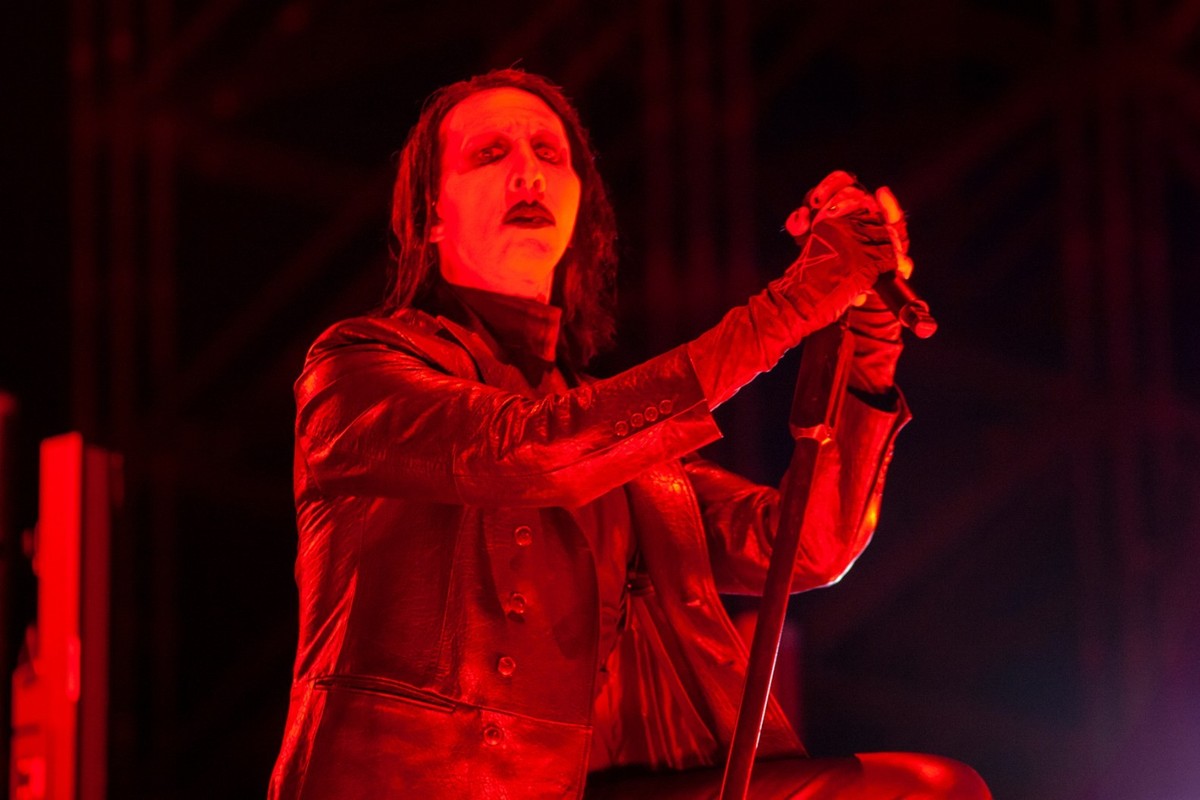

A Los Angeles County judge granted a trial date Wednesday to the woman who claims Marilyn Manson sexually assaulted her at his West Hollywood home studio in 2010 and later subjected her to physical and emotional abuse when she worked as his assistant.
At a court hearing, Judge Steve Cochran noted the case had “traveled a windy road” after it was first filed in 2021 and then dismissed and revived twice. He said he was willing to grant an expedited date if plaintiff Ashley Walters wanted one. When Walters’ lawyer requested a date in November of next year, he quickly set the case for a jury trial on Nov. 15, 2027. While that date might not sound expedited, it’s relatively fast for the county, where new trials are routinely being set for mid-2028.
“We’re confident the case will never get to trial after the court hears our upcoming motion for summary judgment,” the musician’s lawyer, Howard King, said in a statement after the hearing.
In her lawsuit, Walters alleges Manson, whose real name is Brian Warner, pushed her onto a bed in May 2010, pinned her arms, and tried to kiss her before moving behind her, biting her ear, and forcing her hand into his underwear. She says she later accepted a job as his assistant after he suggested they could collaborate professionally. She claims he went on to whip her, throw plates at her, force her to stand on a chair for long periods, and hurl her into a wall during drug-fueled rages.
The long-running case has survived multiple challenges by Warner. A different judge dismissed it as untimely in May 2022, but an appellate panel later revived it, allowing Walters to try to show that trauma-induced memory suppression delayed her filing. Judge Cochran dismissed the case again in December 2025 after finding Walters failed to make that showing.
But Cochran reversed that decision in January after Walters invoked a new California law, AB 250, that opened a two-year window for certain previously time-barred sexual assault claims. In June, Cochran rejected Warner’s latest effort to dismiss or narrow Walters’ third amended complaint.
Warner’s lawyers argued Walters’ allegations did not qualify for revival under AB 250 because she could not show she was physically restrained during the alleged sexual touching. Cochran said the dispute was too fact-specific to resolve at the pleading stage and allowed the case to proceed, leaving Warner free to challenge the claims later.
Beyond her core allegations, Walters also alleges she secretly brought food and drinks to Warner’s “starving and distraught” girlfriends while they hid in his home and that she witnessed Warner throw a prop skull at his former fiancée Evan Rachel Wood with enough force to leave a large welt. Warner has denied wrongdoing.
Walters first stepped forward in February 2021 as multiple women, including Wood, accused Warner of physical and emotional abuse. Rolling Stone later published a lengthy investigation in late 2021 after speaking with more than 55 sources. Warner, 57, reached out-of-court settlements with two accusers, including actress Esmé Bianco. He previously dropped defamation and harassment claims against Wood.
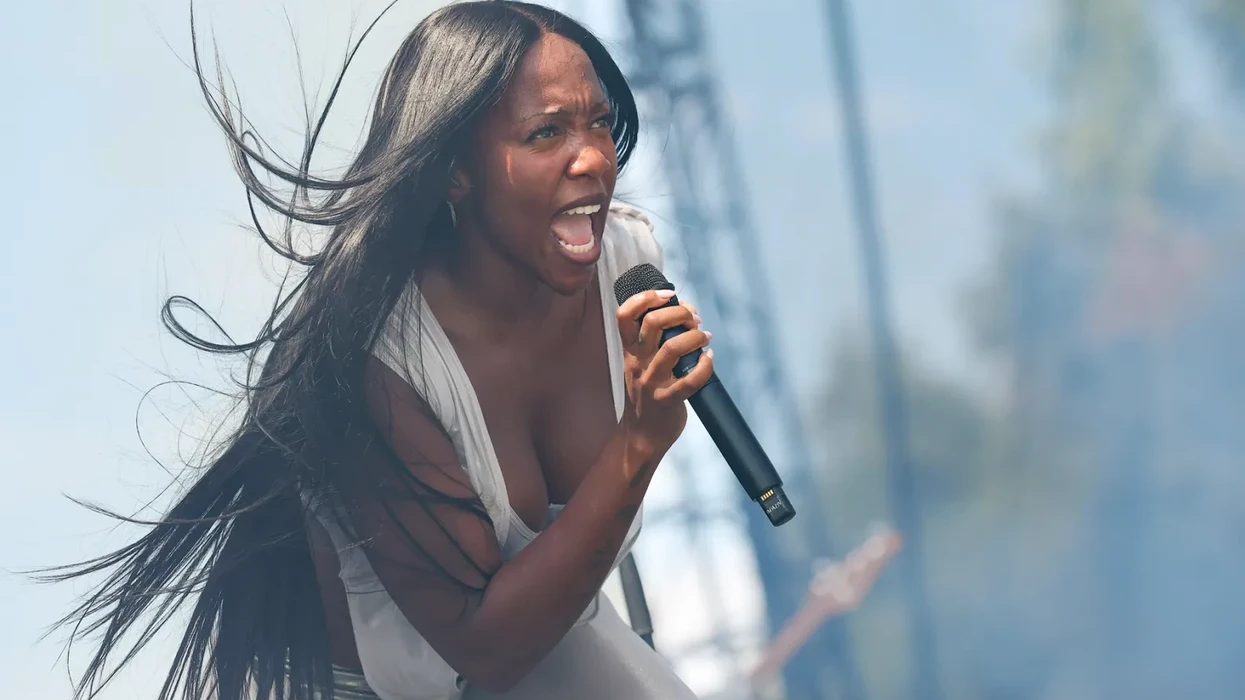


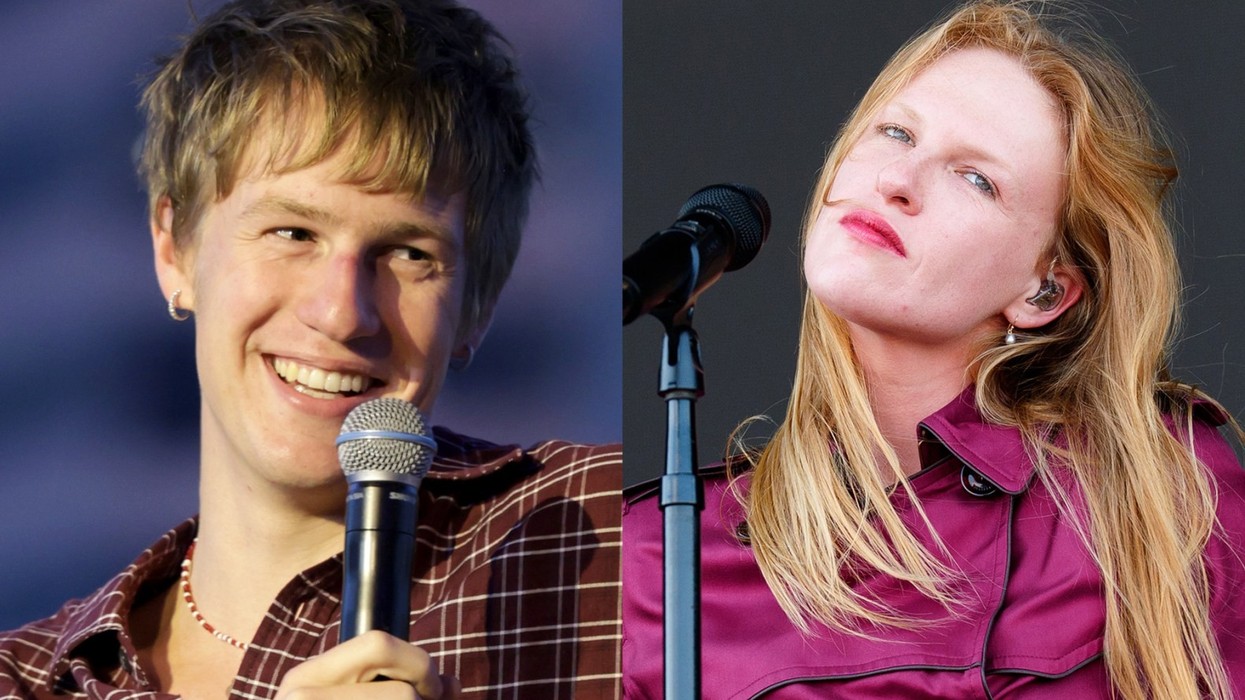


Taylor Swift and Bad Bunny in a split image
Taylor Swift and Bad Bunny Dealt With Trump Quietly. It’s a Smart Move
Taylor Swift and Bad Bunny are both major superstars — and they’ve shared some parallels in their careers and discographies for several years. Now, they’re even using the same playbook to deal with taunts and baiting from Donald Trump and the White House’s social media teams.
Since Trump took office during his second term, he and his administration have been using social media as part of their communication strategy. The propaganda-like, rage-bait-style clips often lean into internet culture and use popular music to make light of Trump’s most egregious actions, like his immigration policy and war-hungry foreign policy.
Olivia Rodrigo, Katy Perry, Ariana Grande, and Noah Kahan are just some of the artists who have had their music used in these videos without their permission — and vehemently spoken out against these actions and against the president. In the past couple of weeks, the Trump administration seems to have wanted to provoke a response from two of the world’s biggest superstars: Bad Bunny and Swift.
On July 30, the official White House TikTok used “La Mudanza” for a particularly tone-deaf video about immigration that celebrated the number of deportations under Trump. A week later, a video with text that said, “mood because it’s August and Donald Trump is your president” set to Swift’s “August” was uploaded by Team Trump, the president’s official campaign account. The caption was an overt provocation: “I’m sure Taylor Swift is going to be super excited we used her song,” it read. Days later, another clip from the same account featured an edited version of Swift’s Red album cover with text that said, “Did you know that Taylor Swift wrote a whole album about the color of the Republican Party?”
Neither musician has released a public statement denouncing the use of their music in Trump’s videos. Instead, two of the world’s biggest superstars quietly removed their songs from videos posted by official accounts linked to the Trump administration. (It’s unclear if there is a TikTok feature that allows selective sound muting on videos or if the respective teams reached out to the social media accounts directly.) The tracks are still available for other TikTok accounts to use in their videos, making their silence a pointed — and smart — approach. Both Bad Bunny and Swift seem to recognize the president and his administration’s tactics for what they are: antagonizing moves that keep the Trump conversation centered on his social media presence, rather than his actual policies and the harm they commit. Why would they add their star power to the conversation and stoke the flames when that’s exactly what the White House appears to want?
Some people argue that celebrities should wield their platform to denounce Trump at any chance if they are truly not politically aligned with his MAGA politics. But because they hold so much influence, these superstars need to be strategic about how they use it.
Benito, in particular, has been incredibly outspoken about his politics. He stood on two of the world’s biggest stages and used them to voice pro-immigration messages, denounce Trump’s policies, and highlight Puerto Rico as it struggles with the effects of U.S. imperialism. “Before I say, ‘Thank God,’ I’m going to say, ‘ICE out,’” the Puerto Rican superstar said at the 2026 Grammys. “We’re not savage. We’re not animals. We’re not aliens. We are humans and we are Americans.” Last summer, Bad Bunny’s music video for “Nuevayol” used a voice that sounds a lot like the president’s to deliver a pro-immigrant message. “I made a mistake. I want to apologize to the immigrants in America. I mean the United States. I know America is the whole continent,” the voice bellows out of a Seventies radio toward the end of the video. “I want to say that this country is nothing without the immigrants.”
Fans were convinced that Benito would speak out against the official White House TikTok account when it used one of his most political songs. But commenting on the video would only blow up the discussion for a wider audience. When Rodrigo, Perry, Grande, and Kahan made public comments, spokespeople for the White House used the opportunity to spread hateful rhetoric. “We’ll say this one last time: what’s actually barbaric, inhumane, and heinous are the criminal illegal aliens who have injured and murdered innocent American citizens,” Abigail Jackson said in a statement to Rolling Stone after Grande spoke out. It’s the antithesis of what Benito said during his Grammys speech this year: “The only thing more powerful than hate is love.”
Swift, on the other hand, has dealt with Trump and the right-wing’s instigations for years, each one crazier than the last. The TikTok videos from the last week aren’t even the first time that the administration has used the singer’s music for social media videos. Last fall, both the official White House TikTok account and Team Trump used songs from Swift’s then-newly released The Life of a Showgirl in separate videos. One plucked the lyrics “pledge allegiance to your hands, your team, your vibes” from “The Fate of Ophelia” to celebrate Trump, Vice President JD Vance, and the first and second ladies. The others boasted about Trump by using “Father Figure” and honored Melania Trump’s Patriot of the Year award with “Opalite.” As of Aug. 10, the audio is not available under all of these specific videos.
The pop superstar has not spoken publicly about these instances. But she has made her disdain for Trump clear. Over the years, Swift has criticized Trump’s autocratic leadership. On X, she wrote “we will vote you out” and endorsed Joe Biden and Kamala Harris in the 2020 and 2024 elections, respectively. In 2019, Swift told Rolling Stone, “There’s literally nothing worse than white supremacy. It’s repulsive. There should be no place for it.”
Even though she’s shared her liberal viewpoints on issues like abortion, LGBTQ+ rights, and racial inequality, Swift has still faced ridiculous claims of being MAGA-aligned and folding in right-wing dog whistles to her music — and that’s without ever naming Trump. If Swift were to make a statement about her music being used by the Trump administration, the attention-seeking president would absolutely revel in it. Getting Swift and Bad Bunny to weigh in is exactly the type of headline grabber he would love to draw attention from his remarkably unpopular presidency.