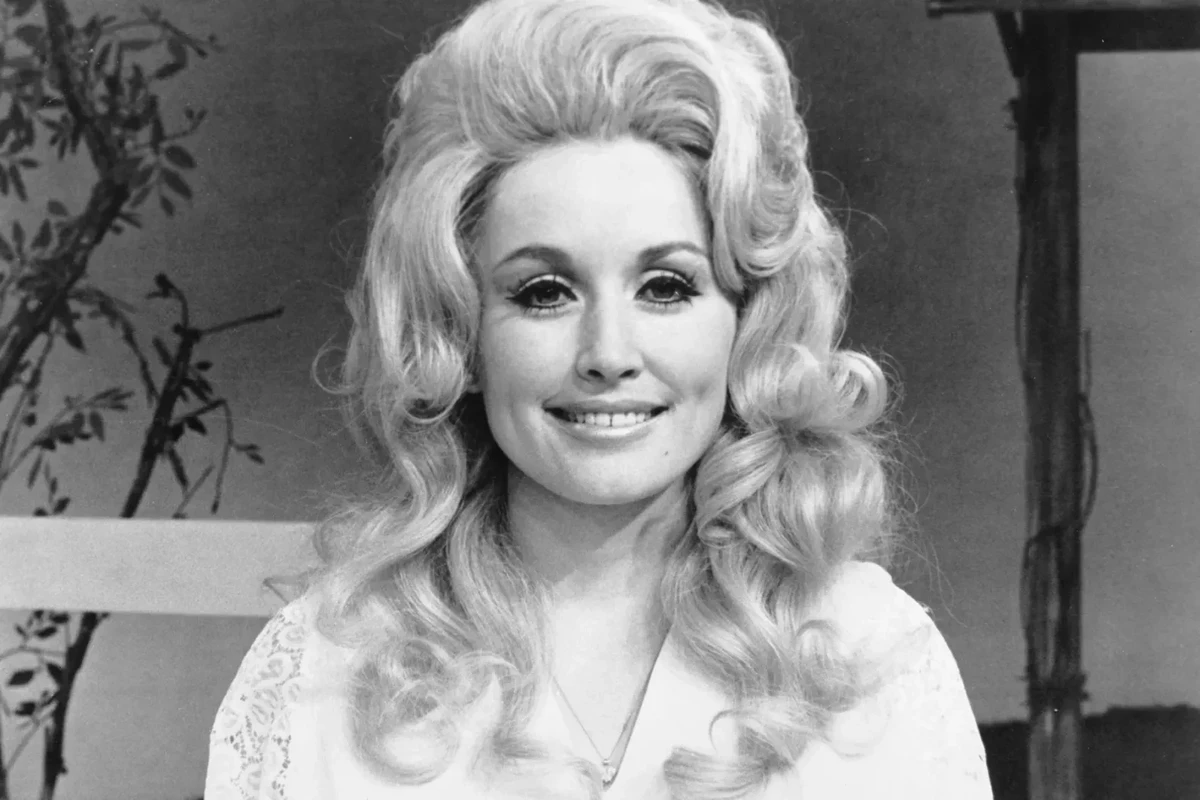

Dolly Parton turns 80 years old today, but somehow she continues to possess all the vitality she had when she first arrived in Nashville from her native Sevierville, Tennessee, back in the Sixties. In honor of her milestone birthday, we publish — for the very first time — this interview about the making of her 1971 album Coat of Many Colors, which gave the Country Music Hall of Fame member her signature autobiographical song. This story was originally presented as part of Rolling Stone‘s “500 Greatest Albums” podcast series.
Dolly Parton has a number of songs that could be considered her signature: the warning “Jolene,” the tireless “9 to 5,” and the royal ballad “I Will Always Love You.” But none come close to “Coat of Many Colors,” her 1971 autobiographical tale about growing up in Appalachian poverty and the hand-sewn clothes that Parton and her siblings would wear to school. To this day, it summons visceral emotion, both in the woman who sang it and in the country music fans who hear it.
But the song also represents Parton’s emergence as an all-around star: not just as a singer, but as a songwriter.
“I was always trying to progress and try to do more, try to grow, and try to express myself musically as much as I could in every album that we did, but still stay true to myself,” Parton tells Rolling Stone. “I always take myself more seriously as a songwriter than I even do as a singer.”
By the time Parton walked into RCA Studio B in 1971 to record Coat of Many Colors, she had already been living in Music City for seven years. She moved to the city intending to be a songwriter, not a singer, but it would take a while for Nashville to recognize Parton as a great writer.
Once in Music City, Parton met a figure who’d play a pivotal role in her life, Porter Wagoner, a veteran country hitmaker who had his own TV variety show. Wagoner gave Parton her big break by casting her on his show, and the pair became frequent duet partners. They released 13 duet albums and won the Country Music Association Award for Vocal Duo of the Year three times. Wagoner even helped Parton pick which songs to record and was a looming presence in the studio.
“Porter was always involved in the production and working with the engineers and working with the musicians, making sure that they got it the way that that he wanted,” she says.
Parton ended her musical partnership with Wagoner in 1974, writing him a heartfelt goodbye with “I Will Always Love You.” But when Parton recorded Coat of Many Colors in 1971, she was already starting to break away. To fully come into her own as a solo artist and songwriter, Parton knew she had to write the bulk of the album, and it all started with the title track, a clear-cut origin story about her childhood in East Tennessee.
Parton grew up poor in Sevierville, Tennessee, near the Great Smoky Mountains. The memory of her one-bedroom cabin was still fresh in Parton’s mind when she moved to Nashville in 1964 after graduating high school. “We didn’t have anything,” she says. “Mama used to sew all of our quilts and curtains for the windows, remake our clothes, and make clothes out of feed sacks or scraps.”
In “Coat of Many Colors,” Parton sang in plainspoken language about her poverty. The song draws on the biblical tale of Joseph and his treasured garment, the coat of many colors.
“I went to school thinking I looked like Joseph,” she says, unaware that she was about to be laughed at. “I was upset with my mom, and I was crying because I felt she had told me a fib. Mama said, ‘I don’t want to ever hear you say that we’re poor. We are rich in kindness and love and understanding.’”
Grammy-winning songwriter Brandy Clark says “Coat of Many Colors” succeeds because it’s so universal. “You’ve got family, you’ve got religion, you’ve got honesty, and you’ve got poverty, and also being made fun of,” she says. “I think if you haven’t had one of those five things go on, you probably haven’t lived.”
Parton first wrote the lyrics to “Coat of Many Colors” on a tour bus with Wagoner. The flashy country singer had his suits with him in a dry cleaner’s bag and, when inspiration struck, Parton snatched the receipt from the bag and began scribbling. “I just grabbed the tag … and I started writing ‘Coat of Many Colors’ on it. I finished the song pretty much on that,” she recalls.
Despite honoring Wagoner’s request to cut some of his songs, Coat of Many Colors is distinctly Parton’s album, and you can hear her take agency of her story. Rolling Stone writer Chet Flippo described it as “the first true flowering of Dolly Parton’s faltering steps to emerge as a free musical soul and a major songwriter.”
Along with the title track, she wrote “Traveling Man,” about a young woman who makes plans to run off with a salesman, only to have her mother steal him first. Clark recognizes clues in the song, as well as in another Coat track, “She Never Met a Man She Didn’t Like.”
“She was working her way to ‘Jolene,’” Clark says of the songs.
The spirit of Parton’s native Smoky Mountains is woven throughout the album. It’s in the lyrics of the title track, in the song “Early Morning Breeze,” and in the actual music of “My Blue Tears,” a bluegrassy song that uses nature as a metaphor for heartbreak.
“Those kind of songs are like a tribute to my Tennessee mountain home,” Parton says. “I wanted to get that old world sound with it.”
“It is mountain music,” Clark echoes. “And that’s another theme that runs through Dolly’s catalog. I always want to listen to Dolly in the fall, because I love to go to Gatlinburg and Pigeon Forge when the leaves are turning. Dolly has figured out a way to make her music feel like that part of the country.”
Sonically, there’s one outlier on the mostly acoustic album: “Here I Am” is more funk-rock than country music. It’s also the most aggressive example of Parton owning her art.
“I wanted to do something a little more bluesy or little more rock, and I remember kind of having to fight a little bit: ‘That’s not really country enough,’” she recalls of the recording session. “And I thought, ‘Yeah, but it’s soulful.’”
Country singer Carly Pearce, who considers herself a Dolly Parton superfan, says that Parton’s most open secret is in the simplicity of her lyrics. “She just has a way of writing that is really to the point,” Pearce says. “I’m reminded when I try to overcomplicate things, that these songs really have stood the test of time, and they were quite simple.”
In the end, the same can be said of Coat of Many Colors. It remains an essential album because it represents country music’s mission statement: simple storytelling that anyone can relate to.
Coat of Many Colors peaked at Number Seven on Billboard‘s Country Albums chart. It also scored Parton her first Album of the Year CMA Award nomination. Looking back, Parton says the album accomplished exactly what she came to Nashville to do — be a songwriter. She’s a global superstar now too, but the title track will always be a part of her story, a glimpse at who she was and who she was about to become. It’s even been adopted as an anthem of gay pride, thanks to its themes of acceptance and love.
“I think people just loved the song, and then there’s a lot of fun, good little songs in the album,” Parton says. “And it’s my early days. A lot of my newfound fans like to go back and see who I am, who I was. And that little coat, people relate to it for many different reasons.”