
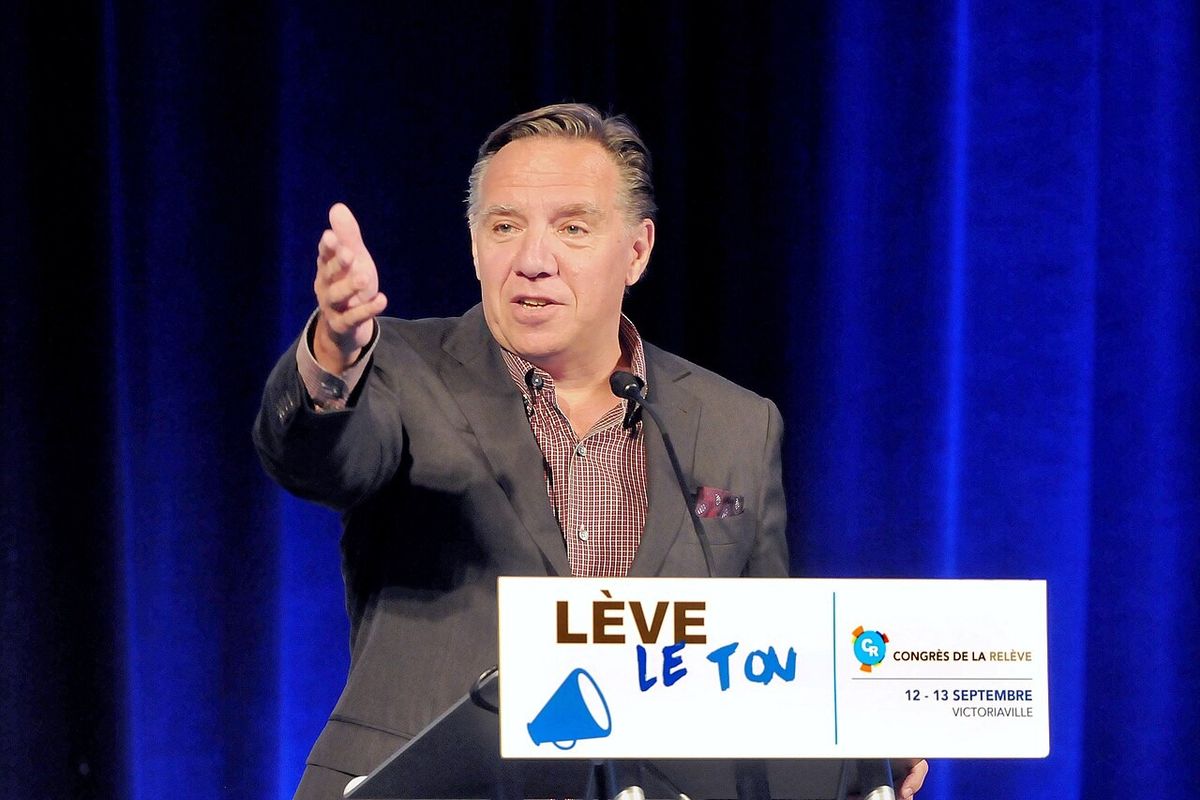

The Premier of Quebec, François Legault, announced his resignation as head of the government and leader of the Coalition Avenir Québec (CAQ) during a surprise press conference held this morning, January 14, in Quebec City. After more than seven years at the helm of the province, Legault said that the growing desire for change expressed by an increasing number of citizens made a renewal of political leadership necessary.
Legault will remain in office until his party selects a successor, but he will not lead the CAQ into the provincial election scheduled to be held before October 5, 2026. His departure comes ahead of an electoral campaign that is shaping up to be particularly uncertain, as polls now show momentum building for the Parti Québécois and other opposition parties, while the CAQ languishes at historically low levels of support.
The resignation comes amid a tense political climate. Over the past year, the CAQ government had faced a series of ministerial departures and internal criticism, notably over the management of the health-care system and the controversial Bill 2 on physician compensation, which led to the resignation of Health Minister Christian Dubé. Legault has also faced sustained criticism over his policies on secularism and immigration, as well as his handling of the COVID-19 crisis, though these issues did not prevent him from securing a second majority mandate.
The founder of the Coalition Avenir Québec, Mr. Legault was previously a successful businessman, notably having founded Air Transat.
Outside his party, the announcement has reignited debates about the future of governance in Quebec, the province’s political identity, and voter priorities just months before the election, against the backdrop of particularly strained political relations with the United States and the rest of Canada.












War Is Peace: Trump’s Regime-Change Reversal