Skip to content
Search

‘Exit 8’ May Be the Best — and Creepiest — Video Game Adaptation Ever

A popular Japanese game involving an endless loop is turned into an existential horror film perfect for Tokyo commuters and Brooklyn sad dads

‘Exit 8’ May Be the Best — and Creepiest — Video Game Adaptation Ever

Yamato Kochi in ‘Exit 8.’

Neon

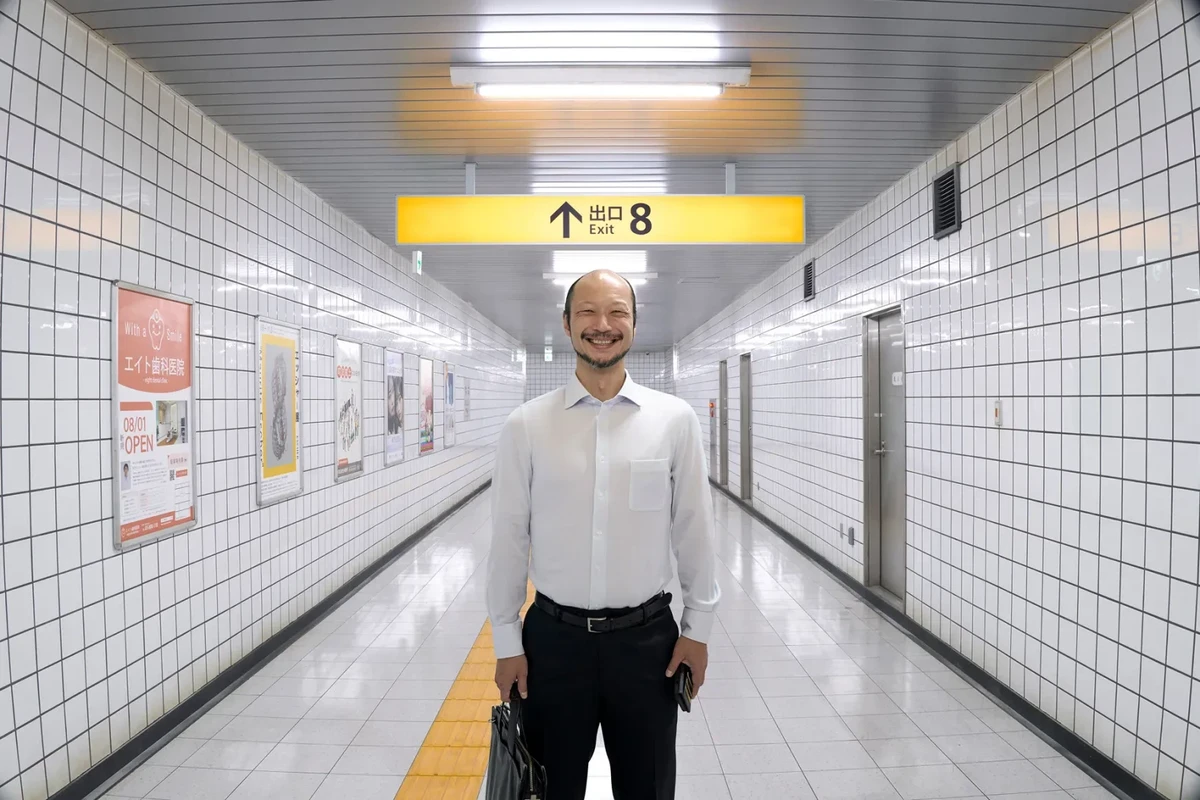
Go up the stairs, and turn the corner. You’re at one end of a long subway corridor — the kind of bland, generic space citydwellers tread through day in and day out. The walls and floors are colored in the overlit, antiseptic white associated with Kubrick films and Apple stores. A man with a briefcase strolls toward you and passes you on your right. A sign hanging from the ceiling points toward an exit. Posters for dentist offices and museum exhibits line one side; three metal doors on the other. Walk to the far end. Turn left. Make a right. Follow the arrows. A yellow sign informs you are on Level 1.

Turn the corner again, and… you’re in the same corridor as before. Same man with the briefcase. Same sign. Same posters. Same doors. Make the same left, then the same right. If you’re lucky, the yellow sign says you’re now on Level 1. If you’re unlucky, it still says Level 0. But now, there are also a set of “rules” next to it. You’ll once again find yourself in the same corridor. Pay close attention to your seemingly nondescript surroundings. If things appear “normal,” proceed forward. Should you see an anomaly — anything that seems different or off from that initial Point-A-to-Point-B trek — turn around immediately. Despite reversing course, you’ll end up in the same place. Round and round you’ll go. Do this successfully enough times, and you’ll eventually make it to Level 8, where the outside world awaits. Fail to heed the instructions, and you’ll be trapped in this urban purgatory with no way out.


This is the premise of The Exit 8, a Japanese video game made by Kotake Create that, as the millions who played it will attest, turns a commuter’s endless circling into a thrilling, maddening first-person-shooter minus the shooting. It wasn’t the kind of gameplay that screamed no-brainer movie adaptation, which did not stop filmmaker Genki Kawamura from making one anyway. And, in what can only be described as a minor miracle, he’s not only completely translated the eerie feeling of the source material with both fidelity and enhanced it with a narrative of sorts (as well as dropping the qualifier). Kawamura has also given us a genuinely genius take on the waking existential crisis that is 21st century living. Hell is no longer other people. It’s being stuck in a perpetual reset, a forever-glitching matrix, an endless sensation of slowly going nowhere again, and again, and again.

That, of course, and the occasional ghostly presences, unsettling cries, and blood dripping from the ceiling. Kotake Create’s game threw a number of different anomalies at players, ranging from the innocuous (wait, wasn’t that door handle originally off to the side instead of dead center?) to creepy-as-fuck (wait, why did that door suddenly creak open and what’s lurking in the darkness behind it!?). The movie occasionally replicates the first-person P.O.V. but adds in a third-person Virgil, in the form of the Lost Man (Kazunari Ninomiya). When we meet him, he’s just another anonymous guy on another anonymous subway, ignoring a yuppie prick yelling at a mother with a fussy baby. Better to simply scroll through his phone and turn up the volume in his headphones. The fact that he’s listening to Ravel’s “Boléro” — a song that keeps repeating a two-part melody and becomes more rhythmically intense as its goes along — is a preview of what’s to come.

When his reverie is interrupted by an urgent phone call from his girlfriend and he’s forced to start thinking about a world outside of his digital cocoon, Exit 8 introduces the closest thing it has to a storyline. Should he stay or should he go? The irony is that the station itself is the one really calling the shots, forcing the Lost Man to amend the question: Can he stay or can he go? Exits are not a right, but a privilege. They must be earned.

Kazunari Ninomiya and Naru Asanuma in ‘Exit 8.’Neon

Once our tour guide realizes the metaphysically impossible scenario he’s stuck in, he begins to memorize every minute detail and dutifully ticks off everything whenever he enters a new déjà vu round. A fan of the game, Kawamura has said he wanted to make viewers feel like both a player and a spectator — the walkthrough vibe is strong here — and he’s unafraid to toggle and fiddle with P.O.V.s for effect. (The filmmaker’s previous movie, a 2022 adaptation of his own novel A Hundred Flowers, brilliantly uses perspective to replicate the mindset of an elderly woman suffering from dementia. We highly recommend you check it out ASAP.) He’s also included a host of elements that fellow Exit-heads will recognize, notably the Walking Man; he’s played by theater actor Yamato Kochi as the world’s most disturbingly gleeful RPC, and that preprogrammed smile will haunt your dreams. He, too, is given a backstory of sorts, which adds an extra tragic element to the proceedings. Let’s just say that every decision you make counts.

Once an unnamed boy (Naru Asanuma) shows up and the Lost Man realizes that this mysterious kid is not an anomaly, Exit 8 begins to adds elements of pathos and paternal anxiety to its free-floating paranoia. You eventually come around to the fact that Kawamura has been slyly fashioning a parable hidden in plain sight, which just happens to be in the guise of a modern horror flick paying homage to The Shining, Ugetsu, and several other dread-conjuring cinematic touchstones. By the time we loop back to our starting point, passivity is no longer an option. You enter this unlikely, but undeniably extraordinary take on a video game ready to be spooked. You exit it with the sensation that you’ve just witnessed a waking nightmare perfect for Tokyo commuters and Brooklyn sad dads alike.
More Stories

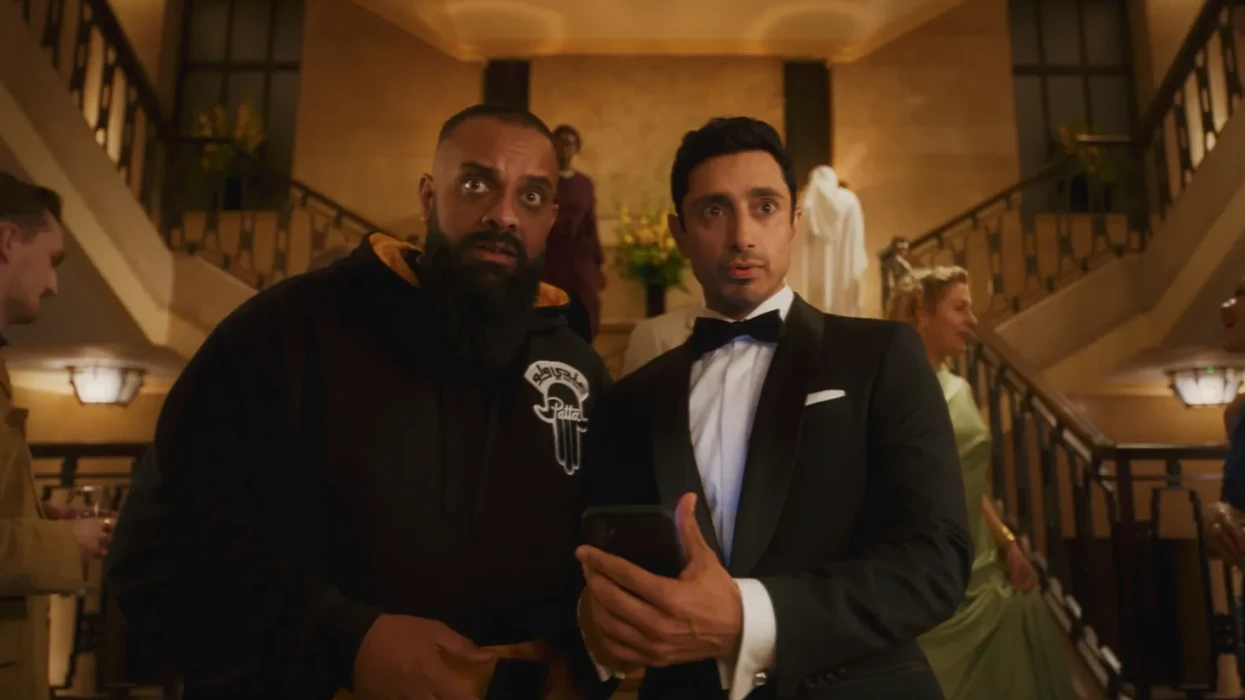
Riz Ahmed’s ‘Bait’ Is About James Bond — But Mostly About Shame

Riz Ahmed, right, with Guz Khan in 'Bait.'

Amazon Studios

Riz Ahmed’s ‘Bait’ Is About James Bond — But Mostly About Shame

Riz Ahmed says the perfect Eid, the celebration at the end of Ramadan, is a gorgeous morning filled with fast-breaking, family, and peace. Unfortunately, that Eid doesn’t exist in real life.

“It’s completely unrealistic!” Ahmed tells Rolling Stone by Zoom from London. “First of all, on the perfect Eid, everyone agrees what day Eid is and there’s no quibbling over it. My Eid clothes I have pre-chosen, ironed, set out the night before, and the shalwar kameez that I’m wearing is not something that was sent over from Pakistan by an auntie that is three sizes too big with the creases down the middle I can never iron out. I get to the mosque on time and there isn’t a crazy overflow onto the pavement and I don’t miss the prayer. The rest of it normally does happen because you just go and see family, but it’s that morning pocket. It’s always carnage.”

Keep Reading Show less
The Music Industry Is Sending Its Stars to Hollywood

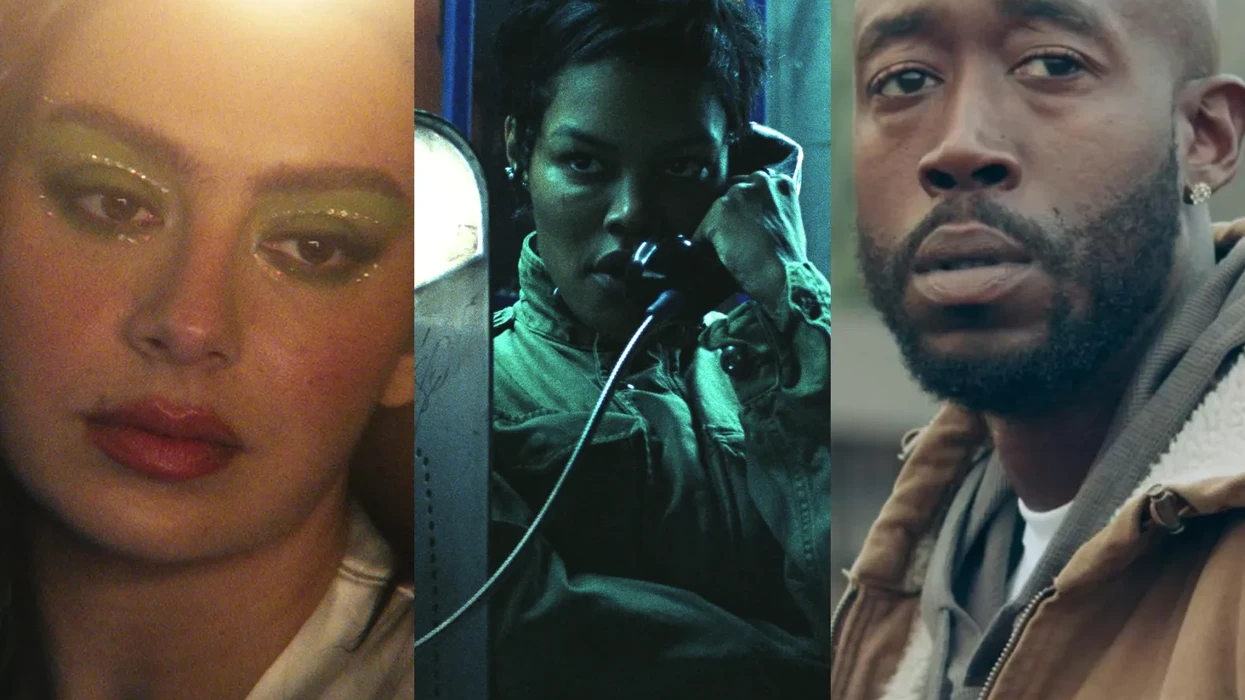
Charli XCX in ‘The Moment’; Teyana Taylor in ‘One Battle After Another’; Freddie Gibbs in ‘Down With the King’

A24; Warner Bros. Pictures; Inside Voices

The Music Industry Is Sending Its Stars to Hollywood

When her career began, it would have been hard to imagine Teyana Taylor winning a Golden Globe before a Grammy. But there she was at the Beverly Hilton, taking the stage after winning Best Supporting Actress, visibly stunned as she thanked her family, her director Paul Thomas Anderson, and the Black women who paved the way.

“We belong in every room we walk into,” she said. “Our voices matter and our dreams deserve space.”

Keep Reading Show less
‘America’s Next Top Model’ Warped Her Story. Dani Evans Is Having the Last Word

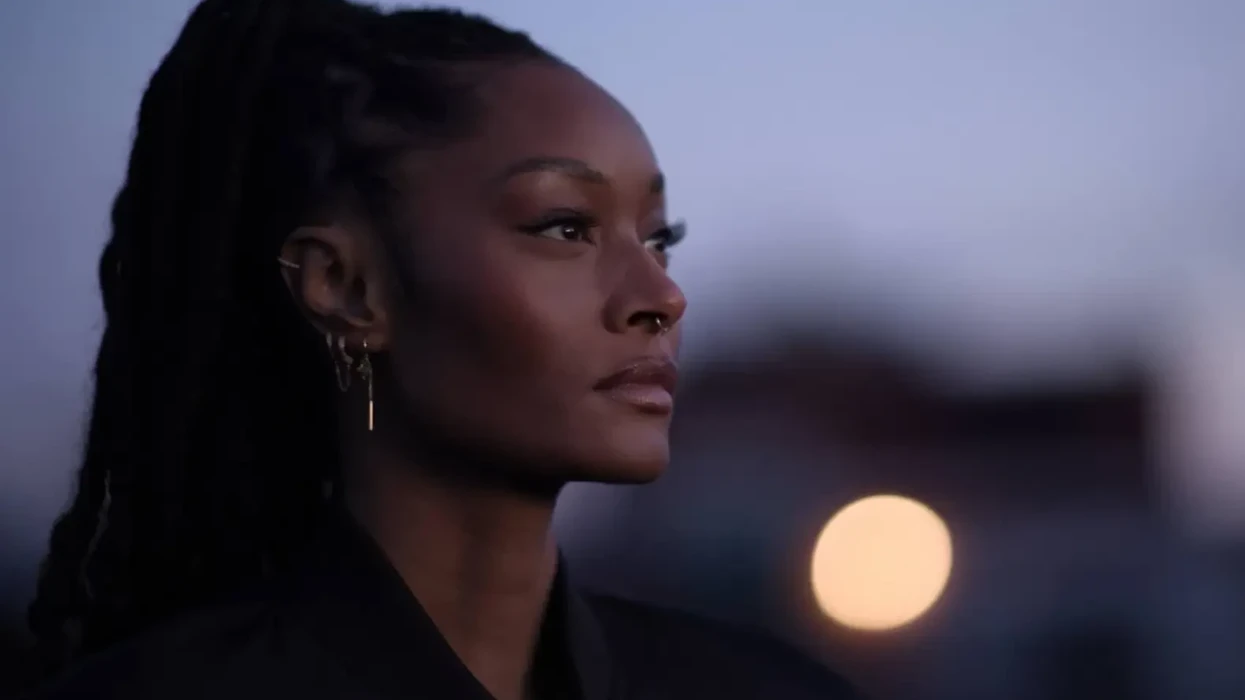
Dani Evans

Courtesy of Netflix

‘America’s Next Top Model’ Warped Her Story. Dani Evans Is Having the Last Word

Dani Evans has learned to trust her gut instinct. It’s a habit she’s developed since the events that took place 20 years ago on America’s Next Top Model and after she walked away with the grand prize, only to learn that it had come with a hefty price. “If something within me is a ‘no,’ then I can’t give my attention to it, no matter what it is,” she tells Rolling Stone. “That’s how I’ve built my personal ethos.”

In 2005, Evans saw winning the hit reality TV show as a one-way ticket out of Little Rock, Arkansas. At the time, ANTM was an entertainment juggernaut. Evans says she knew the series — which had young models living under one roof and competing in high-stakes photo shoots to win a modeling contract — was made to humiliate the girls on-screen, but her brother convinced her it was an opportunity to fulfill her dreams as a model in New York.

Keep Reading Show less
‘The Bride!’ Is a Monster Mash-Up of Sex, Violence, Resistance, and Ideas. Many, Many Ideas

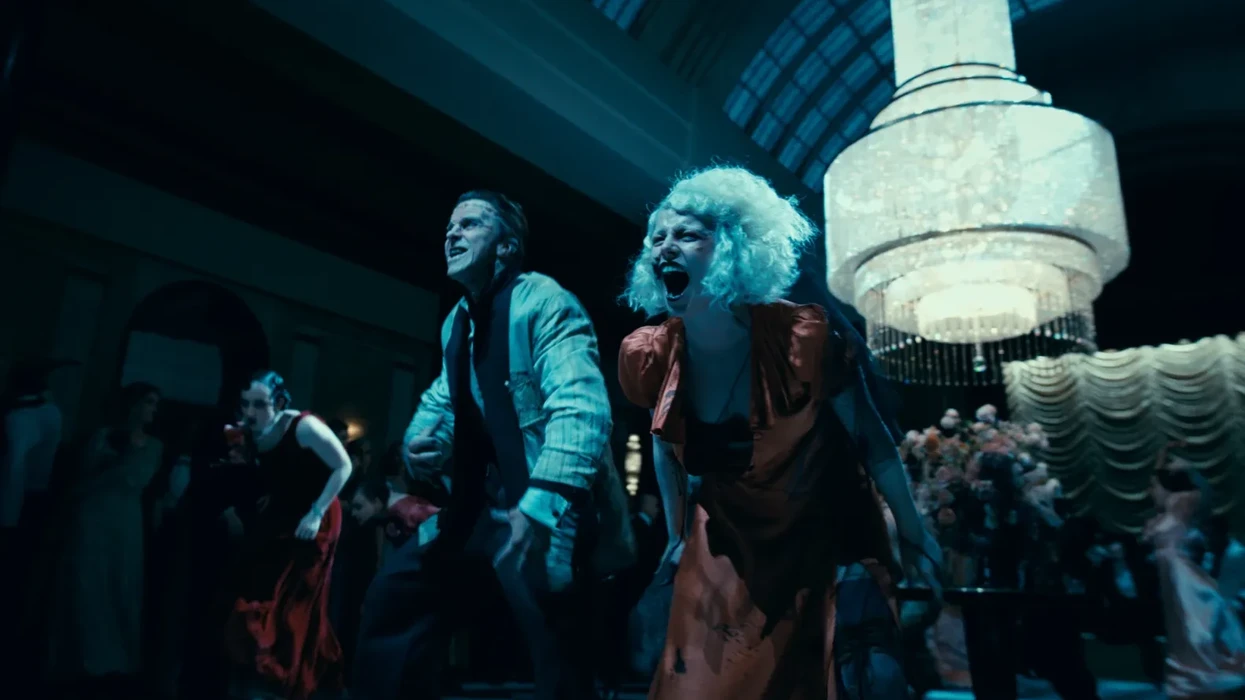
Christian Bale and Jessie Buckley in 'The Bride!'

Warner Bros

‘The Bride!’ Is a Monster Mash-Up of Sex, Violence, Resistance, and Ideas. Many, Many Ideas

He’s a reanimated corpse, cursed to wander the land in a state of existential misery for centuries! She’s a former moll for a two-bit gangster, brought back from the dead to become his soulmate! You could say they’re made for each other — literally, in her case. Not that this young woman with a serious bone to pick with the patriarchy had much of a choice in the matter. Her would-be groom and his doctor friend dug her up, enlisted a scientist to pump thousand of volts of electricity through her, and now they simply expect her to play house for all of eternity? Fuck that! Doesn’t she have a say in any of this? Why, it’s enough to make a once-dead, now alive again and extremely angry lady start a revolution and burn the whole rotten, sexist infrastructure to the ground.

The Bride! — Maggie Gyllenhaal’s radical, fit-to-burst take on The Bride of Frankenstein — is, at its molten core, all about agency. Who gets it, who doesn’t, and how so much of it seems to run across chromosome-based lines. It’s also about the joys of true partnership, and the need to be taken on your own terms or not be taken at all. And the concept of the outlaw couple, and how that everlasting cliché of lovers on the lam has become part of our nation’s collective pop mythology. And about reclaiming Mary Wollstonecraft Shelley’s legacy from the male-dominated canon. And about the infinite pleasure of watching actors in 1930s swells-and-dames cosplay. And the joys of old-timey musical numbers — who doesn’t like old-timey musical numbers? And… and…

Keep Reading Show less
‘A Knight of the Seven Kingdoms’ May Save the ‘Game of Thrones’ Franchise

Peter Claffey in ‘A Knight of Seven Kingdoms’

Steffan Hill/HBO

‘A Knight of the Seven Kingdoms’ May Save the ‘Game of Thrones’ Franchise

If you tuned into HBO on the night of Jan. 18, or logged onto HBO Max soon after, you would have been greeted with the sight of a man digging a grave under a dark, gray sky. A trip of horses neigh uneasily as a storm rains down upon them. After lowering a body into the ground, the hulking figure with the shovel gives a eulogy. He’s a squire who goes by the name of Dunk, and he’s laying his former master to rest. This elderly knight wasn’t always the kindest, or the most sober of mentors. But given that he virtually raised the orphaned Dunk from boyhood, the young man still mourns his death.

The next day, Dunk vows to continue on, in search of adventure. This strapping young lad fancies himself a “Ser,” the title held by the illustrious knights of the realm; the casual namedropping of King’s Landing and Lannisport confirms which particular universe you’re in. He’s heard tales of a tournament in nearby Ashford, where men with boundless bravery and sword skills can make a name for themselves. A recognizable theme — DUN du-du-du-duh Dun, DUH-du-da-du-daaa-DUN — begins playing over the scene. Dunk promises to make his late master proud. He strikes a heroic pose. The theme swells, getting louder… and louder.…

Keep Reading Show less