

Last month, a judge tossed a lawsuit from Elon Musk‘s X (formerly Twitter) against the Center for Countering Digital Hate, an anti-extremism watchdog, that alleged the group had financially harmed the company by reporting on violent and hateful speech proliferating across its platform. The ruling stated in no uncertain terms that Musk and X were trying to punish the CCDH for exercising First Amendment rights.
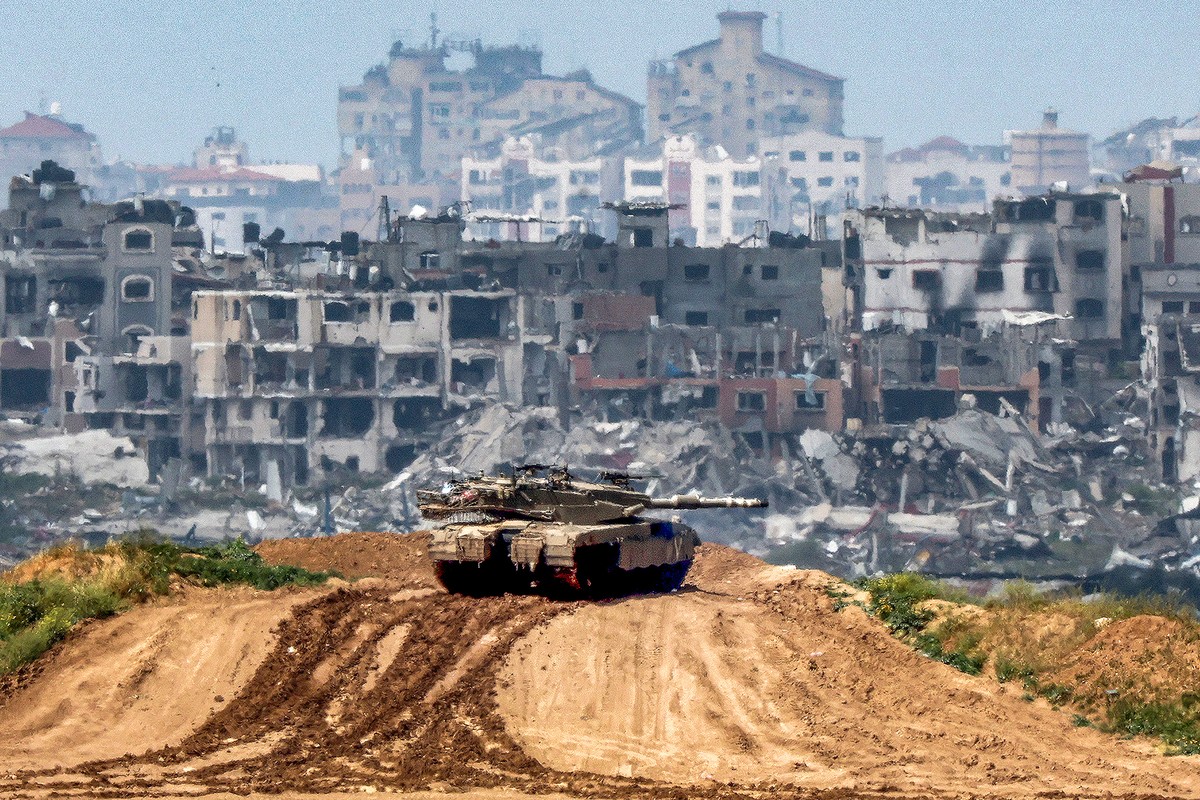
Following that court victory, the organization is once again sounding the alarm about X’s lack of sensible moderation, releasing another trove of data that shows how 10 toxic influencers have capitalized on Israel’s months-long siege of Gaza, rapidly expanding their audiences and raking in money by spreading antisemitic and Islamophobic content. The CCDH found that these accounts, which have together amassed 4 million new followers since the Oct. 7 attack on Israel by Hamas militants, grew four times faster in the months directly following the attack than they had in the months immediately prior. All benefited from the algorithmic boost that comes with paid blue-check verification, and despite repeated community guideline violations, not one has been suspended.
“None of the accounts deserved the enormous visibility they received by cynically goading, upsetting, and terrorizing others into emotional responses,” writes Imran Ahmed, CEO of the CCDH, in an introduction to the new report, titled “Hate Pays: How X accounts are exploiting the Israel-Gaza conflict to grow and profit.” Ahmed adds that the influencers’ fiercest critics also gave them greater reach and exposure because “even ‘negative’ engagement counts as engagement on social media platforms, increasing their attractiveness to the algorithms that control what content gets promoted in timelines and what does not.”
The result, Ahmed warns, is “a race to the bottom of hate and sensationalism with the most profitable ad next to it.” Indeed, the CCDH research shows that a number of major advertisers, from Oreos to the National Basketball Association to Starlink (owned by Musk’s own SpaceX) are having their promotional materials shown in proximity to hateful posts, despite X’s assurances of brand safety and promise that ads will not “serve around potentially objectionable content.” X did not respond to a request for comment on the nonprofit’s findings.
Rolling Stone previously reported on a number of the influencers tracked in the CCDH report who have used nominal support for Palestine as cover to disseminate antisemitic content, including Ryan Dawson, once banned from the platform but reinstated under Musk, and former UFC fighter Jake Shields, who together openly dabble in Holocaust denial on X. Others quick to exploit the slaughter in Gaza to demonize Jewish people were self-described “raging antisemite” Keith Woods, known to have welcomed white nationalist Nick Fuentes onto his YouTube show; anonymous account @CensoredMen, which originally existed to support misogynist manosphere celebrity Andrew Tate as he faces rape and human trafficking charges in Romania; and Jackson Hinkle, a prolific purveyor of misinformation whose account picked up a staggering 2 million followers in the four months after the Oct. 7 attacks.
The second biggest account in this latest analysis belongs to Dr. Anastasia Maria Loupis, based in Denmark, with 1.2 million followers. She infuses her anti-vax content with a heavy dose of antisemitism, repeatedly implying that mass vaccination is the agenda of a powerful group of Jews that control national and global institutions. But since the outbreak of war in the Middle East, she has mostly shifted from arguments against pandemic safety measures to posts about Israel and Palestine, reaping massive engagement as a result. Like Hinkle, Dawson, Shields and @CensoredMen, she has enabled the premium “subscription” feature, allowing followers to pay a monthly fee for additional exclusive content.
Of course, anti-Muslim influencers have been rewarded as well. One is Dr. Eli David, an Israeli computer scientist and co-founder of healthcare and cybersecurity companies. He, too, was formerly mired in Covid-19 conspiracism but now tweets his support for Israel while likening Palestinians to rats and warning that Europe is being taken over by Muslims and “jihadists.” Likewise, @RadioGenoa — not affiliated with any Italian radio station — posts disinformation intended to stoke fear of a supposed invasion of Europe by Muslim immigrants. The two accounts have nearly 600,000 followers apiece, a significant proportion of those gained since Oct. 7.
The last two hate-fueled feeds the CCDH studied were “Way of the World,” an equal-opportunity racism account just as likely to post offensive memes about Black people or Jews, often while railing against immigration, and the account of failed U.S. senate candidate Sam Parker, who has shared conspiracist content about a cabal of Jews supposedly running the world, and invoked the canard that the Rothschild banking family sits at the top of this hidden organization.
“It is clear from the results of a number of studies by CCDH and others that the new leadership of X has not discouraged antisemites, and instead has effectively welcomed them, and accounts which seek to spread hate,” the report concludes. “The increase in followers and reach for the accounts identified in this report is, we believe, a direct result of the policy changes made under owner, Elon Musk, and CEO, Linda Yaccarino.”
Musk hasn’t merely enabled antisemitism, though, as he sometimes wades into such rhetoric himself, once encouraged followers to follow an antisemitic account for updates on the Gaza war, and effectively endorsed ideas akin to the “Great Replacement” conspiracy theory, many versions of which posit that Jews are deliberately orchestrating mass immigration of non-white populations into the West.
Overall, the report presents a bleak portrait of a platform “failing to uphold its duties to keep users safe,” incentivizing hate speech with the rewards of increased engagement and profit while continuing to serve ads alongside harmful material that violates X’s own policies but is not removed when reported. In fact, these accounts are also eligible for ad-sharing revenue based on the organic impressions on promotions that appear in the replies to their extremist and racist posts.
“It’s titled in favor of hate and lies,” Imran Ahmed writes of social media in his summary of this research. “Those preaching tolerance and goodwill have to ice-skate uphill to keep up.” And in his time as the owner of X, Musk has done nothing to reverse that dynamic — quite the opposite. In the absence of any corporate responsibility, the CCDH can only recommend that regulators and lawmakers demand accountability and transparency, while advertisers and users can reevaluate whether they want any part of this destructive online economy.
Musk, meanwhile, can complain about this damning appraisal all he wants, as he typically does when the sheer volume of malignant discourse on X is laid out in the starkest terms. The only difference is that this time, he probably won’t bother to launch a frivolous lawsuit about it.


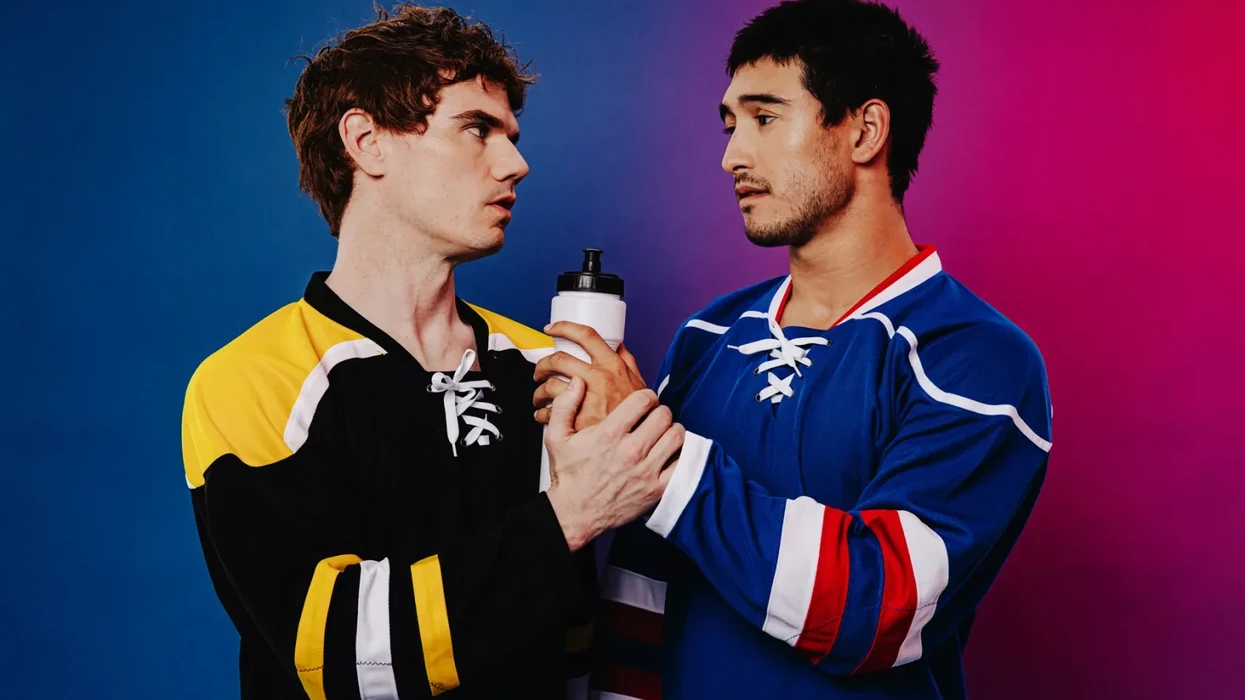
 Cherry Torres, Jay Armstrong Johnson, Jimin Moon, Ryan Duncan, and Ryann Redmond Matthew Murphy*
 Cherry Torres, Jimin Moon, Ryann Redmond, Jay Armstrong Johnson, and Ryan Duncan Marc J Franklin*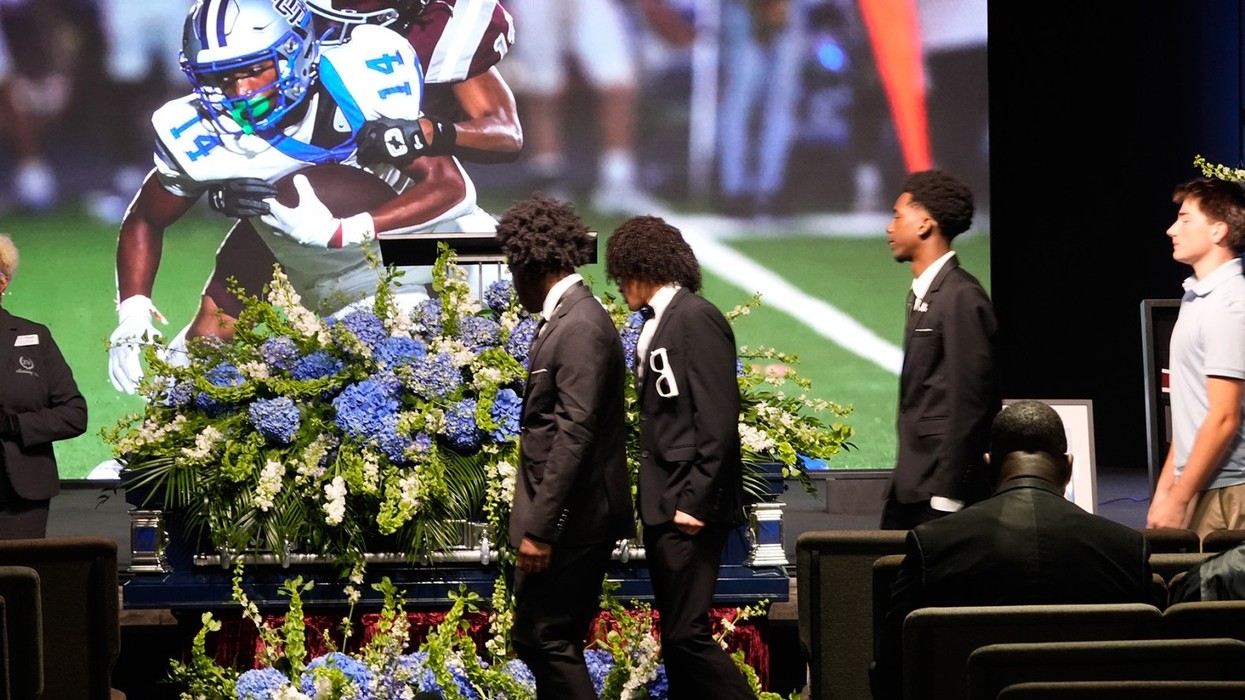
 Christine Wonsley with her husband, Elmore (second from left), attorney Ben Crump (left), and Rev. Al Sharpton (right), during a memorial service for her son Nolan Xavier Wells.Gerald Herbert/AP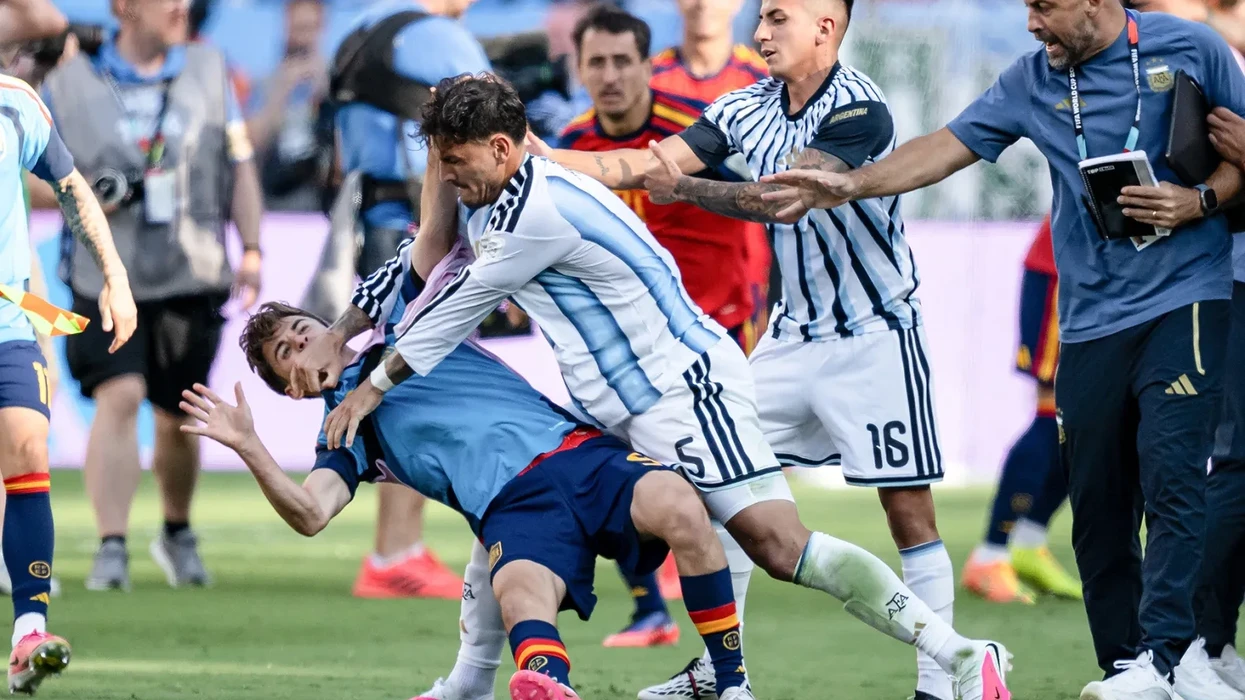
Donald Trump and FIFA President Gianni Infantino stand as Spain celebrates its World Cup victory, on July 19, 2026.
America Got the World Cup It Deserves — Good and Bad
For the past six weeks or so I’ve been having a recurring fight with my friends. The dispute is over whether or not it’s ethical to support the U.S. national team in the World Cup.
To the vast majority of people reading this article, this is an absurd question: of course you can and should support the United States Men’s National Team, you weirdo. And look, I’m with you. But despite the fact that my friends are pompous dorks who are no fun to watch the game with, the question they raise is valid: Are our national teams avatars of the administration in power, or of the people and promise of that country?
If you believe the former, then yeah, it’s pretty fucking weird to support the USMNT. In doing so, by that thinking, you’d be engaging in a sort of athletic nationalism on behalf of a country run by Donald Trump, the most corrupt president in history, who forced the Iranian national team to flee across the border immediately after the final whistle of each of their games, whose federal police have shot numerous civilians dead in the street during a brutal immigration crackdown, who has started a war and supported a genocide while covering up his close personal friendship with the most notorious pedophile in modern history.
I mean just look at him. On Sunday he waddled down onto the field to present Spain with their trophy, lingering on stage with the victorious team as they tried to celebrate. The presence of Mexican President Claudia Steinbaum and Canadian Prime Minister Mark Carney did little to dilute the image of Trump standing next to his crony Gianni Infantino, grinning at all the trappings of their power, hands caressing a trophy they’d done nothing to earn, lingering well past his cue to leave Spain to their glory. This World Cup, literally, had Donald Trump’s fingerprints all over it.
And yet, this was one of the most thrilling, beautiful World Cups in recent memory. That’s America, baby — contradictions abound.
Over the past five weeks of the greatest athletic competition on Earth, we’ve seen games that will literally never leave my memory. The final, which I attended yesterday in New Jersey, was remarkably forgettable — a 0-0 draw until the 106th minute, with Spain dominating every second of play and yet unable to score, undone time and time again by their insistence on tricksy passing and the personal heroics of Argentina’s goalkeeper Emi Martinez. The rest of the tournament, however, delivered. Cabo Verde, refusing to lose until the very last moments of the first knockout round, battling back again and again against both teams that would eventually play in the final. The sheer dominance of France’s Kylian Mbappe in front of goal, scoring at will, rivaled only by the aging GOAT Leo Messi and the Norwegian warlord Erling Haaland. England’s heroic stand at the Estadio Azteca in Mexico City, 45 minutes in the rain, a man down, holding out for the win and singing “Wonderwall” with what felt like half the stadium when it ended. Off the pitch, too: the Algerian national team being welcomed with open arms by Lawrence, Kansas; Scottish braves drinking Boston dry and partying wildly with Haitian fans that overcame so much just to be at the tournament. In Mexico, of course, the World Cup was everything, and its fans threw joyous South Koreans pumped full of tequila into the air, and celebrated in the streets with opposing fans even after their hard-fought defeat to England.
For the United States, what the 2026 World Cup was — what our team was, what our fans were, what our performance as hosts was — is a reflection of two things at once: what our nation is and what it can be.
Our star striker, Folarin Balogun, was born here by accident, a citizen only because of a birthright system that our president is currently trying to erase. We have Ricardo and Giovanni and Freeman and Zendejas. We have another striker whose name is Haji, for goodness sake. I look at that team and I see the country America can be, one in which any soul born in or living within our arbitrary borders can become part of a great national project that seeks to improve the lives of everyone it can. And yet, I can also look at that team and see a reflection of what the country is, because there is an anchor around its neck. When Balogun was — albeit unjustly — suspended for a crucial match, Trump himself stepped in. Cronyism saved the day and got Balogun reinstated, but ruined the fragile harmony the team had enjoyed. On the pitch against Belgium, they came apart. Temperamental star Christian Pulisic tried to go alone and then quit, aging defender Tim Ream’s legs failed him when he needed them most, a young goalkeeper slipped and fell when he had no good options for support.
What more can you say about a team, about our country? The team is an entity that is capable of more but still has so far to go, that is vulnerable to the same forces of avarice and selfishness and fear that plague our national identity writ large.
It’s possible to end the story there, to say good riddance to another failed year and fractured team. But I think that’s a mistake. I think if you believe that you haven’t really been watching. I think that’s also why it pissed me off so much that some of my friends wouldn’t root for the U.S. Yes, we have flaws, like every country involved in the tournament. Yes, our current team management and political government are filled with morons. But if you won’t put on the shirt you’re essentially opting out of our future. We can’t wait around for a better world, a better team, a better president, before we deign to lend our support. Progress only comes from effort, from caring, from believing in something more.
One of my favorite images of the World Cup was a crowd shot of the opening match against Paraguay in Los Angeles: every race, color and creed of American there is, all covered in red white and blue. It’s corny and trite, sure. But that’s what it’s all about. That’s why we’re here. You have to believe. The U.S. won that game 4-2. In four years, we’ll be even better.