
Four years ago, a virus brought everyday life in the United States to a screeching halt. On March 15, 2020, officials in places like New York City and Ohio announced some of the first shutdowns and stay-at-home orders in a century, which soon spread across the country like the novel coronavirus itself.
By March 2021, candlelight vigils and virtual memorial services took place across the United States, providing places for people to remember the roughly 530,000 Americans who died from Covid-19, and process the collective grief and trauma resulting from the pandemic’s first year. Today, it’s hard to believe that the death toll would rise to more than 1.8 million people — not only because the figure is staggering, but because of how quickly the incalculable human losses resulting from the virus have been largely forgotten.
After four years of testing guidelines, travel restrictions, and canceled events, most Americans are — understandably — over it. This includes the Centers for Disease Control and Prevention (CDC), which recently dropped the five-day isolation period previously recommended after testing positive for Covid-19, in favor of a “pan-respiratory” approach also applicable to influenza and RSV.
Basically, this means that people experiencing symptoms of a respiratory virus (like fatigue, a fever, the chills, or a cough) can resume their normal activities after they’ve been feeling “better overall” or fever-free for 24 hours. It’s a return to the halcyon days of ignoring the possibility of being contagious, and not thinking about who might be exposed to what otherwise healthy people perceive as a mild illness, or the potential long-term consequences of an infection.
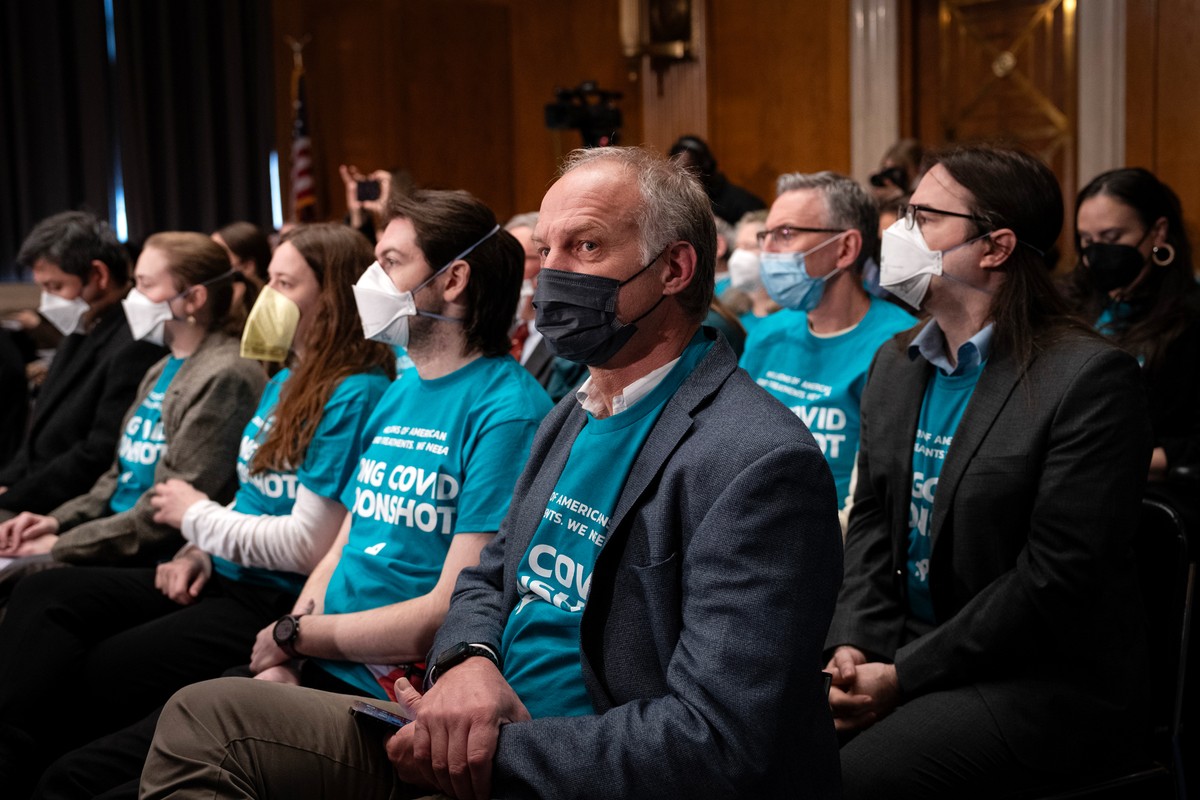
For some people, the CDC’s announcement effectively marked the end of the pandemic, freeing them from the final vestige of Covid-era restrictions: their obligation to avoid infecting others with Covid or other respiratory viral illnesses. But the millions of Americans living with Long Covid, including myself, don’t have the luxury of being able to move on.
We’re stuck in broken bodies that can still be difficult to recognize as our own, even after inhabiting them for four years. Many of us are immunocompromised: some, for the first time, and others after years of living with other chronic conditions. It has cost us careers, sources of income, homes, relationships, and in some cases, our identity. And now, as more people think of Covid as a problem of the past, those of us with Long Covid are concerned about our uncertain future.
By all accounts, I should have been hospitalized during my first acute Covid-19 infection. But it was the first week of April 2020, and I wasn’t the only person in Queens spending hours each day choking down shallow breaths, taking in just enough air to survive.
With patients spilling out into hallways and tents at my local hospitals, the empathetic but exhausted clinicians on the other end of the city’s Covid hotline told me to stay home — unless I stopped breathing completely — and that while I wasn’t eligible for testing, I was considered a “presumed positive” case. When I called back a month later because my symptoms hadn’t gone away, I was dismissed for the first of what would turn out to be many times: told that Covid-19 infections only lasted two weeks, so I must not have contracted the novel coronavirus after all.
As a bioethicist, I went into the pandemic familiar with the ethical challenges that can arise during public health emergencies, but hadn’t anticipated the hypothetical case studies I taught in class to play out in real life. I began covering them in February 2020, and by June, I was working on my first assignment on what would come to be known as Long Covid.
Over several months of reporting, I spoke with other people who had Covid in early spring, sought medical attention after at least a month of new or lingering symptoms, and were informed that they were simply the result of aging, anxiety, obesity, or all in our heads. (Physicians and other healthcare workers living with Long Covid didn’t necessarily fare any better, reporting that they “felt dismissed or not taken seriously by their doctors,” according to the authors of a review of 30 studies evaluating their experiences, published March 5, 2024 in the journal PLOS One.)
Remarkably, four years later, it can still be difficult to find doctors who have even a basic — let alone comprehensive — understanding of Long Covid and the myriad ways it can affect the body and brain. While there are clinics dedicated to treating Long Covid patients in hospitals across the country, it’s not unusual for it to take several months to get an appointment.
“There are not enough clinics to serve all those in need — especially vulnerable patients,” says Linda Geng, MD, PhD, co-director of the Stanford Post-Acute Covid-19 Syndrome Clinic, and clinical associate professor of medicine and population health at Stanford University.
While some existing clinics, like the one at Stanford, have partnered with community health initiatives and primary care providers to expand services and support for Long Covid patients, other programs across the country have lost crucial funding, forcing them to place restrictions on the new patients they accept and the services they offer, or shut their doors completely.
According to Geng, another major challenge for providers trying to care for patients with Long Covid is that there still isn’t a single FDA-approved therapy for the constellation of symptoms and conditions. “We are lacking good tools to treat our patients,” Geng tells Rolling Stone. “While research is advancing, there is an urgent need to find effective and safe therapies for Long Covid.”
Take, for example, neurological symptoms of Long Covid — including cognitive dysfunction, fatigue, dizziness, and headaches — which can be among the most disruptive and destructive to our careers, relationships, and other aspects of our lives. At this point, researchers partially understand what causes post-Covid “brain fog,” and that the virus “leaves an inflammatory footprint on the brain, its cells, vessels, and other structures,” says Anna Nordvig, MD, a neurologist at Weill Cornell Medicine, whose research group is currently studying biomarkers that can be used in future diagnoses and treatments.
In the meantime, doctors have been trying to help people living with Long Covid manage their symptoms using what’s available. “These past four years have been about repurposing all the drugs and treatments we can, from many fields of medicine,” Nordvig tells Rolling Stone.
But having effective treatments and comprehensive care for people living with Long Covid is one thing; being able to afford them is another. On top of the high cost of healthcare in the United States, many people with Long Covid have developed physical and neurological conditions that left them unable to work — at least to the extent they did before getting Covid.
Technically, Long Covid has qualified as a disability under the Americans with Disabilities Act (ADA) since July 2021, but, as I reported that October, it’s up to a person’s employer to determine whether the law and its protections apply to them. Although the extent of the impact on the U.S. labor force and economy isn’t yet known, at least two studies have estimated that roughly four million people are out of work because of Long Covid, resulting in around $200 billion each year in lost wages. Yet the economic burden of Long Covid continues to be widely overlooked.
“There’s been so much discussion about supply chains, worker shortages, and defaulting on debts, but no one wants to talk about the fact that a significant portion of the workforce has been killed or disabled by Covid,” says Froglet Taylor, who first contracted Covid in March 2020, and in addition to their job, also lost their home.
I first interviewed Taylor for a February 2022 article on Long Covid and housing insecurity, and now, more than two years later, they’re “still living in a cabin made of tarps, miraculously, under the same tree” on a dead-end street near the Astrodome in Houston, Texas. Last summer, they changed their first name to Froglet in order to process the way Covid “forever altered” their life and identity. “I needed that division between who I used to be — a person I barely recognize anymore — and who I am now,” Taylor explains.
Since then, their attempts to access government services have continued to fail. “There is still no help for most of us, largely owing to the fact that there is not a test for Long Covid, or even established diagnostic criteria,” Taylor tells Rolling Stone. “Without that, it’s impossible to claim disability assistance unless you happen to have a qualifying secondary diagnosis.”
Lacking that assistance, and financial support from partners, family members, or friends, many people with Long Covid, including Taylor, turn to crowdfunding in order to cover medical bills, as well as basics like food and housing. This also includes Gwen Bishop, who has been living with Long Covid since January 2022, and manages @LongCovidAidBot, an automated account on X (formerly Twitter) that shares crowdfunding campaigns and mutual aid requests.
“Long Covid is expensive and debilitating, and especially hard on those who were underpaid or exploited gig workers prior to becoming disabled,” Bishop tells Rolling Stone. “We have no viable social support in the U.S., so the workers whose health has been sacrificed are left to rot, and are dying. It’s becoming heartbreakingly common for people in my community to die with their last tweet being a crowdfunding request that never gets fulfilled.”




 Today, Prager lives in Brooklyn, in the same apartment building as the story’s author.Sacha Lecca
 The Escape was the vessel Prager used for years.Courtesy of Harvey Prager
 Mike “Cochise” Pace (with his son, Simon, in 1977) was one of Prager’s original crew members, and was elected captain of the group early on.Courtesy of Harvey Prager
 Prager and his crew hung out with Jimmy Buffett in Key West.Michael Ochs Archives/Getty Images
 The Knightsbridge Safe Deposit Centre in London was broken into — but Prager’s belongings were left behind.PA Wire/AP
 Today, Prager is a lawyer at a firm focused on civil rights.Sacha Lecca
 Prager, Jake “Pigpen” Keenan, and Mike “Cochise” Pace got together in 2009 for a reunion