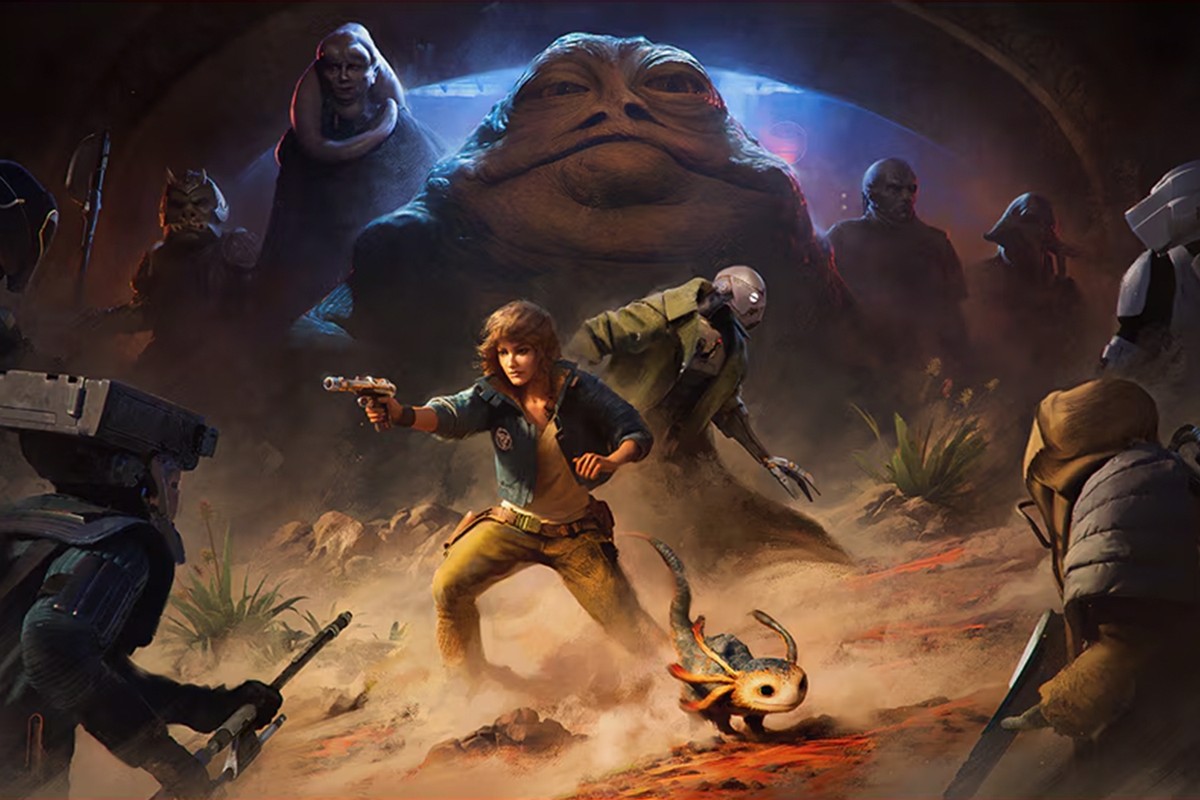

At the entrance of Ubisoft’s Massive Entertainment headquarters in Malmö, Sweden, two stormtroopers are checking credentials with blasters ready. Later, they’ll be demoted to serving coffee, but for now, the security is warranted, as developers are preparing to finally show off their new game, Star Wars Outlaws.
Filing into the padded listening room, attendees are met with an enormous screen positioned above a sprawling audio board. As the lights dim, the theatrical rumbling of the Dolby-powered bass kicks in so strongly, people’s eyeballs begin to hum.
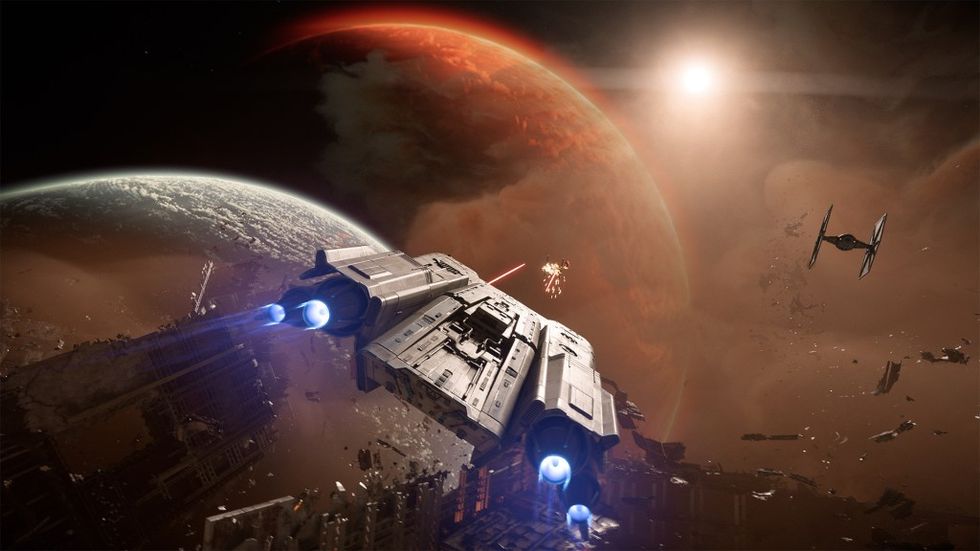
With a bang, a starship shoots across the frame. In the cockpit is a woman — the game’s heroine Kay Vess — and everything’s going wrong. Frantically trying to escape pursuit, laser blasts roaring by, she makes a rough landing on a planet’s surface. In just under two minutes, the sequence delivers all the matinee bravado expected of a Star Wars film, but it’s just a taste of what’s to come. This is the beginning of the “scoundrel experience.”
Throughout the two-day tour, it’s a turn of phrase that comes up frequently, and serves as the mission statement for what Star Wars Outlaws — out Aug. 30 — wants to achieve.
As explained from the onset, the goal of the game was to focus exclusively on the types of characters that embody the everyman (read: non-superpowered) aspect of Star Wars canon, namely Han Solo. While most game developers are looking to embrace the power fantasy of the Jedi, with wild lightsaber combat and destructive Force abilities, the people behind Outlaws wanted to go back to the basics with good old-fashioned blasters.
To get there, Outlaws centers on the exploits of a new protagonist named Kay Vess, a petty thief from the casino city of Canto Bight, previously introduced in Rian Johnson’s 2017 film The Last Jedi. Down on her luck, Kay finds herself looking for one big score that she can use to get out of the worker-district slums and explore some of that galaxy she’s heard so much about. The job goes sideways, leaving Kay indebted to a fixer and smuggler named Jaylen. Clearly, her only way out is a heist.
The game’s creative director, Julian Gerighty, likens Kay’s situation to what made Han Solo such an icon; they’re both underdogs, albeit in different ways.
“When we started thinking about this character,” Gerighty says, “[It] was more about the relatability angle and the fact that they weren’t perfect. When we discover Han Solo, he’s the coolest guy in the world. Kay is much less than perfect. She’s a street thief, she’s struggling to survive, she’s not confident. She gets thrown into this adventure where she ends up tangling with some of the biggest crime syndicates in the galaxy.”
Those syndicates include the Hutt Cartel (led by everyone’s favorite blob Jabba), the Pyke Syndicate, the Ashiga Clan, and Crimson Dawn, whose leader Qi’ra was previously portrayed by Emilia Clarke in Solo, although the actress doesn’t reprise the role for the game.
The syndicates, along with the Empire, present a persistent threat to Kay as she’s forced to go back on her shaky allegiances when new opportunities and imperatives present themselves. As players make decisions that piss off the various powers in each region, they can build up a GTA-style wanted level, cutting off access to certain gang-controlled spaces and, eventually, landing bounties on her head that lead to unexpected ambushes.
The use of existing characters to bolster the storytelling in Outlaws seems like a layup. After all, what is modern Star Wars if not a cavalcade of cameos with some new bits peppered in? But the team at Massive, including narrative director Navid Khavari, who previously oversaw the writing for the Far Cry series, saw the game as an opportunity to view the galaxy and its famous inhabitants through the eyes of their newly created characters.
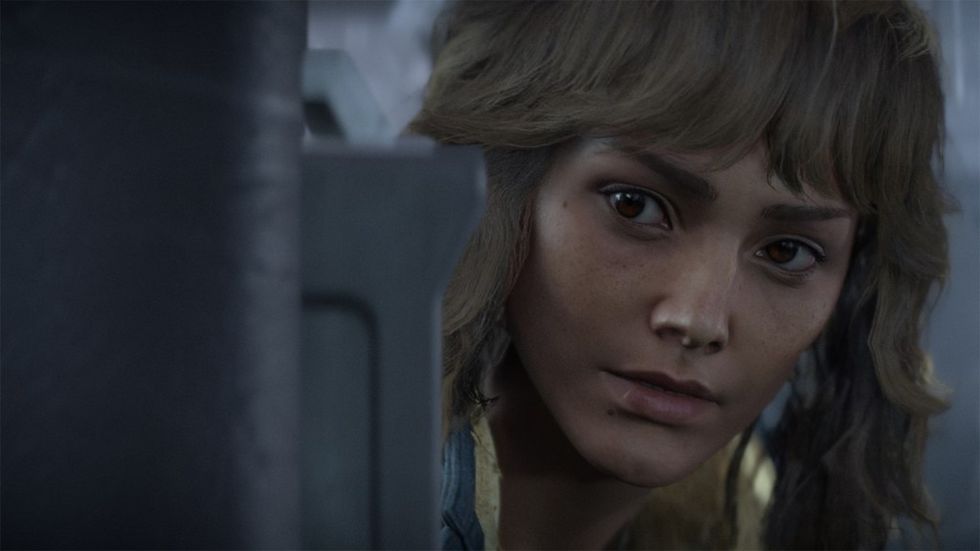
“[We had] a bit of a mantra like, ‘Kay is us, right?,’” Khavari says. “In that she’s gonna be kind of irreverent to these locations and these characters like Jabba or Q’ira. These aren’t people that are special to her in any way. But not too much, because she also has that wonder in her of [having] never experienced the broader galaxy.”
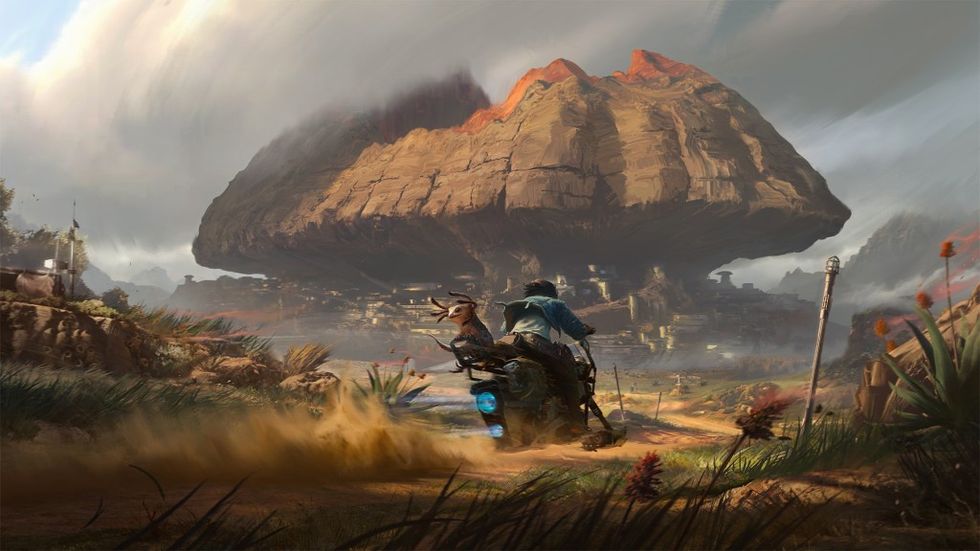
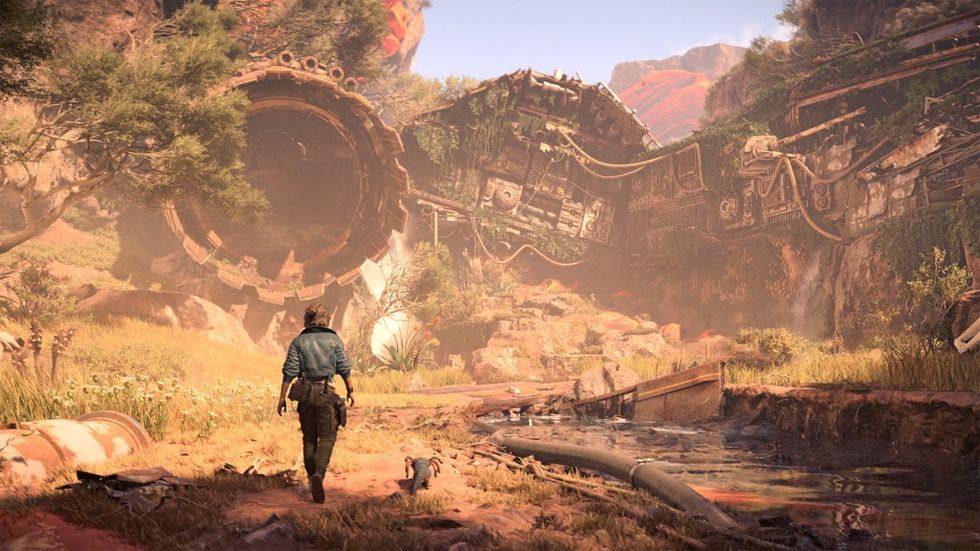
The ability to recontextualize the world of Star Wars also extended to the locations. Billed as the first-ever truly open-world Star Wars game, Outlaws allows players to explore not just huge swaths of any one city or planet, but travel almost seamlessly between destinations across the galaxy. The full scope of the game encompasses five celestial bodies, including the planets of Cantonica, Akiva, Tatooine, and Kijimi, all of which have been introduced in previous Star Wars lore, as well as Toshara, an entirely new moon created by the devs.
For those well versed in the lore, some of those planets may ring a bell, but you’d be forgiven they didn’t. While the sandy dunes of Tatooine are essentially visual shorthand for Star Wars, three of the others were only recently introduced, and their minimal exposure allowed the devs to flesh them out aspects previously only known to Lucasfilm.
“There’s so much depth to the research done for each of those movies, so much that isn’t explained,” Gerighty explains. “[If] you dig deep in with the art [books] or in conversations with the crafts people working on those movies, you can inform a huge amount in terms of narrative as well. So this glitzy casino city [Canto Bight], that is really a tale of two cities, because there’s a worker’s district, they’re the oppressed. [There’s] really cool stuff that we could explore a little bit more.”
According to Gerighty, the people behind the game had figured the original trilogy was off limits for video game developers to add to — and assumed their partners at Lucasfilm were going to feel the same. From their early talks, Lucasfilm had originally wanted the game to be set during the High Republic, the heyday of the Republic prior to the prequels, which is the setting for various novels and the latest Disney+ series The Acolyte. That changed during the formal pitch meeting.
“When they heard our pitch, they turned to one of four guys who hold all of the Star Wars lore — The Holocron, they call them,” Gerighty says with a laugh. “He goes into himself, and he goes, ‘You know what, undeniably, there’s this one-year period between Empire Strikes Back and Return of the Jedi that is perfect for this story.’ Because the Empire just beat the rebels on Hoth, the galaxy’s in turmoil. They’re grabbing more and more power, but this chaos that ensues allows the syndicates to really thrive.”
With the setting in place, the team at Massive got to work delving through decades of assets, art books, and lore provided by Lucasfilm to recreate the look and feel of the original trilogy to the smallest detail. But that doesn’t just mean the location or character design, but the actual visual direction of the films, studying the styles of not just George Lucas, but directors Irvin Kershner (Episode V) and Richard Marquand (Episode VI) whose work defined much of what people know about Star Wars. They also looked at the work done on films like The Force Awakens and Rogue One, which themselves slavishly recreated the OG feel of the franchise for a modern era.
“The original trilogy is such a good example of universal storytelling,” says associate narrative director John Björling. “It’s incredibly cinematic, fluent in cinematic language. I mean the fact that you don’t really need to know much about Star Wars to kind of understand what is actually going on, because the characters are so strong and the conflict that is going on in every scene is just so accessible.”
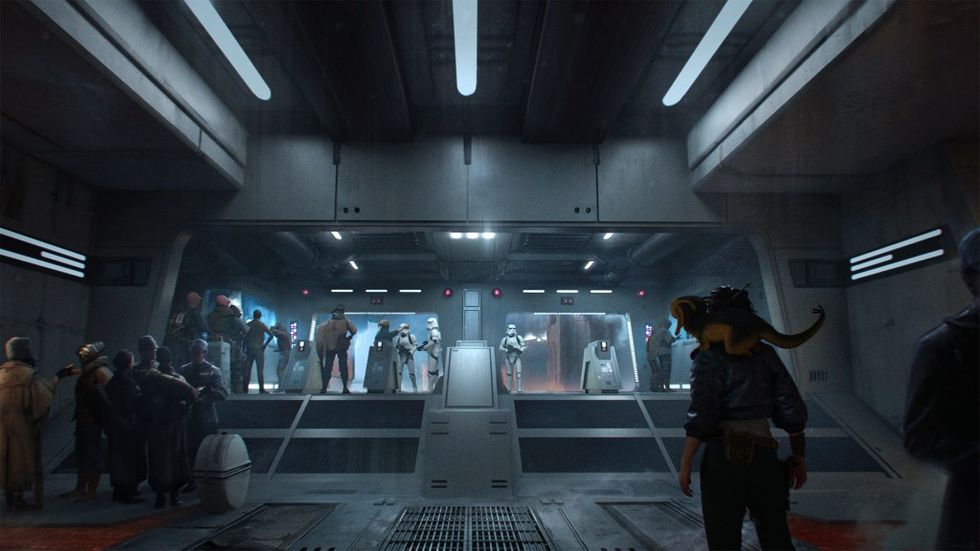
Massive’s attention to visual mimicry extends from recreating the actual anamorphic lenses used in Seventies and Eighties to give the game a super widescreen frame with warped edges, to literally blocking and filming cut scenes in ways that mirror how the movies were shot. But the team also wanted to ensure that it didn’t just look like Star Wars, but felt like it, too. A huge part of that was nailing the naturalistic delivery of the dialogue in the script.
“There was something that [emerged] as we were developing the story early on,” Khavari says. “We were trying to squeeze in jokes, sarcastic quips, things like that — and it wasn’t working. And when we were going back to the original trilogy, we realized a lot of the humor is coming from situations where they find themselves, and how they react.”
As an interactive experience, Star Wars Outlaws plays well enough. Based on the hands-on demos, it functions like any number of third-person shooter games like Uncharted blended with the open-world design that Ubisoft has cemented over the last two decades with the Assassin’s Creed and Far Cry series. With sessions limited to controlled slices of the early game (with a literal countdown timer that pulls the kill switch when the clock hits zero), it’s hard to gauge how the larger experience plays until the full version is available to preview. But the gameplay itself isn’t really the big question, it’s more about who the target audience is.
When individuals across all departments divulged their favorite Star Wars films in casual discussions and interviews, a clear trend emerged. Empire was the de facto answer, followed by Rogue One and A New Hope as secondaries. Solo only crept up once, which was a surprising omission given that the game itself shared much of the same DNA as the scoundrel-driven heist flick and select team members even worked on the film. The prequels, on the other hand, felt more like an elephant in the room.
Little was discussed of the prequels during conversations with the devs — and for good reason. Despite modern Star Wars shows like Obi-Wan and Ahsoka, as well as games like Respawn’s Jedi series, picking up on narrative threads and characters from the end of the prequel era, they genuinely have little place in the vision being pushed by Massive.
“I think the Skywalker Saga is the most Star Wars out of all the Star Wars,” says Björling. “[But] once you start going into the crime syndicates and the relationships with the Empire, Imperial corruption, all of that, you realize no one is missing a Jedi story in this.”
What’s more interesting is how much of the sequels play into the different aspects of the game. Famously divisive, the late 2010s trilogy of The Force Awakens, The Last Jedi, and The Rise of Skywalker haven’t really seen much attention in either games or new media. After 2019’s The Rise of Skywalker, specifically, which disappointed fans and critics alike, Disney and Lucasfilm seemingly pulled the plug on anything related to the furthest part of the Star Wars timeline, instead going back to the periods most fans across generations seem to still have an affinity for.
This makes Kay’s home of Canto Bight a bold inclusion. The decision to use the casino city, the setting of one of The Last Jedi’s most controversial subplots, could easily be chalked up to mandates by Lucasfilm. But it also opens the door for the developers to color outside the margins of the OT, while adding to the generally untapped corners of the Star Wars universe that have otherwise been left to collect dust.
It remains to be seen if Outlaws will do anything meaningful with its canvas in service of the sequels, but for fans of the old films or just those who are exhausted by the oversaturation of Jedi-centric stories, there’s a special kind of appeal to going back to the more average Joe aspect of Star Wars. It’s time to bring back scoundrels. At the very least, that’s what Star Wars Outlaws aims to do.