
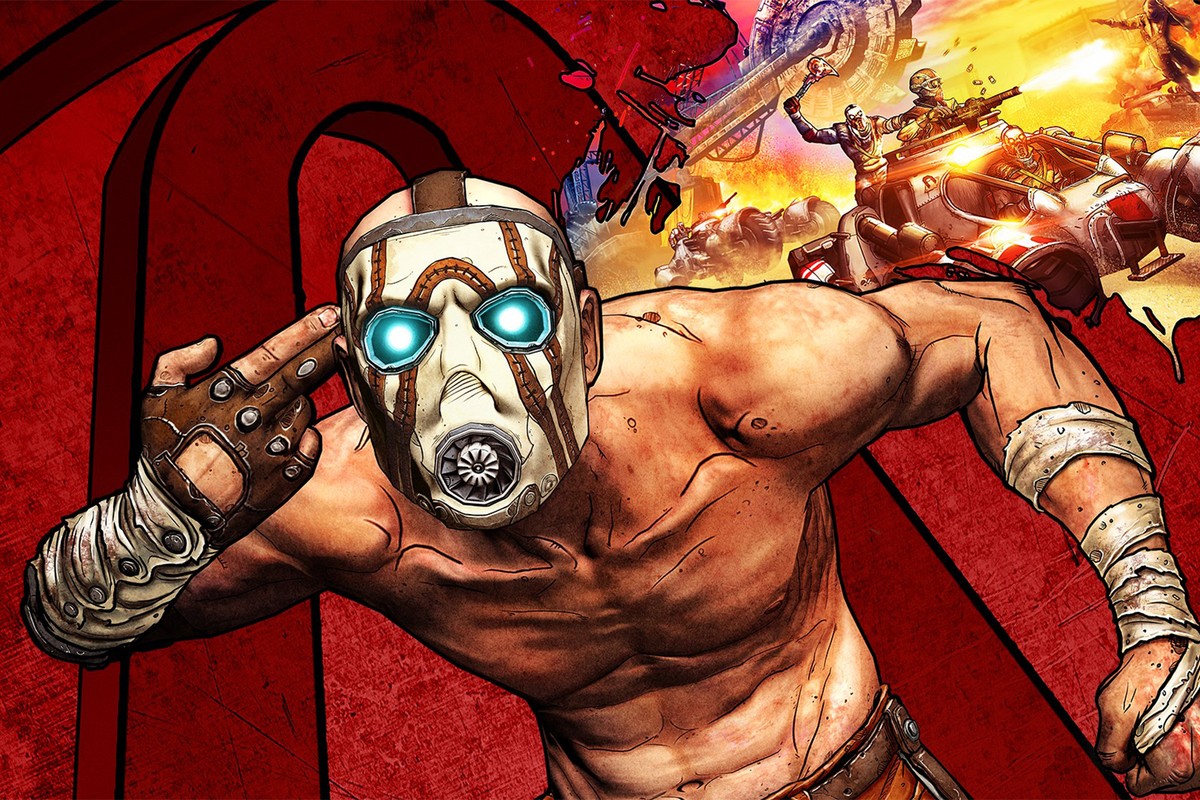

It’s been a big summer for movies, and alongside blockbuster superhero team-ups and schlocky Shyamalan thrillers now comes the next video game adaptation in the form of Borderlands. Co-written and directed by b-movie horror maker Eli Roth (Thanksgiving, Green Inferno), Borderlands is an action-comedy assimilation of the popular first-person shooter series. It’s, uh, something.
Yet despite the critical mauling the adaptation is seeing, there’s a lot more of the Borderlands universe to explore. With seven entries released since 2009, including multiple spin-offs dipping into different genres and styles, its flippantly gonzo tone and addictive gameplay has made it one of the best-selling video game franchises of all time.
For the uninitiated, there’s a lot to learn, but the basics aren’t too complicated. From the world of Pandora to whatever the hell a “Pre-Sequel” is, here’s everything you need to know about Borderlands.
What is Borderlands?
The original Borderlands was released in 2009 for PlayStation 3, Xbox 360, and Microsoft Windows. Developed by Gearbox Software, then primarily known for the grounded military action series Brothers in Arms, it introduced audiences to a new take on cooperative first-person shooters wrapped in a space-fantasy package. After hitting big with over 6 million copies sold, publisher 2K followed up with sequels Borderlands 2 (2012), Borderlands: The Pre-Sequel (2014), and Borderlands 3 (2019), and multiple spin-offs.
The film adaptation of Borderlands mostly pulls from the events of the first game, albeit with heavy changes as plot points and characters from the sequels are cherry picked for inclusion to create something new, but broadly speaking it isn’t too far off base.
Set in a far-off future where mega-corporations race to colonize space for resource mining, the series is largely set on the planet of Pandora, where an ancient alien vault is believed to exist that houses advanced weapons and technology, built by a mysterious race called the Eridians. A dangerous place teaming with vicious wildlife and environmental threats, Pandora becomes a boondoggle for surveyors like the Atlas and Dahl corporations, who struggle to get a return on their investments in between raging a paramilitary war between each other. After years of searching, the solution is to abandon the planet, leaving everyone but the super rich behind to survive among the trash heap wasteland left behind, not to mention a whole colony of convict laborers now running amok.
But even as they retreat, the corporations keep a close eye on Pandora, tracking the work of mercenary Vault Hunters who routinely scour the planet in search of the paydays buried beneath its surface in the vault of legend. In each game, players take on the role of one of four Vault Hunters, each with their own individual motives, who ultimately become embroiled in the larger conflict.
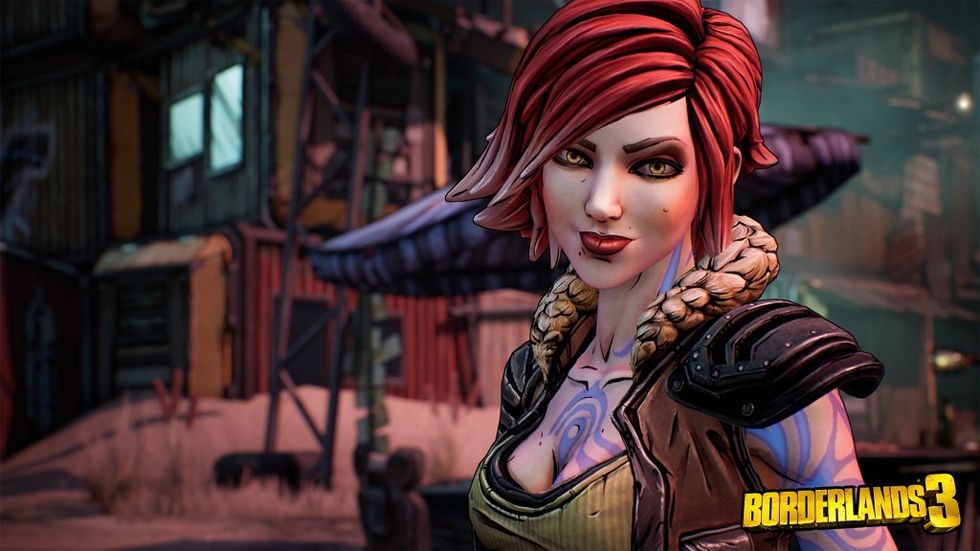
In the first Borderlands, that includes Lilith, a superpowered woman with suspiciously alien abilities, and Roland, an ex-soldier crackshot who previously worked for Atlas’ private military, the Crimson Lance. Both play major roles in the film, played by Cate Blanchett and Kevin Hart, respectively. Another key character from the first game is xenoarchaeologist Patricia Tannis (played in the film by Jamie Lee Curtis), who has been driven insane by the death of her colleagues but manages to find evidence of the Eridian Vault that brings everyone back into the fray.
Each subsequent game builds on the story established here, swapping out different protagonist groups for the next big adventure as new antagonists like the Hyperion Corporation’s Handsome Jack (Borderlands 2) and cultists Troy and Tyreen Calypso (Borderlands 3) enter the mix as more vaults are discovered and the tug-of-war for power continues. Despite changing its playable leads, Borderlands carries over numerous characters as NPCs who remain integral to the unfurling narrative.
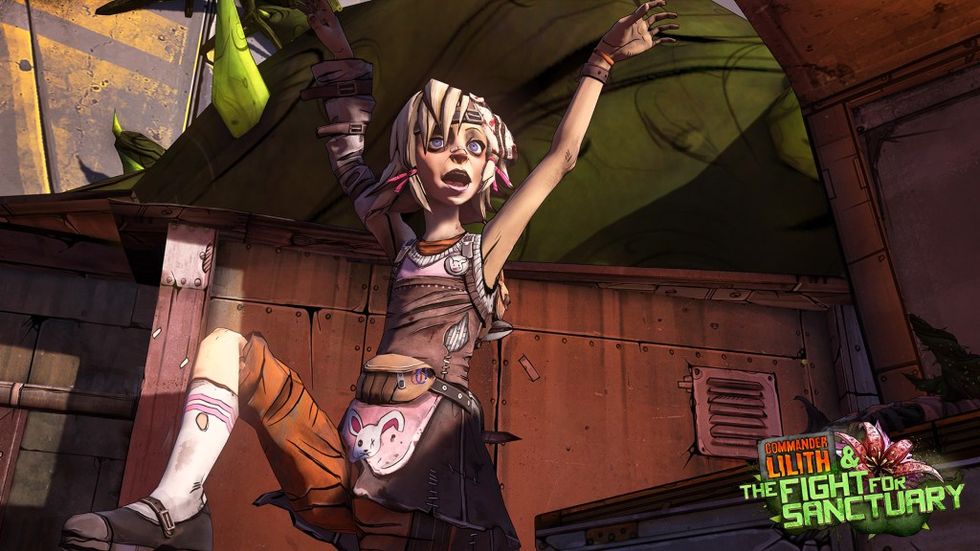
Two characters who become franchise mainstays and make the leap to the film are Tiny Tina (Ariana Greenblatt) and Claptrap (Jack Black). First appearing in Borderlands 2, Tina is a mentally unstable teen with an affinity for explosives whose family was sold as slaves to Handsome Jack before being killed. With a blood vendetta, she aids the Vault Hunters in their quest to take down Jack. Claptrap is a motor mouthed service bot who, through his ability to survive through each game, serves as an exposition dumper. His ongoing presence throughout the series makes him something of an unofficial mascot for Borderlands, and he appears heavily in the movie’s marketing.
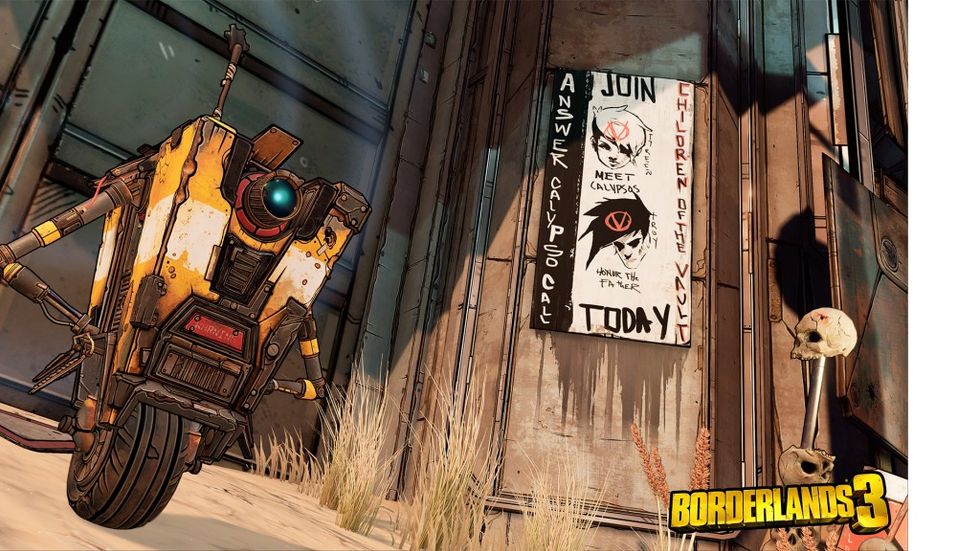
Outside of lore, Borderlands is also known for its vibrant art direction, which heavily influences the look of the movie. With cel-shaded graphics that give the visuals a cartoon-like aesthetic, the outlandish look of the game is defined by exaggerated characters and hyperbolic violence that might be more unnerving in a grittier style. Its bright design also bleeds into the tone, which leans on juvenile humor and an edgy loudness to drive home the feeling of playing a Saturday morning cartoon on shrooms.
Its characters are all caricatures, constantly bickering and hurling insults at enemies. The main vibe of Borderlands is loudness, in both its look and feel. A true product of the late-2000s, the humor of Borderlands can be equal parts endearing and grating, and hasn’t evolved much over the years. Picture the most maximalist version of the Guardians of the Galaxy by way of a teenage boy’s brain, and you’ll be somewhere in the ballpark.
Which games should you play?
Despite being a somewhat young franchise, Borderlands has managed to branch out into a variety of lanes in just 15 years. The mainline entries consist of a full trilogy plus a “Pre-Sequel” set in between the events of the first two games, and all adhere to the basic looter shooter design ethos.
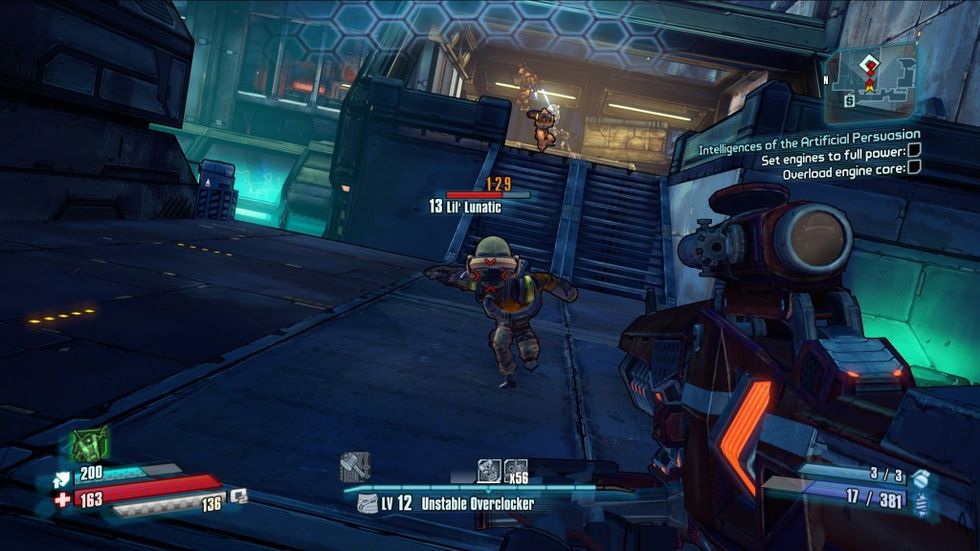
The real hook of Borderlands is its unique blend of high-octane FPS gameplay and RPG elements like open-world exploration, leveling progression, and its key ingredient: looting. Originally pitched as Halo-meets-Diablo, the series helped cement a new subgenre dubbed the “looter shooter,” wherein killing enemies and finding treasure chests rewards players with tons of new weapons and gear with unique stats and traits. Before Borderlands, looting was mostly a mechanic for dungeon crawlers like Diablo and Baldur’s Gate, but the popularity of the Gearbox’s shooter made the feature a standard for FPS/RPG hybrid games like the Bungie’s live service Destiny series.
For anyone looking to start at the beginning, there’s no need to worry about dusting off an old PlayStation 3 or Xbox 360. The original game was remastered and released as Borderlands: Game of the Year Edition in 2019 and is currently available on PC, Nintendo Switch, PlayStation 4, and Xbox One. Anyone with newer PlayStation or Xbox models can also access those last-gen versions, no problem. The Game of the Year Edition holds up pretty well and might be a great entryway for anyone looking to familiarize themselves with the series ahead of seeing the movie adaptation (or looking to wash the taste from their mouths afterward).
For those who don’t really care about soaking in all the lore from the get-go, Borderlands 3 serves as the most recent and modernized game in the main series. But if you’ve already played the primary games or are just looking for a different experience, there’s 2022’s Tiny Tina’s Wonderlands. Although it’s still a loot-based cooperative first-person shooter, Wonderlands serves as a spin-off from the main storyline, centering instead on a Dungeons & Dragons-styled riff on a tabletop gaming world. Set within a TTRPG campaign run by Tina, it offers a fantasy slant on the Borderlands formula, and in true D&D fashion, allows players to create their own character rather than pick a preexisting one. As a direct parody of fantasy game tropes, Wonderlands is a reprieve from the core franchise that may satisfy players who are already tired of the IP’s lack of major evolution throughout the flagship titles.
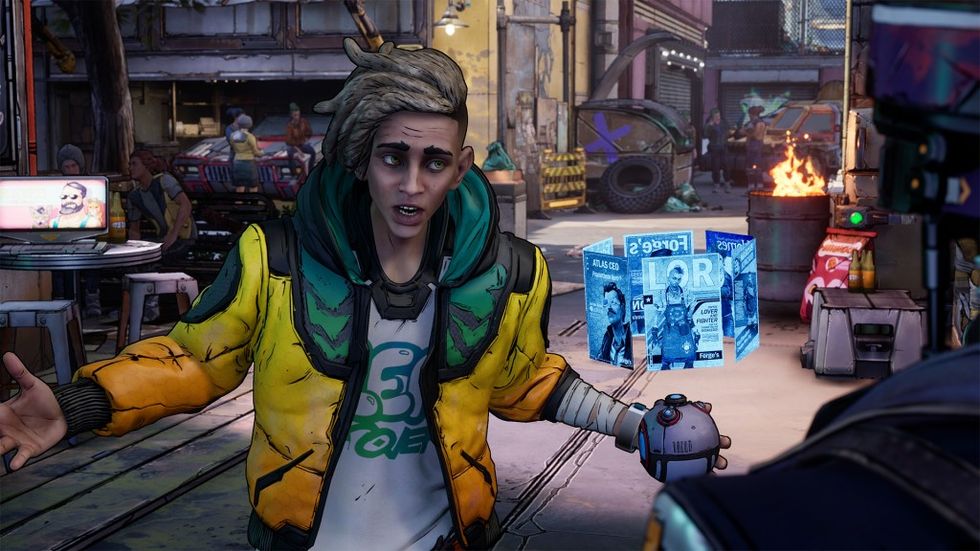
If you’re looking to break away from the first-person shooter genre entirely (or are simply less coordinated), there’s total curveball Tales from the Borderlands. A sub-series of Borderlands proper, the Tales games diverge completely from the main games as episodic interactive graphic adventure games (i.e. point-and-click games). Plot-heavy, they focus more on branching dialogue paths and slow-paced exploration rather than the frenetic gunplay of the base games, although uncovering loot is still a major part of the deal. Of course, anyone looking to recklessly blast rocket launchers and beat bandits to death for pocket treasure will be fully out of luck.
Unfortunately, none of the games in the series are currently available on digital subscriptions services like PlayStation Plus or Xbox Game Pass, despite having been available in the past. The only way to play the games now is to purchase them, although the good news is that they’re regularly on sale as part of seasonal promotions.
Where does the movie fit in?
Unlike recent game-to-screen adaptations that either follow the plot of a single game religiously (The Last of Us) or tell new stories within the franchise canon (Fallout), the Borderlands film goes back to the tried-and-true formula of remixing details from a few different entries into its own thing.
Coming back to the Guardians of the Galaxy comparison, Borderlands (the movie) tells the story of a band of disparate rogues who must reluctantly come together, setting aside their differences to topple a shared enemy. Broadly speaking, it pulls most of its inspiration from the events of the first game and sees the villainous corporate head and certifiable asshole, Atlas (Edgar Ramírez), hiring a mercenary named Lilith (Blanchett) to hit the planet of Pandora in search of lost treasure. Here, the treasure isn’t from the Vault (supposedly), but instead Atlas’ missing daughter, Tina (Greenblatt).
Yes, the movie version of Tiny Tina isn’t just a plucky NPC on the sidelines, and has been reworked as the daughter of the antagonist to use as a MacGuffin. Debuting in Borderlands 2, Tina hasn’t previously been one of the core four protagonists in any of the games, so she’s gotten an upgrade in that regard as one of the leads for the series’ silver screen outing.
The rest of the group is composed of soldier-turned-mercenary Roland (Hart), erratic scientist Tannis (Jamie Lee Curtis), and Tina’s muscle bound psycho babysitter Krieg (Florian Munteanu). Both Roland and Tannis appear in multiple games and play vital roles in the original; Krieg was first introduced as a downloadable character in Borderlands 2. Lastly, there’s the endlessly irritating junk bot Claptrap (Jack Black), who serves as comedic “relief” in addition to his usual function verbally pointing the plot in its next direction.
Without the need to provide a strictly balanced class system for gameplay, the Borderlands movie gets to scale back on the size of the cast, slotting in tertiary characters and NPCs into bigger roles while still sticking to the conceit that all these conflicting archetypes will make for engaging drama.
Ultimately, it’s not essential to play any of the games to understand the Borderlands adaptation, although it may deepen the enjoyment to already be a fan (or ruin it, depending on who you ask). But as the progenitor of looter shooters that have become more common today, going back to any game in the series is a guaranteed good time, especially with a couple of friends on the couch. Time will tell if Borderlands continues as a live-action franchise, but with a new game rumored to be in the works at Gearbox, there looks to be plenty of gas left in the tank, and more obsessive looting to be done.






 David Manheim and Hunter Biden Courtesy of David Manheim
Everybody Likes Drake Again. That Means We’re Healing