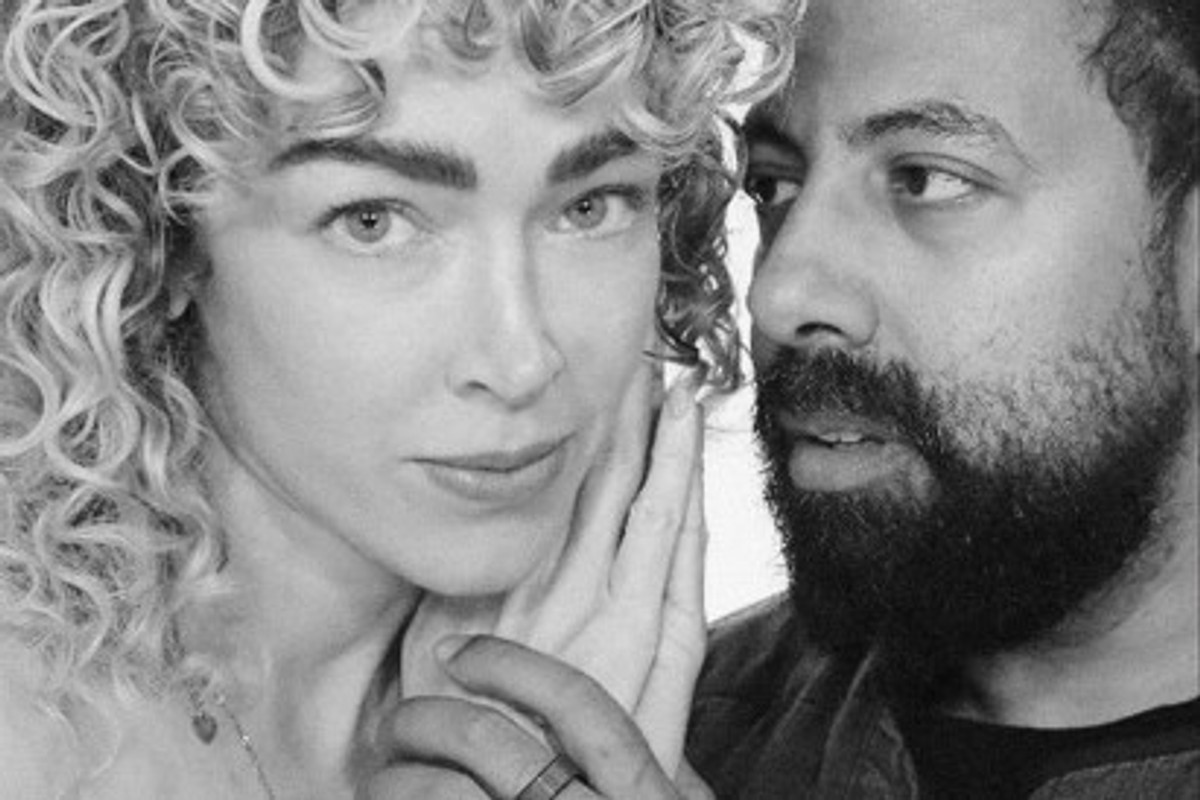

In a backyard in the valleys of Los Angeles, a crowd of 60 people gathered to celebrate the life of Katherine Early McCollough.
Family members, longtime friends, colleagues, and even an ex-boyfriend, who hosted the gathering at his home, spent the evening drying tears and laughing as they exchanged memories of McCollough: how she always forgot her keys, her silly made-up language that they somehow all became fluent in, and the sheer magic that was Kat.
But the obvious hung in the air, unsaid. In recent months, McCollough had become gaunt. The sparkle in her eyes had dulled and her smile seemed forced. A mind that got into Cornell Law School, earning a near-perfect LSAT score on her first try, had grown increasingly spacey. Friends struggled to come to terms with how, in the span of around two years, McCollough developed a once-unimaginable addiction to ketamine. And how the figure who had loomed largest over the 36-year-old’s life was now absent: her most recent ex-boyfriend, Reggie Watts.
Had it not been for McCollough’s all-consuming relationship with the popular musician and comedian, nine of her close friends and sister tell Rolling Stone, they believe she would still be alive. They say that McCollough, to quote one friend, wouldn’t have “fried” her brain without Watts’ encouragement to take a heavy array of psychedelics and designer drugs in the name of intimacy and enlightenment. And that following McCollough’s drug-induced manic episode, which prompted Watts to break up with her, a despondent McCollough wouldn’t have secretly traveled to Peru in March to take her life.
“I would call it recklessness,” Lacey Valentini, one of McCollough’s closest friends, says, labeling Watts’ enthusiastic promotion of ketamine and other substances as dangerous. “I’m so afraid that him being so cavalier is going to lead to irreparable harm or death of another person.”
Watts declined Rolling Stone’s multiple requests for an interview and did not specifically address a majority of questions posed to him in a detailed request for comment. However, his attorney, Andrew Brettler, said it was “dangerously false” and a “preconceived narrative” to suggest that Watts was responsible for McCollough’s suicide. Brettler also pushed back on Watts’ alleged prodding of McCollough to take drugs with him, claiming she was already an “experienced” drug user. “Ms. McCollough did not need any so-called ‘encouragement’ from him,” Brettler said in a statement.
Still, five women who previously dated Watts tell Rolling Stone they recognize elements of their own experience in how McCollough’s friends describe her relationship with the comedian: Watts’ needs prioritized above their own, the chipping away at their self-confidence, and the prompting to take substances with him.
“I do feel like he’s not who he projects himself to be publicly, and I’ve seen many people hurt or mishandled in their relationship with him,” says Anna, who dated Watts in 2018 and was part of his larger friend group. (She requested a pseudonym to protect her privacy.) “I have wanted to see much more accountability than has been taken for all of this.”
In the five months since McCollough’s death, her younger sister Colleen still struggles to wrap her mind around how drastically McCollough changed during her time with Watts. “I feel very strongly that the sister that I knew before this relationship would still be here if she had never met him,” she says.
 McCollough in Los Angeles, 2023 Pete Lee
McCOLLOUGH WAS IMPOSSIBLE to miss. She was striking: model height, with large, bouncy curls that she dyed various shades of pink and blond before settling on a captivating auburn hue. Friends describe her as a lovable weirdo who made connections wherever she went, and maintained them with check-in texts and hourslong phone calls. She read voraciously, had a depth of knowledge in music, art, and film, and gravitated toward creative pursuits. She had a razor-sharp sense of humor that lent itself to her obsession with the comedy world. After years of feeling like she stuck out in her conservative hometown of Columbia, South Carolina, she moved to Los Angeles in 2016.
McCollough quickly created a network of friends through attending music gigs and comedy shows, her various jobs, and community and activist groups. She had a brief stint back on the East Coast, when she quit her digital-marketing position at a record label to earn a law degree at Cornell in Ithaca, New York. But she missed the sunshine and finished her final term at UCLA. It was around this time, in May 2023, that McCollough bumped into Watts at a party. She commemorated the moment with a text to a friend: “That photo was taken by Reggie Watts, whose ketamine I was high on. What a life.”
It’s a running joke in Los Angeles that if you’re out late enough, Watts will somehow materialize. The youthful 54-year-old is easy to spot, his six-foot build accentuated by his long, frizzed-out hair that he wears loose or piled high in a bun that tilts to the side. Watts comes across as a lovable, goofy “teddy bear,” says one ex-girlfriend who requested anonymity for privacy, and someone who’s always down for a good time. “He’s one of the most social people that I’ve ever met, and loves staying out super late,” says Dakota, a close friend of McCollough who was also friendly with Watts, and requested a pseudonym for professional reasons. “When the bars close down, he frequently hosts gatherings at his house until five, six in the morning.”
An eccentric character with a cult following, Watts considers himself a citizen of the world. Born overseas to a French mother and an American Air Force father, he spent his early years bouncing around military bases in Germany, Italy, and Spain before his parents settled down in Great Falls, Montana. He grew up around music, taking piano lessons at age five, clanging out his own arrangements rather than following sheet music. Performing came naturally, but Watts wrote in his 2023 memoir that he was “terrible at memorizing” and preferred winging it onstage.
These early tendencies would become his calling card: improvisational, surrealist stand-up acts blending music, looping pedals, and comedy. Watts bounced around small bands before he began composing for comedy specials and the Key & Peele show, and starred in the TV talk show Comedy Bang! Bang! His big Hollywood break came in 2015 as bandleader for James Corden’s late-night show, which ran until 2023. The New York Times crowned him “the most influential absurdist in comedy today” in 2016.
McCollough told friends that she doubted Watts remembered their initial encounter, but when she bumped into him again at another party in late 2023, they began a whirlwind romance. McCollough thought Watts was a comedic genius, and the pair shared a similar sense of humor, establishing their own bits and improvisational riffs. “She was taken with him immediately,” Colleen says. “She just got hooked.”
The two began spending all their time together, with Watts flying McCollough first class to join him on tour stops. “It was very intense,” McCollough’s friend John, who asked that his full name be withheld for reasons related to his job, says. “I would describe it as Reggie love-bombing her. Like, ‘Let me fly you out to here. Let me treat you to this.’ It was extremely generous.” Watts’ munificence was “world-changing” for McCollough, Valentini explains. “It truly felt like a cheesy romance movie,” she says. “He was really playing the part. He met her every desire, and she really wanted that.”
But there was early friction. Watts was clear from the beginning that he had been polyamorous for decades and McCollough should expect him to continue dating other women. At an early age, Watts wrote in his memoir, he became obsessed with the idea of romance, fashioning himself into the “sensitive James Bond, the funny James Bond, the James Bond who respected women.” Watts found he had a habit of continually falling for women who “were strong, who were bold, who had a little unexpected magic about them,” and decided it’d be best to keep all of his relationships open.
McCollough was not game. After a few months of dating, McCollough effectively gave Watts an ultimatum, and he agreed to be monogamous. She then moved into Watts’ Silver Lake home. “After that point, they hard-launched,” John says. Watts went first, posting a snapshot of McCollough kissing his head to Instagram. “Girlfriend,” he wrote in late May 2024. McCollough followed days later: “This is Reggie, I love him.”
A few months into their relationship, Colleen felt she was watching her sister “completely do everything to bend herself to fit his life,” although McCollough was supposed to be studying for the bar exam. McCollough reassured friends that she had things under control, cramming in sessions from dimly-lit airplane cabins, backstage at a show, or cocooned at social gatherings.
McCollough felt a need to be near Watts constantly, fearing he would lose interest if she didn’t accompany him to events. As a result, she became his shadow. Friend Maria Vanderslice recalls gently broaching the topic with McCollough, asking why she didn’t seem to be taking her law career seriously. Watts interjected, proclaiming his love for McCollough and telling Vanderslice that he and McCollough were “spiritually married and he would take care of her forever, [and that] she didn’t need to worry about money ever again.”
“I feel very strongly that the sister that I knew before this relationship would still be here if she had never met him.”
Colleen McCullough
Those promises influenced McCollough to quit her legal externship in mid-2024 and become Watts’ unpaid assistant, according to Colleen and three friends. With Watts purportedly stressed about finances in the wake of the Late Late Show’s end, McCollough volunteered to subsidize his costs by running his social media accounts and handling odd jobs like manning his merch stand.
Everyone in McCollough’s circle could see she was consumed by the relationship. McCollough’s ex-boyfriend and friend Travis Flournoy says that, prior to dating Watts, she “actively resisted” discussions around spirituality and higher consciousness. “She was the least ‘woo-woo’ person,” he says. But Watts, who is well-versed in gnosticism — an esoteric, religious philosophy that places emphasis on the spiritual realm and obtaining wisdom about oneself — seemed to have had a profound impact on McCollough’s worldview. She began parroting some of Watts’ beliefs about discovering one’s higher self to her friends and mused on those concepts in her own writings.
“She felt very strongly that Reggie was her soulmate and her teacher,” McCollough’s longtime friend Andrew Margalit says. “She just wanted to fucking be with him.”
WATTS’ FONDNESS FOR DRUGS is no secret, with one mutual friend of his and McCollough’s describing him as an “all day, every day ketamine and marijuana user.” He’s a psychedelic evangelist and self-declared “psychonaut,” believing psychedelics and spirituality go hand in hand. He wears shirts with “ketaverse” printed on the front and has appeared on a number of podcasts, academic panels, and a Netflix documentary discussing his experiences with substances.
His first exposure to drugs came as a teenager, smoking marijuana in high school. Watts said he didn’t see cannabis as a thoughtless form of escapism, but an intentional opportunity for self-discovery and enlightenment. His psychedelic exploration came while living in Seattle and performing with his early musical group, Maktub, in the 1990s. But Watts said he scaled back when he entered his thirties. “Now I rarely, rarely do them,” he told Forbes in November 2020. “Maybe I’ll do mushrooms or something like that once every three or four years.”
By 2021, Watts took a liking to ketamine. Is anyone in a “K-hole?” Watts semi-jokingly asked the crowd at the Outside Lands festival in San Francisco that October. He then launched into a spiel about how he was a “client” of ketamine and he’d “encourage all of you guys to get a prescription.” According to Watts, ketamine felt like “dancing on the edge of a black hole” and experiencing “pure consciousness observing itself.”
Developed in the 1960s as a surgical anesthesia, ketamine has grown in popularity as a recreational drug, particularly within the rave and nightlife community, for its dissociative and psychedelic effects. (It’s also used as a sedative for large animals, earning its reputation as a so-called horse tranquilizer.) In the 2010s, a wave of studies found ketamine had significant success in treating neurological conditions, particularly depression, PTSD, and anxiety, and a surge of ketamine-therapy clinics began popping up across the U.S. Still, it’s far from a magic bullet, with extreme usage linked to neurotoxicity, cognition impairment, and bladder issues. “Without a doubt, I’ve seen the benefits, and I’m sure it’s saved many patients’ lives over time,” says Dr. Gerard Sanacora, a professor of psychiatry at the Yale School of Medicine who studies ketamine and has used it as a form of treatment for patients. “[But] these are truly dangerous drugs … and it’s really scary that this belief [is] out there that these drugs are free of danger, because they’re not.”
As public sentiment has begun to more openly embrace the idea of ketamine as a therapeutic aid, Watts has become a prominent advocate. On Joe Rogan’s podcast in 2024, Watts proudly recalled leading a friend through a ketamine experience after they had been nervous to try the drug, saying he considered himself “really good at dosing.” In January, Watts was a guest on actor Rainn Wilson’s podcast, where Watts played devil’s advocate to Wilson’s skeptic about casual use of mind-altering substances. Wilson brought up actor Matthew Perry, who had been undergoing ketamine-infusion therapy and became addicted, leading him to acquire the drug outside the safety of a clinic. Perry suffered an accidental fatal overdose in October 2023 and drowned in his hot tub. (Five people, including Perry’s personal assistant who helped supply the actor with the doses, were convicted on charges related to his death.)
Watts had a swift rebuttal. “Whatever he died of, it wasn’t ketamine,” he countered. “It was like it was a drug interaction, and he also had heart problems. There was a confluence.” (The Los Angeles Medical Examiner’s Office listed Perry’s cause of death as the “acute effects” of ketamine, noting Perry had a history of heart disease.)
Viewers mainly agreed with Watts and scoffed at Wilson for being what they perceived as overly judgmental. “It’s clear that [Watts] has a fair amount of experience with psychedelics and he approaches them responsibly and thoughtfully,” said one commenter.
But Watts is not as responsible as he likes to publicly portray when it comes to recreational substance use, four sources tell Rolling Stone, claiming that he often offers a range of drugs to anyone in his proximity. “It’s pretty commonly known in our shared circles [that Watts gives] people way too much, and is not super responsible with how he introduces people to it or how he administers it,” says Anna. “It’s incredibly reckless.”
Vanderslice remembers a dinner party Watts was hosting in 2024. “Immediately after everyone took their last bite of food,” Vanderslice says, Watts pulled out a basket of drugs, declaring it was “time for dessert.” Inside, there were “probably like 20 substances that I’ve never even heard of.”
Watts deemed anyone who didn’t partake alongside him “boring” and tended to be dismissive of them, three of McCollough’s friends say. One friend says Watts once grilled her at a party when she declined his offer of ketamine. “It was like I was in a D.A.R.E. ad,” they say, referring to the 1980s anti-drug campaign.

McCollough and Watts in June 2024 Faye’s Vision/Cover Images/AP

McCollough and Watts in March 2025 Paul Morigi/Getty Images

McCollough and Watts in September 2025 Michael Buckner/Variety/Getty Images
High Maintenance creator and actor Ben Sinclair described in a Substack post an alarming incident that demonstrated Watts’ glib attitude. At a dance party co-hosted by Watts in March, where Sinclair continually took ketamine throughout the night, a man wearing a lab coat — “Dr. Leo” was scribbled on his jacket in Sharpie — offered Watts and Sinclair what they were told were quaaludes. Watts went first, remarking that something tasted off, according to Sinclair. Still, Watts offered a generous heap of the powder to Sinclair, who readily accepted. Sinclair said they’d later learn they took a massive dose of O-PCE, branded as a significantly more potent version of ketamine, with longer-lasting effects and a deeper dissociative free fall.
“I mourned my beautiful brain,” Sinclair wrote, describing how he spent the next few hours monitored by friends. When the drug finally wore off, Sinclair said he prodded Watts to reflect with him, realizing they could have easily suffered a fatal overdose. “[Watts] started speaking of gnosticism in a British accent, an improvisational bit he often does while performing. I said, ‘Be real with me.’ He said, ‘I am being real.’” They parted ways. “I later heard that Reggie danced at a rave that night,” Sinclair wrote.
WITHIN McCOLLOUGH’S COMMUNITY of creatives, no one was a prude about drug use. But while all of McCollough’s friends admit she was “open-minded” and had experimented with substances in the past, including marijuana, cocaine, ketamine, and Ecstasy, they are adamant that she was not a heavy drug user.
“I never knew her to really be a drug user,” says one friend. “At parties, I rarely saw her do drugs, and if I did, she’d do one or two ‘bumptinis’” — McCollough’s made-up word for the “tiniest bump of something.”
McCollough drastically increased her consumption after she started dating Watts, her friends say. Drugs became a central part of their relationship, and early on, Watts brought McCollough to a practitioner for an intramuscular ketamine injection. McCollough told friends — as did Watts — that Watts felt he could best connect with someone when they were on the same plane.
“He would call it medicine,” friend Dakota explains. “He really has this idea that most people moving through the world are holding themselves back, and taking this ‘medicine’ all day, every day, opens you up and detaches you from your ego.… He thought Katherine had all these flaws, and he acted as if he were her teacher … [and through this] medicine, ‘I’m going to guide you through these experiences and towards being a more conscious, open-hearted person.’”
Nora, who met McCollough at Cornell and requested a pseudonym due to her career, later compiled a list of all the substances McCollough said she had tried with Watts: LSD, MDMA, DMT, MMCs, cocaine, Ritalin, Adderall, ketamine, Xanax, Valium, and Modafinil — a wakefulness drug. “He really took her to the edge,” she says.
McCollough’s friends were also concerned about the amount of drugs she was taking. According to two of McCollough’s friends, Watts believed there should be no difference in their dosage amounts, despite their significant differences in tolerance levels and physical size. It was something McCollough repeatedly voiced concern about, confiding in at least two friends that she believed Watts was giving her more than she could handle. At one party, a friend says she overheard McCollough questioning Watts as to whether the amount of ketamine he was administering to her was the “right” amount. Watts was “constantly pushing her boundaries and trying to convince her that she should be taking the same dose as him or at least a heavier dose than what she thought she wanted,” Dakota says. “It was tension between them. The vibe was that he didn’t respect that.”
In a statement, Watts’ attorney didn’t respond to questions about the prominent use of drugs in his and McCollough’s relationship. However, he claimed that McCollough was already an “experienced drug user,” had taken ketamine prior to when she met Watts, and didn’t need to “encourage” her to partake in substance use with him.
For McCollough’s friends, the escalation was jarring. “Katherine, to us, was not a rock star or a psychonaut, and clearly was having moments where she wasn’t keeping up and faltering,” her close friend Travis Broyles says. McCollough would later detail her extensive drug use in her Notes app, claiming that she “nearly died” from the chemical inhalant amyl nitrate, had K-holed “extremely hard many times,” and once “severely overdosed on MDMA.” (It does not appear that she sought medical help in these instances.)
McCollough told her friend John about the amyl nitrate incident, which occurred within the first six months of dating Watts, saying Watts had given her too much and she “could feel her heart stopping.” Watts had “to give her a bump of cocaine to push adrenaline back into her system,” John says McCollough told him. When John voiced concern, she brushed him off, countering that she was safe and Watts had taken care of her.
Brylan May, who met McCollough through her legal internship at the Writers Guild of America West in 2024, recalls once seeing McCollough snort a line of cocaine at a party and immediately throw up. Watts “didn’t move a muscle,” May says. Instead, Watts reasoned McCollough must not have had enough water that day.
“There were a lot of physical moments of vulnerability that Katherine found herself in that she normalized,” John adds. “But she wouldn’t have found herself in this situation without the reality that was imposed on her by Reggie. He was the instigator.”
ROLLING STONE SPOKE to five women who dated Watts over the past two decades, whose combined experiences showcase a pattern of what some described as reckless and selfish behavior from Watts that manifested in different ways across his relationships and led to potentially precarious moments.
Substances have always been a major part of Watts’ lifestyle, according to three women who recall how he’d encouraged them to use drugs with him. A decade ago, Watts seemed mostly interested in weed and THC-based drinks. Claire, who dated Watts in 2016 and requested a pseudonym to protect her privacy, says he was “constantly ushering” her to join him to get high. “The context was usually around ‘You’re always telling me all the things that make you feel bad, and I’m giving you something that would make you feel good, and you’re not letting me help you feel good.’”
“I’m afraid that him being so cavalier is going to lead to irreparable harm or death of another person.”
Lacey Valentini
During the pandemic, according to two of the women, Watts began experimenting with ketamine and kratom, a substance from a tropical tree’s leaves that acts as a natural stimulant in smaller doses and a powerful sedative in higher amounts. Olivia, who also requested a pseudonym to protect her privacy, began casually seeing Watts in 2020 and says Watts was “very insistent on me trying” ketamine and was “espousing expansive, almost theological-like reasons” to get her to agree. Watts would offer her a “hero dose” — a particularly large quantity — which she adamantly refused. “But maybe if someone was more open,” she says, “maybe they got the hero dose without stopping.”
Anna says she never felt judged or pressured by Watts to partake in substance use with him, but she did feel “encouraged,” though she noted Watts would respect her decision if she declined. Anna recalls several instances where Watts had given her too much of a substance, describing him as “reckless” when it came to dosing. “I had so many experiences with him where he would be like, ‘This is totally going to be fine for you — it feels amazing.’ Next thing you know, I’m dry-heaving on my hands and knees in a stranger’s bathroom.” Watts was largely inattentive in those vulnerable moments, Anna says. “It doesn’t feel like there was a lot of care,” she adds. “It was mostly like, ‘Damn, that sucks.’”
Claire and another woman, whom Rolling Stone is identifying as Lindsey, described an intense cycle of love-bombing and whittling away at their self-confidence. They claimed Watts played manipulative mind games with them and blew past their boundaries in pursuit of his own self-satisfaction. (Watts’ attorney said any suggestion that he was an “abusive” boyfriend was false.)
Lindsey, who dated Watts for roughly three years and requested anonymity, described their relationship as emotionally and psychologically abusive. Watts seemed to want to “make me feel small,” Lindsey says. “It was a constant cycle [of] love-bombing and veiled insults that would tear down your self-esteem.” Their relationship ended in 2020 when, feeling “depleted,” Lindsey says she broke up with Watts. “He started hyperventilating. I could see in his eyes that he knew he lost his grip on me, and it was so weird how it manifested in him.… He kind of teared up a little bit, [and] that’s all I remember because I was really surprised [by] that reaction from him.”
After the breakup, Lindsey says, she tried to remain friendly with Watts. She became suspicious, however, he was monitoring her when, on at least two occasions, he appeared where she was, including a restaurant during a date and at a hotel in Los Angeles. In trying to win her back, Watts allegedly disclosed that he had an explicit video of her that she had not consented to. “I was shocked,” Lindsey says, still confused about why Watts would think she “would be flattered” by his confession. Lindsey says she made Watts delete the recording, recognizing it as a “disgusting breach of trust.” She eventually blocked Watts and discarded all of the electronic devices he had gifted her. “I wish I went to the police, but the time has passed,” she says. (Watts offered no response when asked if he had filmed a sexual encounter with Lindsey without her permission.)
To Claire, Watts seemed charming and lighthearted, but she would now describe their four-month relationship as “abusive.” A red flag came when Watts pressured Claire to stop taking doctor-prescribed medication, blaming the prescriptions on her struggle to orgasm during sex. “I remember we had one fight where he was at the James Corden show backstage yelling at me about how this was an ego thing for men,” she says. “That it was a deal-breaker for him.” It was a point of contention for weeks, and after putting up with Watts rolling his eyes and walking out of the room whenever she took the medication, “I finally ended up going off of it for him, which I really regret.”
After Claire went off her medication, she says, one incident would make her cut Watts out of her life completely. During what would be their first official date, Watts disclosed that he had an STD and vowed to be hypervigilant about wearing condoms. He made a “big show with where he keeps his condoms,” Claire says. (Watts was not always upfront about his alleged STD diagnosis, according to three women, who say he only disclosed his condition after they had been intimate. McCollough told Colleen that something similar occurred with her, with Watts allegedly saying, “‘I didn’t think you needed to know because I wasn’t having an outbreak,’” Colleen says McCollough told her.)
In Claire’s eyes, there was an implicit agreement they would always use protection. One night, as Claire was leaving Watts’ home, she claims he came up behind her and initiated sex. Afterward, Claire knew something was wrong. “Before I even looked at him, he said, ‘I’m so sorry, I just had to know how you felt.’ My heart went into my throat, because I knew what that meant. I turned around, and he did not have a condom on.”
For years, Claire says she had been hesitant to publicly share her experience with Watts. “You always have in the back of your mind … maybe everyone thinks I’m crazy because he’s so nice [and] charming,” she says. “Why would anyone believe me? What if I’m the only person that has this story?”
Watts did not respond to Rolling Stone’s detailed list of questions regarding his behavior in past relationships, but through an attorney, said any suggestion that he “recklessly” exposed his ex-girlfriends to a sexually transmitted disease was false. His lawyer provided the name of a former girlfriend whom Watts dated in the early 2010s as a character witness, but she declined to be interviewed by phone. In a text message, however, she said, “Reggie is a wonderful, generous, thoughtful person, and a dear friend.”
A third woman, who briefly dated Watts in New York in the 2010s and asked for her name to be withheld for professional reasons, said an abrupt end to their fling left her feeling upended. She felt so unmoored that she took acting classes in a bid to feel more interesting. “I didn’t even date him for that long, but it affected me so seriously that I ended up having a complete personality crisis,” she says. “I still remember having these really intense feelings of, like, ‘Why do I feel completely broken?’ It left me questioning my own self-worth.”
 Reggie Watts during The Late Late Show With James Corden in 2016 Terence Patrick/CBS/Getty Images
“I THINK I HAVE an addiction problem,” Colleen says McCollough confided to her in the spring of 2025. McCollough was hesitant, though, to broach the topic with Watts. “‘I’ve got to prepare for it, because he’s not going to like it,’” Colleen says McCollough told her.
Weeks later, McCollough would backtrack, becoming defensive when Colleen asked her how the conversation with Watts went. McCollough said she no longer believed she had a drug problem. “I didn’t realize the danger she was really in, in this relationship,” Colleen adds. “It’s so painfully obvious now.”
A year into McCollough’s relationship with Watts, her friends and sister tried to show McCollough that the relationship was toxic and that they believed there were aspects that were abusive. “I noticed an extreme personality change and the chiseling away and erosion of her independence,” says Brylan May. “I tried the tough-love approach. I could not break the spell he had over her.”
There was Watts’ skirting around paying McCollough any salary for her work for him. He reportedly blamed his accountant for not being able to afford it, although McCollough helped produce one of Watts’ comedy specials and self-funded the production of his improv talk show Watch Watts Happen Live, which yielded only one episode. Then there was the isolation. Watts attempted to steer McCollough away from certain friends he didn’t like, according to Dakota and Vanderslice, the latter of whom recalls two instances when Watts physically led McCollough away to be alone with him in a separate room for lengths of time, including at Vanderslice’s wedding.
“There were a lot of things that he did to control her … that are classic abusive behaviors in terms of trying to isolate her,” Dakota says, such as making McCollough “malleable” enough to be open to leaving her job and some friendships behind. “He cultivated a dynamic and a relationship where she felt like she could only truly access intimacy, closeness, and empathy from him if they were both using [drugs] together.”
While McCollough would do seemingly anything for Watts, it wasn’t always reciprocal. When McCollough returned home to South Carolina to be by her father’s side before his death in early 2025, Watts declined to accompany her and was emotionally absent, telling McCollough that he “didn’t do grief.” According to Colleen, McCollough told Watts she needed his support. “He responded, ‘I’ve thought a lot about that, and I just need to protect myself right now,’” Colleen says. (Watts would later fly into town for the funeral.)
An event in summer 2025 would trigger a devastating domino effect, according to McCollough’s circle. To help in her grieving process from her father’s death, Watts and McCollough took bufo, an intense, ego-death psychedelic derived from the venom of the Sonoran Desert toad.
McCollough wrote in her Notes app that her interest in partaking in the bufo trip was “spurred by grief,” and afterward, McCollough told loved ones that she experienced an enlightening “rebirth.” But she later began telling friends that she was suffering negative side effects commonly associated with the drug, including nightmares, deep anxiety, and panic, for weeks afterward. (Watts’ attorney said it was McCollough who initiated and organized a supplier to administer the bufo, and said Watts never witnessed McCollough suffering from any side effects.)
By August, Watts and McCollough had set off for what was supposed to be a weekslong international trip, but things would take a dark turn. Whether it was continual heavy drug use, an extreme lack of sleep, or continued flare-ups from the bufo experience, McCollough entered a state of mania, resulting in unusual social media posts, strange texts to her friends, and a 24-page Google document titled “A working (complete) unified theory of infinite eternal love.”
Dakota saw danger immediately when she visited the couple in Berlin. McCollough was still taking various drugs and partying alongside Watts throughout the episode, and Dakota says she “started communicating to Reggie [that] this is really serious, we need to get her to a hospital, she needs medication.”
Watts “was supportive in some ways,” Dakota adds. “But essentially it was like, ‘[Dakota], figure this out.’ He kept partying [and] going out with his friends.” (Through his attorney, Watts said it was “simply untrue” that he didn’t assist in getting McCollough medical help in Berlin, saying he “took her to see a different doctor, who examined her and prescribed antipsychotic medication to treat her symptoms.” Watts claimed that he also stopped McCollough from buying drugs from an online delivery service while in the country.)
According to three people, Watts seemed desperate to rid himself of McCollough amid this incident, trying to put her on the 14-hour flight from Berlin to Los Angeles alone, until he was convinced otherwise by McCollough’s friends. When they landed at LAX, McCollough was barely able to walk and soiled herself. Friends came to take her straight to the hospital, where she was placed on a psychiatric hold. A dismissive Watts did not accompany the group to the hospital. Instead, he jumped into an awaiting black car and went home to catch up on sleep. (Watts did not deny that he went home during McCollough’s initial hospitalization, but said, through his attorney, that he later visited her.) Watts was adamant, friend Travis Broyles says, that McCollough was not “having an episode and it wasn’t the ketamine.” Instead, Watts allegedly insisted that “she was going through some awakening, a deeply spiritual moment.”
Still in the throes of a manic episode, doctors kept McCollough overnight, ultimately diagnosing her with bipolar disorder. Dr. Po Wang, a psychiatrist and director of the Stanford Bipolar Disorders Clinic, who did not treat McCollough, says for people with a vulnerability to the condition, “drugs can definitely unmask the vulnerability.” “Maybe the bipolar wouldn’t come out” on its own, he says, “and it would have been brought out now with these stimulating medications.”
After McCollough was released, she eventually returned to Watts’ home, but friends say she didn’t seem like she had fully stabilized. Lacey Valentini, one of McCollough’s best friends, and others say they begged Watts to get rid of all the drugs in the house. He came up with a compromise. Watts “put all the drugs Ms. McCollough could access into a biometric safe that Ms. McCollough could not open and he hid all the alcohol that was at the residence,” his attorney said. But McCollough was still able to find drugs. Colleen claims that she saw McCollough doing drugs at Watts’ home over FaceTime during this period, and friends claim that Watts never safely locked all of the drugs away.
Still in a vulnerable mental state and still taking various drugs, McCollough pinballed between being grateful that her friends had come to her rescue and furious over the hold, which led to a diagnosis that she disagreed with. In her Notes app, dated Aug. 18, 2025, she jotted her “reasons I’m not worried about” the manic episode, saying there was no known family history of bipolar disorder and this was the first manic episode she had ever experienced.
In that same Notes document, McCollough addressed the flip side of her situation. “Reasons I AM worried about the manic episode,” she began, listing the times she believed she overdosed and highlighting scientific findings about the long-term effects of heavy ketamine usage. McCollough was direct about her views on Watts’ role in her substance intake. “My partner is not totally supportive of me resting or abstaining from drugs. I feel his judgment / resistance when I abstain or barely partake or want to do more research before partaking, because it confronts him with a message about his own drug use that he is not ready to receive yet.” She notes, “There are absolutely things I can do to improve this by asserting stronger boundaries, but I also need his support and understanding.” (Watts offered no response when asked about McCollough’s claim that he didn’t allow her to take breaks from drug use.)
There was an immediate shift from Watts after the manic episode, McCollough’s friends say. McCollough had already felt anxiety about the security of her relationship after the death of her father disrupted their honeymoon phase, according to Colleen. McCollough was also struggling to keep up with Watts’ around-the-clock partying, which began taking a toll on her physically and mentally. “She felt Reggie could not get rid of her fast enough,” Vanderslice says. “He wanted absolutely nothing to do with her the moment she stopped being fun and easygoing and a good vibe to be around.”
By October 2025, Watts ended their relationship. In explaining himself, Watts said he couldn’t handle being McCollough’s “caretaker,” Dakota says.
“It’s pretty commonly known in our shared circles [that Watts gives] people way too much [drugs].”
“Anna”
McCOLLOUGH WAS DESTABILIZED after the breakup. She had no home and no steady job, and had pushed some of her closest friends away following the manic episode. McCollough had wanted to explore a career in the entertainment space, but without Watts’ support, she believed that possibility was out of reach. She continued to live with Watts and accompanied him to a set of shows in Australia, partly because she had invested a significant amount of her minimal savings into creating his new tour merchandise, according to Colleen. In December, McCollough moved out and rented a room from a mutual friend, with Watts covering a few months of her rent until she was back on her feet, spotting her around $1,400 a month. Watts’ attorney says he also paid for McCollough’s psychiatric treatment and medication.
Through the first months of this year, friends say, McCollough’s self-confidence was shattered, and she lost an alarming amount of weight. Watts preferred to speak to her by email, was frosty, and ignored her when he bumped into her at events, according to four friends. (“The last time Mr. Watts saw Ms. McCollough prior to her trip to Lima, he told her he loved her and would always be supportive of her,” Watts’ attorney says.) Just a few months earlier, Watts had assured McCollough that she was his lifelong partner and told their friends they were as good as married and that he’d always provide for her. Now, she’d been dumped for what she saw as an involuntary medical response to a drug. And she was addicted to ketamine, taking near-daily hits and voicing anxiety about the long-term ramifications, her friends say.
“She was pretty afraid that perhaps she had fucked up her brain in some way,” McCollough’s friend Andrew Margalit says. “I’ll use her own words here: She regretted how cavalier she was about drug use, but she really trusted the people that she was around.”
No one registered the depth of McCollough’s despair. She began visiting an anonymous suicide forum that some states have tried to restrict access to, and in early March — shortly after her 36th birthday — she began posting about different means and methods to end her life. She wrote of her fears of a painful death, and was hopeful about finding someone from the forum to be present with her in her final moments.
McCollough wrote a detailed post about why she felt this was the path she needed to take. “I was in a relationship with a brilliant, handsome, sensitive, romantic, hilarious, insanely talented and fun partner that ended because I had a drug-induced manic episode 7 months ago (never happened to me before that in my life). It made him lose his romantic and sexual attraction to me to see me in that state.… Our relationship was dream-level romantic and we loved being together all the time …
“Doing really fun and stimulating things literally every day with other incredible artists, sleeping in as late as I wanted, sharing a beautiful home, not worrying about money for the first time in my life, being spoiled with whatever I wanted,” she added. “His life is absolutely incredible and sharing it with him was bliss, magic, unbelievable, beyond my wildest dreams…. I can’t get over the stupid way I lost him and I can’t stand my life now compared to what it was with him. I also can’t stand knowing I will never be remotely close to that happy again, and knowing I will never love someone nearly as much as him because he is so total package and singular. I think about him and memories of our life together literally every waking moment and sometimes in my dreams too.”
It was among some of McCollough’s final posts on the forum. Then, without telling anyone apart from a German man she is believed to have met through the site, McCollough boarded a flight for Lima, Peru, where it’s reportedly easier to obtain a euthanasia agent. She briefly texted with Watts about the afterlife and posted “Happy Reggie Week” on Instagram to celebrate Watts’ upcoming March 23 birthday. Then McCollough went dark.
It had been only a few days after McCollough left when Colleen realized she hadn’t heard from her sister. Colleen touched base with McCollough’s friends, who also had no idea where she was. Having exhausted her options, Colleen reached out to Watts for assistance. He also hadn’t heard from McCollough and didn’t know where she could be, but he remembered that he had access to her iCloud account and was able to trace her phone’s location to a police station in Lima. “I’m thinking, ‘Oh, god, she’s there doing some drug ceremony or something,’” Colleen says. Through a translator, Peruvian authorities relayed that McCollough had been found dead alongside the German man, both dying by suicide.
“To everyone this hurts, I am so sorry that my peace came at your expense,” McCollough wrote in a goodbye letter that was found with her body. “I hope you can forgive me. I hope it helps you to know that the way I went was as peaceful as possible. I know it’s so selfish and loser-y to quit because drugs gave me a mental illness that took away the people and the life I loved. But I’m tired and it hurts and I can’t trust that things get better. I believe that consciousness is an ocean containing everything and that the individual corporeal self is only a wave temporarily rising from it. I’ve returned to the ocean but I believe we bring our memories back with us. Because of this I will never forget or stop loving you.”
 McCollough with sister Colleen Courtesy of Colleen McCollough
FROM A CORNER of a dark room on April 1, Watts began recording himself singing a rendition of “Blueberry Hill.” “Hello and welcome. Tonight is a very special night,” Watts began in a faux British accent. He briefly paused, ducking out of the frame as the sound of several loud sniffs and the clinking of hollow metal came from off-camera. When Watts reappeared, he introduced a new piece of music, something he had just written, an abrasive, cacophonous track. “Katherine vibes,” Watts captioned the video. “My heart is full for you.”
In a separate post, Watts shared the news of McCollough’s death and elaborated on his moment of reflection to his nearly half a million followers. “Katherine, I will miss you so much. I know you were in pain, and while I tried everything I could to reflect the light you brought into this world, the sorrow became too much to overcome. You changed my life. You opened my vulnerability and taught me how to receive love from someone so close. We built a life together, went on adventures, and we took chances together. You had a natural radiance that people could feel from so far away — a light that you carried despite the difficult path you walked from childhood. I’ve been processing so much. I know you can hear me, and I honor the intentionality of your journey. You planned your time in Lima beautifully — the coast, the art, the meals shared with a friend. While it is so difficult for those of us left behind, I understand your need for peace.”
Information about McCollough’s last days was news to Colleen and McCollough’s friends. “We’re like, ‘What is he talking about?’ We didn’t know those details,” Colleen says. It took another week for Watts to disclose to Colleen that he had rummaged through McCollough’s iCloud. Flicking through her photos, scrolling through her texts, and going into her Notes app, Watts was able to retrace McCollough’s final moments and locate a draft of her goodbye letter, which he recited back to Colleen.
Colleen was beside herself. “It was torturous to not know anything, and he knew the entire week,” she says. “He didn’t consider her family at all. He didn’t care. He was like, ‘I have this information, and I’ll decide who needs it and who doesn’t.’” (Watts did not offer an explanation to Rolling Stone as to why he did not immediately share details with McCollough’s family. Through his attorney, Watts said he wasn’t aware McCollough was suicidal. “Not once during that period did Katherine or any of her family members or friends, ever suggest to Reggie that she was suicidal.” )
McCollough’s friends were similarly incensed. Watts spoke as if he and McCollough were still together. He had used flowery language to describe what they saw as a tragic and horrifying decision. “I don’t think there’s any universe in which you can compliment somebody’s suicide,” Margalit says. “She went to Lima explicitly and exclusively to kill herself. There’s nothing beautiful about that.”
Watts was also hindering the healing process by being insensitive and self-centered, friends say. Watts initially refused to delete a video where he shared more details about McCollough’s death, erasing Colleen’s comments where she begged him to take down the post. (He eventually removed the video.) Watts asked Colleen if she’d feel comfortable obtaining crime scene photos of McCollough in the bed where her body was found. And when it came to the laborious process of bringing McCollough’s body home — for which McCollough’s friends created a GoFundMe to offset the $20,000 cost — Watts never donated to the fund or shared the link with his followers. (Watts did not dispute this.)
“There’s just no room, even now,” Colleen says. “There’s no room for her in her own death.”
McCollough’s loved ones view her experience with Watts as a devastating cautionary tale: a perfect storm of conditions that led to a tragic outcome. They firmly believe that if McCollough had never met Watts, had he not pushed his extreme views on psychedelics and substances on her and had McCollough not adopted those views, that she’d still be alive today. “I’m confident if she never met Reggie, she’d be alive,” Nora says.
The women who previously dated Watts say although they were left with emotional scars, they feel lucky they were able to get away. “My heart just broke for her,” Lindsey says. “I remember feeling [how] he would make me feel — completely devastated and worthless. I just wish so badly that she could have known that it gets better, and that this guy has no say in your worth.”
McCollough’s sister and friends hope that her story can prevent another woman or fan who heeds Watts’ blanket endorsement of ketamine and other substances from falling into addiction. Watts is “a manipulative and negligent person riding the wave of this popular drug,” Broyles says. “It was [McCollough’s] undoing.”
Many also voiced concern for Watts himself, labeling his “daily” substance use as equally alarming. It would be a silver lining to Margalit if Watts has a wake-up call about how he propagates psychedelics. “Hopefully, as a result of these things, he can reconsider his approach and advocacy,” Margalit says.
“People can get so wrapped up in the celebrity part — his persona — and they trust him,” Colleen says. “I never thought it would happen to Katherine. I would hate for this to happen to anyone else.”

 Dominic Kwow / Sea to Sky Media