
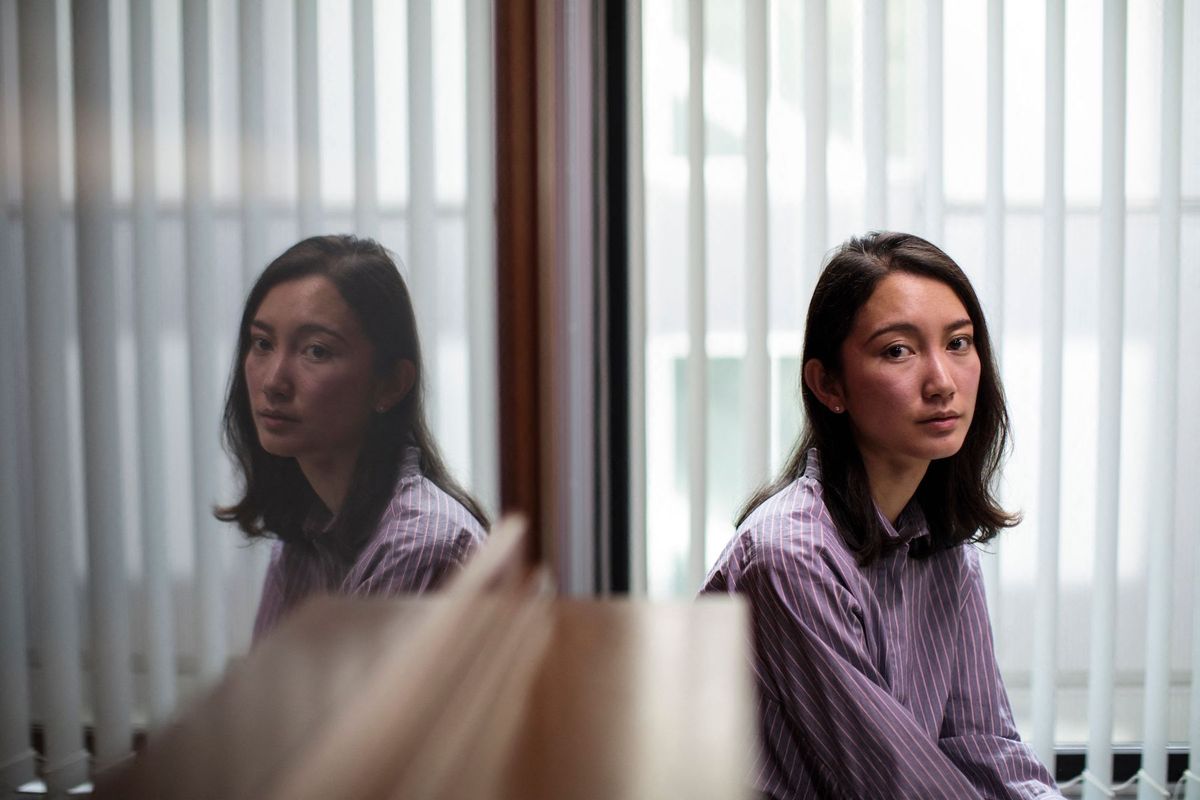

On the night of April 3, 2015, Shiori Itō, an intern at Thomson Reuters, met Noriyuki Yamaguchi at a restaurant under the guise of a job interview. Yamaguchi, then the Washington bureau chief of Tokyo Broadcasting System and a personal friend (and biographer) of Prime Minister Shinzo Abe, was a mover and shaker in Japanese media and politics with the power to change her career. The last thing Itō remembers from that dinner is getting violently ill in the bathroom. The next thing she remembers is waking up in a hotel room the following morning to Yamaguchi raping her.
Itō documented her yearslong journey toward justice in Black Box Diaries, an extraordinary new documentary bowing at this year’s Sundance Film Festival. To call it a herculean task would be a massive understatement. Itō, 25, was not only taking on a high-profile media figure nearly twice her age with ties to the prime minister, but also a legal system whose sex crime laws hadn’t been changed since 1907 and were designed to protect family honor more than victims. According to the law, rape was defined as vaginal penetration; victims had to prove they’d obtained physical injury resisting their attacker; and the age of consent was 13. A survey conducted by Japan’s Cabinet Office found that just 4% of rape victims reported their assaults to the police.
Black Box Diaries is both a riveting account of heroism and journalism. We see Itō meeting with investigators and officials on her case, surreptitiously recording their conversations (occasionally via a tiny tape recorder hidden in her bra). We listen to phone conversations between Itō and the investigator, who initially refuses to accept her victim’s report due to a lack of physical evidence and a single inconsistency in her account — that she claimed to have left the hotel at 5:30 a.m. instead of 5:50 a.m. It takes her two weeks to convince the investigator to take her case seriously. When he does, the prosecutor needs even more convincing. The police take photos of her recreating her rape with a life-sized doll. It’s such a demoralizing, grossly unfair process that Itō breaks down several times on camera.
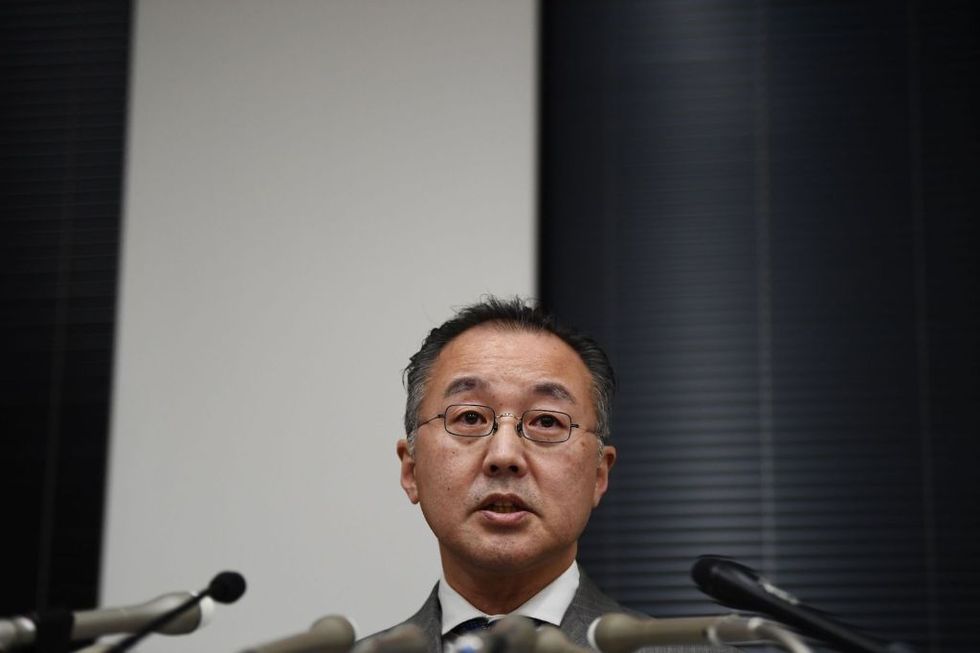
And then things get even weirder. We learn that the investigator on her case has been mysteriously transferred — the reason given: “because he was good at his job” — and a new investigator has been assigned. She meets the original investigator, capturing their rendezvous with a hidden camera, who says he was “suddenly thrown off the case.” He informs her that the police had an arrest warrant for Yamaguchi, brought it to Narita Airport with four police officers waiting in the car to apprehend him, and then received an order from up on high saying, “Wait, halt the arrest.” (It just so happens that Yamaguchi’s biography of Abe was published two weeks before the case was thrown out.)
With nowhere left to turn, Itō goes public in May of 2017 — and, against the advice of her sister, decides not to hide her face, which is typical of sexual assault accusers in Japan, because she says she has “nothing to hide.”
“The police initially refused to accept my victim’s report stating the current law makes it difficult to investigate sex crimes. And that Yamaguchi is a prominent figure, Washington Chief of Tokyo Broadcasting System,” she says during her press conference. “Since the incident, I’ve focused as a journalist on seeking the truth. I had no other choice… People need to know about the horrors of rape and how deeply it affects one’s life.”
Only one TV network in Japan carries the press conference and the newspapers barely report it. She’s subsequently accused of being everything from “a honey trap” to using Yamaguchi to “advance her career” to “attacking the government.” She’s branded “a prostitute” because one of her shirt buttons was open during the press conference. She notices a black van with blacked-out windows parked outside of her home at all hours, forcing her to leave her apartment and stay with a friend. She cries out at night and needs sleeping pills to get some rest.
When Itō learns that her criminal case won’t be reopened in 2017, the camera captures her quietly weeping. But she refuses to back down. She releases Black Box, a memoir of the incident and her difficulty reporting it, which helps ignite the #MeToo movement in Japan, but also results in loads of hate mail from men and women. She files a civil suit against Yamaguchi for 11 million yen, or $100,000 (he countersues for 130 million yen, or $1,180,000, alleging reputational damage). And, in one incredible sequence, Itō is seen chasing down the head of the Tokyo Metropolitan Police Department in the street, pounding on his car window as he speeds away.
The pressure nearly consumes Itō. In a video diary addressed to her parents, she announces that she cannot take the pain anymore and is ending her life. The screen cuts to black. The next scene, she wakes up in a hospital. She’s survived the attempt and realizes she must soldier on.
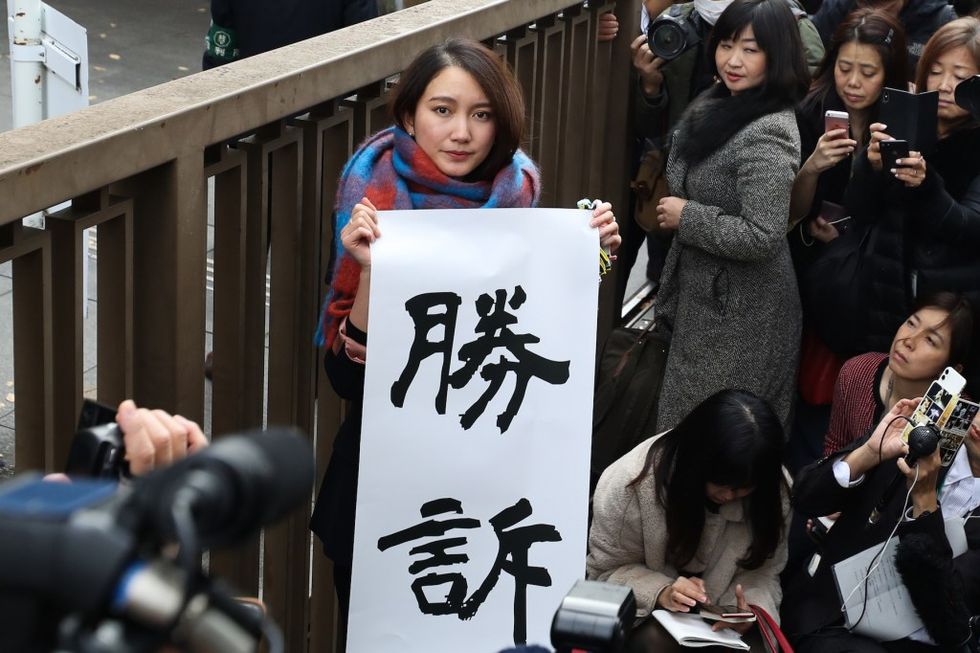
And soldier on she does. In December 2019, more than four years after her rape, Itō wins her civil case, and is awarded 3.3 million yen ($30,000) plus additional damages, with the judge ruling that Yamaguchi raped Itō while she was unconscious. Itō is also forced to pay Yamaguchi 550,000 yen for accusing him of dosing her with a date rape drug in her book sans evidence. Itō’s victory proves a decisive moment in the Flower Demo movement, a social justice campaign protesting sexual violence against women.
In June of 2023, Japanese parliament passed a series of bills updating their sex crime laws for the first time in over a century. The age of consent was raised from 13 to 16, taking explicit photos with hidden cameras was outlawed, and the definition of rape was expanded from “forcible sexual intercourse” to “nonconsensual sexual intercourse,” and now includes victims who are impaired by alcohol or drugs, who are coerced by someone in a position of authority, and who are unable to voice their refusal due to being in a state of shock.
Shiori Itō changed the world. And Black Box Diaries is a monument to her determination and sacrifice, as well as one of the best documentaries you’ll see all year.





«Kiss cam» de Coldplay: la directrice RH impliquée avec le PDG brise le silence