Skip to content
Search

‘American Conspiracy: The Octopus Murders’ Examines Journalist’s Tragic Death, Perils of Sleuthing

‘American Conspiracy: The Octopus Murders’ Examines Journalist’s Tragic Death, Perils of Sleuthing

Obsession works like an addiction. You feed it and feed it, falling down rabbit holes, pursuing your prey with single-minded intensity. You chase the dragon, until you are indistinguishable from the beast itself and the rest of the world slowly becomes a blurry background.

The new Netflix docuseries American Conspiracy: The Octopus Murders is about a great many things: a journalist who either committed suicide or was murdered; a government surveillance software program that the Department of Justice might have stolen from its creators; a shady, scary assortment of geniuses, goons, spies, and killers with tight connections to the CIA, the NSA, and other members of the U.S. government alphabet soup. At it’s best, however, it’s about that unquenchable obsession, the kind that can lead down dark tunnels and into sprawling conspiracy webs and ultimately death. It’s a significant cut above most true crime fare, aesthetically and especially thematically.


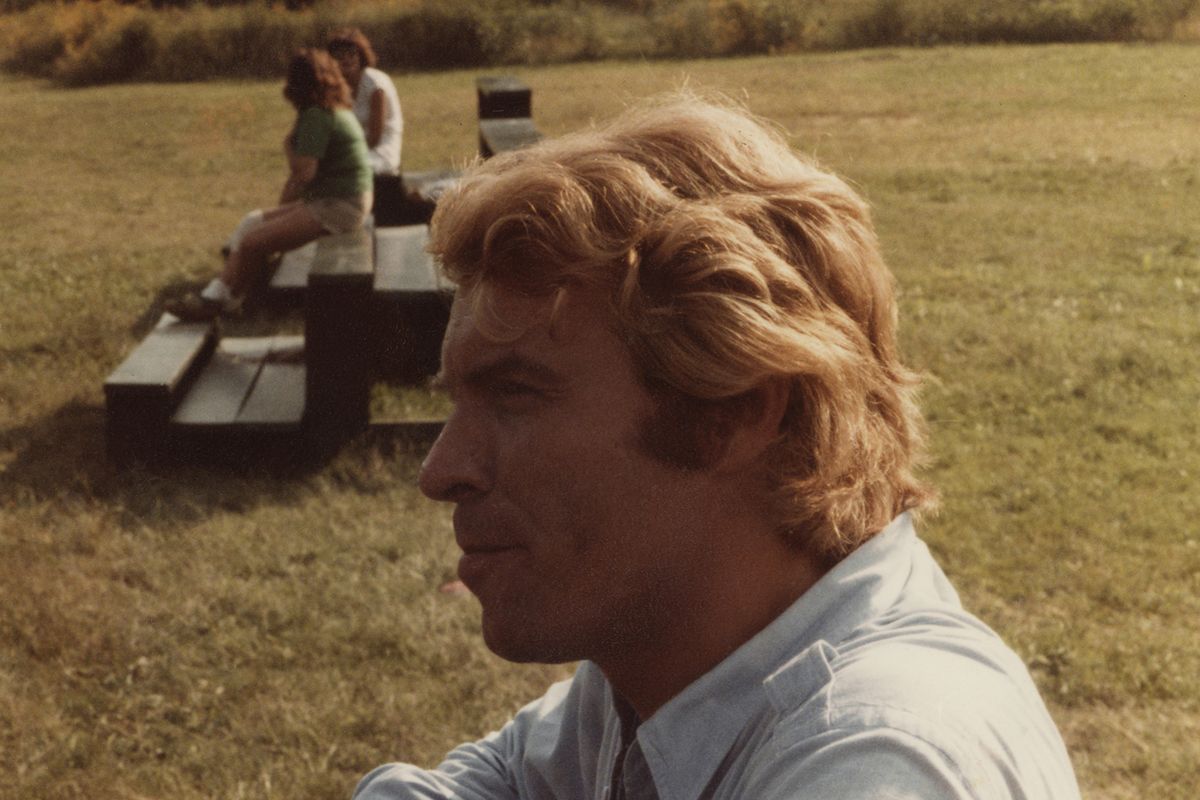
The two seekers here run along parallel lines. There’s Danny Casolaro, a suburban dad and investigative reporter who started digging into INSLAW, an Eighties tech company that designed the surveillance software in question and ended up knee-deep in a conspiracy web that would make Oliver Stone blush. He was found dead in a Virginia hotel room, his wrists slashed open, in 1991. And there’s Christian Hansen, a photojournalist who grabs hold of the Casolaro story and simply can’t let go. He takes director Zachary Treitz along for the ride; much of the four-part series consists of the two men chasing leads, connecting dots, and getting sucked into the maelstrom.

Absolutely not to be confused with the Oscar-winning documentary My Octopus Teacher, The Octopus Murders casts a shadow of plausibility, much of it concerning what the U.S. government is capable of, that should give viewers pause. Maybe you won’t be convinced that Casolaro’s trail leads to the October Surprise — the theory that argues Ronald Reagan cut a deal with Iran to keep U.S. hostages captive until after the 1980 presidential election, thereby making incumbent Jimmy Carter look weak and ineffectual. Perhaps it’s a bridge too far to suggest that former president (and former CIA director George H.W. Bush) was a tentacle of the figurative octopus.
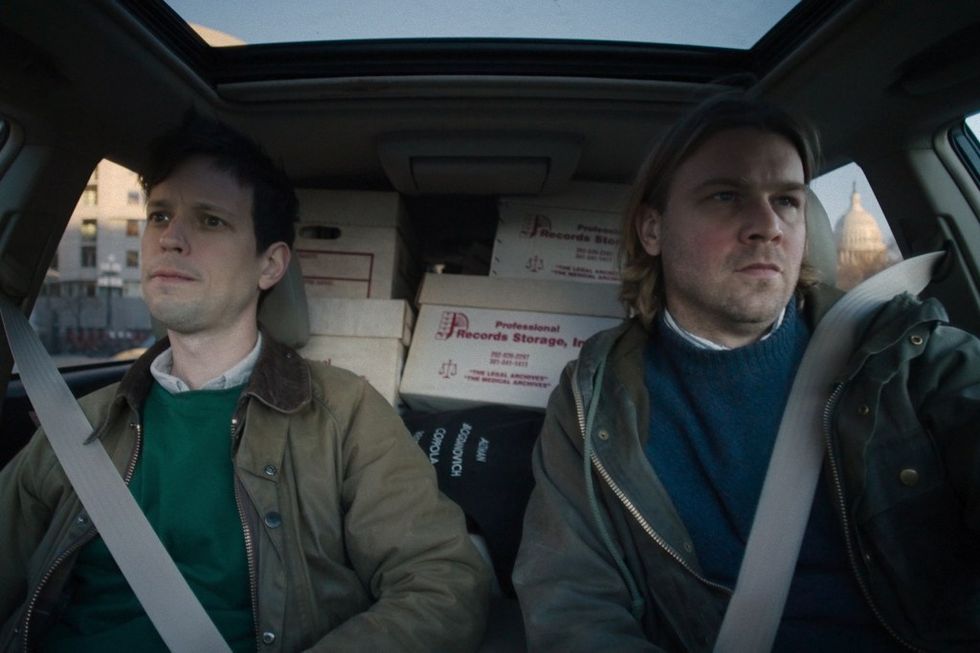
Zachary Treitz and Christian Hansen in ‘American Conspiracy: The Octopus Murders.’

But there are still assassins, henchmen, and dirty trickers galore here, all doing their secretive part for the red, white, and blue. Was Casolaro murdered because he got too close to the truth, or did the Sisyphean story (and a pile of debt) drive him over the edge? The Octopus Murders lets the question hover in uncertainty and ambiguity. It doesn’t force the issue, an approach that earns the filmmakers a level of trust and respect. Casolaro’s death is a big part of the story and certainly the catalyst for Hansen’s journey. But this is not a whodunnit. It’s a trek into a many-valved heart of darkness.

The filmmakers conjure the uneasiness of long drives down foggy roads to meet sketchy sources who might provide more questions than answers. They use editing to blur the lines between Casolaro and Hansen, two men consumed by work that often merely leads to more work; Hansen even plays Casolaro in reenactments. The score, composed by Jose A. Parody, accentuates all moods, from gloom and terror to determination and exasperation. This never feels like a Netflix quickie. You get the sense that the Octopus team, including executive producers Jay and Mark Duplass, was given the time and support to create what they wanted.

The most colorful and problematic source, for both Casolaro and Hansen, is one Michael Riconosciuto, a heavy-set former tech prodigy-turned-drug manufacturer and government operative who drops kernels of truth between what sound like madman ravings. To use a JFK analogy, he’s the series’ David Ferrie, a delusional paranoiac who also happens to know a lot of valuable things. Doug Vaughan, another investigative journalist who appears in the series, explains that Riconosciuto “fits the pattern of people who spin stories that are only partially true, that confuse at best. And confusion has its purpose because it creates doubt and, ultimately, paralysis.” Scrape its surface a little and you’ll find that The Octopus Murders is largely concerned with that confusion, doubt, and paralysis — and the horrors they are designed to obscure.  
More Stories

Marketer Behind Fake Quotes in ‘Megalopolis’ Trailer Dropped by Lionsgate

Marketer Behind Fake Quotes in ‘Megalopolis’ Trailer Dropped by Lionsgate

Eddie Egan, a very real marketing consultant, lost his gig with Lionsgate this week after the studio discovered that quotes he used in a trailer for Francis Ford Coppola’s Megalopolis were fabricated, according to Variety.

The conceit behind the teaser, which Lionsgate recalled on Wednesday, was that critics had trashed Coppola’s masterpieces throughout the decades, so why trust them? Except that the critics quoted didn’t actually write any of the pith. A quote attributed to Pauline Kael that was said to have run in The New Yorker, claiming The Godfather was “diminished by its artsiness,” never ran.

Keep ReadingShow less
Can the Best of Star Wars Survive the Worst of Its Fans?

Can the Best of Star Wars Survive the Worst of Its Fans?

When George Lucas debuted his science fiction epic about a galaxy far far away in 1977, Star Wars went from a long-shot space opera into the highest grossing science fiction franchise of all time. Almost 50 years and one sale to entertainment conglomerate Disney later, Star Wars isn’t just a one-off world. There have been prequels, reboots, stand-alone television series, and an in-depth theme park addition. But like most popular culture, the Star Wars fandom, especially online, has become inundated with loud, conservative, and in some cases, incredibly racist voices. While Disney has never said these voices are directly impacting what shows get made, the vocal minority of Star Wars devotees keep limiting what they’ll accept as true Star Wars. These fans say they’re fighting for Star Wars’ future. But if their endless fantasy world can’t accept any stories that they don’t recognize — some of the self-professed biggest fans in all the worlds could be closing themselves off to any future at all. What is crystal (kyber?) clear is that before Star Wars can have another successful show, the loudest voices online need to realize the Star Wars they want to return to never existed in the first place. Will the real Star Wars please stand up? 

Much of the online discourse around Star Wars has centered on the franchise’s most recent live action projects. First premiering in 2019, these include The MandalorianThe Book of Boba Fett, Ahsoka, Obi-Wan Kenobi, Andor, and The Acolyte. The market has been oversaturated with stories, especially many that occur within the same time frames, with fans frankly, getting tired and in some cases — outright bored. Each of the projects has had its own reception — and own problems. However the low audience scores, angry YouTube rants, and long Reddit threads can really boil down to one question: who determines what’s real Star Wars? First as a film, and then a trilogy, Star Wars established early on to viewers that even when they were focused on a set of powerful twins and a dark Empire, shit was going down on literally every other planet. This freedom has allowed for endless story arcs across decades. But while opportunities have been endless — the patience of fans hasn’t. 

Keep ReadingShow less
Bob Mould and Fred Armisen Help the 8G Band Sign Off ‘Seth Meyers’ With Hüsker Dü Cover

Bob Mould and Fred Armisen Help the 8G Band Sign Off ‘Seth Meyers’ With Hüsker Dü Cover

Bob Mould and Fred Armisen helped the 8G Band close out their tenure as the Late Night With Seth Meyers house band last night.

Mould fronted the group as they tore through a cover of Hüsker Dü’s classic, “Makes No Sense At All,” from the pioneering punk group’s 1985 album Flip Your Wig. Armisen, meanwhile, took his spot behind the drums and belted backing vocals alongside keyboardist Eli Janney, guitarist Seth Jabour, and bassist Syd Butler.

Keep ReadingShow less
J Balvin to Make Acting Debut in Crime Drama About a Fishing Village-Turned-Smuggling Hub

J Balvin to Make Acting Debut in Crime Drama About a Fishing Village-Turned-Smuggling Hub

J Balvin will make his big screen debut as an Interpol investigator digging into a drug smuggling operation in the upcoming film, Little Lorraine, according to Variety

The film appears to be loosely based on real events in the Eighties, and will chronicle how a far-flung fishing and mining village in Nova Scotia became a hub for cocaine smuggling. Balvin’s Interpol investigator is drawn up north while investigating a Colombian drug ring suspected of moving product through the area.

Keep ReadingShow less
Watch Jon Stewart Recap the Democratic National Convention: ‘What a Night for Kamala Harris’

Watch Jon Stewart Recap the Democratic National Convention: ‘What a Night for Kamala Harris’

Kamala Harris accepted the Democrats’ nomination for president last night at the Democratic National Convention in Chicago, but not without some commentary from Republican nominee Donald Trump. Jon Stewart had some thoughts about all of it as he broadcast The Daily Show live from the DNC, ultimately concluding that Trump has “morphed into a poor man’s cat turd.”

During the episode, Stewart started off by addressing the disappointment from fans that Beyoncé didn’t show at the convention. Joking that there would be a special guest, he showed a clip of Michigan rep Elissa Slotkin at the DNC. “You thought it was Beyoncé because everyone thought that it was going to be Beyoncé coming out there, but it was Slotkin all along,” Steward confirmed. “Everybody knew.”

Keep ReadingShow less