
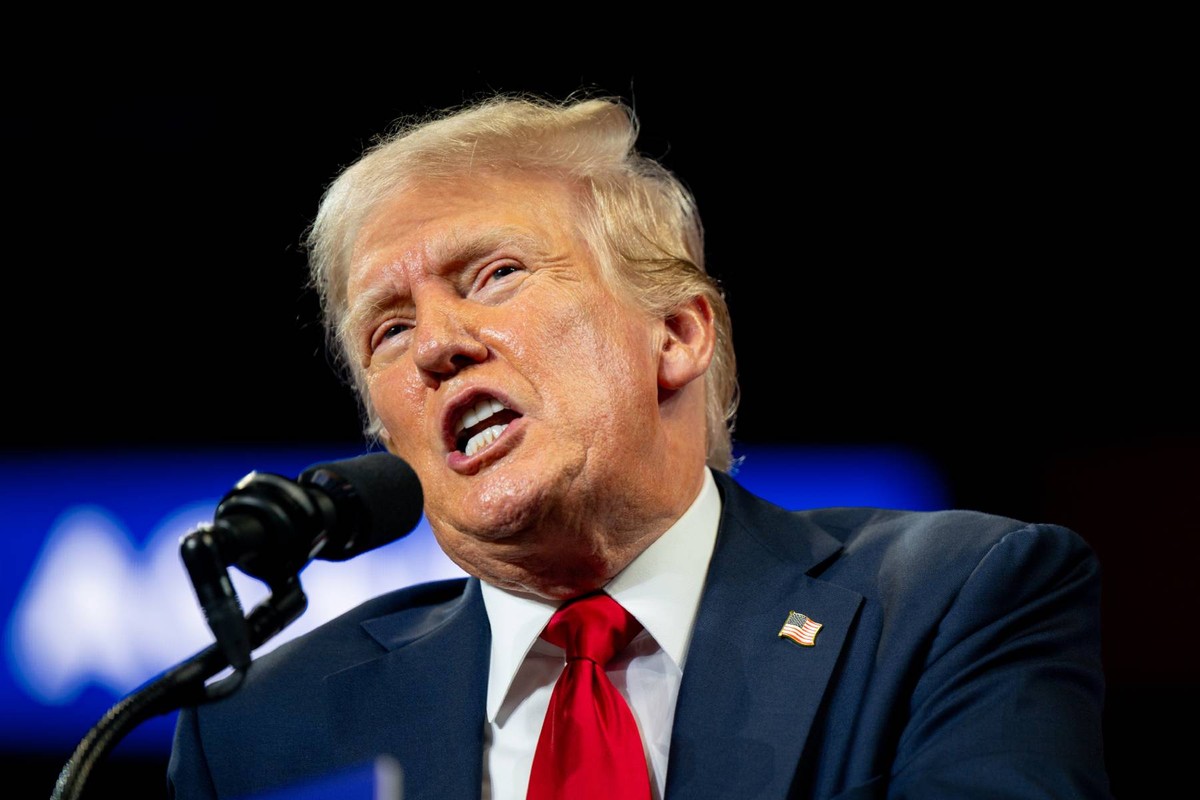

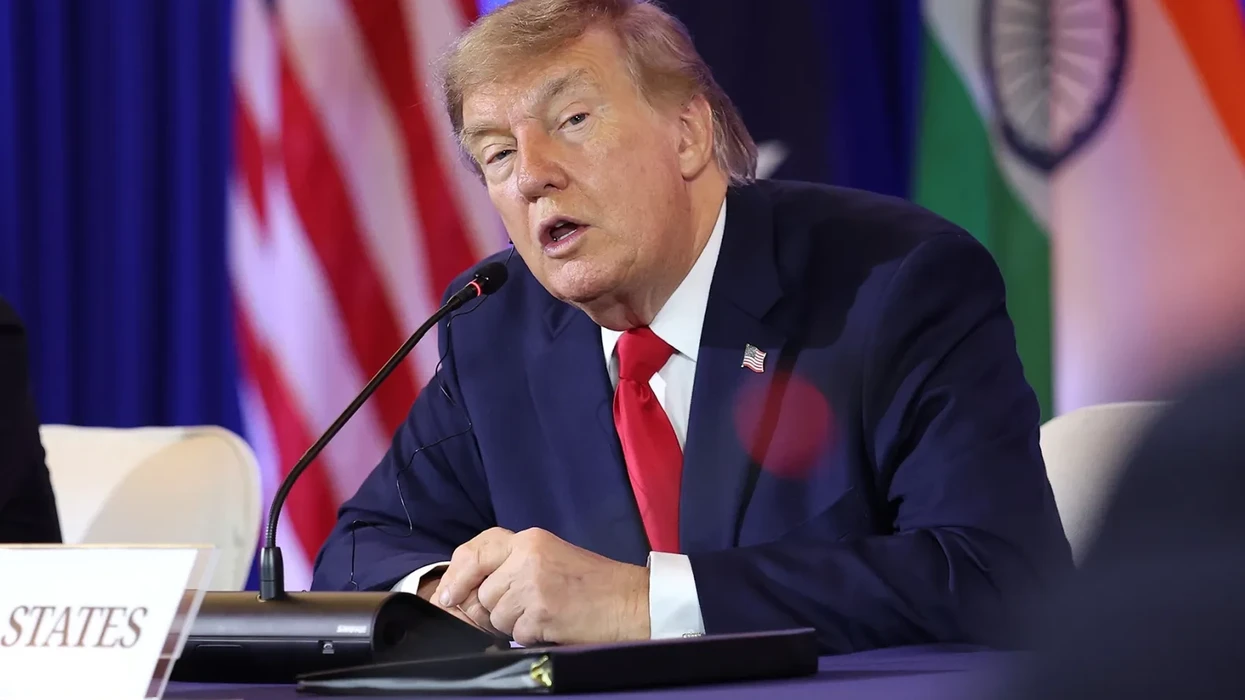
Donald Trump, the former president who double downed on his ambitions of being a dictator, told a crowd gathered in West Palm Beach on Friday that if elected for a second term, they “won’t have to vote anymore.”
At the Florida summit, hosted by conservative group Turning Point Action, Trump promised that if he wins in November, he would “once again appoint rock-solid conservative judges who will protect religious liberty.”
After repeating his usual unfounded claims about mail-in voting, Trump launched into an appeal directed at Christian voters. “Christians, get out and vote!” yelled Trump. “Just this time. You won’t have to do it anymore. Four more years. You know what? It’ll be fixed! It’ll be fine! You won’t have to vote anymore, my beautiful Christians. I love you, Christians!” He added, “You gotta get out and vote. In four years, you don’t have to vote again. We’ll have it fixed so good, you’re not gonna have to vote.”
In December 2023, during a town hall in Davenport, Iowa, when asked by Fox News’ Sean Hannity if he would “abuse power as retribution against anybody,” Trump replied: “Except for day one. I want to close the border, and I want to drill, drill, drill.”
The former president later defended his comments, and at the New York Young Republican Club’s 111th Annual Gala less than a week later, Trump said, “I didn’t say that. I said I want to be a dictator for one day. You know why I wanted to be a dictator? Because I want a wall, and I want to drill, drill, drill.”
Trump has also called for the termination of the Constitution in order to overturn the 2020 election results following his loss to President Joe Biden. In December 2022, during one of his rants on Truth Social, he incorrectly called himself the “rightful winner” and claimed that “Massive Fraud of this type and magnitude allows for the termination of all rules, regulations, and articles, even those found in the Constitution.”
Following Biden exiting the 2024 presidential race last weekend and endorsing Vice President Kamala Harris as the Democratic nominee, Trump is now set to face the VP in the upcoming elections.
The convicted former president has been grasping at straws since then. Earlier this week, when baselessly accusing Harris of committing crimes, Trump referenced his own criminal record while bringing up the VP’s background as a courtroom prosecutor. Trump also backed out of his previous vow to debate “ANYTIME, ANYWHERE, ANYPLACE,” and demanded the showdown be hosted by Fox News, instead of ABC News. The former president’s communications director also said that Trump would not debate Harris “until Democrats formally decide on their nominee,” despite Trump previously debating Biden in June.



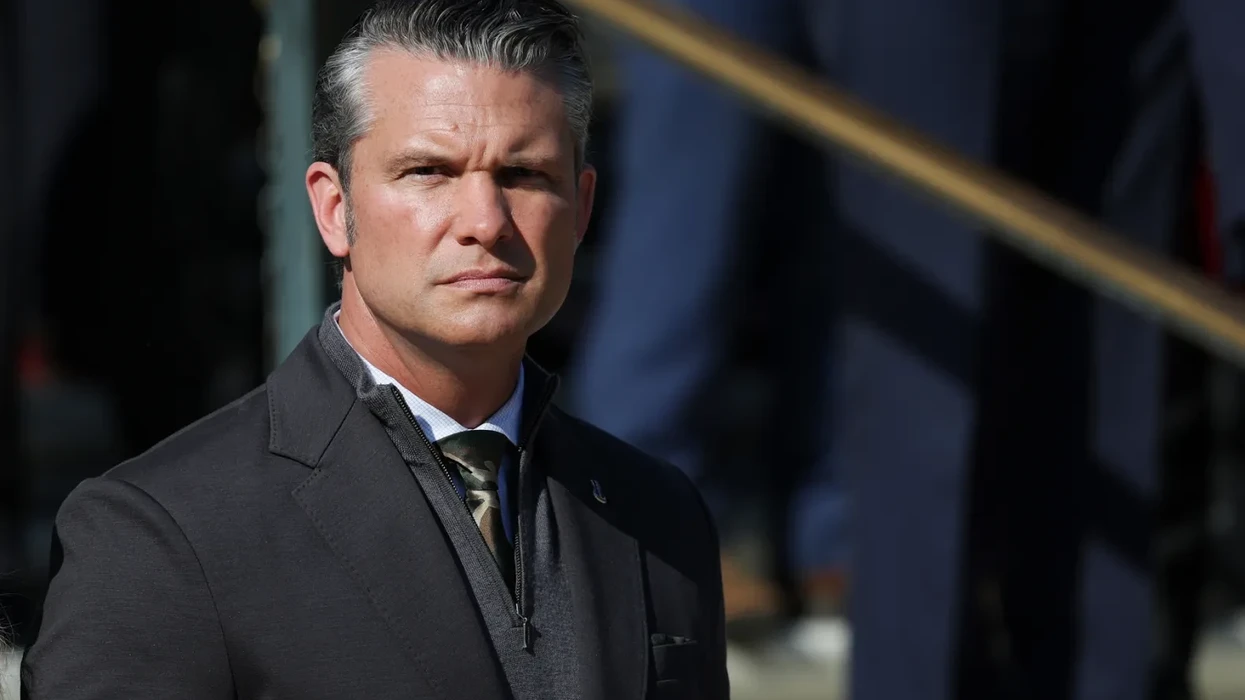

Stephen Miller in Washington, D.C., on Oct.21
Stephen Miller Wants to Win Back Young Men. It Might Not Be So Easy
Stephen Miller is not much of a man, at least by the right wing’s increasingly Herculean standards. Gawky, bald, and pasty, Miller has nevertheless ascended during Donald Trump’s second administration, most recently climbing from an advisory role to the lame-duck leader’s chief of staff.
In that role, Axios reports, Miller has one priority: win back America’s young men to the MAGA cause.
The right sees young men as one of its most important demographics, as they have been less susceptible to the overall leftward shift of young people over the past 20 years. But after making massive gains with the group in the 2024 cycle, Trump’s MAGA Man project stumbled, its support drying up faster than the lawn in front of a Texas frat house. In the 2026 midterms, young men swung 38 points in favor of the Democrats compared with how they voted in 2024. Why this happened is a complex puzzle, but the biggest piece in it is clear: American men are sick of war. In Iran, they faced the existential threat that America would revert to the warlike nation that sucked their older brothers’ and parents’ generation into 20 years of futile bloodshed in the Middle East.
Miller appears to have identified this early. The New York Times reported last week that Miller’s pitch to Trump when he was angling for the chief of staff job involved direct advice to wind down the Iran war, which Miller thought — correctly — had alienated supporters he couldn’t afford to lose.
But Iran is only part of the picture. I’ve reported on masculinity in America for years, and the anxieties that young voters face are more holistic than just a fear of being sent to die in a foreign land. That’s part of it, of course — while Generation Z was mostly too young to fight in the peak of the Global War on Terror, plenty of them remember older siblings or parents who spent years away in Iraq or Afghanistan. But what they remember even more were the economic effects of 20 years of American war. For many young men I’ve spoken to over the past few years, their childhood political memories aren’t Clinton getting a blowjob or the all-encompassing trauma of 9/11. Those on the older side remember their parents losing jobs in the 2008 crash; those on the younger side left high school or college and walked right into the Covid pandemic.
Now, with missiles flying over the Persian Gulf, young men see it happening all over again: gas prices going up, food costs rising, and the promise of owning a home and one day retiring slipping even further down the drain, even if they aren’t drafted to fight for a cause they don’t support.
In 2016, and to a much greater extent in 2024, Donald Trump effectively harnessed young men’s anxiety about their place in the world. In both those campaigns, he met men where they were: in 2016 on social media and in 2024 in a new-media world of podcasters and influencers. Both of these places gave a generation of adrift young men a culture they felt at home in — and in Trump, they had a leader there with them.
This had a profound effect. Some young conservatives, at least, still see their futures as directly linked with Trump, likely because the MAGA movement was the first time they’d ever felt a sense of political agency or control. But for those less ideologically linked with Trump, the relationship is more transactional. Sure, young men may get a kick out of Trump shimmying around on TV and talking trash. But what his successful campaigns have done is promise those men something concrete: their prices coming down, their fortunes going up, a leader who will fight for their place in the world. A few years back, at a UFC fight just after Trump was elected for the second time, a pair of twentysomethings told me that they loved that Trump “comes out like a fighter,” which they said “resonates with a lot of people that are hurting.” “When they see a strong figure like that, it gives a sense of hope,” one said.
The difference, now, is that Trump doesn’t represent that hope anymore. And that means Miller has a very, very tall hill to climb. He can’t, as he did in 2024, just tell men to “show that you are not a beta” and vote for Trump. Axios reports that Miller is expected to focus on more of this culture-war chum, cracking down on “woke” policies at schools and offices.
But all of that is window dressing. In the midterms, young men swung toward Democrats in record numbers because that party offered them something: an end to foreign wars, a better shot at the future. Even if Miller is successful and gets Trump to roll back the Iran war, young men aren’t stupid: you barely get credit for “ending” a war that you started in the first place.
Axios reports that Miller also plans to push other economic reforms the Trump administration has mentioned but not delivered on in the past, like prescription-drug prices, but also that they will continue to focus on fraud and eliminating the federal bureaucracy. The latter points sound like a rehash of DOGE, an idea that may have initially sounded good on paper but yielded unclear, if not disastrous, actual results. Still, it’s a sign that Miller has identified some of the core issues he believes lost Trump votes with every demographic, not just young men. Democrats have their own ideas of what Americans voted on this month, though, and heavy majorities in both houses of Congress they can use to push them.
The next two years, then, will determine which party is able to persuade young men that it’s fighting for them. Miller has taken this task upon himself, which Democrats should see as an opportunity. After all, he doesn’t look like that hard of a guy to beat.