Leonard Leo is known as the architect of the Supreme Court for good reason: He helped Donald Trump pick three Supreme Court justices, and his dark money network led PR campaigns to install five of its six conservative justices. Leo’s network also funds politicians and organizations pressing the court to take up certain cases and rule specific ways.
This approach has been enormously successful, culminating in an end to federal protections for abortion rights and a $1.6 billion donation to Leo’s network. Now, Leo’s operation is upping the ante: It’s leading a public-facing campaign saying the Supreme Court “needs to take up” Honolulu’s historic lawsuit against major oil companies, and shield Big Oil companies from a trial over climate-related damages.
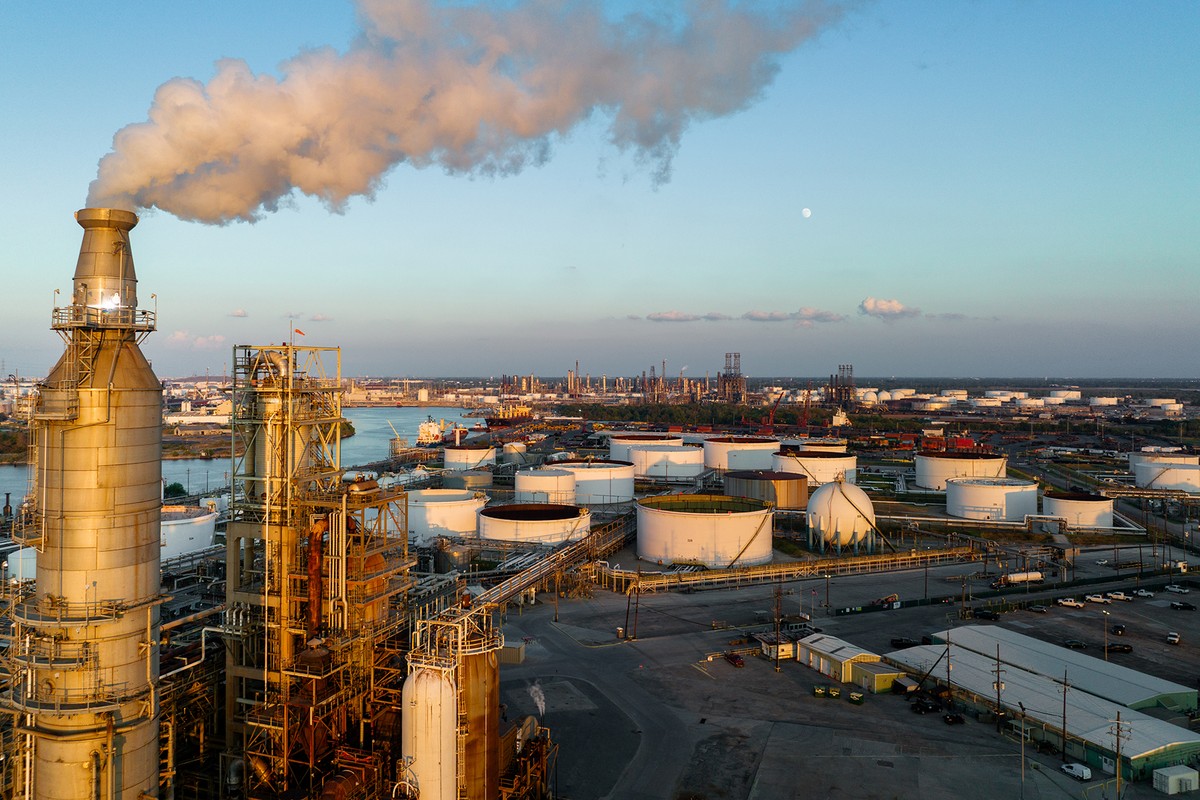
“The major fossil fuel corporations raked in more than $100 billion in profits combined last year, and they are desperate to escape efforts to hold oil corporations accountable in a court of law for leaving communities like Honolulu to pay an ever greater price for climate damages caused by their products,” says Lisa Graves, the executive director at the watchdog group True North Research. “And now their efforts to evade legal accountability are being aided by … the very same groups that helped the majority of justices on the U.S. Supreme Court get their seats on the bench.”
In 2020, Honolulu sued major oil and gas companies, accusing them of knowing for decades that burning fossil fuels would damage the climate, and concealing that information from the public. The lawsuit alleges oil companies violated public and private nuisance laws, as well as laws requiring them to warn about the harms caused by their products — and it demands the companies pay damages to make up for the costs to property and infrastructure.
The defendants — which include Aloha Petroleum, BP, Chevron, ConocoPhillips, ExxonMobil, Marathon Petroleum, Phillips 66, Shell, and Sunoco — have fought for years to block the Honolulu lawsuit from moving forward, arguing that the city is wrongfully seeking to regulate interstate and international greenhouse gas emissions, and that the federal Clean Air Act should preempt state law.
After the Hawaii Supreme Court ruled in October the case can go to trial, oil companies petitioned the U.S. Supreme Court to review the state court’s decision. The oil companies are being backed directly by Leo’s network as well as by 20 Republican attorneys general — whose political organization has long been financed by Leo’s dark money operation.
The Supreme Court is set to discuss in its conference Thursday whether to review the Honolulu climate case next term.
The court’s looming decision comes four years after Honolulu city and county officials first sued the fossil fuel giants — and less than a year after 101 lives were lost in the Maui fires last summer. Climate change, while not the only factor behind what fueled the devastation, likely contributed to the intensity of the blaze — as rising temperatures, invasive grass species, and winds strengthened by hurricanes transformed the island into a deadly tinderbox.
Honolulu’s legal team accuses the companies of engaging in “sophisticated disinformation campaigns to cast doubt on the science, causes, and effects of global warming” — leading to increased fossil fuel consumption and carbon emissions, which in turn caused property and infrastructure damage in Honolulu.
The court’s decision on whether to take the case could have sweeping implications: Many state and local governments across the country have filed similar challenges with claims including public and private nuisance, failure to warn, and racketeering.
Vermont lawmakers separately just passed a state law, the Climate Superfund Act, that will require oil and gas companies to pay for the costs of climate change. The law comes after the state was hit by catastrophic floods last summer. Republican Gov. Phil Scott allowed the law to go into effect last week without his signature.
The financial fallout for fossil fuel companies from the Honolulu case and others like it would be unprecedented, as states and localities around the country could all potentially seek billions of dollars for past and future damages, and to potentially help regions adapt to rising sea levels, increased heat waves, floods, droughts, and more.
Leo’s dark money network and Republican attorneys general, whom his operation funds, want to make sure that can’t happen.
In April, attorneys general in 20 states filed an amicus brief urging the Supreme Court to review the Hawaii decision, arguing that it “endangers the rights of states to adopt their own policies with respect to energy production, environmental protection, and potentially any other activity that ‘exacerbate[s] the impacts of climate change.’” They assert that Honolulu’s lawsuit and similar actions pose a “grave threat” to “our nation’s energy infrastructure.”
“It’s political theater,” says Robert Percival, a law professor and director of the University of Maryland’s environmental law program, calling the Republican AGs’ filing “a sign of how desperate they are to stop this litigation, because it’s winning.”
“The oil companies have been trying to get the Supreme Court to just arbitrarily quash all climate litigation,” added Percival. “But the problem is, these are all state court cases, and out of respect for federalism, the Supreme Court has no business reviewing state tort claims that don’t raise any federal issues.”
The New York Times exposed the Republican Attorneys General Association (RAGA), which elects GOP attorneys general, a decade ago for working hand-in-hand with the oil and gas industry to fight environmental regulations.
Since 2014, RAGA has received roughly $1 million in contributions from ExxonMobil and Chevron. Leo’s network has separately donated more than $20 million to RAGA since 2014, according to data from Capitol Hill Access.
While Leo’s network is RAGA’s top individual funder, the Center for Political Accountability, which tracks corporate political giving, points out in a new report that RAGA gets much of its cash from corporate lobbying groups and public companies — and some of RAGA’s corporate donors have publicly pledged actions to address climate change.
“Climate change is such an important area of risk,” says Jeanne Hanna, research director at the Center for Political Accountability. “A lot of companies acknowledge that they face quantifiable economic risks if climate change carries on. It can do damage to their markets. It could do damage to their production. Companies themselves recognize it as one of the more tangible issues that they are committed to addressing.”
Outside of RAGA, Leo’s network is spearheading its own PR campaign calling on the court to review the Honolulu case and use it to set a new precedent quashing state and local climate litigation.
“Across the nation, trial lawyers and left-wing officials, backed by dark money donors, are using public nuisance lawsuits to force political agendas and reshape American society,” says a video from the Alliance for Consumers, which adds: “To end this nuisance charade, the Supreme Court needs to take up the Honolulu case and declare once and for all that public nuisance is for local issues, not global climate change or dictating national policy.”
The Alliance for Consumers is an entity registered within Leo’s sprawling dark money network. Earlier this year, Leo said he is using the proceeds of an unprecedented $1.6 billion donation to try to “institute a lot of legal and social change through philanthropy.”
Since April, the Alliance for Consumers has run a series of Facebook ads encouraging the Supreme Court to review the Honolulu case.
“Should a city like Honolulu be able to set energy policy for the rest of the United States?” the organization says in an ad launched last week. “A case before the Supreme Court would let that happen if they don’t intervene.”
The ad directs users to a Harvard Journal of Law & Public Policy article co-authored by the Alliance for Consumers’ executive director, O.H. Skinner.
“The Honolulu litigation might walk and talk like a case purely about climate change, but underneath is a tantalizing opportunity for the Supreme Court to hand states a huge sovereignty win and reshape the way policy fights happen in the courts for years to come,” Skinner writes in the article.
As the Honolulu suit and other climate-related cases pend across the country, fossil fuel company defendants are scrambling to “sideline this litigation and avoid a trial and decision on the merits of the plaintiff governments’ claims,” says Richard Frank, a co-director at UC Davis’ California Environmental Law and Policy Center.
“The defendants believe — with considerable accuracy — that their best way to do so is to convince the U.S. Supreme Court to intervene and snuff out these lawsuits before they get to trial,” he says.