


Donald Trump’s first term in office was a test run — four years spent mapping the ins and outs of how to leverage the federal government to make himself, his family, and his cronies as rich as possible. He’s spent the past 18 months putting what he learned into practice.
The president’s financial disclosures revealed this week that in 2025 he made $2.2 billion — including $1.4 billion on crypto. This is more than he made across all four years of his first term combined. It’s also over three times the $622 million he made in 2024 before returning to the White House, which should tell you all you need to know.
It feels trite to say this kind of naked corruption would end the political career of anyone not named Donald Trump. Of course it would, but so would countless things Trump does on any given day. The harsh reality is that the year is 2026 and Donald Trump is indeed the president, and he’s able to dispose of the media’s questions about, say, selling out the country for billions, as casually as he might remove the lettuce from his Big Mac before tossing it into the Air Force One trash can.
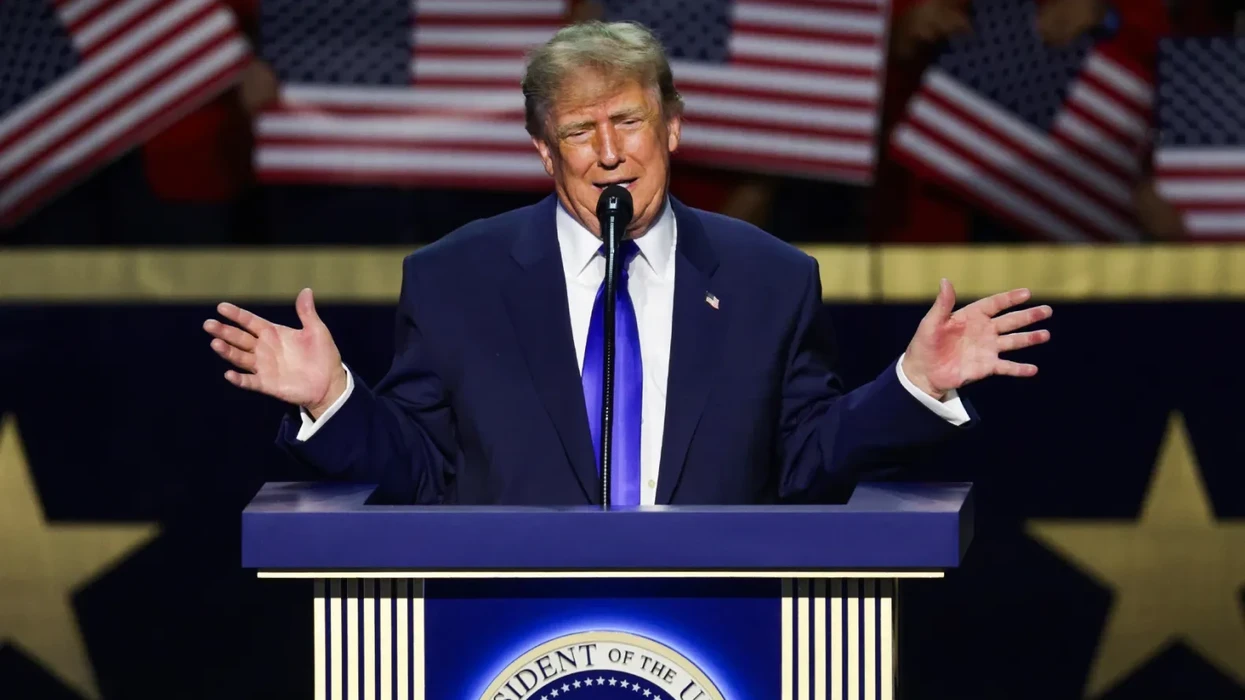
“I don’t get involved,” he said Wednesday as part of a word salad that also involved telling reporters they should be thanking him for how well their 401Ks are doing. “I’m profiting because I have a lot of money and a lot of cash and I give it to institutions,” he added. “I don’t know if they know what they’re doing or not. They buy a vast array of things.”
What? It doesn’t matter. The reporters move on and the corruption train continues unabated.
A few hours after brushing off concerns about his financial disclosures, Trump posted about how Micron, a semiconductor company he has been touting publicly for weeks, invested $250 million into Trump-branded investment accounts for children that were established in last year’s tax bill. It’s unclear how the accounts will actually function. Trump praised Micron again Thursday morning, writing: “How about this? Micron, a GREAT American Company, announced that they are putting in 250 Million Dollars into the Trump Accounts for the future benefit of children, and their stock went up 9 points today.”
You may be able to guess what comes next. Trump revealed in his financial disclosures that he happens to already own a healthy amount of Micron stock, including some purchased this spring.
The fact that one could almost assume that there was something more to Trump’s posts about Micron than the president of the United States wanting to praise a good old-fashioned American company is a testament to how Trump has operated throughout his second term. The White House is open for business, and everything from favorable policy to criminal pardons appears to be for sale.
The well-heeled tech industry has understood this from the day he was elected, pumping millions into Trump’s inauguration fund and scrambling to find new ways to humiliate itself at Trump’s feet after he took office. The president is relishing every second of it. In their new book Regime Change, Jonathan Swan and Maggie Haberman of The New York Times write about how Trump enjoyed telling associates how much Mark Zuckerberg and Jeff Bezos were “kissing my ass.”
“You would not believe the texts I got from these tech guys. I’ve got to show you,” Trump reportedly told guests at Mar-a-Lago.
Trump’s financial disclosures also included the nugget that he received a $10.7 million licensing fee for Amazon’s Melania documentary. The record-breaking deal for the glossy film about the first lady was announced just weeks after Trump dined with Bezos at Mar-a-Lago in late 2024 following his election win. Melania made tens of millions from the project.
The financial disclosures are only what’s in public view. There is of course plenty of corrupt wheeling and dealing that isn’t quite as out in the open as the $400 million Qatari jet Trump took questions in front of on Wednesday (which now serves as Air Force One after it was retrofitted with an additional $400 million of taxpayer money).
The Times offered a glimpse behind the scenes earlier this week, reporting about how Trump and Commerce Secretary Howard Lutnick struck a mining deal with Kazakhstan last year, with Trump and Lutnick’s sons going into business with partners in the deal before the deal was actually signed. The Times noted that the Trumps or the Lutnicks have financial ties to at least 14 companies working with the government on various mining projects.
Trump has no real reason to stop engaging in this kind of corruption, or even to hide it from public view. The Republican Party has agreed not only to cede its congressional duty to check the president’s power, but to actively run cover for him as he bilks the American people — who are enduring the brunt of an economic crisis brought on by his trade agenda and nonsensical war against Iran.
Americans will have a chance to rebuke the party this November, and they very well may have Trump’s corruption top of mind when they head to the polls. “Somebody is making money on the side, and it’s not me,” a Trump voter told MS NOW when asked about the revelation that Trump made $2.2 billion last year. “It’s frustrating that you see your president get richer and richer and the middle class is getting poor.”
There’s always Micron stock.

 Siri worked out of Dr. Mehmet Oz’s (right) home in an unofficial role on Kennedy’s transition.Brendan SMIALOWSKI/AFP/Getty Images
 West Virginia Gov. Patrick Morrisey has aimed to allow parents a religious exemption to school vaccinations.West Virginia Governor’s Office


 Health Secretary Kennedy served as co-counsel with Siri in 2018.Jim WATSON/AFP/Getty Images


 Firefighters work to extinguish a fire at an office building in Kyiv following a Russian strike on Sept. 23, 2026.Kostiantyn Liberov/Libkos/Getty Images


 A Canadian flag flies along the waterfront of Lake Ontario, on Aug. 27, 2026. Cole Burston/AFP/Getty Images
Trump Keeps Getting Richer. The Rest of Us? Not So Much
The president's financial disclosures highlight a second term built around corruption