
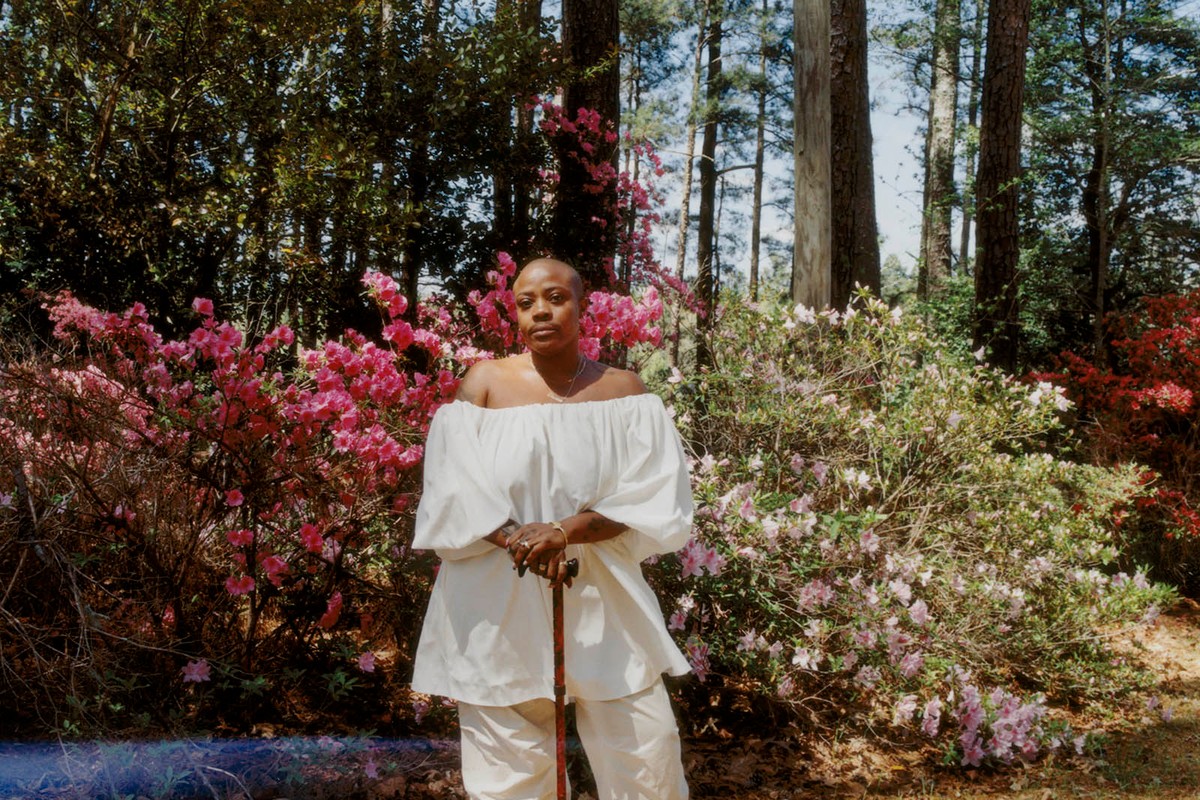

In 2016, Ash Williams became pregnant for the first time. Williams wants to be a parent eventually — but he wasn’t ready for a child then. He didn’t know much about what an abortion entailed, and he needed a ride, so he called up a friend who drove him. When they got to the clinic, Williams, who is trans, remembers the people working there didn’t care enough to get his name right — using, instead, the name on his license. Never mind asking about pronouns.
“Working with the actual provider was really fucked up, too,” he says. “I just remember he didn’t say one word to me, and I felt sad about that.”
After the procedure, Williams’ friend, who also happens to be trans, took over. Without asking what Williams needed, his friend purchased Maxi Pads for aftercare bleeding and cooked him a pot of collard greens with ham hocks to combat the low iron levels the pregnancy caused. “She cooked it in my house and didn’t leave for like a day or two, and I remember thinking, ‘Wow, you didn’t have to do that,’ ” Williams recalls. “I remember feeling like I didn’t want to be alone, but I also wasn’t using the words ‘Can you be with me?’ ”
Today, the 31-year-old Williams is an abortion doula, doing professionally what that friend did for him back then.
When most folks hear the term “doula,” they likely think of the person hired to give support and guidance during labor, suggesting breathing exercises and comfortable positions. Or maybe they’re thinking of a postpartum doula, someone who helps a new parent sent home with their newborn. But Williams supports patients who choose to not remain pregnant.
For Williams, being a doula requires showing up physically for clients, accompanying them to procedures and aiding in aftercare, ensuring they have medication and holistic outlets including journals to help them monitor their pain and manage their range of emotions. But being a doula also means providing other forms of support that can be as simple as going on Instagram to raise funds for someone’s procedure.
With debates swirling around reproductive rights in the U.S. right now, abortion doulas like Williams have often been left out of conversations regarding care, even within reproductive spaces. “Abortion and birth often get siloed, and we’ve been made to think that these things are a binary, but they’re really not,” he tells me. “For me, abortion is a type of birth.”
Since the 2022 overturning of Roe, more practitioners are receiving training. “We’ve for sure seen an uptick in the number of doulas who are joining already having an abortion-doula certificate,” says Brandie Bishop, a doula of 13 years and CEO of the National Black Doula Association. “These are new certifications,” Bishop says. “People who have been a part of our membership for years have [now] added this certification.”
The NBDA serves as a national database for people researching doulas and a resource for potential and current doulas to access courses and mentorships that center on birth work. The organization is currently designing a dedicated abortion-doula curriculum. “A lot of doulas have become much more aware of the need for resources in this space,” Bishop says. “People are not becoming certified [just] within the abortion space. A lot of Black and brown doulas are working with midwives or their community, getting more information to know how to work with families.”
When the Dobbs v. Jackson decision came down, a trigger law went into effect in Williams’ home state of North Carolina, reducing the window in which a person could access an abortion at that time from 24 weeks to 20. But it remained less restrictive than other states in the South, and North Carolina saw an increase of nearly 8,000 abortions in the nine months after Dobbs, according to one report.
“Where I live, we’ve been aware of these post-Roe realities that a lot of people are just getting hip to since Dobbs,” Williams says. “We had to figure out how to get people to places when they didn’t have a clinic where they lived. We were figuring out how to help someone get an abortion when they couldn’t afford one. In the South, we are uniquely positioned to answer that call to increasing access within this criminalized landscape because of what we have always had to navigate in terms of restrictions and bans.”
Birth work, especially within Black communities throughout the South, has a deep history that’s rooted in the practices of the first Africans who came to the Americas — many of them enslaved. Black midwives and doulas were a source of spiritual, emotional, and physical support, and they were respected across racial lines in their communities. Williams’ own great-grandmother, Polly, was said to be a “baby catcher.”
“The deeper you get into birth work, the deeper you see the undercurrents. Birth workers have never pretended like abortion is not a part of the work we do,” says whitney williams-Black, a full-spectrum doula — a person trained to support every form of pregnancy, from abortions to postpartum — as well as a student-nurse midwife and organizer of the Doula WorkStudy Project. “In the Deep South, people knew that a Black midwife could help bring a baby in, but she could also get the baby out.”
Williams’ own experience at the intersection of Blackness, transness, and disability — navigating autism, PTSD, and mobility issues (he uses a cane) — while also having been pregnant puts him in a unique position to understand the hurdles that can arise while trying to get a simple medical procedure. In his six years in the field, he says, some of the reproductive organizations he’s worked for have refused to acknowledge and respect identities outside of what’s considered traditional womanhood.
“I’ve been told this is not about trans people,” Williams says. “As with many Black and trans people, I know that there are structural and systemic barriers to getting the jobs I want and am qualified to do.”
Williams instead does much of his work independently, connecting with people who need his services through his network and word of mouth.
In March 2022, a few months before the overturning of Roe v. Wade, India Ríos-Jimenez learned that she was pregnant and didn’t know where to turn for help. “Living in Georgia, they were talking about overturning,” she tells me. “I talked on Instagram about it, and someone said, ‘I know an abortion doula.’ ”
That doula turned out to be Williams — with whom Ríos-Jimenez had a rocky history. The pair had butted heads years earlier over their work in the nonprofit space.
“I was like, ‘Oh, Ash hates me, there’s no way Ash is going to help me,’ but Ash didn’t bring up any of the past stuff. He was like, ‘Hey, India, if it’s cool, could I fundraise for you?’ ” Williams started the request on his socials in the morning — Ríos-Jimenez, who was splitting the $400 fee with her sexual partner, was only looking for $200 — by that afternoon, Ash raised the full $400. “I was crying,” Ríos-Jimenez says. “It was such a relief.” In addition to the money, Williams also sent a care package filled with herbal teas, the herb black cohosh, a heating pad, and palo santo to clear the air.
“As long as there’s people calling me and telling me they need an abortion and they need help, I’m going to do whatever I can,” says abortion doula Ash Williams.
Williams also hosts abortion-doula trainings throughout the country and virtually via Zoom. And he has run seminars on gender justice since receiving an invitation from the abortion clinic where he had his second abortion, in 2018, to do a training for staff.
“I saw Ash was doing an abortion-doula training on Twitter, and I reached out,” says Nandi, an abortion doula in Georgia who attended one of Williams’ sessions. (Nandi asked Rolling Stone to use only her first name in this story.) “It was a space for only Black folks. With Ash being trans and having a different perspective on how to support folks who are not cisgender, that was really helpful for my practice.”
Nandi, who has two children and has had three abortions (two before the Dobbs decision and one after), is a full-spectrum doula who’s accompanied clients to North Carolina so they could have abortions that the state of Georgia restricted.
The fight for abortion care and access is ongoing, seemingly exhausting, and yet, Williams says, “I have a lot of hope.”
Last year, researchers found that Americans had more than a million abortions in the U.S., a 10 percent increase since 2020, when there was increasing talk about the overturning of Roe v. Wade.
“People are still calling me, asking where to get help to have an abortion, and that’s the source of my hope: abortion seekers,” he says. “As long as there’s people calling me and telling me they need an abortion and they need help, I’m going to do whatever I can.”
The latest hurdle Williams and his clients are anticipating is a Supreme Court decision that could limit access to mifepristone, a drug that can end a pregnancy when taken in combination with misoprostol. Though studies have shown mifepristone, which has been used for decades, is safe, conservatives filed a lawsuit alleging that it’s dangerous. “These kinds of moves impact disabled people in a negative way,” Williams says. “If people are not paying attention to it, because they are not paying attention to disabled people anyway, then that will continue to be another gap in care for reproductive health.”
On the Friday Williams and I first speak, it’s been a week since I’ve undergone my own abortion. “Congratulations,” he says, genuinely. It throws me off, but in a good way. He’s the first person to celebrate my process, and it feels affirming. “There’s not just sadness and grief, but there’s also so much relief and celebration,” says Williams, who had an abortion shower years after his own procedures. “I believe every person deserves to have the kind of abortion that they want to have, the kind of pregnancy that they want to have.
“People are afraid to talk about abortion,” he continues. “We have this idea that if we are talking about birth, then we are not talking about abortion, like abortion is some other type of issue. Both birth and abortion have been medicalized and institutionalized and taken out of the hands of the community.”


War Is Peace: Trump’s Regime-Change Reversal
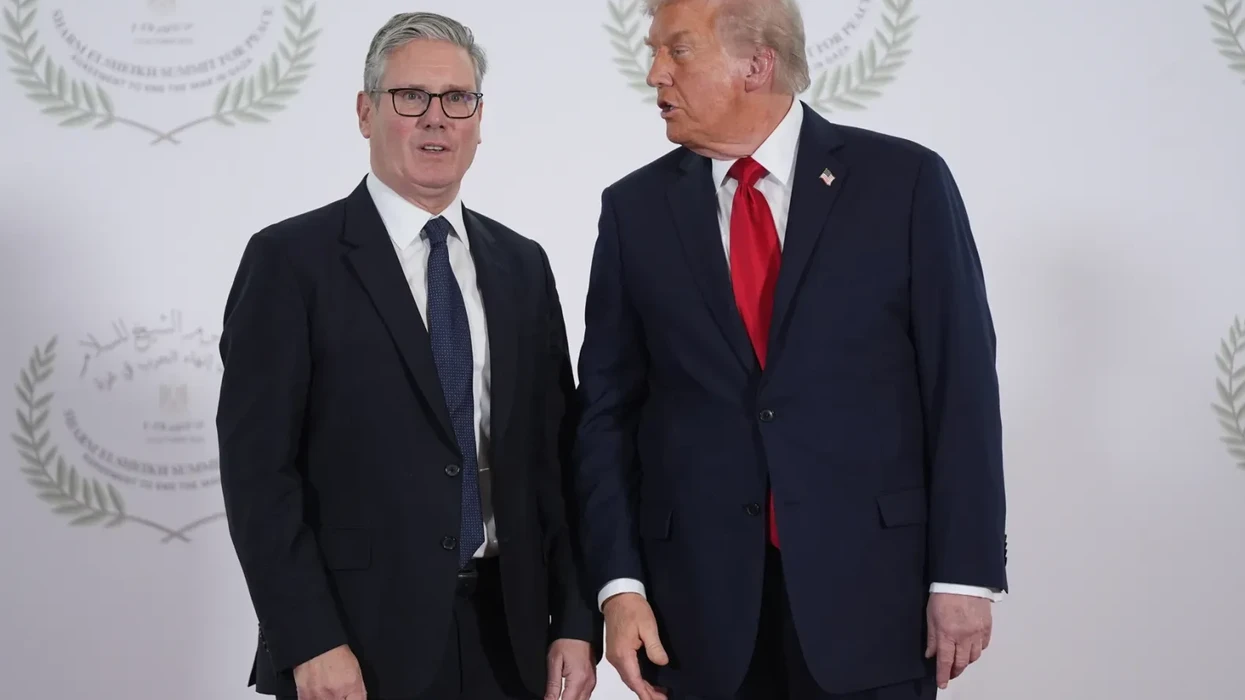
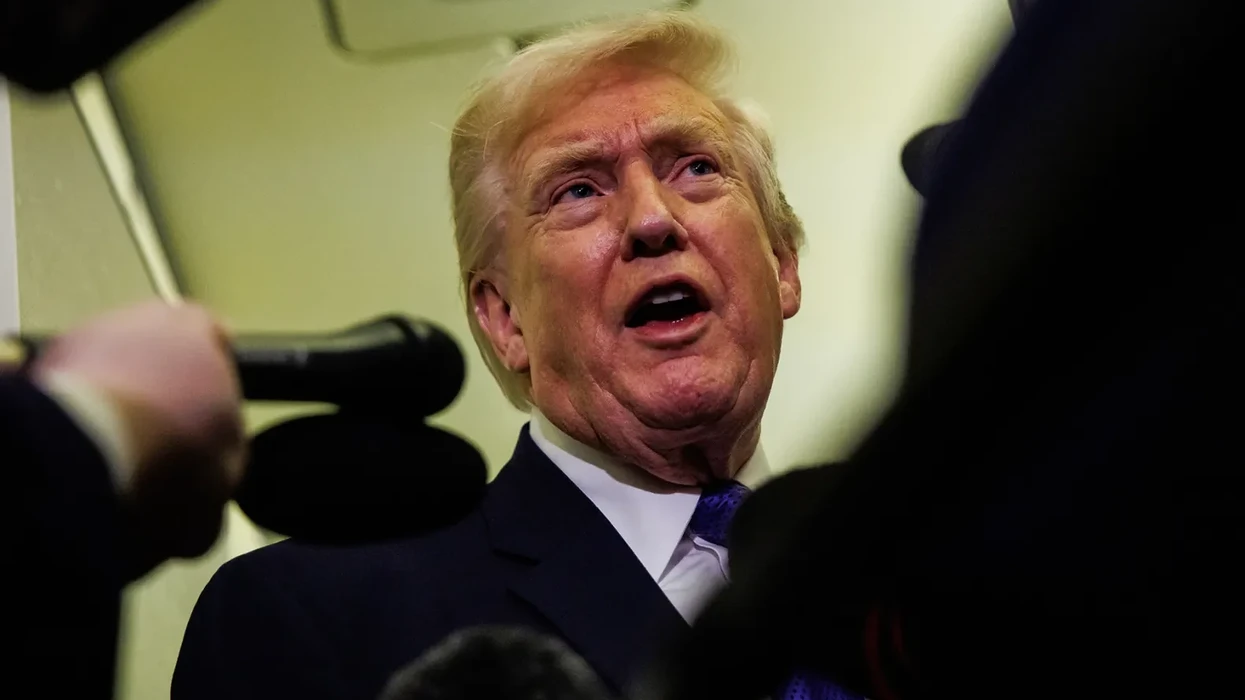
As American and Israeli rockets fly into Tehran, with the stated goal of regime change, anyone who bought into the self-evidently absurd idea of “Donald the Dove” ending America’s forever wars ought to be suffering from a bloody form of buyer’s remorse.
It was always bullshit. But that’s what the Trump team was selling hard. Take human ghoul Stephen Miller’s tweet days before the election: “Kamala = WWIII. Trump = Peace.”
The Trump team reads George Orwell’s 1984 like an owner’s manual and so of course “war is peace.” Their undermining of NATO and the dismantling of American alliances in favor of a “might makes right” foreign policy executed by a sycophantic kakistocracy is a guarantee of more war amid autocratic power grabs worldwide, with a side order of corrupt crony capitalism to profit from the chaos.
If you voted for Trump and believed him, this is on you. And that includes self-styled Palestinian peace activists who thought that Biden and Harris were the worst of all possible worlds and stayed home. We will no doubt see protests for the innocent lives lost in these strikes — but I’d have a lot more time for those folks if they were also seen protesting the estimated 20,000 to 30,000 Iranian lives snuffed out by murderous mullahs in the last few months alone.
The Islamic Republic of Iran has been despotic and dangerous from its inception. The Iranian people have been oppressed and denied basic freedoms for decades. But this is an extreme example of a war of choice. The American military strikes against Iran’s nuclear weapons facility last year were justified because Iran cannot be trusted with a nuclear weapon. That is true. But the much trumpeted total obliteration of those facilities is apparently not true — or so goes the justification for this war. And don’t forget that it was Trump who pulled the U.S. out of an Obama-era deal to stop Iran from developing weapons — arguing absurdly that the imperfect anti-nuke deal needed to be blown up to stop Iran from developing a bomb. Iran’s subsequent progress toward a bomb then created the rationale toward these strikes. This is a self-inflicted state of emergency. Peace is war and war is peace.
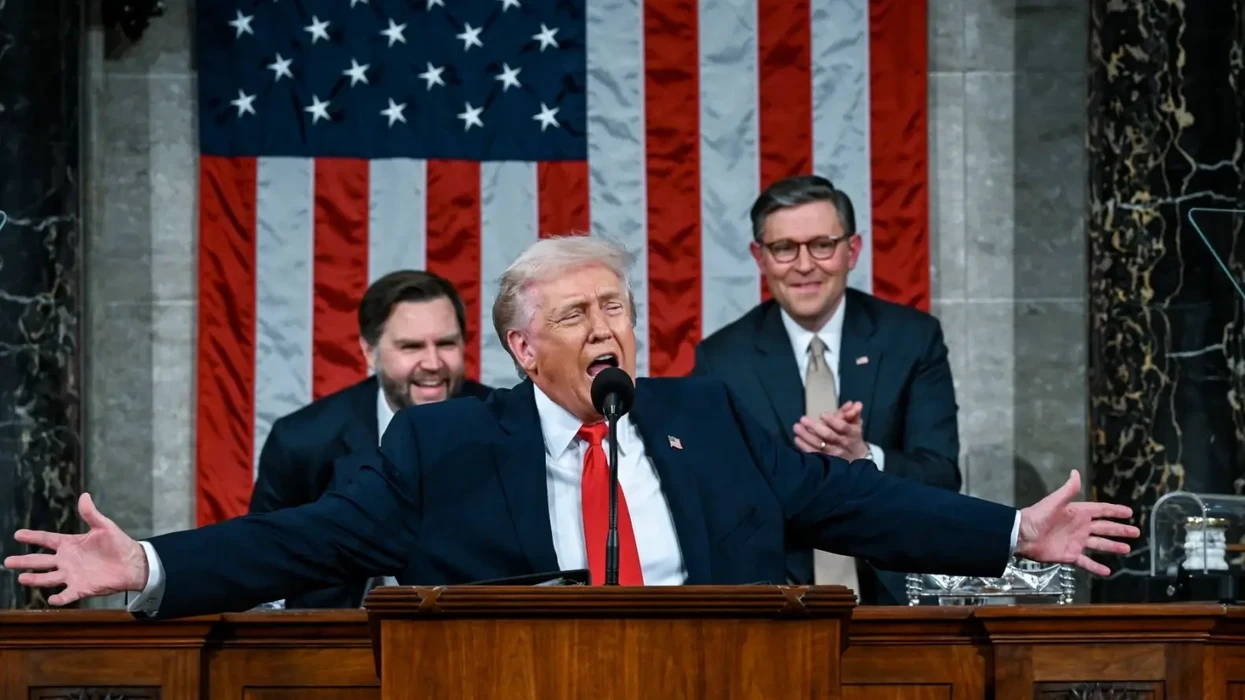
Pity the willful dupes in Congress who deluded themselves into thinking that Trump deserved the Nobel Peace Prize. They’ll probably rationalize that he would’ve been peaceful if he got the honor. Now it will be read as a cautionary tale for not sucking up. The chairman of the Board of Peace is now bored of peace. While Rand Paul remains admirably consistent, it’s Lindsey Graham who is pirouetting around the Senate floor while the Gimp Speaker Mike Johnson is unable to speak for the basic constitutional principles of separation of powers let alone authorization to go to war.
If you’re feeling shell-shocked trying to keep up with Operation Epstein Distraction, get ready for the inevitable next crisis — regime change without a plan for replacement. This is what the Trump administration did in Venezuela — kidnapping the socialist dictator Maduro but keeping his regime in place in exchange for crude oil access. The opposition is still in exile and its leader María Corina Machado gave her Nobel Peace Prize to Trump in exchange for exactly nothing.
One of the clear lessons of history is that if you don’t win the peace, you don’t win the war. The Saudis and their Sunni allies will back the U.S. and Iran because they hate the Shia Iranians (who, incidentally, are not Arabs), but beyond removing the Iranian regime, the plans for replacement and stabilization seem TBD — and with Trump’s inability to stay focused on anything beyond his immediate self-interest, solid plans are unlikely to emerge. Maybe a leader will come from the underground opposition; maybe it will be the Shah’s son, who has been living in the U.S. waiting for a restoration like many members of the diaspora. The upside is that Iran has a distinguished history and an accomplished Persian culture: The Islamists don’t represent the entirety of the people of Iran and never have.
But the path ahead will be messy at best. It will require concerted effort and civil commitment, not just an open call for private investment from Mar-a-Lago members. If the United States is now kidnapping and killing dictators without direct provocation, it establishes a dangerous precedent which will come back to bite us after demolishing our moral authority in the world.
It is the unexpected effects, the cascades of consequence where we cannot always plan ahead, that cause most responsible statesmen to try to keep the peace. But Trump has the carelessness of a rich-boy bully who can always buy or bluster his way out of trouble. He’s a con man who has found his ultimate mark in his followers, who fool themselves into thinking that a reflexive liar is the one man with the courage to tell the truth.
Perhaps the most prominent example is the vice president himself — a bright guy who not that long ago compared Trump to Hitler and a deadly narcotic but then convinced himself that careerism demanded an abrupt conversion. After all, he endorsed Trump less than two years ago with this very serious column headlined “Trump’s Best Foreign Policy? Not Starting Any Wars,” explaining, “He has my support in 2024 because I know he won’t recklessly send Americans to fight overseas.”