


Hulk Hogan will speak on the last night of the Republican National Convention before Donald Trump formally accepts the Republican presidential nomination, multiple outlets reported on Thursday.
The former wrestler, born Terry Gene Bollea, has had a penchant for making political remarks in recent years. He told the hosts of Fox & Friends last month that he was interested in taking a turn in politics after spending over three decades in wrestling and entrepreneurship. “We need somebody in there that’s got some common sense, you know what I’m saying?” Hogan said. “So if you need a president or a vice president, I’ll volunteer and take this country over, and I’ll rule with an iron fist.”
Hogan also considered running for Senate in Florida in 2018, and has openly criticized pseudo-liberal companies and positions. He appeared on Fox & Friends last month to push his new beer venture, Real American Beer, which the former wrestler said he created after seeing Bud Light’s fallout with conservatives following an ad campaign released with transgender influencer Dylan Mulvaney. The can depicts a wrestler waving an American flag, and Hogan said he hopes to “bring America back together, one beer at a time.”
In 2015, he was fired from WWE for using the N-word to describe his daughter’s then-boyfriend years earlier. He released a brief statement at the time apologizing for using “language that is offensive and inconsistent with my beliefs.”
Hogan speaking at the RNC emphasizes the degree to which Trump has turned Republican politics into something akin to professional wrestling, injecting it with name-calling, ostentatious theatrics, and a glitzy cast of characters. One of those characters is Kid Rock, who will also appear at the RNC on Thursday. “You fuck with Trump, you fuck with me!” Kid Rock said in a video posted to X following the assassination attempt against the former president on Saturday.
MAGA lawmakers are on board with all of this. On Monday, Rep. Byron Donalds (R-Fla.) said people should expect Trump’s entrance to look like “Hulk Hogan at WrestleMania.”


 Firefighters work to extinguish a fire at an office building in Kyiv following a Russian strike on Sept. 23, 2026.Kostiantyn Liberov/Libkos/Getty Images
Volodymyr Zelensky and Donald Trump on the sidelines of the 81st United Nations General Assembly in New York, on Sept. 22, 2026.
Trump is Selling Out Ukraine to Putin
Most Americans continue to support Ukraine in its war against Russia. But under President Donald Trump, their government is now on Russia’s side.
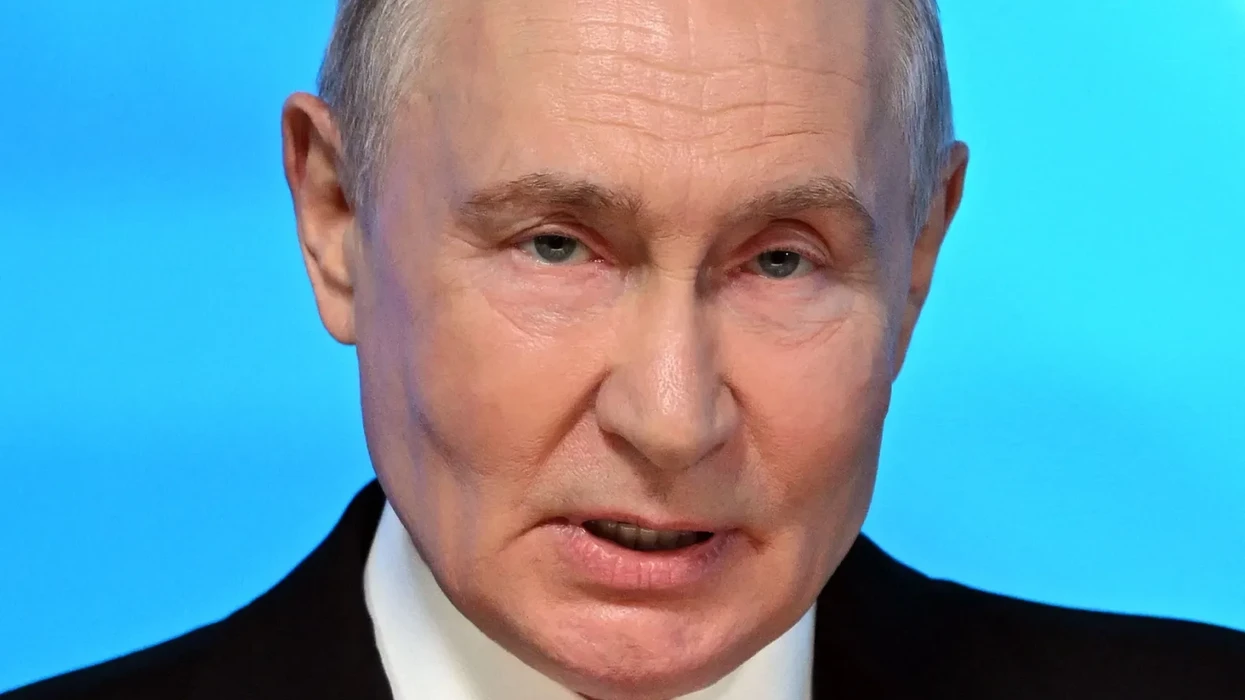
The relationship between Washington and Kyiv has been in crisis since Trump returned to power last year. The White House increasingly blames Ukrainian President Volodymyr Zelensky, rather than Russian President Vladimir Putin, for the war’s continuation.
“Zelensky is not a good guy for us to deal with,” the president said in a TV interview on Friday. “I’m not a big fan of Zelensky. They’ve destroyed that country.”
Even as Trump blamed Zelensky, Russia was launching hundreds of missiles and drones targeting Kyiv.
The crisis has deepened over the past two weeks as Trump has taken a flurry of steps to undermine Ukraine and assist Moscow, beginning with a proposal to let Russia sell diesel fuel to the U.S. and culminating in Friday’s decision to effectively waive portions of the so-called “Graham Bill.”
The bill, named after recently deceased Russia hawk Sen. Lindsey Graham, is a recently enacted law that would have tightened economic pressure on Russia.
“The decision to undo all of this, to block all of it, seems wrong to me. And it definitely helps only the Russians,” Zelensky told reporters in Kyiv on Saturday. “It only fuels their satisfaction and their desire to keep killing people. This certainly does not stop the war.”
Ahead of the announcement, the administration worked throughout the week with tech billionaire Elon Musk to throttle access to the military version of Starlink. The space-based internet system has become a critical lifeline for Ukrainian defenders — although both the White House and Musk have denied responsibility for deciding to limit usage.
Multiple officials describe hours of heated phone calls between Americans and their Ukrainian counterparts, after the White House ordered its people to ramp up pressure on Kyiv and deliver an ultimatum that the U.S. would cut off intelligence unless Ukraine stopped attacking Russian oil refineries.
Trump has been courting Moscow with energy deals and eased sanctions to try to deliver lower fuel prices — which have spiked due to disruptions from the U.S.-Israeli war with Iran — ahead of midterm elections. He is trying to recast the fallout not only from the Iran quagmire, but also his failure to end Russia’s war in Ukraine, as someone else’s fault.
Once again, Trump has made Zelensky the scapegoat, blaming him for high diesel prices.
“Zelenskyy is using Diesel Refineries in Russia as a target, knowing that these attacks are seriously hurting the world diesel markets, including those in the United States,” Trump wrote on social media on Sunday, adding “he doesn’t want to end this war, and probably never did.
The world has gone through the looking glass since the first time I met Zelensky in Mariupol, less than two months after his election in 2019. The man once derided for his willingness to make peace is now condemned for refusing to surrender. In Washington, the victim has become the aggressor, the adversary has become the friend.
Zelensky was visiting the bustling industrial port to attend the Fifth Annual Liberation Day Parade, an event held by the Azov Regiment. The far-right volunteer unit had played a central role in retaking the city from pro-Russian separatists in 2014. Five years later, Azov had become a bugbear, a central pillar in the Kremlin’s propaganda about “neo-Nazi” Ukraine and a staple of Western media coverage — despite the combined far-right never pulling more than three percent of the vote in any Ukrainian election.
Zelensky campaigned on ending the simmering war in Donbas by speaking directly to Moscow — and that led many to fear he would give up land to secure peace. There was so much anger about it that there were already rumors of a coup plot by right-wing nationalists only 60 days into his term.
It seemed the “comedian-turned-politician” — as he was invariably dismissed in international media — was in over his head. But I had seen Servant of the People, the popular TV series in which he played a schoolteacher who becomes president due to a viral video rant about endemic corruption. This is no mere satire, I thought. It is a political manifesto packaged as mass entertainment.
And so it proved. Zelensky and his cohorts built a political base via sitcom. His party was named after the show, and the last episode aired three days before the start of the election that would bring him the presidency.
Zelensky was hardly the first to parlay a television personality into a political career. After all, back in the United States, Trump had built his candidacy largely on the popularity of his fictitious portrayal of a successful business tycoon in a reality TV show.
So on June 15, 2019, there was Zelensky in Mariupol, celebrating Azov’s triumph while keeping the regiment itself at arm’s length. Zelensky was trying to show he wasn’t afraid of the far-right — and he wouldn’t let it claim a monopoly on patriotism.
I watched Zelensky work the crowd at a concert. “Mariupol is a Ukrainian city forever,” he told the audience, to wild cheers. Few Americans at the time really cared about Ukraine’s new president. They weren’t watching what was happening between Moscow and Kyiv.
Within three summers Russia invaded, and that vibrant city by the sea was left in ruins, surrounded by mass graves.
Zelensky became the face of dogged resistance, rallying his nation in its desperate hour. He’s now in the seventh year of a five-year term, with elections prohibited while the country is under martial law.
The far-right threat proved stronger in America, where a cadre of reactionary extremists have taken power. They, too, want to oust Zelensky. The transgression they charge him with isn’t his willingness to sell out his country; it’s his unwillingness to give it up. It’s Putin who wants peace, Trump and his cohorts say. Zelensky is the war-mongering dictator.
Through the looking glass, indeed.
There was a time after that first disastrous Oval Office showdown, where Trump’s venal arrogance was on full display, when people thought the relationship between Washington and Kyiv could be salvaged. But Trump has yet to make any substantial moves to pressure Russia.
Trump’s overriding of the Graham bill shows exactly how unrestrained he feels in mollycoddling Putin — the bill passed with 86 votes in favor in the Senate, a display of bipartisan resolve that was for nought.
Republicans in Congress keep explaining away Trump’s words and actions. But the excuses never change the result. Trump’s actions might be defensible if they actually set the belligerents on a path to peace. But there’s no reason to think they will.
That’s because Trump and his MAGA mouthpieces are delusional. To anyone who knows Ukraine — to anyone who is honest about Russia — listening to the American president pontificate about the war is like attending the Mad Tea Party in Wonderland.
Trump, Hatter-in-Chief, presides over chaos with ever-changing rules, one minute spouting nonsense about the war having started because he lost a “rigged election,” and the next barking riddles about Crimea having “four sides of ocean.”
All the usual suspects echo the same ignorant talking points and hone in on the same culprit. Musk says “Zelensky has gone too far.” Former Trump adviser Michael Flynn, who nearly went to prison for lying about his meetings with Russians during Trump’s first campaign, says once Zelensky is gone, “this war will end and people of that region of the world can start rebuilding their lives.”
Trump and his allies behave as if this war is just a matter of personalities and deals. But the war in Ukraine is not a real-estate transaction. It’s not even about geopolitics — NATO expansion or spheres of influence — as so many seem to believe.
This war isn’t about empires, it’s about national identity.
That’s where Trump — and Putin — go wrong. Zelensky is a figurehead. Even if you get rid of him, Ukraine will keep fighting. Even if Kyiv were to fall, and Russia magically occupied the entire country, Ukrainians would resist.
Russian imperialists have been trying to destroy the idea of Ukraine for generations. Joseph Stalin, one of the bloodiest dictators in human history, starved millions of Ukrainians to death; he purged, executed, and deported tens of thousands in part to eradicate their national identity. He couldn’t do it. The tsars before him couldn’t do it, either.
This isn’t some mysterious, unique human experience. The English could never stamp out Irish nationhood in hundreds of years of occupation; Imperial Japan couldn’t stamp out the Koreans; neither the Israelis nor the Palestinians will eradicate the other nation, despite all their efforts.
Resistance to Russia is central to the very idea of Ukrainian statehood. So long as Russia is intent on destroying Ukraine as a nation, the war will go on. Peace doesn’t require Zelensky’s acceptance of Russia’s territorial demands. It requires Putin’s acceptance of Ukraine as a nation. Americans deserve a government that has figured this out and acts accordingly.
Alice found her way out of Wonderland by waking up. It’s high time America and its political leaders do the same.