

One of the odder features of American journalism is that the columnists who hold themselves out as “fact checkers” and review claims made by politicians — calling balls, strikes, and “pinocchios” — are unusually terrible at it.
Fact checkers offered up several botched reviews of content from the Democratic National Convention, but nothing has broken their brains like Democrats’ sustained attacks on Donald Trump over Republicans’ anti-abortion agenda, which is laid out in gory detail in conservatives’ Project 2025 policy roadmap.
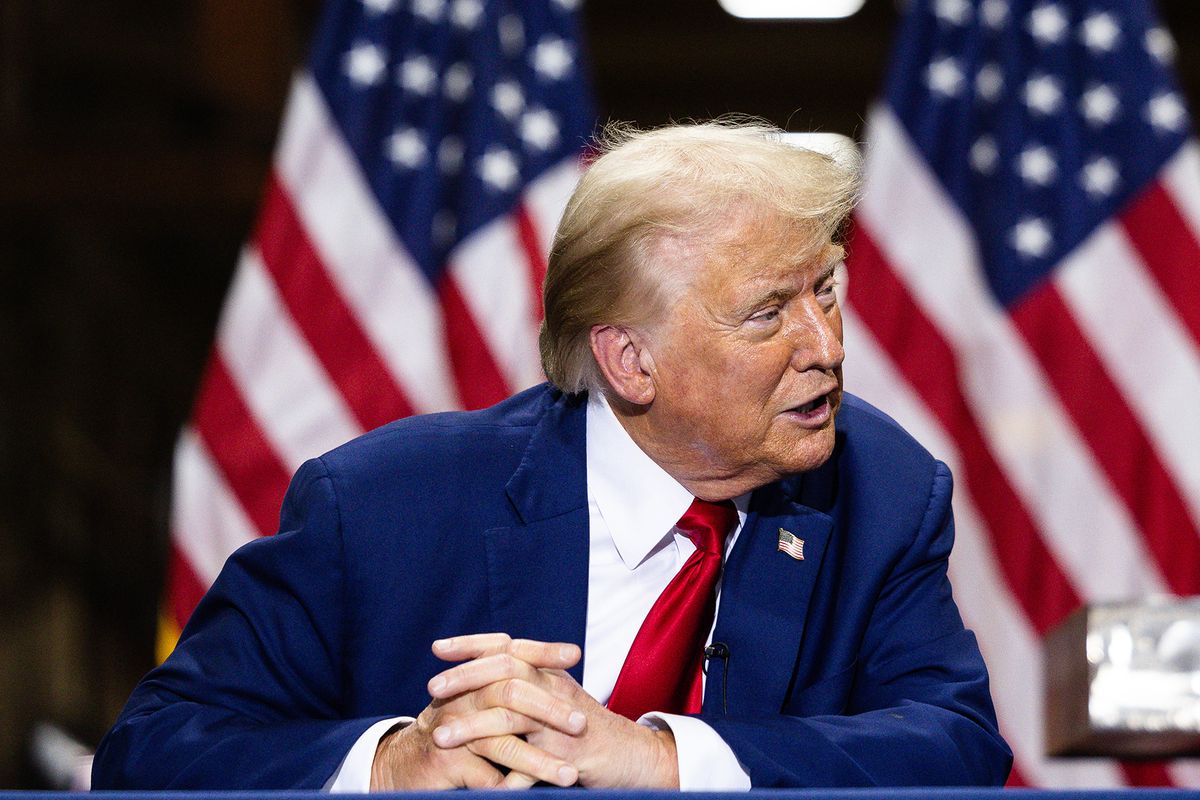
The former president has actively attempted to run away from Project 2025, because the policy goals laid out in the 887-page blueprint are deeply unpopular. Trump has claimed, “I know nothing about Project 2025, [and] I have no idea who is behind it.” On Thursday, he again claimed to “HAVE ABSOLUTELY NOTHING TO DO WITH” it.
It’s an absurd claim: The policy manual was written in large part by former top Trump administration officials — and when he spoke at a 2022 event hosted by the Heritage Foundation, the think tank behind Project 2025, Trump said: “This is a great group, and they’re going to lay the groundwork and detail plans for exactly what our movement will do and what your movement will do when the American people give us a colossal mandate to save America.”
As Rolling Stone has reported, sources say that Trump has been directly briefed by confidants and close aides on Project 2025’s substance and progress. Top officials involved with the project are expected to have senior roles in a Trump administration.
Instead of fact checking Trump’s clearly false claim that he knows nothing about Project 2025, fact checkers have decided they — and everyone else — must simply take him at his word. Further, Democrats must be punished for tying Trump to its unpopular policy proposals.
The Poynter Institute’s Politifact already beclowned itself earlier in the week by declaring it was unfair of the DNC to broadcast a video of Trump from 2016 saying “there has to be some form of punishment” for people who have abortions, because he “walked back the comment.”
On Thursday, Politifact’s staff reviewed Vice President Kamala Harris’ claim that Trump “plans to create a national anti-abortion coordinator and force states to report on women’s miscarriages and abortions.”
Politifact deemed Harris’ claim “mostly false” because Project 2025 “isn’t Trump’s plan,” adding that “Trump and his campaign have repeatedly said they were not involved in the project and Trump is not listed as an author, editor, or contributor.”
It’s hard to say how inappropriate this is, but things quickly got worse.
“Project 2025 doesn’t mention a ‘national anti-abortion coordinator.’ The document calls for a ‘pro-life politically appointed Senior Coordinator of the Office of Women, Children, and Families,’” Politifact wrote. “It says the U.S. Centers for Disease Control and Prevention’s abortion surveillance and maternal mortality reporting systems are inadequate and proposes withholding federal money from states that don’t report to the CDC how many abortions take place in their states.”
These are virtually the same things.
The article also pans Harris’ supposedly “predictive” claim that Trump wants to “enact a nationwide abortion ban,” noting that “Trump said this year he would not sign a national ban.” This is true — but shortly before the former president announced that abortion should be a state issue, he openly mulled endorsing a national abortion ban.
It’s obviously worth considering, too, that Trump appointed three conservative Supreme Court justices whose votes were essential to overturning Roe v. Wade, allowing states to ban abortion — an accomplishment he openly brags about.
Politifact concludes that Harris “exaggerates Trump’s abortion agenda by tying him to Project 2025 ‘allies.’”
Is it really a journalist’s job to declare with certainty that the issue position Trump has settled on, as a matter of politics, is exactly what he would do as president? Absolutely not. It’s even more irresponsible coming from pundits holding themselves out as “fact checkers.”
If that is indeed their job, they should throw in the towel.





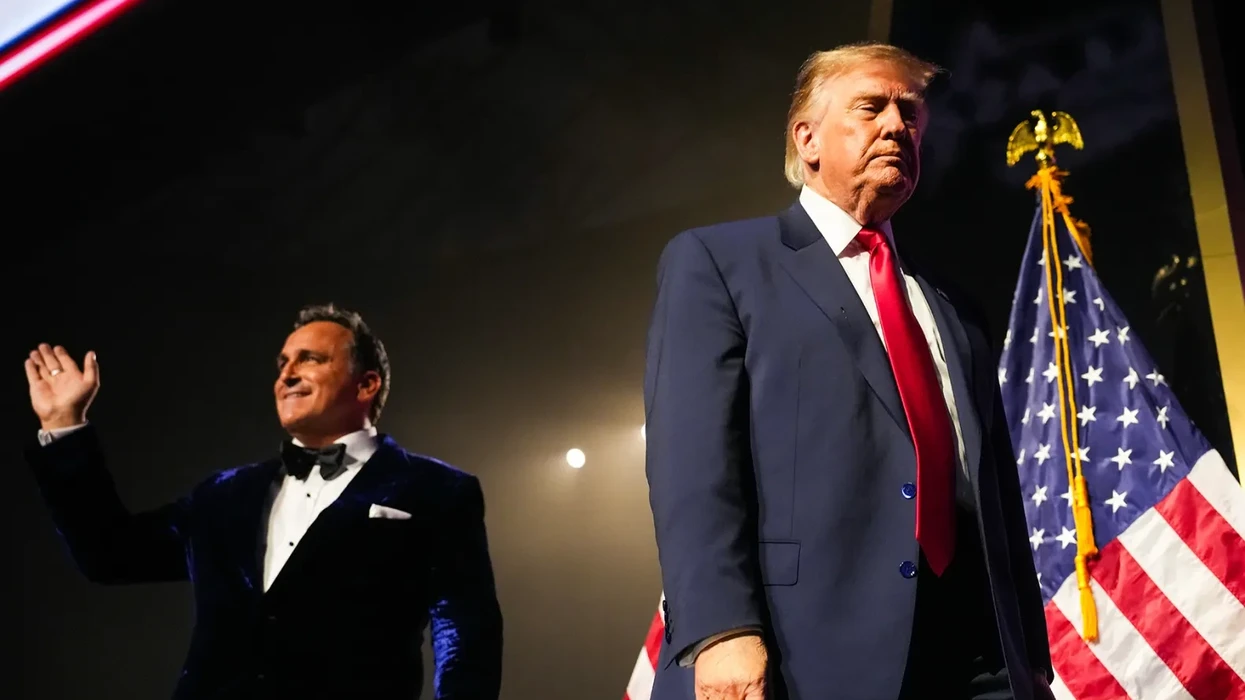
 The first day of the 2026 Republican National Convention at the American Airlines Center, on Sept. 9, 2026 in Dallas, Texas.
 People of all colors listen as Donald Trump speaks on the first day of the Republican midterm convention.
 Trump supporters at the Republican midterm convention.

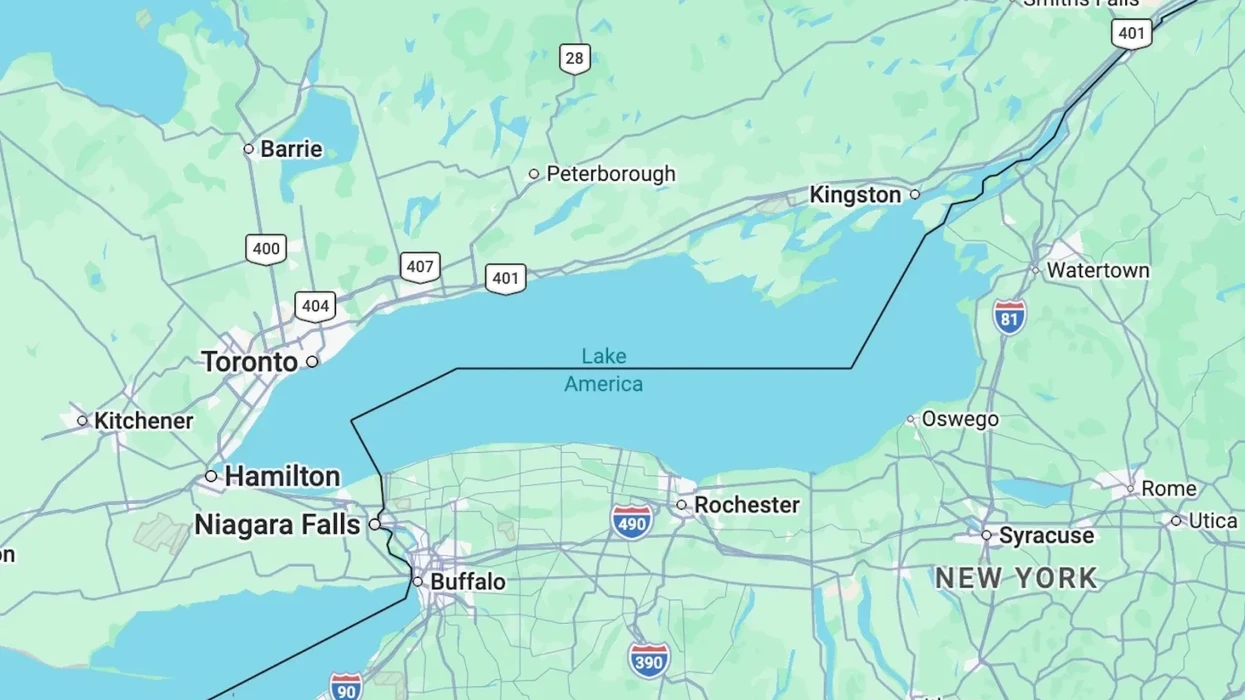
 Apple Maps, August 30, 2026

It’s Been 25 Years Since 9/11. Did the Terrorists Win?
I once had a conversation with Barack Obama about the nature of terrorism. This was during his second term, and he’d been going on for a few minutes about how Islamic terrorism wasn’t actually an existential threat to Americans, but rather a chronic and manageable risk. I was all too familiar with this argument, having conducted the interview with John Kerry in 2004, in which he said terrorism could be reduced to the level of a “nuisance” — a quote that blew up on him during the final weeks of the campaign. I found Kerry’s answer problematic then, and I had the same reaction when Obama said it. I asked him pointedly: What would have to happen for him to decide that terrorism was, in fact, existential? How about a suitcase nuke on a subway car? Then would he concede that terrorists were more than criminal gangs?
Obama didn’t hesitate. Terrorism would only reach the level of an existential threat, he told me, if Americans responded by abandoning their own values and turning on one another. There was nothing a bunch of homicidal zealots could do to destroy the most powerful country on Earth, but we could certainly destroy ourselves if we abandoned our constitutional protections in a fit of panic.
At the time, this struck me as something you might expect to hear from a constitutional-law professor, but not necessarily from the president of the United States. There was an intellectual fatalism about Obama I sometimes found disconcerting — a sense that he saw himself as a twig in the river of history, and it was up to the rest of us to change the current. I doubt he would dispute that assessment. But I thought often of that conversation a few years later, as the country careened into the Trump era. And as we pause now to reflect on the 25 years that have passed since the attacks of Sept. 11, I find myself thinking about it again.
Alternative histories are a tricky business, best left to novelists and sci-fi filmmakers. As a friend of mine in politics likes to say, mockingly, whenever such theories get floated: What if Hitler had won the Civil War? And yet, it’s hard not to see a direct line between the events of 2001 and where we are today — and to wonder how different the country might have looked had it never happened. On the eve of the devastating attacks on the World Trade Center and the Pentagon, George W. Bush’s young presidency seemed to be wobbling. Absent those attacks, he might well have been a one-term president, and he almost certainly would not have invaded Iraq. Nor would Democrats become backed into defending the entrenched war in Afghanistan as the “good war” — a way of differentiating their own response to 9/11 from Bush’s without sounding reflexively pacifist.
Without the economic shock of 2001, it’s unlikely that desperate policymakers would have looked the other way while lenders, underwritten by the government, turned the housing market into a casino, leading to the second massive blow of the decade: the market collapse of 2008. All of these things, in quick succession, destroyed what remained of the public’s faith in its governing establishment, leading directly to Obama’s stunning takeover of the Democratic Party and, later, to the election of Donald Trump.
The Trump I met in the late 1990s, while he was flirting with an independent run for president, held himself out as a centrist reformer, in the mold of Ross Perot. By 2015, when he started running as a Republican, Trump had fully embraced a reactionary, white-nationalist movement — a response to Obama, yes, but also to Bush, whose instinct in the months after 9/11 had been to speak out forcefully in defense of Muslim Americans, and whose support for liberalized immigration infuriated much of his party’s base. Trump’s core appeal then, as it is now, was rooted firmly in the nativist, anti-globalist backlash that emerged in 2001. (According to Pew Research, roughly 42 percent of Americans believe Muslims are having a negative impact on the country.) The animating idea of Trump’s second term is that white, English-speaking Americans are the only authentic Americans. It shouldn’t be controversial to say that he will twist or shred any page of the Constitution to enact this vision, since he really makes no effort to conceal it.
Nor is America’s hard turn away from pluralism and liberal democracy happening in a vacuum — far from it. In the past decade, similarly reactionary, anti-immigrant movements have rocked Britain and taken over Italy, and they now seem poised to wrest power in France and Germany. Maybe some of this would have happened without 9/11; the hollowing-out forces of globalization and automation were already fueling plenty of economic fury here and in Europe by the turn of the century, and the revolution in social media wasn’t far off. But there’s little doubt that the “War on Terror,” which became the first real foreign policy framework since the end of the Cold War, focused all of that anxiety toward an identifiable enemy, fracturing societies that had been held together by a 50-year consensus around personal liberties. If Obama were being honest, he’d probably say he told me so, and he’d be right.
IN THE MONTHS after 9/11 and before the invasion of Iraq, it was hard to get much perspective, and genuine patriotism mixed — as it always does — with a series of mindless gestures and clichés. Flag pins became mandatory even for reporters, peace songs were effectively banned, Republicans brought “freedom fries” and “freedom toast” into the lexicon to protest French misgivings about war. It became rote for politicians to say that the terrorists hated our way of life and we would never let them win. (To this day, when my dog snarls at some terrified Shiba Inu for no reason, I ask her why she hates freedom.)
Twenty-five years on, though, with the benefit of distance and experience, we can ask some questions we couldn’t ask then. And one of them is what the violent extremists who sent those suicide planes into our buildings really hoped to achieve. Did Osama bin Laden think he could win a holy war with America? Did we ultimately frustrate his script for the downfall of the West, or did we simply play our part?
Terrorism is, by its nature, asymmetrical. Whether it’s the Viet Minh under the French, or the IRA in Britain, or Al Qaeda, there’s an inherent understanding that the terrorist can’t win a conventional war against an obviously superior military force. What the terrorist seeks is destabilization of the status quo. His desperate act is an igniter in search of fuses; the goal is to set off a chain reaction inside the fortress that can’t be controlled, to disrupt order with chaos and see what shakes out. The terrorist knows this will likely cause his own people suffering in the short run, but that’s part of the point. He believes the occupier to be a soulless monster, and by reducing it to its basest instincts, he hopes to bare its nature to the world.
We’re seeing this play out, in real time, in Israel. The leaders of Hamas, their military options exhausted and their political goals slipping away, could not have been under any illusion that they would drive out the Israeli occupiers by savagely killing and mutilating more than a thousand innocent people. They must have hoped that Israel would react with blind fury and cruelty, resorting to the instinct for all-out annihilation that its leaders had long managed to suppress. Nearly three years later, Israel has tumbled from legitimatized power to international pariah, its politics riven by disunity, its moral authority in shambles. Do we think Hamas really cares that more than 70,000 of its own people have died in the carnage? Its repugnant leaders almost certainly consider that a cost worth paying in the broader context of history. What they have achieved, in political terms, has exceeded their most feverish dreams.
The Israelis should have looked across the Atlantic and learned something from our own experience. America on Sept. 10, 2001, was an unchallenged superpower at peace — vexed by social and economic divisions, yes, but still stable enough to survive a disputed election with its political consensus intact. A quarter century later, we find ourselves fighting a third unsuccessful war in the Middle East, our society more divided and our politics more poisoned than any time since the 1800s, a foundation of laws imperiled after 250 years of durability, immigrants hunted down like animals by masked agents, violence and extremism on the rise from both right and left, truth and intellectualism in retreat. This is not solely the fallout from Sept. 11, 2001, but it is the result of a series of events that, were you able to hit a rewind button and live it all again in reverse, would lead you directly back to that day. If bin Laden meant for his attack to be the first in a series of similarly epic crimes, then he was soundly defeated — no small achievement for American soldiers and spies. But if his goal was to destabilize America and bring out the worst of our nature, then he may have pulled off the most successful terrorist attack in history.
Over and over we told ourselves, in that agonizing moment, that the terrorists would never win. A quarter century later, it’s getting hard to argue they didn’t.