Skip to content
Search

Tyler, the Creator Has a Point About ‘Meme’ Musicians

Tyler, the Creator Has a Point About ‘Meme’ Musicians

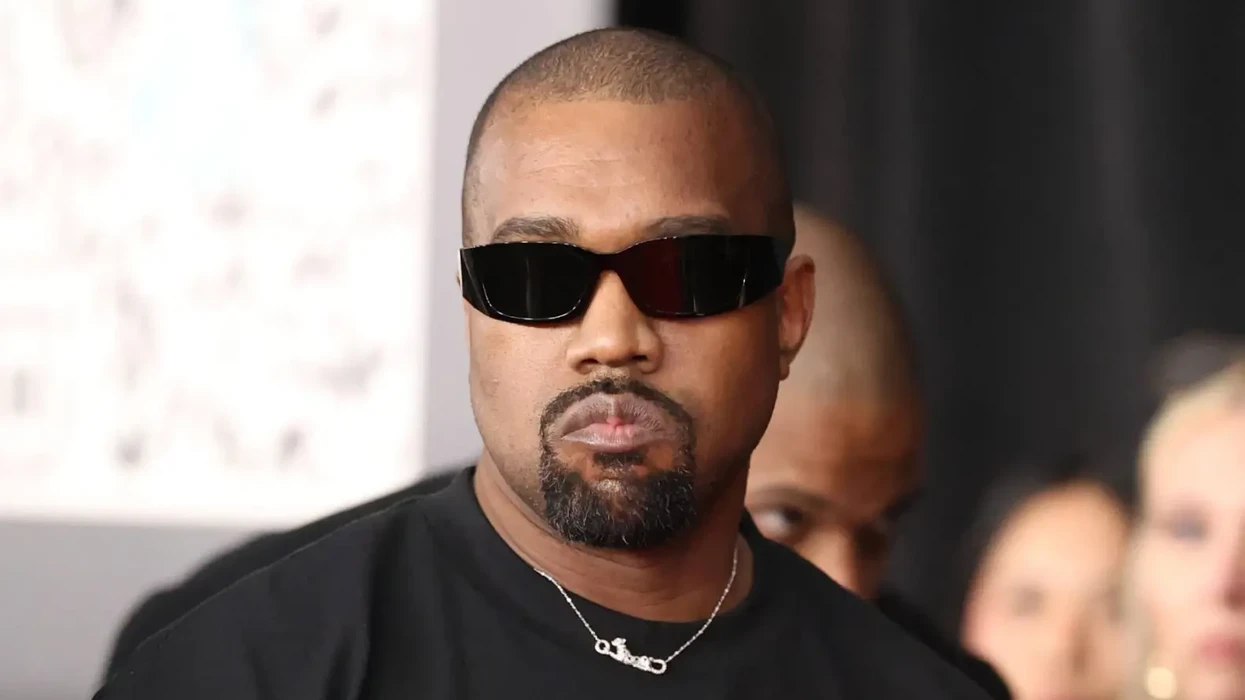
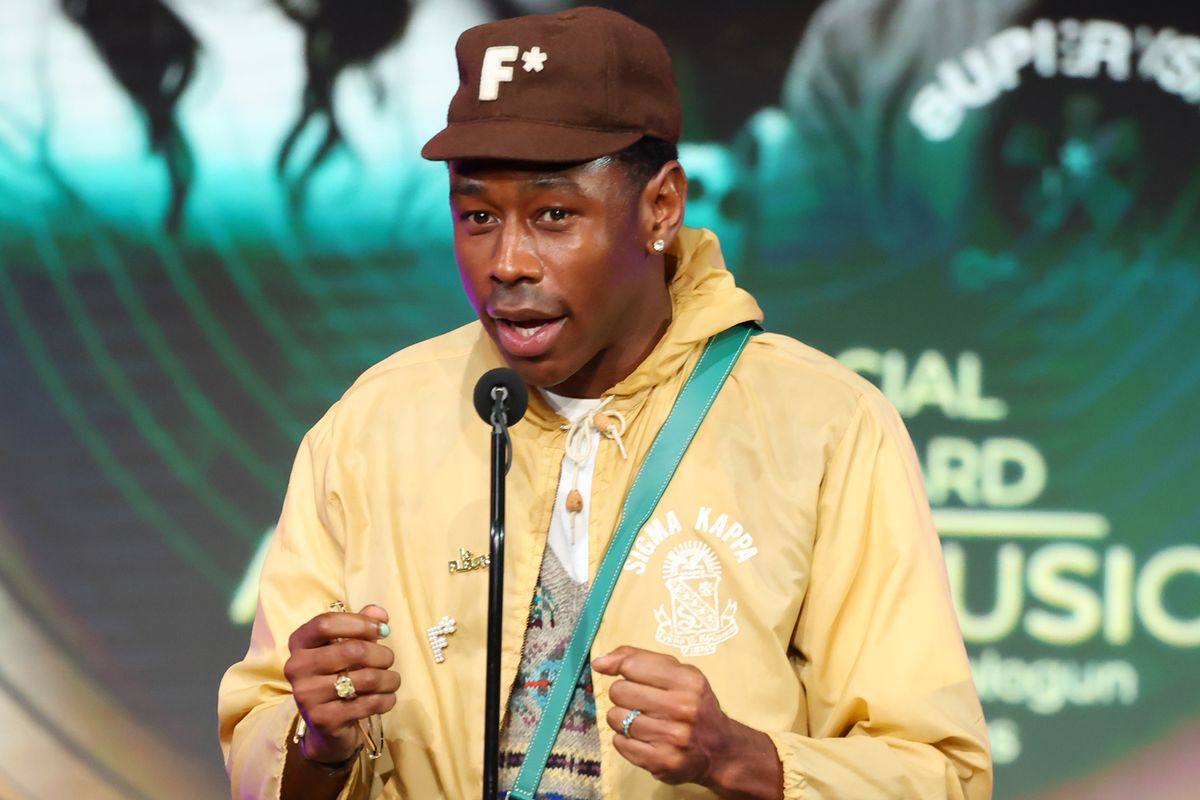
On a newly released episode of the web series Mavericks with Mav Carter, Tyler, the Creator managed to stir up controversy from every corner of the rap internet. In a clip that’s circulated online all week, he tells host Maverick Carter that “There’s so many niggas out right now that aren’t musicians that are getting treated like musicians because they make meme records — publicly will be like, ‘I don’t give a fuck about music. I just do this shit for money.’”

The designation of “meme” records caught the ire of some who claimed many of Odd Future’s early releases could be considered meme records and others who saw the comments as proof that Tyler, who turned 33 this year, is becoming out of touch. In the same interview, Tyler went on to comment about a white rapper he’s been seeing online who he believed was doing a pastiche of Atlanta rap icons like Gucci Mane and Future. Many online have come to think Tyler was referring to Ian, the viral rapper with cosigns from the likes of Lil Yachty, whose appeal relies heavily on the dissonance between his look and sound.


Both of Tyler’s comments seemed to coalesce online as a rebuke of the current generation of rap musicians. Bu Thiam, Ian’s manager and the EVP of Columbia Records, posted a response to Tyler’s comments in a since-deleted Instagram Stories post last night: “i signed Ian & im from Atlanta. He sounds nothing like Gucci or future lol. It’s called influence,” he wrote. “But i never though I’d see the day where you become old & hate on the youth lol.”  It’s a frustrating defense and one that’s regularly deployed in this generation’s rap discourse (never mind that Bu, an industry veteran, is roughly a decade older than Tyler). Nobody wants to be called “old” and thus people refuse to engage critically with anything shiny and new, instead chalking it up to the amorphous and apparently unimpeachable notion of youth culture. 

Except, citing the whims of young people is almost always a red herring. “The idea that youth culture is culture created by youth is a myth. Youth culture is manufactured by people who are no longer young,” The New Yorker’s Louis Menand wrote in 2019, referring to his own generation of Baby Boomers. “When you are actually a young person, you can only consume what’s out there. It often becomes ‘your culture,’ but not because you made it.”

The distribution pathways that dominate the way today’s young people experience music — mediated by multibillion-dollar tech companies helmed, by and large, by old white men — are not a representation of the values of the younger generation, but rather the conditions they’re forced to operate within. Ian, or any viral superstar of this moment, is less a symbol of what moves young people and more a product of what works in an economic system that young people have no control over. The moment we’re living in could be described as one of “context collapse,” the flattening of multiple audiences into a single context. The endless “For You” feed, consuming any fleshy reality of modern culture and spitting back the bland, inoffensive background noise an entire generation has been conditioned to see as art.

Last month, shares of UMG fell 30 percent after the company announced a slowdown in streaming growth, marking the end of an era of what seemed like limitless expansion in the space. Thanks to deals made with tech giants like Spotify, YouTube, and Apple, much of the music industry’s success over the past decade has been tied to Silicon Valley. Now, avenues like A.I. and licensing artists’ catalogs for use on social platforms have brought the music industry even closer to the tech world, transforming its central product from a cultural concern to a technological one. In other words: Meme music.

None of this is surprising. By now, it’s no secret that viral success has become an essential part of any new musician’s marketing strategy. The flaw here, as Tyler rightly points out, is thinking that this has anything to do with music or artistry. And more often than not, those trying to sell the increasingly soulless music that proliferates on social platforms as part of this generation’s culture are members of the old guard who stand to profit off of them regardless.
More Stories

Jonas Brothers announced as Headliner for Boots and Hearts 2026
Ralph Bavaro/NBC via Getty Images

Jonas Brothers announced as Headliner for Boots and Hearts 2026

Boots and Hearts is marking its 15th anniversary with an unexpected booking. Republic Live confirmed that the Jonas Brothers will headline the festival’s Friday night on August 7 at Burl’s Creek Event Grounds, making their first appearance at a country music festival.

The multi-platinum, Grammy-nominated trio is best known for its pop catalogue and stadium-scale tours. Their addition signals a deliberate shift for Canada’s largest country music and camping festival, which has increasingly reflected the genre’s commercial crossover with mainstream pop. The Jonas Brothers have collaborated with country artists in recent years, including Russell Dickerson, and have existing ties to Rascal Flatts and Ashley Cooke, both also on this year’s bill.

Keep ReadingShow less
Britney Spears Sells Rights to Her Entire Music Catalog
Tim Mosenfelder/Getty Images

Britney Spears Sells Rights to Her Entire Music Catalog

Britney Spears has sold the rights to her iconic music catalog, multiple sources confirmed to Rolling Stone.

Primary Wave will now take over Spears’ ownership share of her many hit songs, including “… Baby One More Time,” “Oops! … I Did It Again,” “(You Drive Me) Crazy,” “I’m a Slave 4 U,” “Lucky,” “I’m Not a Girl, Not Yet a Woman,” among many others.

Keep ReadingShow less
All of the Hidden Symbols and Meanings You May Have Missed in Bad Bunny’s Super Bowl Set

Bad Bunny performs at the Super Bowl LX halftime show on Feb. 8.

Kevin Sabitus/Getty Images

All of the Hidden Symbols and Meanings You May Have Missed in Bad Bunny’s Super Bowl Set

This story was originally published on Feb. 9th, 2026

Bad Bunny
is no stranger to making history, and last night, he conquered another first when he became the first artist to perform only in Spanish at the Super Bowl halftime show. Up until the big day, the only hint we had about potential themes for the show came from the Apple Music trailer that showed Bad Bunny dancing to his hit song “Baile Inolvidable” with a diverse cast of dancers. The vibe was unity and fun. But Bad Bunny always finds a way to get many complex messages into his performances, just as he does with his songs.

The performance had been even more anticipated because of the conservative backlash he received (to the point of Turning Point USA organizing an alternative halftime show). Additionally, because of Bad Bunny’s highly political Grammy acceptance speeches (he started one by declaring, “ICE out”), many people couldn’t wait to see what Bad Bunny might say or do during his 13-minute halftime set.

Keep ReadingShow less
From Lenny Kravitz to the Spice Girls, Nineties Music Takes Over Olympic Figure Skating Ice Dance Event

Canada's Piper Gilles and Paul Poirier compete in the ice dance-rhythm category during the Winter Olympic Games on Feb. 9, 2026.

AFP via Getty Images

From Lenny Kravitz to the Spice Girls, Nineties Music Takes Over Olympic Figure Skating Ice Dance Event

It turns out Ricky Martin’s appearance during Bad Bunny’s Super Bowl Halftime Show Sunday night wasn’t the last time viewers would hear from the singer this week: the Latin superstar was all over the speakers at the Winter Olympics figure skating competition Monday, as the world’s best ice dancers took to the arena for the rhythm dance event.

Martin’s 1995 hit, “Maria” was used by no less than three ice dance teams for the rhythm dance (formerly known as the “short dance” or short program), with couples from Finland, Sweden, and Spain all choosing the upbeat hit for their performances. While the specific song choice of “Maria” was a coincidence, the genre of the track was not, as ice dancers were assigned a “1990s” theme for the rhythm dance this season.

Keep ReadingShow less
The Seattle Seahawks Win Super Bowl LX

Seattle Seahawks' quarterback #14 Sam Darnold and Seattle Seahawks' head coach Mike Macdonald celebrate with the Vince Lombardi Trophy after the Seattle Seahawks defeated the New England Patriots during Super Bowl LX at Levi's Stadium in Santa Clara, California on February 8, 2026.

JOSH EDELSON/AFP/Getty Images

The Seattle Seahawks Win Super Bowl LX

The Seattle Seahawks have won Super Bowl LX, defeating the New England Patriots 29-13 at Levi’s Stadium in Santa Clara, California, on Sunday.

Kenneth Walker III was named the game’s Most Valuable Player, for good reason — the running back managed to get 135 rushing yards and 27 attempts, racking up significant yardage for the Seahawks.

Keep ReadingShow less