


This week, the Number One song in America is a diss track. Kendrick Lamar’s “Not Like Us” debuted at the top of the charts, to the surprise of no one who’s seen the track go viral since its release earlier this month. The song is buoyed by a catchy DJ Mustard beat and a slew of unforgettably delivered lyrics by Kendrick — even if the lines are vulgar barbs toward his rival Drake.
What does the record’s success mean? For one, it highlights how desensitized we are as a music-listening public. Drake’s “Back to Back,” a 2015 Meek Mill diss that went Number One, was filled with G-rated shots like, “Is that a world tour or your girl’s tour?” But on “Not Like Us,” Kendrick is levying career-ending — if not freedom-ending — accusations toward Drake, and we’ve collectively decided to turn up to it.
So much of the Drake-and-Kendrick beef, which Top Dawg Entertainment CEO Anthony Tiffith recently declared in an X Post was over, fixated on speculation of a “red button” diss — “Not Like Us” was a deep scarlet. But the song also presents cultural quandaries along with moral ones. The record’s primary premise is that Drake is a voyeur of Black American culture. When Kendrick says “us,” he’s referring to Black Americans like the Atlantans that he reeled off in the song’s third verse, when he alleges Drake exchanged his visibility for their cultural credibility and tells him, “You not a colleague, you a fuckin’ colonizer.“ (Yes, 21 Savage was technically born in the U.K., but he spent his formative years in Atlanta and is respected like a native.) That verse connects with Kendrick previously asking Drake “How many more Black features ’til you finally feel that you’re Black enough?” and going on to jest about OVO, rapping “Tell ’em run to America, they imitate heritage, they can’t imitate this violence” on “Euphoria.” He drew the dividing line early on in their war of words.
“Not Like Us” is meant to be an anthem for those sharing the Black American experience, but its astronomical streaming numbers make it safe to assume that we aren’t the only people enjoying the record. What are we to make of millions of listeners screaming “they ain’t like us” to the heavens — including the people who aren’t like us? There are numerous viral videos of the song being played at sporting events and other public gatherings. A group of college-aged Torontonians danced to a remix of the song outside Toronto’s New Ho King (where they apparently have a Kendrick Lamar special). The British producer Fred Again even dropped an edit of the track, which was captured in a TikTok and viewed by close to 100,000 people. One X user noted: “Just went to a graduation party and the girl screamed ‘A minorrrrrrr’ as soon as the beat dropped.”
Again, it’s a bit disconcerting that one of the hip-hop moments of the year is referring to preying on a child. But dissonance shrouds hip-hop, and the tone of a diss song allows leeway to bars that would probably be called out on a “normal” song. So people are having fun with “Not Like Us.” Besides the song becoming a chance to dance on the figurative grave of Drake, DJ Mustard’s flip of Monk Higgins’ “I Believe to My Soul” has a classic West Coast swing, and Kendrick sounds as playful as ever. Even if some of his accusations are basically fighting words, he’s saying them so colorfully that listeners can’t help but recite them.
The song is going viral on TikTok with videos of people Crip-walking to it, which, in L.A. parlance, is weird. In 2003, CJ Mac released a documentary called C-Walk – It’s A Way of Livin where he asked people from L.A. how they feel about the dance’s assimilation into mainstream culture. Ice T noted that he viewed it as “just a dance.” But others in the documentary purporting to be Crips lamented that they’re not fans of the co-opting because there was a time when “you had to be from somewhere” to do it without risking violence, “somewhere” being a Crip neighborhood. Despite what the dance’s actual progenitors have said about their preferences, people who’ve never heard of Tookie Williams — or CJ Mac’s documentary — listened to the “L.A.-type beat” on “Not Like Us” and decided to channel their inner Snoop Dogg. Doing a gang dance to a song dissing someone for appropriating street culture is pretty dense, but perhaps we’re all having too much fun to care.
The toothpaste is out of the tube when it comes to hip-hop. There’s a hip-hop culture and a hip-hop consumer base; artists engage the latter. They probably don’t get to be multimillionaires (and billionaires) without opening the floodgates to hip-hop listeners with no proximity to the communities that started the art form. Critical listening is merely an option in that cohort because many of these fans wouldn’t understand the full scope of what’s being said even if they did listen. We’ve seen this dynamic manifest throughout a beef that hinges on racial elements many of the most avid observers can’t credibly speak on. And now we see it in the epilogue.
“Not Like Us” isn’t just a Drake diss, it’s a rally against perpetrators who shifted hip-hop from a Black and brown community with culturally understood modes of being into an at-times parodic circus. That’s why when Kendrick rallies his cultural peers against the Canadian with “the braids,” one can’t help but wonder if the figurative victory parade is being attended by people who aren’t on the winning team. Kendrick probably doesn’t care who fills his bank account, but the song’s virality presents a weird paradox. “Not Like Us” has become a microcosm of hip-hop itself as art by and for Black and brown people that’s being consumed by the entire world.

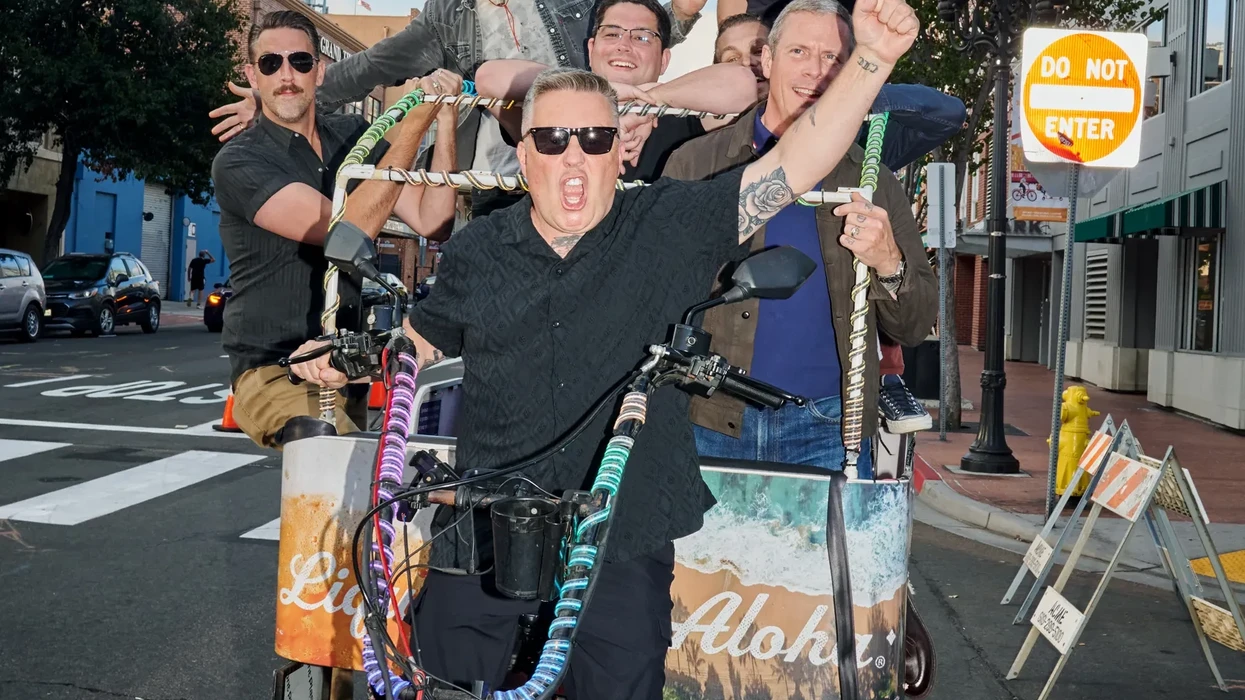
 Ken Casey stuck around after the show in San Diego, California, talking to members of the International Brotherhood of Electrical Workers.John Francis Peters for Rolling Stone
 Some of the challenge-coin haul.
 The band started as a bet. “My band has a show in three weeks,” Casey’s coworker told him in 1996. “I dare you to open for us.”John Francis Peters for Rolling Stone
 Dropkick Murphys (from left): Casey, DaRosa, Webster, Kelly, Rheault, Brennan, and Lynch John Francis Peters for Rolling Stone
 Casey is largely the voice of the band, but the other members back him up. “We’re so lucky he’s the mouthpiece,” says Brennan, left. John Francis Peters for Rolling Stone
 “Only the Irish can take a song about death and destruction, famine, alcoholism, and raise a glass like it’s an anthem,” says Casey. John Francis Peters for Rolling Stone
 “Anytime it feels like things are about to plateau for us, something gives us a little bump,” says guitarist Lynch. “It feels exciting. It feels dangerous. It feels like doing something.” John Francis Peters for Rolling Stone

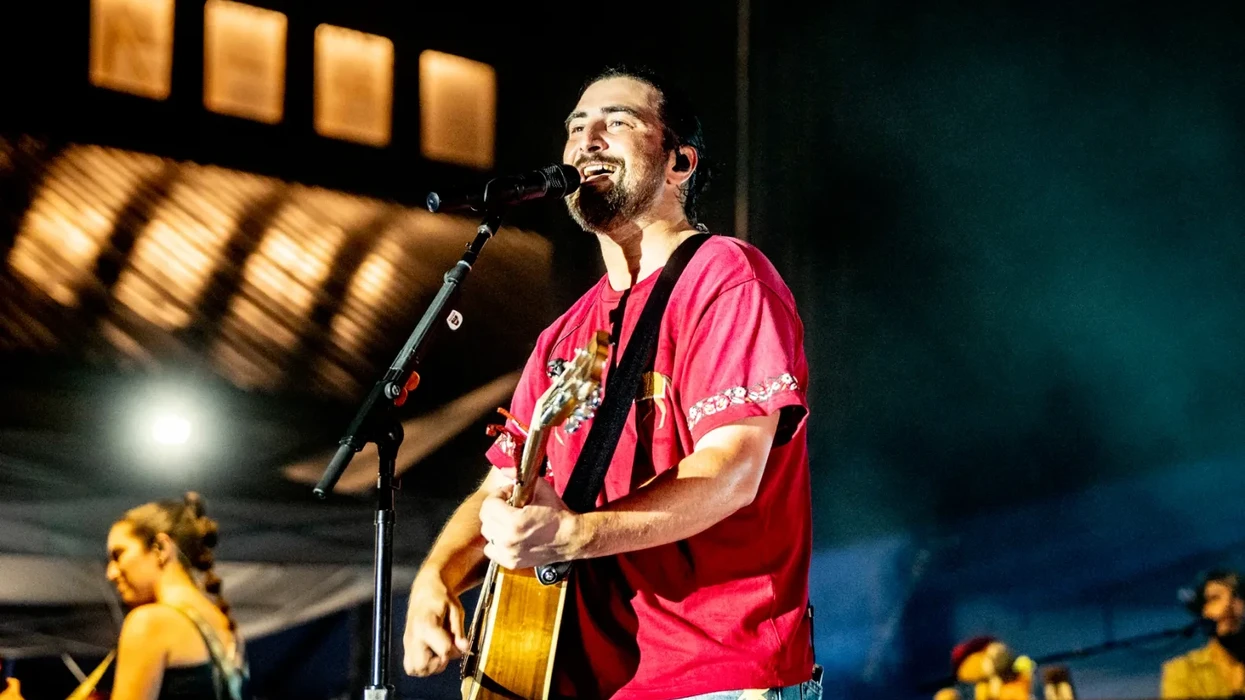
Jay-Z performing at the Stade de France in Saint-Denis in Paris.
Jay-Z Deserves the Super Bowl Halftime Gig
Where’s the love? Jay-Z asked that question 25 years ago, in the chorus of one of many songs in his catalog that still move audiences today. If he performs “Heart of the City” as part of his Super Bowl halftime show next February, those indignant bars are sure to be a highlight: “First the Fat Boys break up, now every day I wake up, somebody got a problem with Hov…” It would be an appropriate choice, too — because then as now, any time Jay-Z notches a new achievement, people find a way to complain.
The jokes and nonsense started almost as soon as the first rumors trickled out that Jay, whose company Roc Nation has executive-produced the Super Bowl halftime show since 2019, might be choosing himself to headline next year’s show. “Jay-Z just Dick Cheney’d himself for the Super Bowl,” Puck‘s Matthew Belloni quipped on X last week, alluding to the time that the late prince of darkness, who’d been asked to run the vice-presidential search committee for George W. Bush’s 2000 campaign, put himself on the ticket. (Super hip and current reference, and not at all apples-and-oranges.) Others pointed to TMZ reports that pop stars like Harry Styles and Justin Bieber had been asked first. “How are they the frontrunners, and he end up in the front?” Cam’Ron, who’s delighted in trolling Jay for many years, wondered aloud on his podcast. “Out of all the people on the roster, they couldn’t pick nobody else?” asked Cam’Ron‘s co-host, Ma$e.
These critiques miss the point, which is that Jay-Z is one of the best choices for a high-profile gig like this. He’s a superstar with a comparable level of name recognition to any other A-lister in music. He has a deep stack of classic songs going back decades. And he’s a highly skillful live performer who knows his way around a stadium stage, as he’s spent this year reminding people on his Jay-Z 30 tour. He tore down Yankee Stadium three nights in a row this summer; just last week, he rocked SoFi Stadium, which happens to be the same place where the 2027 Super Bowl is being held. He held the crowd’s attention with ease at all of those shows, and though there were plenty of glittery guests — that’s a given at a Jay show, and it will surely be true at the Super Bowl, too — he did it mostly through the force of his own magnetic energy. Let’s state the obvious here: Jay-Z is really, really good at rapping. We’re talking about one of the slickest, sharpest talkers in the history of words, someone who made it to the top through a sustained act of myth-making, then kept going. Are we seriously asking whether he can handle a 15-minute televised performance?
And yeah, there’s a touch of self-congratulation in the way he appointed himself. So what? Praising his own gifts is arguably Jay-Z’s greatest talent of all. He made a fine art out of self-applause. He told his story again and again, retracing the steps from Marcy Projects to the corner suite, and he made us believe. It would almost be insulting to the audience if he didn’t give himself the gig at some point.
Pop culture observers in recent years surely remember the backlash to Super Bowl headliners like Kendrick Lamar and Bad Bunny — all of it at least culturally conservative, and much of it frankly just racist. The blowback to Jay’s announcement is mostly coming from other quarters, at least for now (let’s just wait to see what the right-wing swamps make of this one). But it’s disappointing in a different way. Jay-Z has spent his career expounding hip-hop as a mainstream commercial force. He’s not a businessman, he’s a business, man. But he’s also an artist. He’s made huge amounts of money, and gotten himself into the rarefied rooms where he even has the ability to give himself a gig like this, by spinning his experiences into compelling narrative art, one verse at a time. Let’s not lose sight of how impressive his life’s work really is. Jay-Z is not some random C-suite bro, and he’s definitely not Dick Cheney. He’s one of the greatest rappers of all time, by any measure. He’s earned that Super Bowl spot.