
Twenty years ago this month, the Randy Rogers Band released Rollercoaster, an 11-track album on the independent Smith Music Group label.
Within a year of the LP’s Aug. 24, 2004, release, the record had taken the band from a life of scraping by in Texas dive bars and underpaying opening-act slots to the pinnacle of the Texas music scene. Rogers has been there ever since.
Rogers founded his band in 2000 and already had a studio album to the group’s name — Like It Used to Be dropped in 2002. But Rollercoaster changed the trajectory of the group and of a state’s country music scene. The album landed the band a deal with Mercury Nashville, and they parlayed it into a career that came to define Texas music in the same way that Lone Star icons like Willie Nelson, Robert Earl Keen, and Pat Green had done before them.
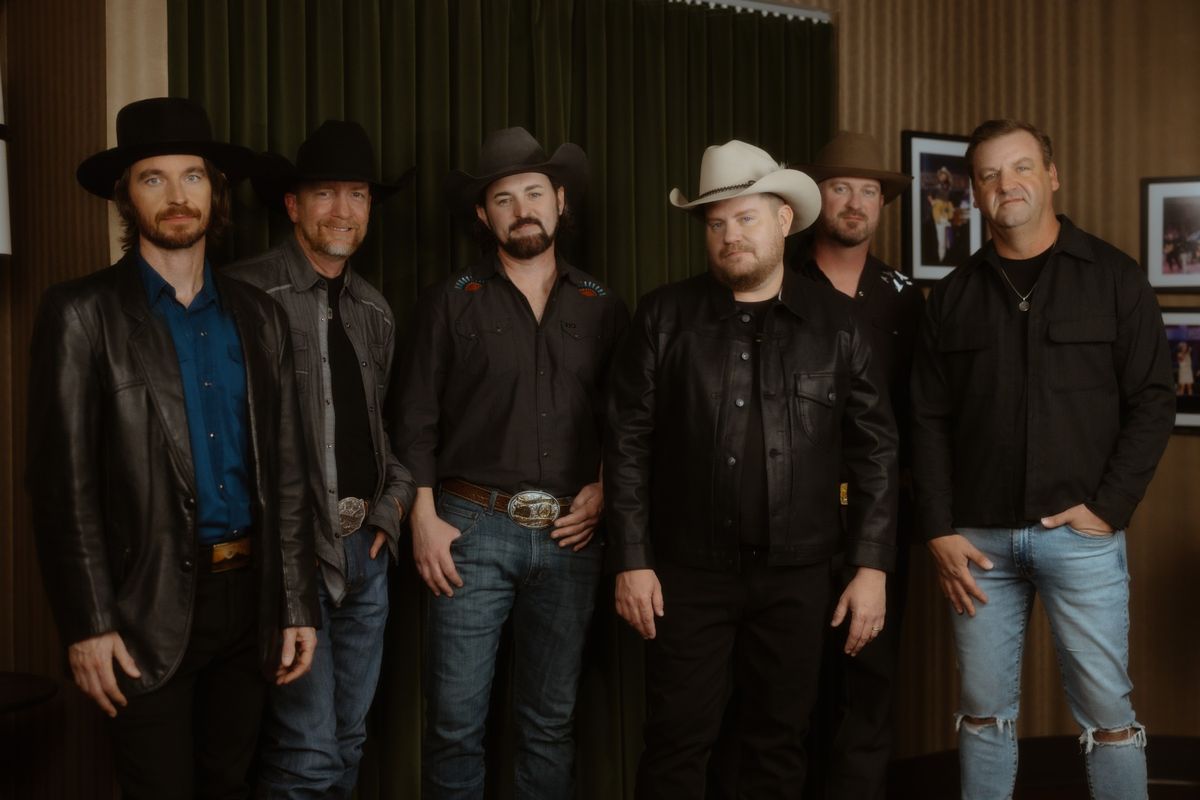
Now a veteran group, the Randy Rogers Band are unchanged from the artists that went into Cedar Creek Studio in 2003, confident but clueless about the ways of music, having just asked Radney Foster to produce an album. At the time, Rogers fronted the band and was joined by Geoffrey Hill (guitar), Johnny “Chops” Richardson (bass), Brady Black (fiddle), and Les Lawless (drums). Twenty years later, the same musicians continue to make up the group, bolstered only by Todd Stewart playing keyboards and acting as an aux player when needed.
“The story of Rollercoaster,” Rogers tells Rolling Stone, “isn’t the album. It’s everything that’s happened since then.
“We trusted each other,” he continues, “and it’s all the same people I’m working with right now.”
Rogers was born in Cleburne, Texas, and claims San Marcos as home. He grew up immersed in the outlaw-bent, independent country music from the Lone Star State. One of his favorite artists was Del Rio native Foster, who had found mainstream success both as part of Foster & Lloyd and as a solo artist during the heyday of Nineties country, and whose 2001 album, Are You Ready for the Big Show?, became a major hit in Texas country circles. Rogers met Foster at a concert and asked him to produce what became Rollercoaster.
“I was a fan of his melodies, and a fan of his records,” Rogers says. “I went after Radney because he had Texas, and he had Nashville, and he had a sound that was different than anything I’d ever heard.”
Foster was impressed with Rogers’ confidence and saw limitless potential, and he found an artist willing to absorb his advice.
“Randy sent me a bunch of songs, and I listened to them,” Foster tells Rolling Stone. “He asked me what I thought of the songs, and I said, ‘I think you have four or five.’ He tells me it took him a year to write them. And I said, ‘Look, if you’re going to do this, if you’re gonna run with the big dogs, you’re gonna write 30 or 40 or 50. Welcome to the big leagues.’ I can guarantee you that, for every 12 songs that make a Bruce Springsteen album, there are 30 songs that end up locked in a guitar case that you never hear.”
Rogers took Foster’s advice to heart and came back with more — and better — songs. The two also co-wrote “Somebody Take Me Home” and “Tonight’s Not the Night (For Goodbye)” for the record. Of the 11 tracks on the album, Rogers wrote or co-write nine of them. Richardson wrote “Ten Miles Deep” and the late Kent Finlay penned “They Call It the Hill Country.”
One song, “Again,” was co-written with Cody Canada, and also appeared on Cross Canadian Ragweed’s seminal record, Soul Gravy, released the same year. “This Time Around” was another Canada co-write that made it onto Ragweed’s Garage record. Another, “Lay It All on You,” was co-written with Wade Bowen and appeared on Bowen’s Lost Hotel album. Rogers and Bowen still tour and record together to this day, giving their collaborations the “Hold My Beer and Watch This” branding.
When Kenny Chesney cut “Somebody Take Me Home,” Rogers believed his ship had come in. “I thought it was going to be easy getting my songs cut after that,” he told Rolling Stone while reflecting on Rollercoaster before his headlining set at the Jackalope Jamboree in Pendleton, Oregon, in June.
Over the past year, the Randy Rogers Band have been on the road celebrating the album’s two decades of influence. On Friday, one day shy of the actual anniversary, they released Rollercoaster: 20th Anniversary, a remastered version of the original studio album.
This is the story of that record, as told in summer 2024 by the people who brought it to life.
“It Was Our Do-or-Die”
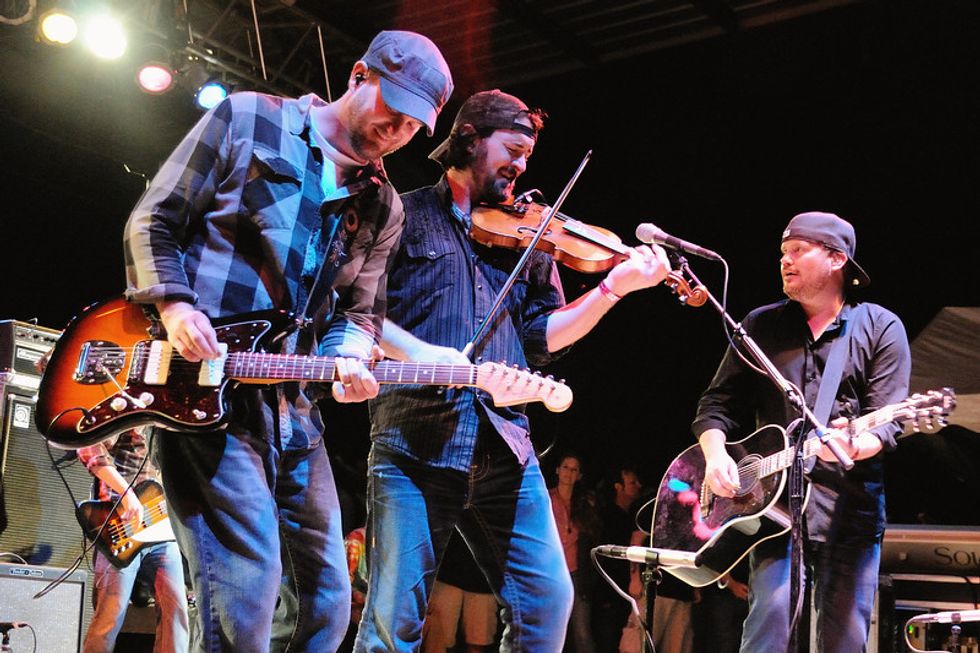
Black: The thing about making the record was that we were all kind of broke at the time. So, we had literally four days that we could record this whole record. Well, you know how sometimes, when you’re under pressure, you’re better? That’s what happened to us. We just said, “Let’s get in there and hold each other accountable.” There was no real time for reflection about whether this was a good solo or not. We just had to go and do this.
Lawless: It was in the time in our career where there were no rules. Our influences were all over the board at the time. Me and Geoff were kind of Nineties grunge. Brady was bluegrass. Chops was more punk. Randy was the country songwriter guy. We had no expectations. We weren’t trying to sound like anything other than ourselves going in there and playing.
Richardson: I was kind of intimidated. It definitely felt like the most real project I’d ever done at that point. I’d been in the studio a couple of times, but it was real garage-y. This was the first time it felt like I was making a real record, and not just for fun.
Hill: It was our do-or-die. Here’s our one shot to make something that people are going to like, or we’re going to have to go get day jobs.
Foster: Some of it was, we fell in the luck bucket. But I think the performances are engaging. There’s a playfulness due to the fact that they weren’t yet session-quality guys. But no new band is. That’s true of the Beatles. How charming are those first few recordings? Obviously Randy and the guys don’t sound anything like he Beatles, but there’s a charming element to it. It still sounded like, these are kids playing their asses off somewhere in a garage, until they get it right.
Robin Schoepf, band manager for Rollercoaster: Once the band decided they wanted Radney to produce, they didn’t back down, and if I remember correctly, Radney made them a screaming deal on that album so they would have enough money left to get by till it came out. In the studio, there were long conversations about production and songs and arrangements. It was the first time an outside force — Radney — was involved in the creative process for RRB. He challenged them in ways they hadn’t been challenged before. I really believe the experience with Radney at that exact time in their career forged a relationship that became one of the most important threads woven throughout the band’s career.
Rogers: Radney showed me how the business worked. He was just so smart, because he had been through it and done it. I could see that he was somebody who needed to be my mentor. He probably hated it, because I was a little bit creepy. But he taught us how to be a band.
“Everybody’s Two-Stepping”
Mattson Rainer, CEO and music director, KNBT-FM, New Braunfels, Texas: There are certain records that impacted the scene so much, it’s hard to imagine the scene without them. Texas music started to explode during the mid-Nineties with the release of Number 2 Live Dinner from Robert Earl Keen, Charlie Robison’s Life of the Party, Bruce Robison’s Wrapped, Pat Green’s Carry On, and Cross Canadian Ragweed’s Soul Gravy. These are some of the records that came out during the defining years of modern Texas music — which, to me, was 1995 to 2004. Rollercoaster is a part of that group of records that defined the scene.
Hill: The first single on that record was “Tonight’s Not the Night,” and we went to Fort Worth, to Billy Bob’s after it was out, and we damn near sold the thing out. That was the turning point. We realized that we had something.
Black: For that Billy Bob’s show, we drove 19 hours, all night from Steamboat, Colorado. None of us had showered. And we walk in, and it was a packed-out show — the biggest we’d ever played. It was eye-opening. Then, people started singing the words back to us, and that was a ‘Whoa! What is happening?’ moment.
Foster: I felt like I’d done my job. They had made another record before, but it was not this lineup. So, I always say that I made the first Randy Rogers Band record. I think it translated into doing something honest and vulnerable, with all of the swagger of being a rock & roll band playing country music.
Rogers: When it came out, and when “Tonight’s Not the Night” hit, all of a sudden, everybody’s two-stepping. I’ve got the crowds. That was when I knew we were on to something. It was getting traction, and people couldn’t fucking figure it out. All of a sudden, people from Nashville were flying in. We were entertaining record labels. All that because of one song.
“The Best of Texas”
Rainer: Once that record came out, it seemed like most artists wanted to sound like Randy, and, certainly, sell as many concert tickets as Randy. Rollercoaster turned the Randy Rogers Band into a machine that became the new bar for what Texas music should sound like. Appealing to the masses in a bigger way than those other previous records and, yet, at its core, was pure Texas country. Yes, it did achieve some mainstream country success, but Rollercoaster was, is, and will always be, the best of Texas. Rollercoaster stared Nashville in the eyes and said, “Accept us if you’d like, but Texas music is strong enough to stand on its own.”
Foster: When that record was breaking, they worked their asses off. When we went in to make the second record, they were twice the band they were before. That’s what 250 gigs and a lot of craziness will do for you. They have a gig somewhere tonight, and they will kick ass. They will blow people away. They are seeing now what I saw from my career. The 20-year-olds in the crowd now are the sons and daughters of their first fans.
Rogers: Wade and I were young buckaroos. We were a little bit different. But, if it wasn’t for Ragweed, if it wasn’t for Pat Green, and Jack Ingram, all these guys who were institutions before Wade and I ever came along, I’m not here. I thought Cody was a god. I thought Pat was. Those guys, to me, were untouchables long before we came along.
“I Was Writing the Truth”
Foster: They’ve done nothing but get way better at their instruments, at their writing, at their singing, at every aspect of how you make this work. They outlasted the guys that they used to open for. They put more butts in the seats in places like Kansas City now than they did at the height of when they are on a major label. For guys who are 45 now instead of 25, that’s astounding.
Hill: At the time, we barely had our feet in the door to a lot of these dance halls. We weren’t pulling very big crowds. We had all decided that we were going to quit our day jobs, and we were going to try our best to make it as a band. So, whether or not that record was going to make it, we had already decided that we were going to give it hell. The thing that makes us unique, today, is the fact we’ve been together so long. We’re going on 23 years. That’s what sets us apart from any other band.
Rogers: What I take away from Rollercoaster now is, I was writing the truth, and Radney knocked it out of the park. I mean, bottom of the ninth, bases loaded, down by three, and it’s a grand slam to win the game. I felt like he reined us in. That record is why I’m here.
Josh Crutchmer is a journalist and author whose third book, Red Dirt Unplugged, is set for release on December 13, 2024, via Back Lounge Publishing, and available for pre-order.