
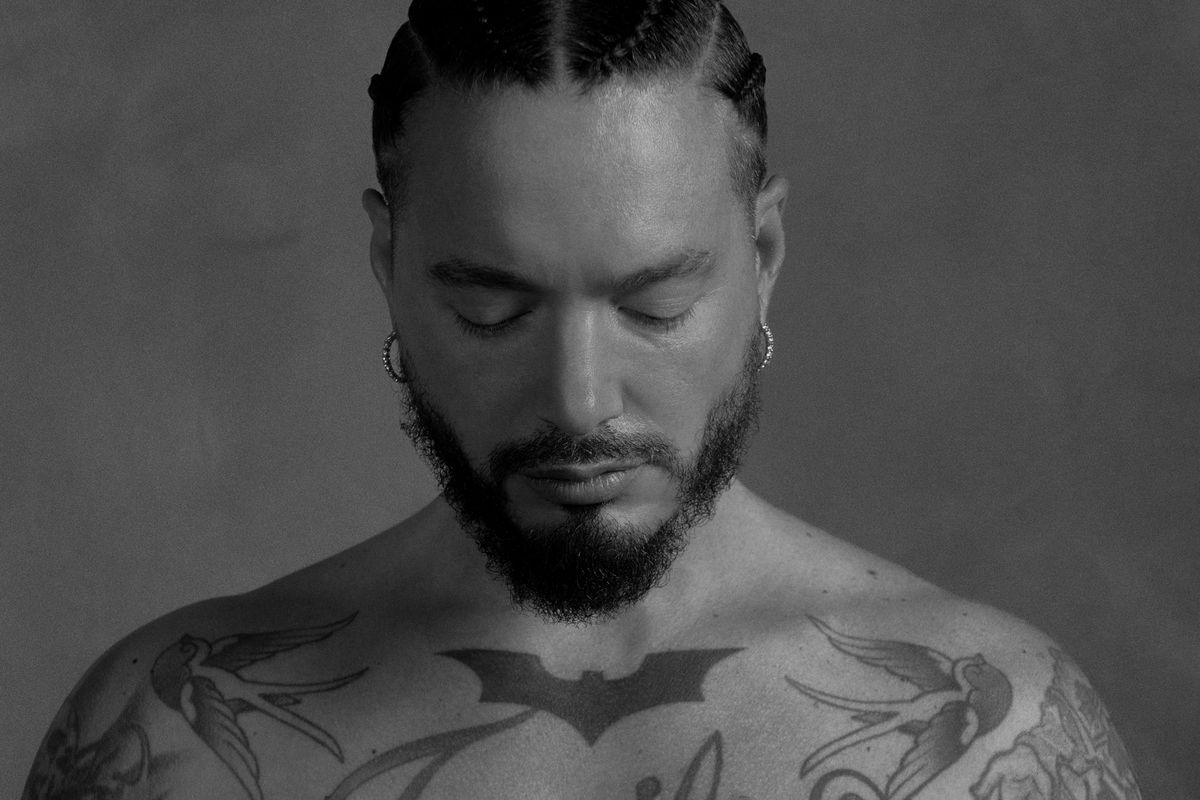

J Balvin took the two years following the release of 2021’s José to retreat from the public eye and spend more time with his family. And for understandable reasons: the Jose album cycle was plagued by controversy, a cancelled tour, and an uncompromising verbal assault from hip-hop en español’s resident curmudgeon. When he decided to get back to work, he hit the club. Decamping to London, José spent his days recording at Abbey Road and RAK Studios and nights on the dancefloor, clubhopping and testing demos on unsuspecting crowds. The result is a new album, Rayo, that leans heavily into pop reggaetón and the sounds of the club, a PG-13 perreo that’s as palatable as it is predictable.
Balvin’s superpower has long been his ear for talent: He’s a genre tourist of the highest class, constantly scouring global charts for new sounds and new voices. His song with norteño superstar Carin Leon is his first exploration into the diverse regional Mexican sounds dominating the charts. But their collaborative track “Stoker” is a disappointingly bland acoustic ballad that has more in common with pop country than música mexicana, and the rest of Rayo finds him treading mostly familiar ground with radio-ready popetón jams and collaborators from Colombia, Puerto Rico, and Spain. He’s said the album is rooted in nostalgic notions, reminiscent of a time when he would sell records out of the trunk of the VW Golf featured on the album’s cover. The MIDI melody on the Zion collaboration “Lobo” certainly sounds lifted from one of the Puerto Rican reggaetonero’s 2000’s era hits, but much of Rayo feels contemporary.
Lyrically, Rayo lacks depth, failing to say much beyond the garden variety boasts of sex, drugs, and having a good time. Of course, such a POV isn’t inherently boring; his collaborative album with Bad Bunny (Oasis) managed to make the fun-in-the-sun vibe way more interesting. But while that record benefitted from a tongue-in-cheek tone, a shorter runtime, and, well, Bad Bunny, Rayo feels bloated and more self-serious than it has any right to be.
There are flashes of brilliance — the pummeling beat switch near the 2-minute mark of “Polve de tu Vida,” the hypnotic analog warble of the synths on “Doblexxó,” the propulsive energy of “Gaga” and its four-on-the-floor cosmic house beat — that nod to the London club scene he immersed himself in while recording Rayo. The production is generally slick and polished, which suits him. José has always been quite far removed from the raw, chaotic energy of early reggaetón, and no matter how hard he tries, he’s more convincing as a sensitive romantic than a dick-swinging lothario. It’s why “3 Noches,” an ode to yearning that marries the dembow riddim to a twinkling afropop melody, works so well, while the comparatively hard-edged “Swat” feels incongruous from the moment Balvin’s verse startss
Rayo is a perfectly serviceable reggaetón album, with no egregious misses, but no obvious hits. It’s clearly the record he wanted to make, and after millions of streams, sold-out stadium shows, and countless awards, he has little left to prove. Yet on this, his seventh album, one glaring question does remain: Does J Balvin have anything left to say?








Jack White Responds After Uproar Over Taylor Swift Songwriting Comment
This is why we can’t have nice things.
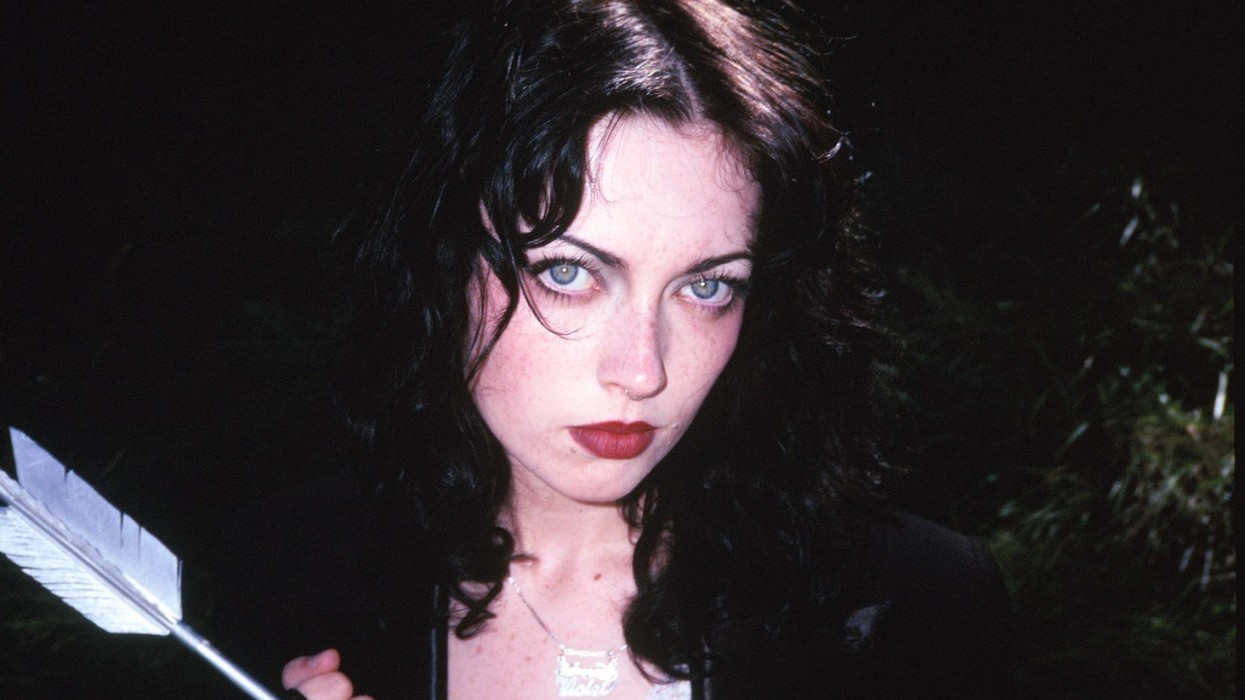
Jack White posted a statement on Instagram Monday evening after numerous publications took his comments in an interview with The Guardian out of context. When discussing poetry and songwriting, White mentioned fellow musician Taylor Swift‘s style of songwriting, and explored his own approach to storytelling when creating music. Unfortunately, online outlets framed his words as a critique of the Tortured Poets star, especially when it came to headlines that quickly circulated on the internet.
“Putting this up for a day and then taking down to just put this to bed,” wrote White in the since-deleted post. “I didn’t say that I think Taylor Swift’s music was ‘boring’ or whatever click bait the net is trying to scrape together. What I was trying to say in an interview I did about poetry and lyric writing, was that I don’t find it interesting at all for ME to write about MYSELF in my own lyric writing and poetry because I think that it could be repetitive for ME to always write about and It could be uninteresting for people who listen to my music to delve into, and that imaginary characters are more attractive to me as a writer.”
White went on to acknowledge the “tremendous success” of Swift and other songwriters who have their own process, while stating that just “because I say I have a way of doing things doesn’t mean that I think that EVERYONE should do it the same way.” He added, “They should do what works for them, And they do, and it is obviously appealing to many people, and I’m glad to hear that.”
When asked by The Guardian in the article published Sunday, if any of any of his songs were entirely autobiographical, White replied, “Not too much. Now it’s become very popular in the Taylor Swift way of pop singers writing about all of their publicly aired break-ups, which I don’t find interesting at all. I think it’s a little bit boring for me to write about myself.”
White further explained, “Even if I’ve had a really interesting day, I feel like I’ve already lived that, I don’t need to go through it every time I sing this song. If it’s something really painful, I’m not going to put this important, painful thing that I went through out there for some idiot on the internet to stomp all over. So I put a percentage of that into what I do and then morph it into somebody else’s character. I can’t really learn about myself until I put it into somebody else’s shoes.”
Editor’s picks
The 250 Greatest Albums of the 21st Century So Far
The 100 Best TV Episodes of All Time
The 500 Greatest Albums of All Time
100 Best Movies of the 21st Century
In his Monday statement, the Rock and Roll Hall of Fame inductee said that at times he has been “made less and less interested in doing interviews” amid the “age of this massive demand for click bait and content.” Any “scrape of anything interesting” can be used as drama and “spit out as bait,” he continued, leading White to “not want to answer questions with any sort of romance or passion or reflection as I’m too busy having to worry about accidentally triggering nonsense like this from so called ‘journalists’ and ‘editors.'”
Trending Stories
Jack White Responds After Uproar Over Taylor Swift Songwriting Comment
Watch Hilary Duff's Intimate Performance of 'Roommates' on 'Fallon'
Rihanna Shooting Suspect Held for Attempted Murder on $10.2 Million Bail
Amy Klobuchar Slams Live Nation Settlement: 'Every Sign Points to a Backroom Deal'
He ended his response to the wave of backlash following his interview by saying, “This has always been a problem as it encourages artists to give ‘safe’ answers to any question and stifles artistic vision and imagination and pushes all of us to not share anything interesting, which was one of the points I made about keeping private things private in that same interview. But yeah, content.”
ADVERTISEMENTWhite recently released Jack White: Collected Lyrics & Selected Writing Volume 1, a collection of lyrics from the artist’s solo recordings including No Name, The Raconteurs, and more, plus selected poems and writings by White, and essays by poet Adrian Matejka.