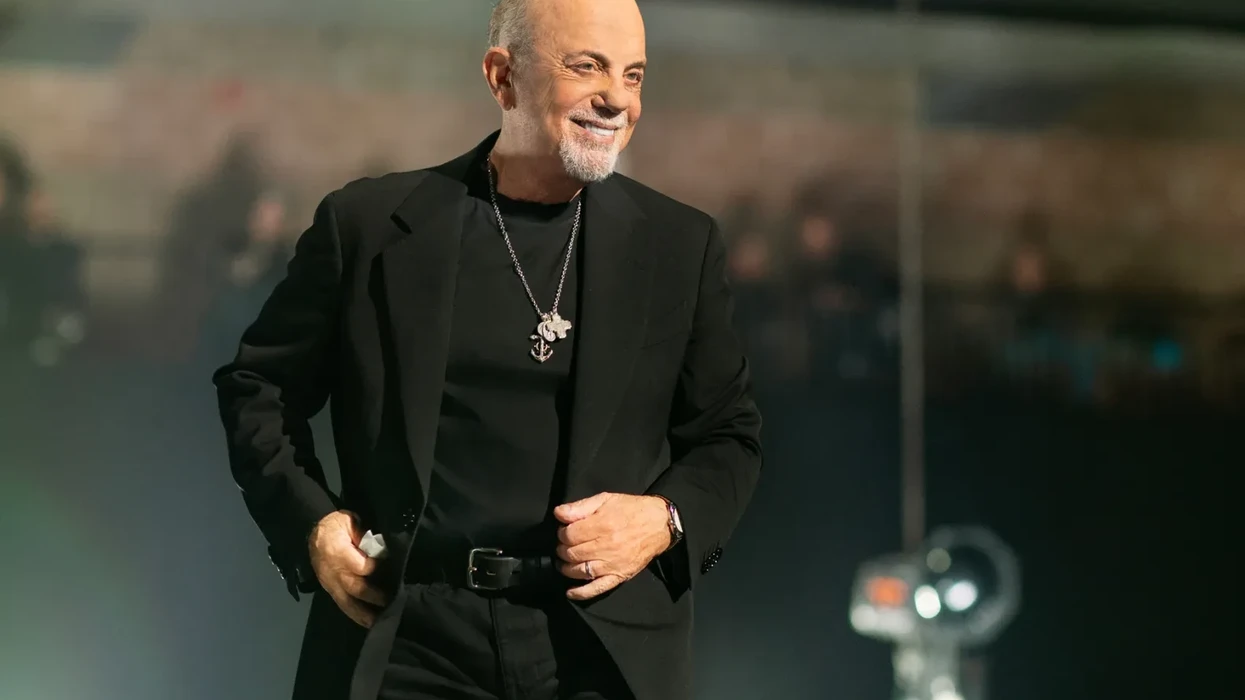
The year isn’t half over, but Shaboozey’s already had a great 2024: After collaborating on two tracks for Beyoncé’s Cowboy Carter, the Nigerian-American singer-songwriter-producer has a hit of his own with “A Bar Song (Tipsy),” currently hovering in the Top Five of the pop charts. On Friday, May 17, Shaboozey stopped by Brooklyn’s intimate Baby’s All Right for a raucous yet intimate show. Check out these exclusive photos.
Search
Don’t Miss Out
Journalism that matters. Music that inspires.
Most Popular
More Stories
Prevost: the Québec company behind the biggest tours
Oct 20, 2025
If you’ve ever wandered backstage at a festival or through the private parking lot of an arena during a concert, you’ve probably noticed something: a long row of tour buses. And if you looked closely, you may have seen the same name on every single one: Prevost.
The story of these coaches, like that of nearly every tour bus in North America, doesn’t begin in Los Angeles but just outside Québec City.
That’s where I find myself on a rainy morning, the day after Def Leppard’s show at the Festival d’été, in Sainte-Claire, about thirty minutes from the city. From the moment you enter the village, you feel Prevost’s impact: a source of local and national pride and by far the region’s largest employer. The founder’s house still stands here, as do those of many of his descendants, including his grandson, Marco Prévost, who gives me a tour of the company’s massive factory.
The family dynasty, he explains, began when his ancestor Eugène Prévost, a cabinetmaker by trade, was hired to build the body of a REO truck that would transport villagers to the capital.
From War to World Tours
His skills quickly earned him a reputation, and orders started pouring in, but he limited production to one bus a year, since his main business at the time was building church pews. In 1939, he opened his first factory dedicated to bus manufacturing, which boosted output to ten vehicles per year. It came at the perfect time, as Prevost received a major contract from the Ministry of Defence during the Second World War.

Gradually becoming the continent’s leading coach manufacturer, Prevost began specializing in tour buses for artists in the 1980s and soon dominated the field entirely.
“Today, there are about 1,500 of our buses across North America, and we basically cover the entire entertainment industry since we’re the only player in that segment,” says François Tremblay, Prevost’s president.
Ingenious Québec Craftsmanship
What truly sets Prevost apart is the structure of its chassis, all built in Sainte-Claire. Normally, RVs and motorhomes are mounted on truck frames topped with fiberglass shells. “As you can imagine, over time, everything shifts and starts to go crooked,” Tremblay explains. Building on a stainless-steel bus chassis allows everything to stay perfectly aligned for decades. Even if a converter installs marble or tile flooring, “the floor will never crack.”

This durability translates into impressive numbers: Prevost coaches are designed to last an average of 20 years and often rack up more than 1.6 million kilometers over their lifetime. To ensure this, each bus undergoes rigorous testing in Sainte-Claire, including in a special chamber that simulates extreme weather to make sure they can withstand anything from a snowstorm in Thunder Bay to the California desert.
A Home on the Road
For touring professionals, driving comfort isn’t a luxury, it’s a survival requirement.

When I meet Laura Jean Clark in Québec City, she’s on tour with Slayer. “The bus becomes more of a home than my actual home,” she tells me. A tour manager for artists like Drake, Coldplay and Shakira, Clark spends more time in Prevost coaches than in her own house.
For artists, moving from a minivan to a real tour bus is a game changer, not only for logistics but for the crew’s health and morale. A bus means no need to book hotels or eat out for every meal, since there’s a kitchenette onboard. Most importantly, each bus has a bathroom, and some even include showers.
On Beyoncé’s Cowboy Carter Tour, for example, that convenience is crucial, as she reportedly ordered around thirty Prevost buses.
Another reason the world’s biggest artists, as well as Formula 1 drivers, mobile banks in rural areas and even the U.S. president, choose Prevost is the near-infinite level of customization. “Justin Bieber even had a fireplace installed in his,” reveals Tremblay. While Prevost builds the vehicles themselves, several specialized companies handle interior conversions.

Each bus, made up of roughly 9,000 parts assembled over about 48 days, is then sent to a converter who tailors it to the client’s needs. Many amateur and professional sports teams also travel in Prevost coaches, while F1 drivers use their customized motorhomes as mobile headquarters.
Limitless Customization
Some artists opt for a full bedroom or a recording studio. As Clark tells me, the studio bus that followed Drake on his early tours was key to the creation of several of his biggest hits.
Other clients have more specific requirements, like Ground Force One, the code name for the two Prevost buses used by the U.S. president and the Secret Service. Equipped with ultra-secure communications systems and a range of classified features, they’re built on the X3-45 VIP model, the same type I saw being assembled that morning in Sainte-Claire. According to the Secret Service, Prevost was the only manufacturer with a chassis strong enough to support the extensive modifications and security systems required.

The Promise of Greener Touring
Today, the original factory site built by Eugène Prévost serves as a research and development center, ensuring the company continues to innovate. In the coming years, Tremblay says, the biggest challenge will be electrification. The first all-electric tour buses could be ready as soon as next year.“More and more artists are trying to reduce their carbon footprint. When you’re going from stadium to stadium, it’s actually pretty simple to plug in the bus and get ready to hit the road again, but of course, range is still the biggest challenge.” 
As I leave the factory, a row of brand-new buses stands in the yard, lined up like spacecraft ready to launch into another world. Within days, they’ll be bound for Nashville, Rouyn-Noranda or Los Angeles, joining massive concert tours or professional sports convoys. It’s striking to think that from this village of just 3,000 people comes such a vital piece of North America’s entertainment infrastructure. Each bus assembled here carries not just Québec’s engineering expertise but also a distinct sense of craftsmanship, comfort and pride.
The models have changed, and so has the market, but the artisanal spirit imagined by Eugène Prévost still runs through every detail. The artists who sleep, write or celebrate aboard these buses may not realize it, but they’re living, quite literally, inside a small fragment of Québec.
Keep Reading
Show less
Featured Stories
Don’t Miss Out
Journalism that matters. Music that inspires.
Rolling Stone Québec Future of Music 2025
Aug 08, 2025
Alexandra Stréliski
We could list a lot of impressive figures to showcase Alexandra Stréliski’s success: 600 million streams, 100,000 concert tickets sold, 10 Félix awards, 2 Polaris nominations, 1 Juno…

But the recognition the celebrated Québécois pianist enjoys stems more from intangible elements: the evocative power of her ethereal compositions, always infused with infinite gentleness; the beauty of her arrangements, which never fail to strike straight at the heart. Known for his discerning musical taste, the late filmmaker Jean-Marc Vallée, with whom Stréliski had developed a close friendship, included several of her melodies in his projects, from the series Big Little Lies and Sharp Objects to the films Dallas Buyers Club and Demolition, each time sparking strong emotions.
Beyond her creative work, Alexandra Stréliski also moves people through her sensitive, human, and humorous approach to life.

Though she currently describes herself as being in a “fallow period,” this well-earned break after two whirlwind years of touring will likely give rise to a new, rich, and promising creative cycle.
Alicia Moffet
Alicia Moffet’s highly publicized journey might give the illusion that we already know her.
She’s grown up in front of us for more than a decade, from her YouTube beginnings and appearances on shows like La Voix and Canada’s Next Star, to her influencer career and role as host on Occupation Double. But her latest album, No, I’m Not Crying, reminds us there’s still much to discover when it comes to her music.

With this third record, and her first on Cult Nation (Charlotte Cardin, Lubalin), the singer-songwriter leans into raw honesty and a clearly defined sonic direction.
Where her previous efforts, Billie Ave. and Intertwine, explored different balances between R&B and introspection, No, I’m Not Crying consolidates Moffet’s sound, blending emotional alt-rock with accessible yet uncompromising pop. The track Choke, which went viral in the spring, captures this approach: instantly catchy, with sharp lyrics and a powerful contrast between the vulnerability in her voice and the roaring guitars.

Fredz
He looks the part, some might say. Round glasses, bowl cut, soft voice — Fredz looks more like a teacher’s pet than a massively popular rapper.
But behind that discreet appearance lies one of the most distinctive voices in Québec’s emerging scene.
Originally from Longueuil, Frédéric Carrier wrote his first lyrics as a teenager, learned guitar through YouTube, and built a hybrid universe where cloud pop meets melancholic rap, framed by lyrics that resonate strongly with Gen Z.
- YouTube www.youtube.com
His latest album, Demain il fera beau, confirms his status as a unique singer-songwriter. While he shares some traits with introspective rap traditions, Fredz stands out for the way he draws listeners into his world. With a sober but polished aesthetic, he constructs a cohesive universe where each track has its own mood. On stage, he draws a devoted, multigenerational audience on both sides of the Atlantic.In a music landscape filled with clichés and hype, Fredz opts for nuance, softness, and attention to detail. A different way to approach rap: grounded in the real world, and bound to inspire many more in the years to come.
Laraw
With a pop sound that swings from soft to punchy, Laraw defies expectations.

A Montréal-based artist of Moroccan and Lebanese descent, she’s been making her mark on the local scene for several years now. Her online presence, radio play, and festival appearances have only grown since the release of Quarter Life Crisis in 2024. But behind the image of an accessible pop singer lies a songwriter with a dense and nuanced world, constantly reinventing herself with every release.
Her latest track, Milk and Sugar, reinforces that impression. A bittersweet song about the early days of rekindled love, it features simple yet incisive lyrics, carried by an airy production co-signed by Tim Buron. This return to English after the EP J’ai quitté le Heartbreak Club confirms Laraw’s versatility, equally at ease with the codes of francophone songwriting and global alt-pop.

In a Québec music landscape increasingly open to atypical and ambitious projects, Laraw represents a new generation capable of speaking to multiple audiences at once. She stands out for her consistent creative vision, unapologetic vulnerability, and her ability to turn doubt into infectious hooks.
High Klassified
At first glance, High Klassified might seem to exist outside the local scene.
A Laval-born beatmaker who came up through Fool’s Gold Records, he’s produced for artists like Future, The Weeknd, Hamza, and Damso, before circling back to lay the foundations of a more personal project. But behind the international aura, Kevin Vincent remains a creator deeply rooted in his suburban home turf, which he both celebrates and transforms in his own way.
With Ravaru, his latest album, he takes on a challenge few producers dare attempt: building a cohesive narrative universe where futuristic textures, R&B melodies, vaporous funk, and Japanese animation influences coexist. Ravaru is “Laval” pronounced with a Japanese accent: a way to reimagine his hometown like a video game, unlocking hidden treasures, shifting between light and darkness.
Rather than capitalize on his star-studded résumé, High Klassified chooses to double down on vision. He invites guests like Zach Zoya, Hubert Lenoir, Ateyaba, and Tsew the Kid — not to rack up features, but to serve a coherent, globally-minded body of work that remains true to himself.
Keep Reading
Show less

Kaftan: Rick Owens/Jewelry: Personal Collection & So Stylé
Photos by SACHA COHEN, assisted by JEREMY BOBROW. Styling by LEBAN OSMANI, assisted by BINTA and BERNIE GRACIEUSE. Hair by VERLINE SIVERNÉ. Makeup by CLAUDINE JOURDAIN. Produced by MALIK HINDS and MARIE-LISE ROUSSEAU
Dominique Fils-Aimé Follows Her Heart and Own Rules
Jul 04, 2025
You know that little inner voice whispering in your ear to be cautious about this, or to give more weight to that? Dominique Fils-Aimé always listens to it — especially when people push her to go against her gut instinct. The jazz artist doesn’t care for conventions or received wisdom. She treats every seed life drops along her path as an opportunity to follow her instincts. To go her own way. To listen to her heart. And it pays off.
The Montreal singer-songwriter tends to question everything we take for granted. Case in point: applause between songs at her shows. Anyone who’s seen her live knows she asks audiences to wait until the end of the performance to clap, so as not to break the spell she creates each time.
“I wanted to stop the usual format of ‘talk, sing, applause, talk, sing, applause.’ At first, people found it confronting. A lot of them said: ‘It makes me feel weird,’” she recalls. “But can’t we ask ourselves these kinds of questions more broadly in life? What are the little habits we’re so used to that not doing them makes us uncomfortable? Do they belong? What do they mean? We tell ourselves: ‘That’s the way it’s done, so let’s do it.’ Let’s question everything. Absolutely everything.”
Dominique Fils-Aimé questions absolutely everything, including the conventional music industry cycle — singles, then an album, then a tour. Even before releasing her debut album Nameless, she knew she wanted to make a trilogy. “I was often told people don’t have time for trilogies,” she says. “But I want to take my time. I want to invite people into a long-term process. I want to offer someone who’s curious the chance to go deeper into an artistic journey. Sure, it’s not for everyone, and that’s fine.”
I don’t want to be for everyone. I want to be myself.
This determination to follow her heart is the very essence of jazz — the genre she’s become a flagbearer for in Quebec. “Jazz is anti-academic. It’s about breaking down established rules. It’s the freedom to do what others say you can’t do. It’s a mindset. It's my mindset: creative freedom.”

In pure jazz tradition, Dominique Fils-Aimé recently released a live album documenting the major outdoor concert she gave last summer at the Montreal International Jazz Festival. A milestone in a remarkable career — recorded exactly ten years after the public first discovered her immense talent.
Asked what she remembers from that landmark show, she exhales with joy. “So many beautiful memories. Love, always. Waves of love. And deep gratitude to be on that stage.” Gratitude, especially, for the festival team — who, she recently learned, had been paving the way for this moment from the very beginning of her career.
“I was really lucky: the festival supported me from the start. At the beginning of my trilogy, my manager Kevin Annocque and I — who co-founded Ensoul Records — barely knew what we were doing. But I found out after last summer’s show that the festival team had everything mapped out from the first album, when I played the little room upstairs at MTELUS [the M2]. They had a whole long-term path planned to get me to the main stage!” she says, still in awe. “The lesson I took from that is: we worry too much about people talking behind our backs or sabotaging us, but we should really focus on the little angels along the way quietly conspiring for our success.”
One such angel is her sound engineer Simon Lévesque, whom she “loves dearly” and sees as a full-fledged member of her musical team. On his own initiative, he records every show in multitrack. “He sends us all the files. I don’t listen to any of them, but they’re there!” she laughs.
Of course, he recorded the Jazz Fest show — even though no one had planned to turn it into an album. Only afterward did Kevin Annocque convince her it was worth releasing. “He told me: ‘Hey, that was an amazing show! We should make it an album.’” At first, she wasn’t thrilled with the idea, thinking her vocals hadn’t been at their best. But she eventually changed her mind. “I realized that whatever the performance lacked in perfection, you can hear it in the emotion. And that’s worth keeping.” I tell her it was a great decision. “Yes, Kevin makes good calls!”
Indeed, he has good instincts. The singer’s warm, enveloping voice shines throughout the recording, from soaring peaks to hushed restraint. The energy of the show is palpable, magnified by 16 musicians and choristers on stage. From the a cappella opener—sung in monastic silence, a feat for Place des Festivals! — to the euphoric grooves of Grow Mama Grow, it’s a vibrant, joyful ride.
The set overflows with inspired improvisation, bold tonal shifts, and stunning vocal harmonies. It’s a perfect showcase of her musical journey so far, touching on jazz, soul, R&B, blues, gospel — even rock and hip-hop. For those who missed this ambitious concert, the album is pure joy.
The release comes amid a flurry of projects. Since January, barely a week goes by without a press release announcing a new venture — from performing at Expo 2025 in Osaka to Nikamotan MTL, a project bridging Indigenous and non-Indigenous artists — or news of an award, like those from the Dynastie Gala and SOCAN.

Last spring, she performed in Sweden, Germany, Spain, France, and England. In September, she’ll tour the U.S. for the first time. Meanwhile, between Quebec gigs — including Festif! in Baie-Saint-Paul and Théâtre de Verdure in Montreal — she’s recording her fifth album of original material in eight years.
Just summarizing her schedule is dizzying. For someone who claims to champion slowness, she’s impressively productive. She bursts out laughing when I point out the paradox. “Yes! Wow... One point for you, no one’s ever called that out before,” she says, genuinely surprised. “You’re 100% right. I’m passionate, maybe a bit extreme when I love something. I think I have an addictive personality. I got lucky it was music and not crack,” she jokes.
Even her production company, La Maison Fauve, noted that no other artist on their roster has released as many albums and tours without a break.
Ironically, it’s her commitment to the principles of slow living that makes her so productive, she argues. “Because I feel good. I could make music all day and not feel like I’m working. But I’m starting to realize — it is work. And I want to learn to slow down.” She’s thinking of taking a vacation in 2027 or 2028. “Might not be a bad idea, but...”
- Why stop when you’re inspired?
- Exactly. I’m having fun. I love what I do.”
Despite her packed agenda, she looks particularly serene and well-rested when we meet on a dreary May day at a Mile End café she frequents. In another life, she worked in corporate mental health and burned out. “I used to define myself through work. My job was my identity. That burnout made me let go and just follow where life was leading me.” Music became her lifeline.
To devote more time to it, she took a job at a café. That lifestyle fulfilled her completely, she says. Soon after, she met Kevin Annocque, who shared her vision of success. Together, they made a pact to create without compromise. “We decided not to make music just to sell. He told me: ‘We probably won’t be on the radio, we probably won’t make a lot of money, but if you’re okay with keeping a side job, I promise you’ll be free.’ That fit perfectly with my values. Others had tried to mold me, offering videos with backup dancers and saying I wouldn’t need to write — ‘we’ll give you covers.’ But I want to write! I want to create!” That’s why Dominique Fils-Aimé is so deeply grateful to now live off her art.
Dress: Helmer/Jewelry: Personal Collection 
Though technically a solo act, she often speaks in terms of “we.” “I have the best team,” she says repeatedly during our conversation. “Honestly, there’s so much good music out there. The difference is the team,” she insists. She jokes that 90% of her success comes from her team, and only 10% from her talent. That seems modest. Too modest? “I’m just being realistic,” she says. “They deserve all the flowers.”
She repeats it after our photo shoot — four joyful hours with Sacha Cohen capturing her radiant presence. “It’s 90% the team, 10% talent!” she beams.
In her life and in her art, Dominique Fils-Aimé lives by three guiding principles: love, peace, and gratitude. She returns to these words again and again in our exchange — even though she says people have mocked those values as naïve. “In this world, I’ve been ridiculed,” she says. “You see it in people’s eyes — ‘you’re cute.’ Talking about love as a healing force or the power of universal love... people lump that in with hippie stuff.”
Her response? Follow her heart, always. “It’s not naïve. It’s not cheesy. It’s what we all want — peace and love. Why do they have such a bad reputation?”
When I suggest it might stem from cynicism, she lights up. “Yes! Exactly. There’s this idea of: ‘That’s all well and good, but it’s not the real world.’ But it is. It’s part of this world,” she says. “I can’t blame anyone for their views. I can only choose not to care — and hold to mine anyway.”
My deepest intention is to share love and good energy.
That’s the gentle resistance Dominique Fils-Aimé has been practicing from day one. Far from the superficial hashtagged “#gratitude” trend, hers is a deeper conviction — a form of soft power activism.
“I think revolution can take many forms,” says the 2022 Artist for Peace award winner, one of many accolades she treasures. “Some people are meant to speak out loudly, and I 100% support that. But there’s also backlash. I want to hold space where I can support those people — where I can promote the world I want to live in.”
That doesn’t mean she shies away from taking a stand. On April 5, in an Instagram post responding to global injustice, she wrote: “It's a strange place to be. Profoundly grateful for my life while deeply saddened by the state of the world… Fighting the useless guilt and despair with the hope my music brings love and light. It’s like trying to cultivate joy while mourning. Life is plural. Also, ‘defund the police’ means reinvesting in more adequate services. I'll just leave this here with a sigh.”
Her upcoming U.S. tour prompted deep reflection, especially considering Trump-era policies. But she reached a place of peace. “It’s possible to truly love everyone — even if I disagree with what they do,” she says. “If we shut out people who think differently, we deepen the divides. And that scares me. It’s made worse by online echo chambers — everyone’s in their own little bubble, and the other side seems far away and weird. I don’t want to fall into that trap. I don’t want to contribute to that divide. In the end, every person deserves love.”

It’s easy to forget now, but Dominique Fils-Aimé first appeared on the public radar through Quebec's adaptation of the The Voice —La Voix — in 2015. She joined simply to familiarize herself with the audition process and ended up a semifinalist. “I saw it as an experience. I love challenges. If something scares me, I have to do it. Because once it’s done, it feels so small. That’s always the case — our fears are bigger than reality,” she says with characteristic wisdom.
Three years later, she released Nameless, the first in her trilogy honoring the musical heritage of the African diaspora. A year later, Stay Tuned! brought her success and acclaim: a Juno for Best Vocal Jazz Album, a Félix for Jazz Album of the Year, a Polaris shortlist nod, and a spot as Radio-Canada’s Jazz Revelation.
She’s since released two more albums: Three Little Words, completing the trilogy, and Our Roots Run Deep, the start of a new creative cycle. Both earned Polaris nominations, and the latest also added more Junos and Félix trophies to her shelf. In recent months, she received SOCAN’s Hagood Hardy Award and the Dynastie Gala prize for International Artist of the Year.
How does she process all these accolades? They validate her place in music, she admits, but she tries not to focus on them too much. “It’s something I had to reflect on, because I don’t feel any competition with others. That goes against my values as an artist. I see everyone as my teammate. My well-being depends on my neighbor’s, and vice versa.”
That’s why she doesn’t keep her trophies at home. “My sweet mom has them all,” she says with a huge smile. “They’re on her mantel. She’s really proud. It warms my heart to give her that.” Like many immigrant families, hers — of Haitian origin — made sacrifices so their children could have better opportunities. “And I come from a family of scientists. My mom’s a doctor. I’ve always been surrounded by people with ‘serious careers’… These awards helped ease her worries when I chose music.”

People often say Dominique Fils-Aimé’s voice and music soothe the soul. But even in silence, she radiates kindness and warmth. Enough that I dare to briefly set aside my journalistic reserve and make a personal confession. I tell her how much her song Quiet Down the Voices, from Our Roots Run Deep, has helped me. Her eyes light up as she places her hands over her heart.
“Deep joy. Truly. Thank you for saying that. I created Quiet Down specifically to offer a space of calm for anyone who might need to recenter. If I need it, someone else surely does too!”
She hears stories like that all the time. “It fills me with gratitude when people take the time to share their experience. That’s worth 10,000 awards. I’ve always felt a mission to contribute to others’ well-being — but now I’ve found a way that nourishes me too. That’s heaven.”
Then she eagerly shares a song that gives her that same feeling: Sit Around the Fire by Jon Hopkins. “This song changed my life. It feels like a gift I was given, and now I want to share it with as many people as possible. I can’t wait for you to hear it!” she says, adding it to my phone.
Well-being, connection, the power of the present moment — that’s what Dominique Fils-Aimé explores in her second trilogy. Our Roots Run Deep is already about growth, our link to nature, and the interconnectedness of all living beings. She can’t reveal much about the next chapter, due in 2026, but she shares the mindset guiding her.
“I’m trying to embody this idea I often talk about: intentionality in music. Returning to childhood — creating for the joy of it, letting go of the thinking brain. I’m trying to stay as close as possible to raw emotion, to spontaneous truth. That’s pure jazz to me.”
Jazz says: it all sounds good. You are free.
She admits her pursuit of authenticity was once held back by modesty. “It took me three albums to say the word ‘love,’ even though it’s what I live and breathe all day long. It’s my favorite subject. That, and drinking water!”
After a long, timeless-feeling conversation in a noisy café, I turn off my recorder. Coat buttoned, umbrella in hand, Dominique Fils-Aimé hugs me and asks, with a smile, about my water intake. Clearly, she really does live on love and fresh water.
“Exactly! We’re like plants. That’s all we really need.”
Keep Reading
Show less

Cotton two-piece by Marni, SSENSE.com / Shirt from personal collection
Photographer Guillaume Boucher / Stylist Florence O. Durand / HMUA: Raphaël Gagnon / Producers: Malik Hinds & Billy Eff / Studio: Allô Studio
Pierre Lapointe, Grand duke of broken souls
Feb 14, 2025
Many years ago, while studying theatrical performance at Cégep de Saint-Hyacinthe, Pierre Lapointe was given a peculiar exercise by his teacher. The students were asked to walk from one end of the classroom to the other while observing their peers. Based solely on their gait, posture, and gaze, they had to assign each other certain qualities, a character, or even a profession.
Lapointe remembers being told that there was something princely about him. That was not exactly the term that this young, queer student, freshly emancipated from the Outaouais region and marked by a childhood tinged with near-chronic sadness, would have instinctively chosen for himself. Though he had been unaware of his own regal qualities, he has spent more than 20 years trying to shed this image, one he admits he may have subtly cultivated in his early days.
That, however, is proving to be a difficult task. With Dix chansons démodées pour ceux qui ont le cœur abîmé, his fifteenth full-length album, he once again asserts his boldness and classicism, solidifying his place as the Grand-duke of sensitive souls.
In 2004, Pierre Lapointe arrived ‘accidentally’, as he claims, onto the Quebec cultural scene with a grandiose and theatrical French Chanson, which starkly contrasted with the musical offerings of the time. Wedged between Crazy Frog, Gwen Stefani, and Simple Plan, a dandy who seemed to have been plucked from another century sang about his desire to lick every window of the columbarium, dreaming of sleeping there in peace, on a composition that sounded as if it had been borrowed from Jacques Brel himself.
Beneath Pierre Lapointe’s baroque elegance lies a mind in constant motion. From the moment his self-titled debut album found success, he never relented, continuously releasing albums, performing concerts, winning awards, and making television appearances.
But this frenzy came at a cost. Before the pandemic, the artist was pushing himself at a relentless pace.
"When everything stopped, I was heading straight into a wall. I was exhausted, I think I was on the verge of burnout. So, in a way, it was a blessing," he admits.
"My father used to ask me, whenever I talked about my schedule and how I felt, ‘But are you sleeping?’ And I’d answer, ‘Not much.’ That’s a sign that stress has taken over. He would tell me he was worried. When the pandemic hit, he was the first to say, ‘I’m glad you’re canceling everything and taking a break.’"
The timing of this break was perfect. When his longtime manager retired, Lapointe built a new team, leading to a shift in his approach, where he finally learned to do less. His new manager, Laurent Saulnier, the powerhouse behind the success of the Montreal Jazz Festival and Francofolies, gave him flak for being too prolific.

"He told me, ‘Your albums may be great, but you're saturating your own market. You release an album, and people don’t even realize it’s new. The messages are all getting mixed up.’"
For someone whose music is just one outlet for his creativity, this was a chance to return to other passions. After working on theater productions and film scores, Lapointe collaborated with Swiss visual artist Nicolas Party on L’Heure Mauve, an exhibition for which he created a soundtrack.
He also returned to drawing, having initially studied visual arts in Cégep, and designed various pieces of furniture, including a series of tables, carpets, and a Memphis-style lamp, "because the creator in me never stops." This forced break, he believes, allowed him to reconsider his approach to music and performance. He slowed down, rethought his creative process, and accepted that sometimes, less is more. Exploring other forms of art such as design, illustration, and scenography was not a diversion from music, but a complement that helps build his artistic universe. This multidisciplinary approach keeps his inspiration fresh without exhausting him. Having always envisioned his albums as total works of art, where visuals and music intertwine, Lapointe is now pushing that concept even further.
True to his love of theatricality, Lapointe has often structured his concerts as live tableaux. But the artist who once hid behind his piano now embraces a bolder, more embodied stage presence. For his upcoming show, he will stand front of stage almost the entire time, flanked by two pianists, Amélie Fortin and Marie-Christine Poirier, fully assuming his role as the central figure. This shift in stage presence stems from a broader reflection on his relationship with the audience, which has evolved over the years.
Early on, he explained that the piano acted as a shield between him and the audience, which adds another layer to ‘Toutes tes idoles’ when he sings: "You don’t like seeing people cry / It awakens the pain beneath / Of the child who grew up too fast and learned to arm himself to the teeth."
"Now, I want to be up front. I have no problem with it anymore, but back then, it was different. You have to understand that my teenage years were complicated," he confides. "I was deeply sad and depressed. I didn’t feel comfortable in my own skin, like so many teenagers. Being gay surely played a role in that. I found the world very ugly. I needed aesthetics, I needed beauty."

"Then the piano arrived. It lifted me up. It healed me. I would play notes, sometimes the same note for hours. And I would say, ‘I’m healing myself.’ The resonance calmed me. Looking back, it was a form of music therapy. I was healing through sound."
That healing process is especially evident on this album, particularly in the poignant “Comme les pigeons d’argile”, a tribute to his mother, written after her Alzheimer’s diagnosis. In “Madame Bonsoir”, he converses with the Grim Reaper, arriving, as always, at the worst possible time.
This album, however, was not originally intended for him. Lapointe explains that the songs in Dix chansons démodées pour ceux qui ont le cœur abîmé started as an exercise—an attempt to create something in the spirit of the classic French chanson he grew up with, but infused with his taste for the radical and refined. Initially, the plan was to offer these songs to other singers.
"There has never been an album where I went only halfway in a direction. When I finished writing these songs, which I had not written for myself, and then pieced them together, I realized I had to make an album out of them," he explains. "I told myself I had to go full speed ahead. The arrangements, my pronunciation—sometimes I pronounce the ‘E’ sounds like they did in the ’50s and ’60s Chanson réaliste [genre]. In the way I control my breath, in the fervor of my delivery, I went all in."
"Like Monique Leyrac, like Diane Dufresne, like Pauline Julien—artists who studied theatre, who ventured into Rive Gauche chanson [genre]. Singers who projected their voices like actresses, who could sing Kurt Weill as easily as they could sing Gilles Vigneault, but always with authority."
The Rive Gauche genre he evokes refers to the cultural movement that emerged in Paris’ left bank, in the 50s and 60s. In the heart of the Latin Quarter, intellectuals, artists and other bohemians would gather in smoky cabarets, where one could happen upon Sartre, Miles Davis, Juliette Gréco or Gainsbourg. Poetic, clamoring, theatrical; those are the songs that would come to redefine French music for the next half-century, and with which Lapointe grew up.
The result? Dix chansons démodées pour ceux qui ont le cœur abîmé has already become one of the most critically acclaimed albums of early 2025. At the time of publishing, it holds the top spot on the ADISQ sales charts.
January has been filled with constant back-and-forth travel between Québec, where Lapointe is preparing for his spring tour while also serving as the new coach on the TV series Star Académie, and France, where he has been spending several months a year.
He enjoys considerable success across the Atlantic, but more importantly, he holds the coveted status of an "Artiste"—with all the French reverence that title entails. Almost, as he jokingly puts it, as if he was more French than the French themselves.
Recently, after appearing on the hugely popular French television show Taratata, he was approached by the manager of a major French star, someone who had worked with all the greats of francophone music. "He told me that for years he had been trying to convince artists to make albums like they did in the era of Jacques Canetti, the 1960s music producer who discovered Félix Leclerc, among others. But every time, people backed out halfway, afraid to commit. He told me, ‘When I listened to your album, I felt like I was hearing a great record from that era, without compromise, yet completely contemporary.’"
Paradoxically, he also sees himself as the most Québecois of all Québec artists who have successfully exported themselves to France, when compared to figures like Garou, Isabelle Boulay, or Cœur de Pirate. "When I talk to people, they think I have a thick accent. To them, I’m unmistakably Québecois, with a very Québecois approach," says Lapointe. "(Those artists) are stars. Me, I’m a well-known singer in the Chanson world, and in a somewhat intellectual, outsider circle. The music industry, the contemporary art scene, the theatre world…"
It is true that his list of friends and collaborators is impressive. The music video for “Toutes tes idoles”, the first track on the new album, was filmed in the studio of ceramist Johan Creten. Lapointe was also invited to sing at the birthday celebration of French artist Jean-Michel Othoniel. On his Instagram feed, he is seen posing alongside the legendary Amanda Lear, Salvador Dalí’s muse.
"I have a strange status over there, one I don’t quite understand. I was named a Commander of Arts and Letters. Not a Knight—straight to Commander. I haven’t even received a medal in Québec or Canada yet!" he says, laughing. "I’m the only Canadian in history to have been immortalized by Pierre et Gilles, which is pretty funny. At the exhibition, there was Marilyn Manson and Madonna next to us. Nina Hagen was there too. And then there was Pierre Lapointe. Not Bryan Adams or Céline Dion."
There is a certain pride in his voice when he speaks about these experiences, but it is tempered by his naturally reserved nature. It is clear that Pierre Lapointe, despite his sharp pen and well-honed aesthetic sense, does not embody the role of an aloof, princely dandy. In fact, he struggles to understand how this perception took hold in the first place.
"When my success began, it completely overtook me, and my image was so strong that I could be walking down the street in sweatpants, and people would still call me ‘Sire’ and speak to me in poetic prose," he recalls. "I had only ever been to two or three poetry nights, and every time I just wanted to vomit on everyone and storm out yelling ‘You’re all so boring!’ And yet, here I was, suddenly considered a poet, with journalists asking me about Baudelaire and books I had never even read."
The dilemma in all of this is that it makes it even harder to pin down exactly who—or what—Pierre Lapointe really is. To strip him of the title of "poet" would be to overlook the raw and solemn beauty of a song like Le secret, which hides behind its bossa nova rhythms, and to forget the millions of tears shed around the world while listening to his music. And though he rejects the label of "dandy," he has nonetheless always been impeccably dressed at every one of our encounters, regardless of fatigue or illness.
The Pierre Lapointe we imagined on our television screens 20 years ago may not have been the one we thought he was. Or perhaps, he simply wasn’t that person yet.
Because despite all the sadness of his adolescence, and even though nothing was truly calculated, he feels that "there is a real symbiosis between who I knew I was and what I have done."

It was only last year, while promoting the 20th anniversary of his debut album, that he fully reconnected with the mindset he had back then. "It was as if I already knew everything that was coming," he recalls. "I knew I would work with individual artists, that I would be involved in theatre, that I would collaborate with directors, designers, architects. I knew I would travel, that I would make tons of albums, that I would go in all directions. But I hadn’t done any of it yet. When I talked to people, there was a gap between what I projected, what I said, and what I had actually done. Now, with hindsight, I understand."
In the end, perhaps Pierre Lapointe is not so much trying to escape his persona as he is trying to break free from a static image of himself—one defined by our perceptions rather than by the full scope of his talent or his desire to create something beautiful and meaningful.
By embracing, with pride, the role of the Rive Gauche crooner, he demonstrates that true audacity is not found in the medium itself, but in the sincerity of a fully and fearlessly realized artistic gesture.
Keep Reading
Show less

Photographer: Raphaëlle Sohier/Photo production: Bryan Egan/ Blazer: Tishanna Carnevale/ Skirt : Jade Simard/ Heels: Black Suede Studio/ Jewelry: Marmo & Epiphites/ White blouse: Maison Maire
On «Abracadabra», Klô Pelgag proves she still has the magic
Nov 15, 2024
Anyone who has seen Klô Pelgag on stage can attest to her untamable energy, punk spirit, and refreshing spontaneity. "I really enjoy sweating and being out of breath," she says. "Feeling a little drained after a show is the best." The artist, who I met with on a rainy day, is the polar opposite of her onstage persona: today, she’s gentle, thoughtful, and introverted. Her soft, calm voice contrasts with the loud bustle of the crowded restaurant where we’re seated.
These different facets of Chloé Pelletier-Gagnon coexist harmoniously within her. After all, we are all made of paradoxes and multitudes. "Sometimes, I feel more like myself on stage than when I bump into someone I vaguely know at the grocery store and engage in small talk. That’s when I struggle!" she says, laughing.
Fortunately, our conversation is anything but small talk: we delve deeply into what drives the artist—her search for happiness and freedom, her anxieties, the pressures of life, and, more recently, the weight of motherhood. But also, the immense joy of innovation, creation, and performance. To chat about all of this and more, Klô suggests we meet at a beloved Montreal institution, Phò Lien in Côte-des-Neiges, a place she holds dear. A place that, as one might say, mirrors her: unpretentious, but of undeniable quality.

She has just returned from a vacation in the Bas-du-Fleuve, a region located along the south shore of the lower Saint Lawrence River, where her family’s ancestral home is located. "It’s the place I go when I have time. I always forget how beautiful it is. It blows my mind," she marvels. "It’s so beautiful in the summer! The light at all times of the day, the sunsets…"
The Montreal-based artist seems visibly rejuvenated and rested from the stay. It should be noted that we are meeting during a quiet period, just a few weeks before the media whirlwind that will surround the release of her fourth album, Abracadabra. One of the most anticipated releases of the fall, Klô Pelgag has been one of Quebec’s most prominent artists for the past ten years.
Her previous effort, Notre-Dame-des-Sept-Douleurs, was a massive success. It earned her 13 Félix awards in 2021, not only tying a record set by Céline Dion but also bringing her impressive trophy collection to 20. To top it off, she was shortlisted for the Polaris Prize that same year. Nothing to alleviate the pressure that comes with creating a new album.
"Ideally, I want as many people as possible to love the latest thing I’ve done, but I have no control over that," she says. "It’s also a trap, receiving a lot of recognition. I knew it at the ADISQ, when I got my Félix awards. It’s really fun to receive them, but I shouldn’t get too attached because it’s a bit dangerous. When you get something, you always want more."
One of my biggest fears is repeating myself and falling into a certain comfort zone.
That previous album was specifically crafted in response to the burnout she experienced following the release of her first two records, L’alchimie des monstres and L’étoile thoracique, which came out in 2013 and 2016, respectively—a not-so-distant time when mental health for artists was hardly considered. "We didn’t talk about it. Then, the last album came out during the pandemic, and at the same time, I became a mother, which changed my perspectives on everything," she says just before ordering a rare beef phò.
Indeed, she touches on her experience of motherhood in the beautiful song Lettre à une jeune poète (‘Letter to a Young Poet’), where she addresses her daughter with disarming vulnerability and introspection, singing heartbreaking lines like: "I gave you life, I could make you want to live it."
"Right now, things are going well, but in moments when they’re not, it can get pretty deep," she explains, searching for the right words to detail her thoughts. "I find it so heavy to bring someone into the world. You know, being their first link to the world. It’s so important. It’s huge! We don’t always realize how much it defines what we become."
From a practical standpoint, motherhood has also impacted the creative and recording process of Abracadabra. "Honestly, it happened quickly, it was like a burst. I went away for three days a few times to work day and night—with a young child, I can’t work until 4 a.m. every day anymore, you know. I had this sense of urgency: I have to do it now. There’s that, and also, the fact that… I don’t want to say like everyone else that I have an attention deficit, but kind of. I feel like it has to go fast, or I’ll lose interest. When I’m in my zone, I like to throw everything I can at it."

Klô admits she was gripped by intense anxiety during the album’s creation. "I’ve always felt that at the start of every album. It’s like the ground is slipping from under my feet. But it also comes with a certain excitement. It’s a whirlpool, but I still have a lot of fear and anxiety about it. Am I still able to do it? Is it still relevant? My approach to music is probably way too intense, for nothing."
What does she mean by that, exactly? "In the sense that it’s almost a matter of life or death. A lot of musicians feel that way—it’s the most… it’s like…," she trails off, thinks, hesitates. Clearly, she doesn’t take these things lightly. "Yeah, I don’t take it lightly at all, but I’m trying to work on that. I think it even shows in my music. I’ve learned to see it because people have told me, but there’s something a little epic in my songs, very much like, ‘aaaaahhh!!!,’" she exclaims, throwing her hands up dramatically, finishing her thought with a hearty laugh.
It’s true that Klô Pelgag’s music doesn’t lean towards minimalism, even though she has toyed with the idea of making a stripped-down album for several years. "It’ll happen someday, but it has to be the right time. I still have a lot of tenderness in me." I can attest to that, but in the meantime, the artist has a lot of emotions to externalize in her new collection of songs, which, true to her repertoire, is rich and dense with string and synthesizer arrangements, giving her music a larger-than-life feel.
As our discussion shifts to the cohesion between her imaginative lyrics and music, she shares that she has recently experimented with creating music without lyrics. "You know, there are songs where the words are just syllables or even a single word, like ‘yogurt’. They’re sounds that don’t mean anything… I tried doing that!" she says, amused. "In the end, I didn’t finish the song. I find it difficult. But I’m impressed—a lot of artists add the lyrics at the last minute. Wow! Because it’s different from what I do, I find it fascinating."
In preparing for this interview, I noted how fundamentally free Klô Pelgag seems as an artist, creating without any constraints. Before I even bring up the subject, she begins a reflection out loud: "I’ve questioned freedom a lot in recent years, because I’ve been so defined as someone who is free; it’s what people say about me the most. I understand why people think that, but at the same time, I don’t feel free. There’s something in creation that can become a bit of a prison."
To escape that prison, she’s come to the wise conclusion that it’s healthy not to put all your eggs in one basket. "You have to develop other aspects of your life, that’s what I’m realizing as I get older. Finding balance. Most people who make music, like me, are seen as weirdos at some point in their lives. Then you feel accepted when people like what you do. So you say, ‘music saved my life!’ It gives a sense of approval. But that’s not necessarily the right way to be okay with yourself. Confidence has to come from within, not from others."
This all brings us back to the pursuit of happiness—fragile and fleeting—a theme that’s very present in Klô Pelgag’s work. Happiness is often illusory for people in public professions like hers, she observes. "We often feel like we’ve accessed something, but in reality, the happiest people I’ve met are just comfortable being alone; they don’t necessarily need others."
Abracadabra, the fantastic title of her new album, precisely references this quest for the absolute. She utters this magic formula on her song Jim Morrisson, expressing a desire to "belong to a perfect moment."
"In that word, there’s hope of finding a formula that would fix everything that’s wrong," she explains, describing herself as highly sensitive. "Everything that happens, like genocides, hits me hard. It has a big influence on how I live daily—that’s something else I need to work on, I guess! It’s tough. Also, this album was created post-pandemic, where it seems like people are even more violent, angrier, more psychologically distressed. Abracadabra is a bit of all that: make something happen so things get better… And, I thought it was really funny to call my album that!"
In the midst of these great—and healthy—introspections, Klô Pelgag pauses the flow of her thoughts. "Behind this album are all these reflections that are difficult to express… you know, the exercise of doing interviews. I’m trying to understand what I’ve done to be able to talk about it, but it’s hard to talk about what I do!"
I take this opportunity to ask about her relationship with the media and how comfortable she feels doing interviews. "In general, I’d say it makes me very anxious, but it really depends on the fit, like everything in life. It’s harder on television; you feel like you have to get straight to the point, say what you have to say quickly."
She’s getting used to it, little by little, though she’s still careful not to expose herself too much in situations where she doesn’t feel at ease. "Questions like ‘what colour defines you?’—I never know what to say! I’ve been attributed this image of being a bit goofy or funny, but I prefer saying things the way they are. I’m also a bit modest, especially in this era where everyone shares absolutely everything about themselves and their personal lives on podcasts. I don’t quite fit with the current trend."
Later in the conversation, she also mentions her discomfort with being recognized in public places. "When I started making music, it was so naive. I never wanted to be ‘someone.’ I like being incognito."
This refusal to compromise in both her personal life and artistic creation is part of why she’s so often described as a ‘free’ artist, even if it closes some doors. "None of my songs have played on commercial radio, and I accepted that a long time ago," she comments. "We all have our prisons, like I said. At least that’s not one of them for me. In a way, I have freedom because I don’t feel like people expect anything from me other than to be myself. That’s the most beautiful thing. I feel lucky."
When I go to the grocery store and hear the radio, I really don’t see how my music could play there!
So no, you won’t find out what colour defines Klô Pelgag. But here’s a scoop: her favourite season is fall. On Libre, she sings: "Autumn finishes you/The colours hide your sorrow/I stay for the winter/Your storm will be mine." And on Décembre, a standout song she describes as "a bit metal on the edges," she evokes "the end of autumn, when nothing forgives anymore."
She smiles when this observation is made. "There’s more of that on this album, right? Décembre is a song about seasonal depression, basically. Le goût des mangues is about seasonal depression too. Well… I think I have seasonal depression!" she concludes with a laugh, before elaborating.
"You know, in Québec, we experience the seasons more intensely. They have a real impact on our mood and emotions; it’s wild! That’s what I find beautiful about living here. And there’s no escaping it. In the spring, everyone goes crazy, like everyone’s a little high on the season! Then, summer, you have to live it—you go canoeing, you go camping—because we don’t have much time! Fall, it’s so freaking beautiful. It’s my favourite season."

For the first time in her career, Klô Pelgag fully produced her album, a process she describes as "very solitary" and filled with doubt. "It’s hard to have confidence in what you do. Pierre Girard, who mixed the album, really encouraged me to record at home, to do my vocals, and to record the piano and synthesizers, but… When I started in music, you know, it was unimaginable. It seemed like ‘recording’ was a job I couldn’t touch. So I developed that, but it comes with some frustration: all the technical stuff, it’s heavy. Transferring tracks, sending them…"
All the steps of album production that we rarely think about when listening but that are crucial to the final result. "Yes, exactly. There are so many things we could have done in a studio with the best people in the world, and it would never have sounded the same because it’s someone who doesn’t have the same instincts’ approach. It’s always interesting when a non-actor plays a role; it can create something really special. It’s still part of the signature."
This technical experimentation, which she began on Notre-Dame-des-Sept-Douleurs, is pushed even further on Abracadabra. Listening to these 12 new songs, the fun Klô Pelgag had in crafting and orchestrating these grandiose and wildly creative arrangements is palpable. Despite the anxiety, she clearly had a blast.
"Oh yes, absolutely!" she confirms enthusiastically. "When I was in the heat of creating something new, I really had fun. That’s what I’m looking for: pushing my limits and growing in them. All the resources you find within yourself to do what you do, there’s nothing more beautiful. It makes you feel alive."
Intuitively, I tried to make songs as different from each other as possible because I love experimenting with lots of things.
Her unique way of biting into the words she sings, with her distinctive phrasing and expressive voice, remains a key part of her signature. On some tracks, like Coupable, she particularly plays with her intonation, slicing and stretching syllables. I dare a poor imitation to explain what I mean, which makes her laugh. "With one of my musicians, we listened a lot to a Turkish singer named Gülden Karaböcek. In the studio, he said, ‘Ooh, Gülden Karaböcek, influence!’ I hadn’t thought of it, but sometimes things just pop up."
As we discuss more about the instrumentation on Abracadabra—"I often treated the synthesizers like an orchestra instead of automatically putting in strings," she notes—Klô showers praise on her musicians Étienne Dupré, Pete Pételle, Virginie Reid, and François Zaïdan. "I’m lucky to be surrounded by such great people. Every time I sent them stuff, they were into it. And they all told me it was their favourite album. I try not to take my motivation from others, but coming from people I respect, it’s a nice thing."
The artist has been loyal for several years to this core group of collaborators, who accompany her both in studio and on tour. "For me, they’re a sort of family because we share everything: we cry, we fart, we sleep together… It’s quite an intimate connection!"

When we meet, Klô Pelgag is just about to start rehearsals with them for her upcoming shows. "I’m really looking forward to playing shows, but I saved that for later in 2025—I don’t even know why," she laughs. "But maybe it’s good to create anticipation, to be excited about it."
Over the years, she’s treated us to absurd surprises, flamboyant costumes and makeup, and jaw-dropping performances. Fans will remember her delightful fruit-themed show that capped the L’Alchimie des monstres tour, as well as Vivre, her pandemic "spectral show" featuring fried chicken, a parachute game, and Hazmat suits.
What magic tricks does she have up her sleeve for the Abracadabra tour? That remains a mystery. "Improvisation on stage is very important to me. Last year, I toured solo in a format where it was just my microphone and my piano. The concept was really to not have a setlist, to play different songs, so it was never the same, and I was never safe."
The show offers everything the album can’t. It’s another dimension opening up.
It’s hard to believe, looking back at her impressive career, that unlike many other artists, Klô Pelgag never dreamed of making a living with her art, during her youth in Sainte-Anne-des-Monts, Gaspésie. Sure, she and her brothers learned to play the piano—she describes herself as a "very undisciplined" student, shocker!—but her parents, both social workers, weren’t particularly into music. That didn’t stop the family from being proud of her father’s uncle, "little André [Gagnon], who became a great international musician."
It was when she moved to Montreal to study at Université de Montréal that she gave music a shot, with the success we know. When I ask if she sees herself doing this for a long time, her reaction surprises me: "Making music? I don’t know!" she says with a burst of laughter.
Klô Pelgag isn’t one to project herself too far into the future. "Life changes so much. Maybe it would be fun to tour with two other girls and play our old songs!", she jokes, referencing Marie Carmen, Joe Bocan, and Marie Denise Pelletier’s show Pour une histoire d’un soir. "Or maybe I’ll be in the Bas-du-Fleuve and won’t want to see anyone."
Or perhaps she’ll return to school, she cautiously suggests. It’s an idea that occasionally crosses her mind but remains very tentative for now. "I often look at programs online and then close the site. I’m not that daring." The community sector and health counseling world speak to her greatly, though she doubts she has the psychological strength needed for that kind of work.
I offer a well-worn cliché: doesn’t she already provide a form of emotional support to her audience through her music? "Sometimes I get messages on social media, but I never know what to answer. I find the connection we can have on there is limited," she says. "But yes, music can have a lot of benefits, because it does that for me too."
All of this brings us back to the stage, the ultimate place where the connection between her and her fans happens. Her eyes suddenly light up: "There’s a communion unlike anything else in life," she rejoices.
A communion that makes her belong to a perfect moment. "My mother came to one of my shows this summer, and she told me everyone was crying! Something happens, a connection that comes with music. It’s the most beautiful thing, being able to communicate that way. That’s why I can’t wait to perform." Abracadabra!
Keep Reading
Show less
Load More
Rolling Stone Québec
ROLLING STONE QUÉBEC is a registered trademark of ROLLING STONE, LLC, a subsidiary of Penske Media
Corporation.
©2025 ROLLING STONE, LLC. Published under license.


‘They’re Frightened of Diversity’: Rob Reiner on the Threat of Christian Nationalism