Devotion runs through the veins of Fontaines D.C.’s music. The Dublin group first crashed onto the post-punk scene with their 2019 debut Dogrel, a nuanced, gripping homage to their homeland; 2022’s guttural Skinty Fia unpacked the guilt they felt after relocating to London. Now, they’re considering devotion through an entirely new lens, introduced on the opening title track of their fourth album Romance. Over brooding, cinematic synths, singer Grian Chatten proclaims, “Maybe romance is a place/For me/And you.”
If there was any takeaway from the 4-single run ahead of songs the band put out before Romance’s release, it’s that Fontaines aren’t to be pigeonholed. From the grungy Nineties rap-rock flow of “Starburster” (one of the best tracks of the year) to the jangly dream-pop charmer “Favourite,” the band quickly melted away any genre confines that might have been previously placed around them. The shift was exciting, it was unpredictable, it was even lightly nerve wracking. But Romance delivers: the record is wildly expansive, and Fontaines’ bullheaded integrity still stands, perhaps with a stronger spine than ever.
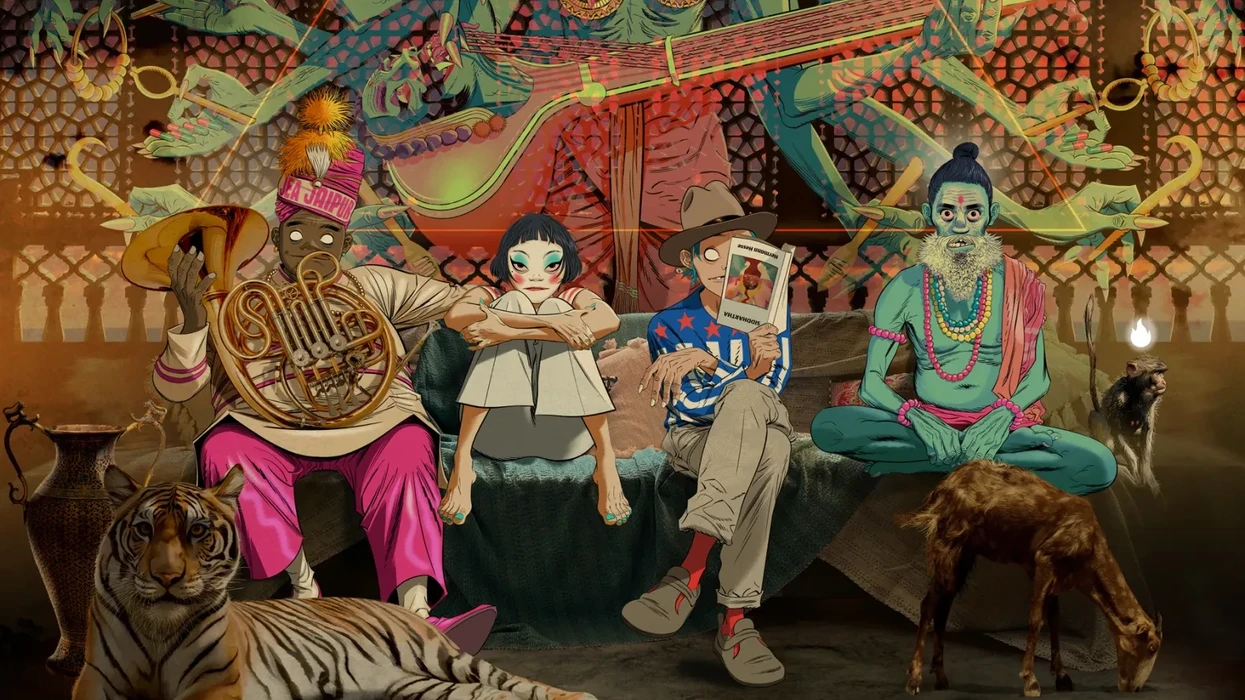
The subversion extends beyond the music: a significant talking point surrounding the album’s rollout has been the band’s sudden aesthetic and stylistic shift. The colors are brighter, the outfit choices more bizarre. It may seem drastic, but this is not the business of a band flailing to reinvent their own wheel; it’s a group who has stepped into a new echelon of self-assuredness. And it’s really not too random, after all; there have been foreshadowed hints that this version of Fontaines has always lived in their DNA. In a Reddit AMA the band held five years ago in support of Dogrel, frontman Chatten stated his love of an Arthur Rimbaud poem also titled ‘Romance,’ saying it “does a similar thing to me as some of [Bob] Dylan’s early lyrics.”
It takes a true romantic to be a world-builder, and Fontaines D.C. have mastered the art. Each song on Romance acts as its own fantastical cinematic universe, fleshed out with fictional characters, in-depth monologues, and pristinely-curated sonic elements to match. That’s partially indebted to the band’s decision to work with producer James Ford (Arctic Monkeys, Blur) on this record. The textures of the instruments on Romance sound crisper and more strikingly pinpointable, showcasing drummer Tom Coll, bassist Conor (Deego) Deegan III, and guitarists Carlos O’Connell and Conor Curley at their most harmoniously in-sync.
On tracks like “Desire” and the plunging, Slowdive-like “Sundowner” – which features lead vocals from Curley – heartrending guitar riffs build atop a steady bed of lush strings and ooze into full shoegaze territory. “Death Kink” is a masterclass in edging and restraint, with Chatten gasping for air as a sky-high wave of fuzzy guitars suspends just long enough for him to utter, “I made a promise and I killed it/Shit, shit, shit.”
The band’s vocal performances serve as a storytelling tactic on their own. Chatten outdoes himself here, whether he’s employing his gravelly growl, floating into falsetto, or stepping back from the mic to let his words echo and fall in the negative space. A major strength of Romance are the background vocals sung by Deego and O’Connell – they double as parentheticals, or secondary narrations, telling tiny stories all their own. Take the push-and-pull conversation that occurs on the cascading, Lana Del Rey-esque “In The Modern World,” an orchestral examination of numbness and escapism: “I don’t feel anything, and I don’t feel bad.”
At moments on the record, particularly the string-laden ones, it feels like Fontaines D.C. could be teetering on the precipice of disillusionment. They’re well-aware of the crumbling dystopian world around them, with themes of apocalyptic existentialism and a real Hail Mary “love at the end of the world” sensibility running through the album. And yet, they maintain that romance – as idealistic and whimsical as the concept might be – is the crux, a delusion worth surrendering to.
The album’s heartbeat lies in “Horseness Is The Whatness,” which takes its name from James Joyce’s Ulysses. Singing lyrics written by O’Connell, Chatten dizzily asks for someone to find out what the word is that makes the world go ‘round. “‘Cause I thought it was love,” he implores, with an almost childlike defiance, and you can tell he wants to believe it. “But some say that it has to be choice.”
The tension between love and choice brings to mind a song on the band’s 2020 album A Hero’s Death. The title is the message, and it’s repeated on a loop throughout the track: “Love Is The Main Thing.” Romance finds Fontaines D.C. running through a thick smog of anxiety and doom, sending up a slew of questions about what the point of it all even is. It seems like they’ve known the answer all along.