
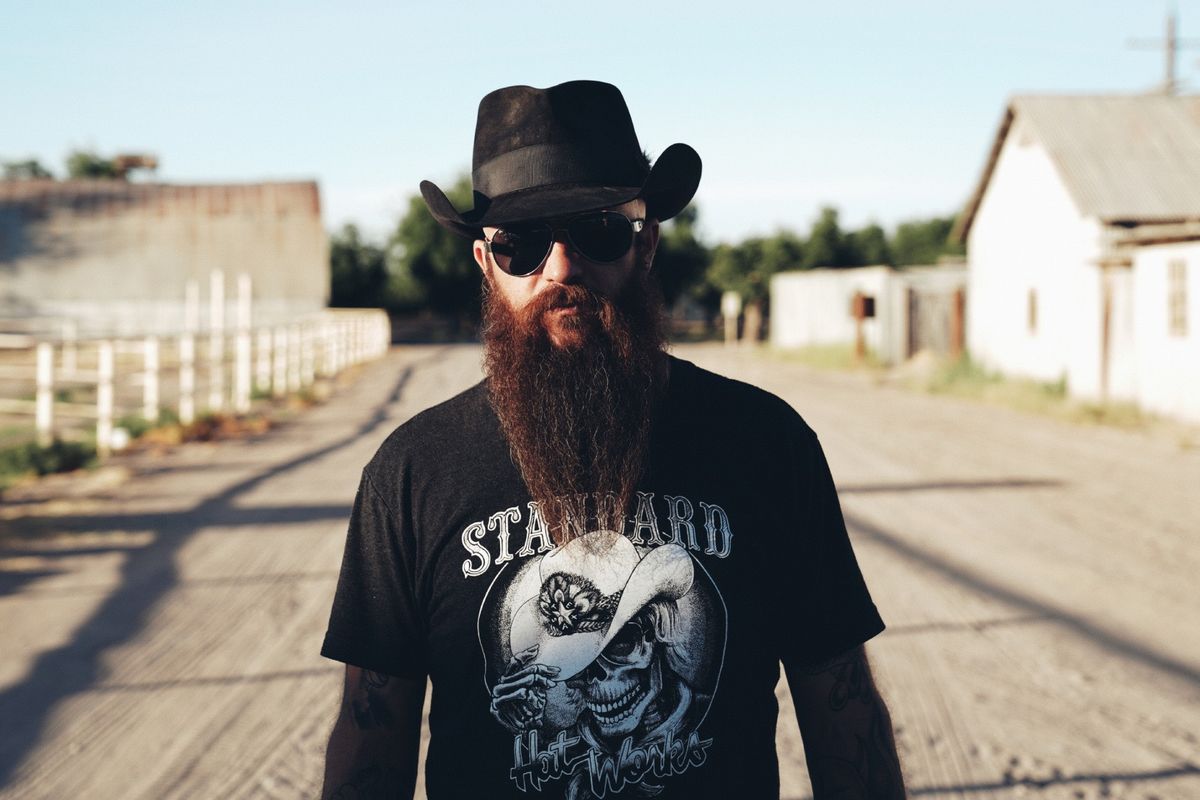

Two days after his 43rd birthday last August, country star Cody Jinks woke up, turned to his wife, and said he was quitting drinking.
“And I haven’t touched a drop since,” Jinks tells Rolling Stone. “I gave it to God. Take it from me. I don’t want it anymore. I’m full. I drank everything. I drank all of it.”
Well-documented for being a little rough around the edges and defensive to those trying in vain to figure him out, Jinks is rather upbeat in conversation these days — with a sense of self not felt in decades.
“I quit drinking, parted ways with my longtime manager, and I started therapy. It was all happening at once,” Jinks says. “And this record’s really a turning of the page hopefully in my life.”
On the surface, Change the Game, which dropped on Friday, is Jinks’ signature blend of country gold and dusty boots honky-tonk, all with just enough spit shine for crossover appeal. That combination has led the Texas native to become a national headliner in recent years, with a loyal army of fans who connect with his hard-fought journey.
“Everybody can look at how much everybody sells, concert prices and stuff like that. But at the end of the day, I’m a songwriter and an artist,” Jinks says. “And if that’s what you truly are, take more control of what you’re doing. You’re going to be much happier and your fans are going to get more of a pure product.”
On Change the Game, Jinks trades hardscrabble ego and road-dog grit for vulnerability, accountability, and redemption. Song titles like “Take This Bottle” and “Sober Thing” expose a new layer of Jinks, lyrically and sonically.
“A lot of stuff on the record was hard to put out, but it’s about growing and learning.” Jinks says. “Every record I write, it is my life. This one was just at a really vulnerable point.”
Like a battered soul too tired to keep fighting his demons with booze on the tune “Wasted,” Jinks exhales not a sigh of regret, but relief that he hit the brakes before swerving into the ditch: “I can’t get back the time I’ve had/Can’t make amends/Rewrite the past/I’ve changed my ways before it’s too late.”
“I really don’t know where the darkness [comes from] in me. And I think a lot of people have that,” Jinks says. “But at the end of the day, my songs end with hope. Take a stand and be the light in the darkness.”
Jinks points to his early days in the Fort Worth metal and punk scenes for why he decided to shake up his management team: Now, he manages himself.
“I’m 43 years old I’ve been doing this 25 years,” Jinks says. “I know how this business works. I’m going back to making the decisions I feel are right.”
But Jinks doesn’t have a chip on his shoulder when it comes to the corporate side of country music. He doesn’t consider himself an “outlaw” either. “I don’t mind the outlaw moniker. But I don’t walk around calling myself an outlaw ‘cause I’m not,” he says. “I will walk around and say ‘I am a punk.’” He’s leaning hard into his DIY roots now, to retain control of his music, his business, and, most importantly, his sanity.
“The way I’m trying to change the game now is trying to help artists realize you don’t need a record company,” Jinks says. “The big Nashville thing is just part of the bigger music picture — they’re going to do what they do and they’re going to screw artists.”
With a headlining tour kicking off next month and running throughout 2024, including several dates supporting Luke Combs, Jinks has a lot ahead of him. But he’s facing it with the outlook of an artist who’s done some self-reflecting.
He’s candid when it comes to discussing therapy. When asked about being a marquee act and dealing with personal issues in the public spotlight, Jinks recalls an article he read in a rock magazine when he was a teenager. It was about Megadeth’s Dave Mustaine, who talked frankly about getting older and prioritizing his health.
“I was like, ‘That doesn’t sound like a very rock & roll thing to say,’” Jinks says. “But you know what? You wake up and one day you’re there. If you’re lucky.”




Jack White Responds After Uproar Over Taylor Swift Songwriting Comment
This is why we can’t have nice things.
Jack White posted a statement on Instagram Monday evening after numerous publications took his comments in an interview with The Guardian out of context. When discussing poetry and songwriting, White mentioned fellow musician Taylor Swift‘s style of songwriting, and explored his own approach to storytelling when creating music. Unfortunately, online outlets framed his words as a critique of the Tortured Poets star, especially when it came to headlines that quickly circulated on the internet.
“Putting this up for a day and then taking down to just put this to bed,” wrote White in the since-deleted post. “I didn’t say that I think Taylor Swift’s music was ‘boring’ or whatever click bait the net is trying to scrape together. What I was trying to say in an interview I did about poetry and lyric writing, was that I don’t find it interesting at all for ME to write about MYSELF in my own lyric writing and poetry because I think that it could be repetitive for ME to always write about and It could be uninteresting for people who listen to my music to delve into, and that imaginary characters are more attractive to me as a writer.”
White went on to acknowledge the “tremendous success” of Swift and other songwriters who have their own process, while stating that just “because I say I have a way of doing things doesn’t mean that I think that EVERYONE should do it the same way.” He added, “They should do what works for them, And they do, and it is obviously appealing to many people, and I’m glad to hear that.”
When asked by The Guardian in the article published Sunday, if any of any of his songs were entirely autobiographical, White replied, “Not too much. Now it’s become very popular in the Taylor Swift way of pop singers writing about all of their publicly aired break-ups, which I don’t find interesting at all. I think it’s a little bit boring for me to write about myself.”
White further explained, “Even if I’ve had a really interesting day, I feel like I’ve already lived that, I don’t need to go through it every time I sing this song. If it’s something really painful, I’m not going to put this important, painful thing that I went through out there for some idiot on the internet to stomp all over. So I put a percentage of that into what I do and then morph it into somebody else’s character. I can’t really learn about myself until I put it into somebody else’s shoes.”
Editor’s picks
The 250 Greatest Albums of the 21st Century So Far
The 100 Best TV Episodes of All Time
The 500 Greatest Albums of All Time
100 Best Movies of the 21st Century
In his Monday statement, the Rock and Roll Hall of Fame inductee said that at times he has been “made less and less interested in doing interviews” amid the “age of this massive demand for click bait and content.” Any “scrape of anything interesting” can be used as drama and “spit out as bait,” he continued, leading White to “not want to answer questions with any sort of romance or passion or reflection as I’m too busy having to worry about accidentally triggering nonsense like this from so called ‘journalists’ and ‘editors.'”
Trending Stories
Jack White Responds After Uproar Over Taylor Swift Songwriting Comment
Watch Hilary Duff's Intimate Performance of 'Roommates' on 'Fallon'
Rihanna Shooting Suspect Held for Attempted Murder on $10.2 Million Bail
Amy Klobuchar Slams Live Nation Settlement: 'Every Sign Points to a Backroom Deal'
He ended his response to the wave of backlash following his interview by saying, “This has always been a problem as it encourages artists to give ‘safe’ answers to any question and stifles artistic vision and imagination and pushes all of us to not share anything interesting, which was one of the points I made about keeping private things private in that same interview. But yeah, content.”
ADVERTISEMENTWhite recently released Jack White: Collected Lyrics & Selected Writing Volume 1, a collection of lyrics from the artist’s solo recordings including No Name, The Raconteurs, and more, plus selected poems and writings by White, and essays by poet Adrian Matejka.