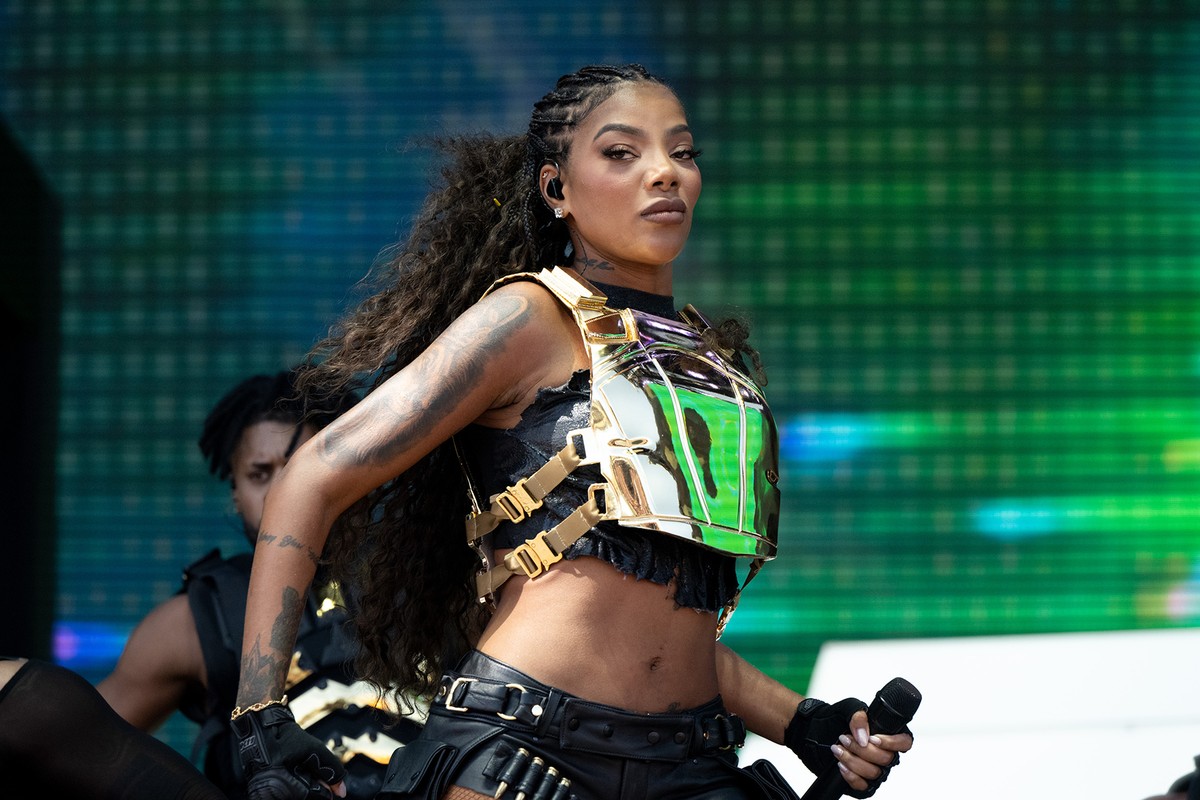

Last month, the Brazilian artist Ludmilla made history: After powering through her hits during a breakout set at Coachella, she became the first Afro-Latina to perform at the music festival. She riled up the crowd with songs that have made her one of the most listened-to Brazilian artists in the world and even brought up her wife, sharing a kiss with her in a proud moment of LGBTQ visibility.
The performance was buzzy on social media. The Rio-born artist, who has amassed almost 20 million monthly listeners on Spotify, launched into the beats and hooks that bred her over the last 10 years of her career and put one distinct sound front and center: baile funk.
“This music saved my life, and it does for a lot of people,” Ludmilla says. “I see it in the place it deserves to be, not only in Brazil, but internationally.”
Ludmilla often goes by her nickname Lud. But to fans familiar with her early career, before she released her first album Hoje, she’s MC Ludmilla. The MC moniker is often used by artists in baile funk, also known as Brazilian funk. Even pop trailblazer Anitta, also born and raised in Rio, was known as MC Anitta in her first years in music — a past she revisited on her latest album, Funk Generation. The genre’s beginnings date to the 1980s, when New York freestyle, Miami bass, and Los Angeles electro blended into the sound of bailes funk (“funk parties”) in Rio’s suburbs and favelas.
Today, it’s easy to stumble upon the feverish beats of baile funk in pop culture. The style, essentially made out of two kicks (one off-tempo) and three crisp snares, is everywhere: It’s in Kanye West’s “Paperwork,” for instance, a track that samples “Faz Macete,” by DJ Roca and Vitinho Beat. Funk has also meshed into fashion trends like Brasilcore, and it’s become the soundtrack for North American and European vacation summers, thanks to songs like MC Fioti’s “Bum Bum Tam Tam.” From Karol G’s performance at the 2023 VMAs to haute-couture catwalks to viral videos, baile funk is making its way to the top.
But as the sound of funk goes global, just a handful of funk artists reach top-tier, internationally acclaimed venues and stages such as Coachella. While Anitta and Ludmilla lead the way to global pop, baile funk continues to flourish mostly in underground favelas, covering a wide range of cities and regions, sprawling its infectious drumwork across the country.
São Paulo is home to the outlandish sub-genre known as mandelão with DJs like Jeeh FDC. Rio, meanwhile, is where names like DJ Crazy Jeff chop and slice funk sounds into a polyrhythmic mix. In the state of Minas Gerais, Anderson do Paraíso casts off a dark, somber funk vibe, while in the northeastern city of Recife, MCs like Elloco spit bars over steely off-kilter cowbells with brega funk. Baile funk echoes in the streets and blasts in clubs, pushing techno and house forward. It’s everywhere in Brazil’s big cities.
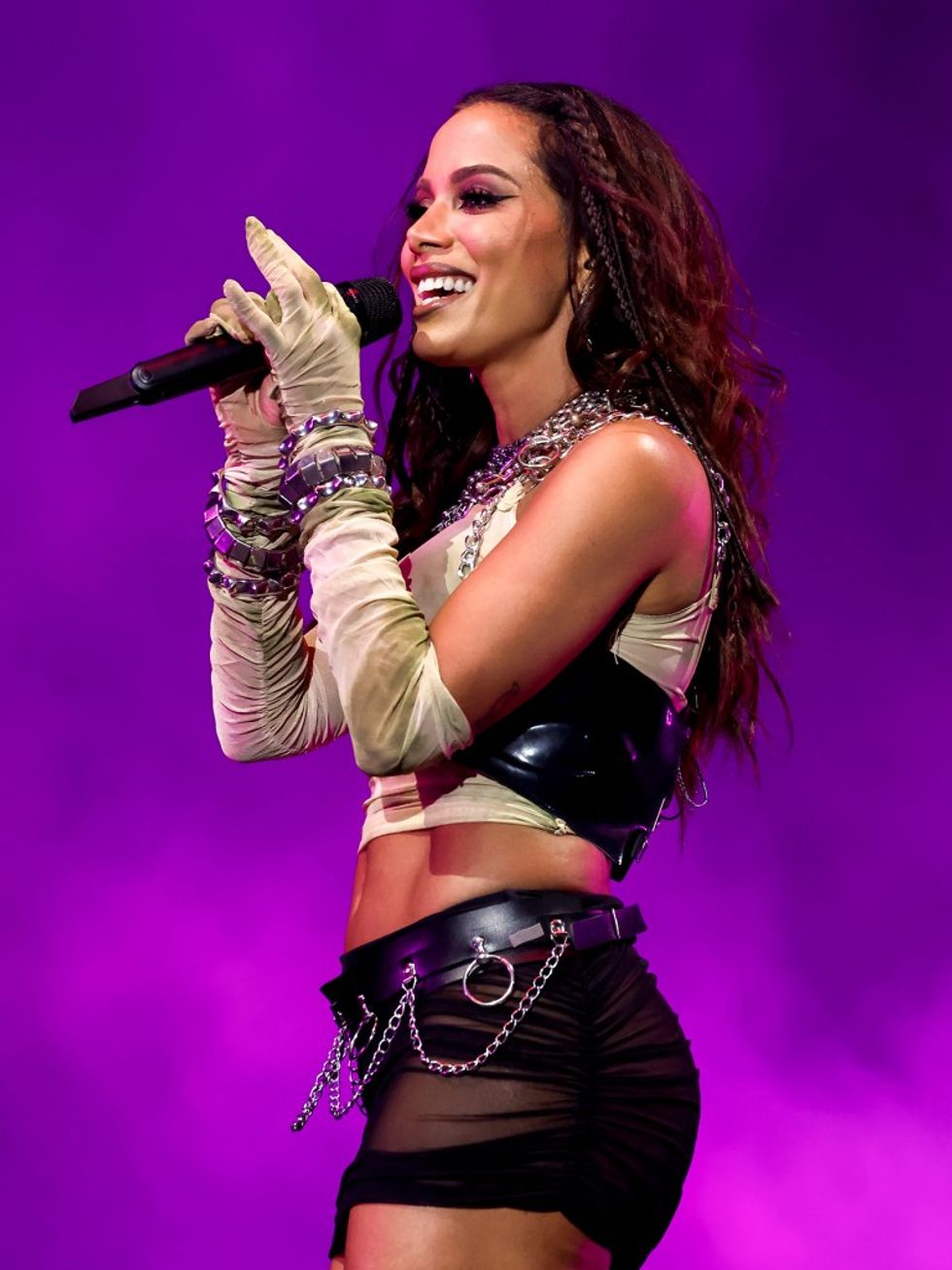
And yet, few MCs and DJs make it to the top of the global charts. Though it’s growing, baile funk often operates in a concentrated local market. The scene differs from other parts of South America, where artists often sail to stardom with reggaeton and afrobeats. An industry gap in the region and short-sighted goals keep many baile funk artists primarily in Brazil.
“When I first started, there was a lot of prejudice against funk, and today funk is hype, [it’s] cool,” Ludmilla says. “I see that it’s something less and less marginalized, I see people outside Brazil embracing funk, enjoying our music”
Still, she adds more progress is needed. “Funk artists need more opportunity. People listen to our music, but funk artists are not lined up to perform in other countries. Since I first started, I knew I wanted my concerts to be big, with pyrotechnics, dancers. This made me get where I am now in music. People didn’t get this back then,” she explains.
Ludmilla made her debut in music with “Fala Mal de Mim,” released in 2012. She was only 16 then, raised within Rio’s first funk generations. Throughout the Nineties, funk gave birth to new waves of local artists, made its way to TV channels and radio stations, and became the music of Rio’s Black and underprivileged youth — the reason why the genre, to this day, is at the center of systematic prejudices that challenges artists.
“I think this is a structural problem,” Ludmilla says. “When I first started I was wronged several times. As funk artists, we’re in the hands of people and quite often we don’t know anything about business. Funk artists come from harsh backgrounds, sometimes they can’t go to school, they don’t have parents they can rely on, they start at a young age, it’s tough, and that’s why a lot of people can’t go further in their careers. I was robbed, but I bounced back and made a career for myself.”
Stories of promising artists whose careers come to a grinding halt are frequent in Brazil’s baile funk scene. A remarkable voice that claimed spaces once dominated by men, Deize Tigrona went through a similar experience. At the beginning of her career in the early 2000s, funk was making waves globally for the first time. One of baile funk’s founding fathers, DJ Marlboro, kicked off his first European tour in 2004. That same year, the compilation Rio Baile Funk Favela Booty Beats came out, becoming a hallmark of the genre.
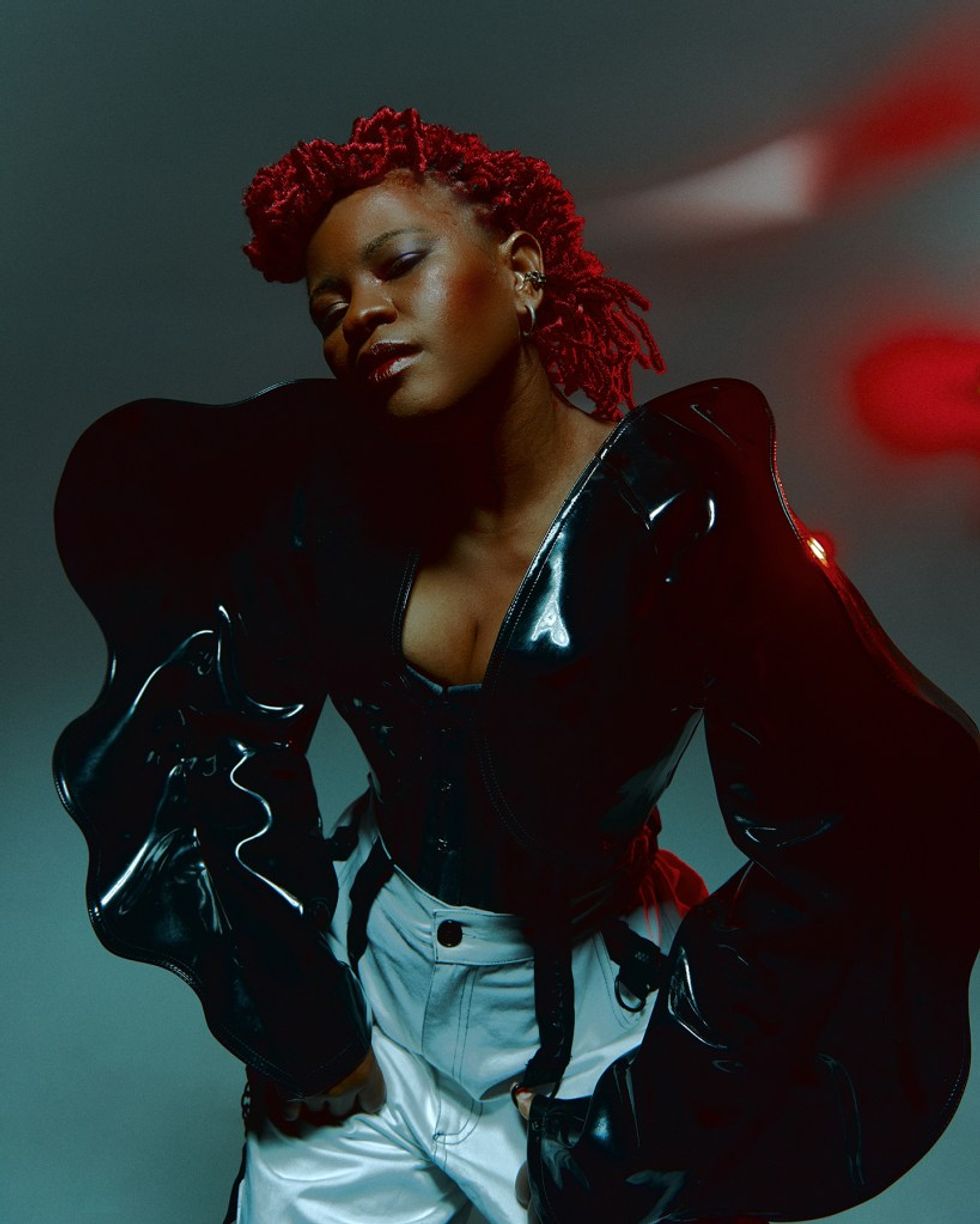
Deize had a break when M.I.A. sampled her song “Injeção” on “Bucky Done Gun,” a collab with Diplo. “Later that year I toured Europe, I performed in Paris, I met Buraka Sound System, Dizzee Rascal, I saw my music had great potential,” she remembers.
But despite her ambitions, Deize faced a tough time. Her show bookings were sparse, earnings from her released tracks were abysmal, and her savings shrunk. The scenario was hard all around: From the mid-2000s to mid-2010s, all eyes were on Rio for the 2014 World Cup and the 2016 Olympics. Government officials and police officers cracked down on baile funk parties, and the already-fragile scene struggled to survive.
In 2014, Deize started working as a trash collector. She admits she faced personal issues at the time as well. “I had depression and I thought funk was over for me,” she says. “In the Nineties and 2000s, we just wanted to sing. We signed off on contracts no matter what and suddenly we realized we fell for a trap. I was a victim of one of those.”
Her comeback ended up mirroring funk’s second international explosion. By the 2010s, the genre was already a musical powerhouse in Brazil, now driven by São Paulo. That sound gradually flowed into the rest of the world with hits like “Bum Bum Tam Tam,” the first Brazilian video to amass more than one billion plays on YouTube.
In 2022, Deize released “Foi Eu Que Fiz,” her first album in over a decade. She was rediscovered by a new generation of artists and fans who saw her as a pioneer. Invitations for features, collabs, and concerts started to pile up in her DMs. Finally, she could make a living out of funk again. “I almost gave up on music, but today I see that my perseverance made me win,” she says. “But I’m not delusional: I want to work and collab, but if a European DJ wants to collab with me, I’m not like ‘Yes!’ with my eyes closed.”
Deize notes that artists still face major prejudices if they want to go big. “There’s still a lot of racism against funk, because it’s favela culture, and the artists making it come from the favelas,” she explains. “Sometimes, people sing a funk song and they have no idea who’s the artist behind it.”
MC GW is familiar with this. With his abrasive vocal delivery and a knack for uncomplicated and catchy lyrics, GW has become one of the most recognizable voices of funk in the last few years with tracks like “Ritmo Mexicano.” Born in Rio, the artist stepped away from his childhood dream of being a samba singer once he noticed his talent for funk. But as he became more popular, he was almost a victim of his own success: GW’s voice became a frequent source of sampling for producers, and the singer had no control over it. (This is a regular practice in baile funk, with vocals sampled constantly on major tracks.)
“Quite often I find tracks I had no idea that featured my voice,” he tells Rolling Stone. “Today, I think this is cool. I see that as part of my legacy to the funk movement. But it took me a while to get my brand, my image as MC GW, attached to my music. Everyone knows the voice, but who’s the person behind it?”
Eventually he cracked the code. “As my work got popular, I started registering my a apella vocals before releasing them or sending them to DJs,” he says. “This allows me to work in collaboration with other artists, whether they’re independents or top-tier.” Along with that, he landed solid collaborations with artists from different genres, such as Marshmello. The North-American DJ teamed up with GW and Brazilian duo Tropkillaz and DJ Mu540 on “Movimenta.”
GW says he relies on streaming platforms for earnings. He started taking English lessons a few months ago. The MC is keeping an eye out for new collabs abroad and eventually, he wants to tour internationally. His strategy is not that different from Anitta’s or Ludmilla’s.
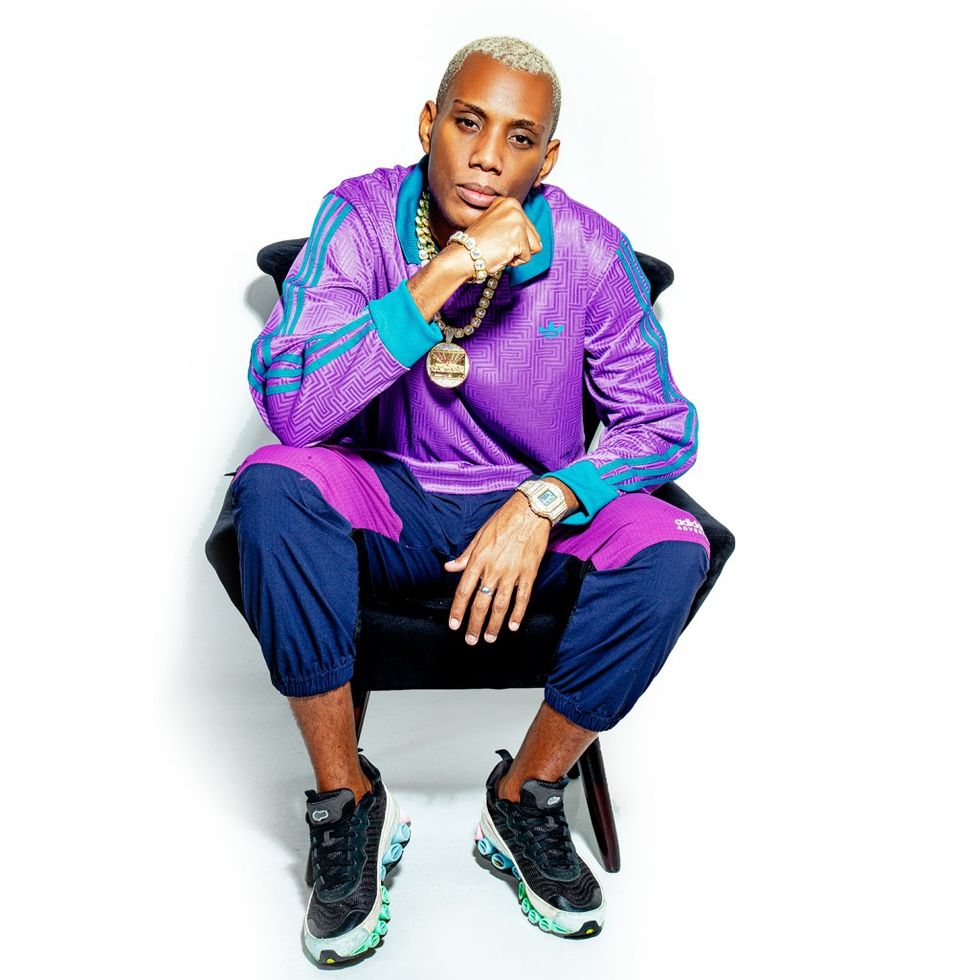
But even when funk artists master the industry with top-charting songs, sustainable business models and original artistry, crossing the bridge to international markets is uncertain. This reflects the tricky politics of linking Brazilian music to the global pop landscape, especially within Latin America. According to a recent report by the International Federation of the Phonographic Industry (IFPI), Latin music has kept growing for 14 consecutive years, with the Brazilian industry leading the way. The only Latin American country in the top ten global music markets, Brazil has its top-charts mostly filled by local artists.
That might suggest Brazilian artists can thrive regardless of an international audience, but it also implies that some successful artists aren’t seeking out global connections like their Spanish-speaking neighbors. This isn’t a sonic fracture: samba and salsa have always shared some standards, boleros are part of the Brazilian soul, and regional is not that different from sertanejo. In the past few years, some of this has changed, as funk has brought Brazil closer to the Latin American industry with collabs such as “Me Gusta,” with Anitta, Cardi B, and Myke Towers, or Ludmilla’s latest single, “Piña Colada,” featuring Ryan Castro.
But there seems to be a long way to go. GR6 and Kondzilla, the two biggest baile funk labels of Brazil with 100 million subscribers on YouTube, don’t have a single MC or DJ on the international stage — GW is an exception. When touring abroad, their artists often play for homesick Brazilian crowds in small venues.
“I think the world has been accepting funk as culture, but it’s still hard for different countries to absorb funk as a music genre. Funk is not reggaeton. Sometimes, depending on the funk song, I think people don’t know how to react on the dancefloor,” says Daniel Mansur, Ludmilla’s A&R. Formerly an A&R for Warner Brasil, Mansur now works closely with the Brazilian artist in her international endeavors. “Today, I believe that funk artists can go international because music is globalized. Brazilian music can burst the international bubble easier today,” he says. “But Brazil is a racist country, and I fear that funk will be respected only when white artists appropriate it, just like it happened with rock, R&B, and rap.”
According to Mansur, embracing different music genres has helped Ludmilla become the most listened to Afro-Latina artist in the world, and the first to reach the one-billion plays cap on Spotify. It’s a paradox and a trade off: In order to become a pop star rooted in funk, one has to go beyond it. “Funk has opened the doors of Brazil to the world, but I don’t believe Ludmilla is seen only as a funk artist abroad,” he reflects. “I believe she’s seen as a Black music artist.”
Ludmilla embraces this. Navigating between her funk past and her future ambitions, the Brazilian artist wonders, “With so many talented Afro-Latina artists, why am I the first one to perform at Coachella?!” Still, she’s continued moving forward. Last December, Ludmilla experienced another career first: She met up with Beyoncé during a Club Renaissance event. Ludmilla’s first moniker was MC Beyoncé, a tribute to the singer. “When Roc Nation reached out to me, when I was lined up to perform at Coachella, when me and Beyoncé met up, I can only say: Look at what we’ve done!”

 © Melissa Auf der Maur