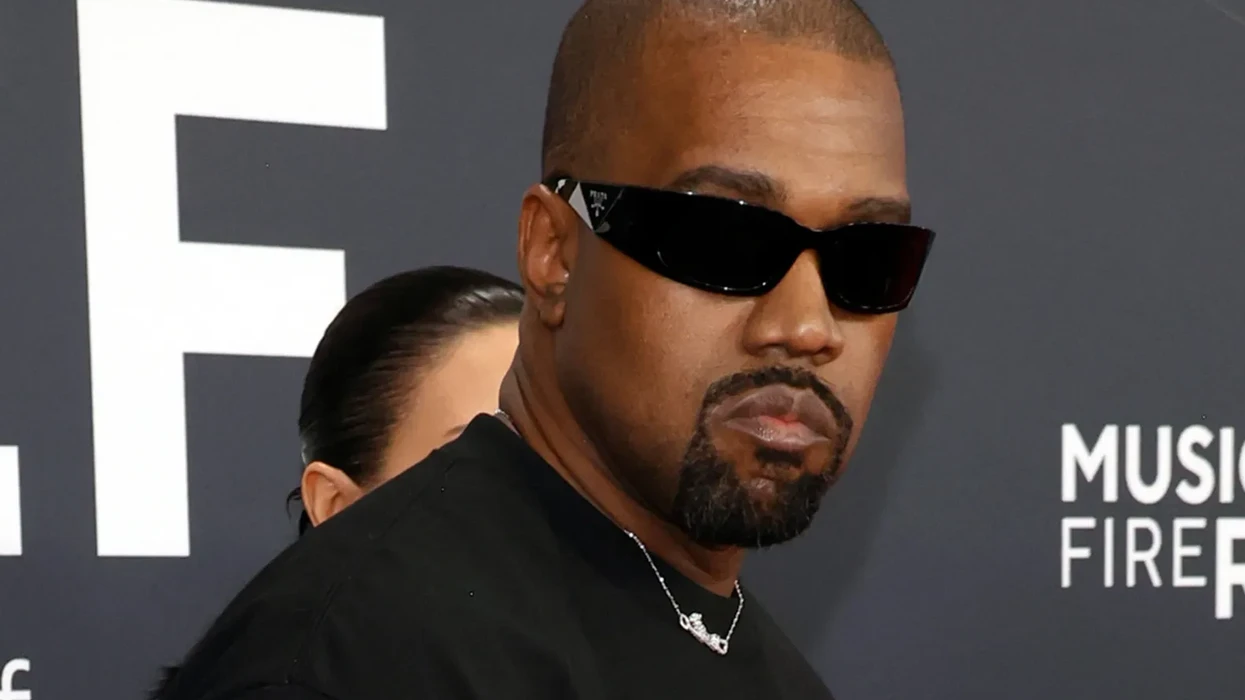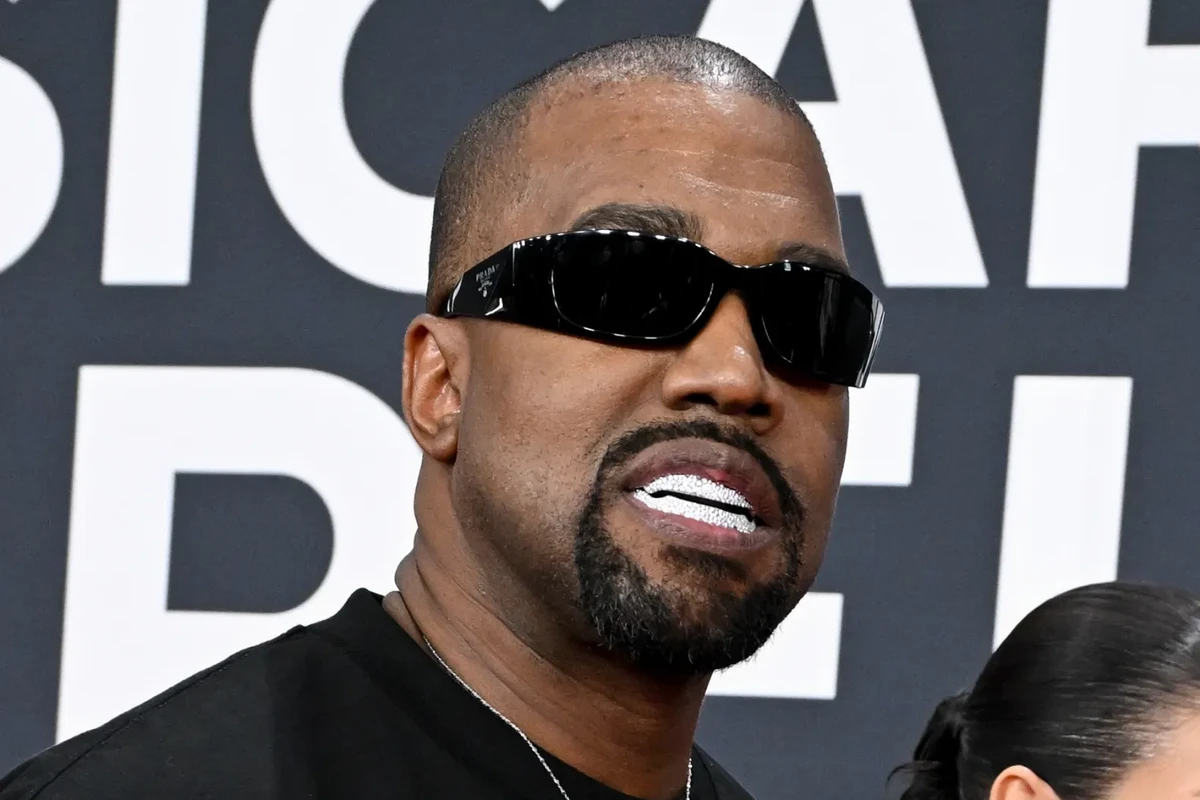

Kanye West, the musician now known as Ye, was found liable by a jury Wednesday after a man said he was seriously injured during the controversial gutting of Ye’s $57 million Malibu mansion in 2021.
The plaintiff, Tony Saxon, had asked for $1.7 million in compensatory damages. But in the mixed verdict that included several wins for Ye, the jury awarded only $100,000 for past and future medical expenses and another $40,000 for past pain and suffering. Jurors declined to award any damages for future pain and suffering and did not impose punitive damages. They found that Saxon had not been wrongfully terminated and that Ye did not engage in “malice, oppression, or fraud.” (Ye also is on the hook for Saxon’s reasonable attorneys’ fees and costs.)
“It took a lot of discussion to get to $140,000. Some people wanted to go higher,” a juror who spoke with Rolling Stone on condition of anonymity says. “We thought [Saxon] was injured, but there were too many other nebulous things to consider.”
The juror says the panel meticulously dissected bank statements and canceled checks to determine how much of the $240,000 that Ye wired to Saxon in late 2021 had been used to pay workers and invoices, and how much should count toward the wages Saxon claimed he was still owed. “We figured he pretty much broke even,” the juror says.
Asked about Ye’s wild turn on the witness stand last week, when he appeared to fall asleep amid his examination, she and a fellow juror said it left them cold.
“He looked at us contemptuously. It was just a waste of our time. Either he was just bored, or he was falling asleep on the stand. Both are bad options. I was not impressed,” the female juror says.
“Oh, he fell asleep. I saw it,” the second juror, a man, tells Rolling Stone. “I was kind of surprised. I could tell he’s not what some of my friends who still like him believe.”
Saxon’s lawyers said the mixed verdict was “a vindication” for their client. “Obviously, it’s not as much as we asked for, but under the labor code, they have to pay attorney fees and costs. It’s going to be a lot more than $140,000 when it’s all said and done. The final judgment should be over $1 million,” Saxon’s lawyer Neama Rahmani, president of West Coast Trial Lawyers, tells Rolling Stone.
Rahmani and his co-counsel, Ronald Zambrano, said that before the trial, Ye demanded that Saxon pay the rapper-producer’s fees and issue a public apology. Saxon refused, they said. “In true David-vs.-Goliath fashion, Mr. Saxon stood firm against one of the biggest celebrities in the world, with the truth on his side,” Zambrano said in a statement.
“Although the jury found that Saxon qualified as an employee for certain purposes, they awarded no damages for lost wages, overtime, waiting-time penalties, retaliation, punitive damages, or any other statutory penalties,” Ye’s spokesman, Milo Yiannopoulos, said in a statement highlighting Ye’s victories.
He also pointed to a portion of the verdict form where jurors found that Saxon performed “in the capacity of a contractor” while working for Ye. Based on that finding, he said, “we believe the damages award is legally barred and will be seeking post-trial relief from the court.”
During the two-week trial, Saxon alleged that Ye hired him as a project manager and around-the-clock security guard at the contemporary concrete beach house designed by the Pritzker Prize–winning Japanese architect Tadao Ando. “Stay here now. You can’t leave,” Ye purportedly demanded, according to Saxon’s testimony.
Saxon, 35, testified that he severely injured his neck and back while working at the property and was later fired after seeking workplace accommodations and refusing to run fuel-powered generators indoors. He said that when he warned Ye the generators posed a carbon monoxide risk, the rapper snapped, “If you don’t do what I ask you to do, you’re an enemy. You’re a Clinton. You’re a Kardashian. And I won’t be your friend anymore, and you’re only gonna see me on the TV and the news.” Saxon told jurors the moment was “a very scary interaction.”
In closing arguments Monday, Zambrano said that under California law, Saxon had been hired as a full-time employee, not an independent contractor. Zambrano played a clip from Ye’s videotaped deposition in which the musician was asked whether he disputed hiring Saxon as an employee. “No, I don’t dispute it,” Ye replied on video, before later taking it back.
Zambrano said Saxon produced thousands of pages of records supporting his claims. By contrast, he told jurors, Ye’s legal team turned over just 19 pages of discovery. “[Saxon] kept things that were embarrassing, and he still presented them to you,” Zambrano said. “Mr. Saxon, for all his layers, was transparent with you. He has been victimized, and he got hurt.”
Among the materials presented to jurors were 94 pages of text messages between Saxon and Ye, who bought the house for $57 million in 2021 and ordered it stripped of plumbing, toilets, fixtures, cabinets, electricity, a concrete fireplace, and two custom 30-foot stainless steel chimney stacks. Ye later sold the property for $21 million in September 2024, a steep loss.
In his dueling closing argument, Ye’s lawyer, Andrew Cherkasky, portrayed Saxon as an unreliable witness who fabricated claims about injuries and unpaid wages after being let go from the project. “The lies are so deep and so wicked, not a thing can be believed that came out of his mouth,” Cherkasky said, calling Saxon a “professional victim.”
Ye’s wife, Bianca Censori, an architect from Australia who worked on the Ando house, testified that Ye had an aversion to stairs and windows, preferring “ramps and slides” and “trying mesh as the barrier between indoor and out.” She said Saxon told her that he was a licensed contractor, a claim Saxon denies.
Cherkasky also praised Ye for appearing in court last week and taking the witness stand. “He answered the questions. He wasn’t sleeping, he was bored. This is beneath him,” Cherkasky said Monday.
In rebuttal, Zambrano said Ye hardly deserved a “participation prize” for his brief appearance. “Who’s been here the rest of the time? You guys,” he told the jury of seven women and five men on Monday.
Zambrano argued Ye was gutting the Ando house without permits and hired Saxon not as a licensed contractor but to keep the work discreet. He pointed jurors to a group text message from Censori that read, “No permitting increases caution,” which suggested the team should seek solutions that are “quicker” and create “less red flags.”
Text messages shown in court appeared to document Saxon complaining about a back injury suffered on the job. “I hurt my back and have been taking it easy,” he wrote to Ye in one text from his tenure on the job in late 2021. In another message to Censori, he wrote, “My back is so fucked.”
Saxon also asked about seeing a chiropractor who regularly visited Ye’s warehouse office in Los Angeles and wrote to Censori at one point, “I can’t live here anymore,” adding that he had asked Ye to hire new security.
Zambrano said Saxon, a vintage records dealer and performer, described himself to Ye as a “guy with a van,” not a professional contractor. “Tony is not a general contractor. He never was. Everyone knew that,” Zambrano said, arguing Ye’s failure to secure workers’ compensation insurance left him responsible for Saxon’s injuries.
Cherkasky countered that Saxon’s messages reflected a typical relationship between a homeowner and an independent contractor. “Your passion about the outcome of your home is not an invitation to have someone become an employee,” he said.
Jurors also heard testimony from Jeromy Holding, a handyman who supported Saxon’s claim that the project lacked permits. Holding said the home was discussed as potentially serving as a private school location, a bomb shelter, a monastery, a recording studio, and a playground with slides and ramps.
Censori disputed the idea that the project was chaotic, describing Ye’s evolving directives as “iterations” of a consistent vision. “This was all concepts,” she testified. “It was always going to be a residence.”
Saxon’s lawsuit was the first to reach a jury among a wave of civil complaints filed by people who worked for Ye in recent years. The musician, 48, has faced more than a dozen lawsuits since an October 2022 social media tirade in which he tweeted his now-infamous plan to “go death con 3 ON JEWISH PEOPLE.” Last year, Ye again posted inflammatory messages on X, formerly Twitter, writing “IM A NAZI,” and “I LOVE HITLER.” Days after that, he aired a Super Bowl commercial promoting Yeezy.com, where he later sold shirts emblazoned with swastikas. Last May, he released a single titled “Heil Hitler,” which was quickly removed from most digital streaming services.
In January, he took out a full-page advertisement in The Wall Street Journal apologizing for the hateful rhetoric. “I’m not asking for sympathy, or a free pass, though I aspire to earn your forgiveness,” the ad read. “I write today simply to ask for your patience and understanding as I find my way home.”
Ye is still facing a crush of other civil lawsuits, though last year he did settle complaints from a former assistant principal and teachers at his failed private Christian school Donda Academy. The staffers alleged deplorable conditions, including an overflowing septic tank, exposed electrical wiring and the removal of windows because Ye allegedly “did not like glass.”
Former assistant Lauren Pisciotta sued Ye last year with claims he sexually harassed her between 2021 and 2023, then wrongfully terminated her. She alleges he made obscene comments about her body, demanded she wear tight-fitting clothing, groped her, forced her to watch pornographic material, and sent sexually explicit images. Ye is fighting the lawsuit, with a hearing set for March 23.
In a separate complaint, a model who appeared in a 2010 music video with Ye alleges he choked her with both hands, smeared her makeup, and then “rammed several fingers down her throat.” According to the lawsuit, Ye told her, “This is art. This is fucking art. I am like Picasso.” He is seeking to dismiss the claims.