
For women and girls in Afghanistan, life has become one big “No.”
No school beyond the sixth grade. No traveling without a male guardian. Death by stoning for “moral crimes” such as adultery. In most places, women must cover themselves from head to toe if they leave the house. And playing sports is forbidden, too.
When the Taliban regained control of the country in 2021, the regime immediately clamped down on women’s rights, erasing decades of hard-won gains. One of the first moves was to ban access to sports for women and girls, saying such activities would “expose” their bodies. “Women athletes became targets for retribution,” says Mara Gubuan, founder of the nonprofit Equality League, which helped evacuate and resettle dozens of female athletes.
But some Afghan women are finding ways “to challenge the Taliban’s tyranny,” says Minky Worden, director of global initiatives for Human Rights Watch. “Women athletes have shown enormous resilience by evacuating themselves and rebuilding their national teams in soccer, cricket, and other sports.”
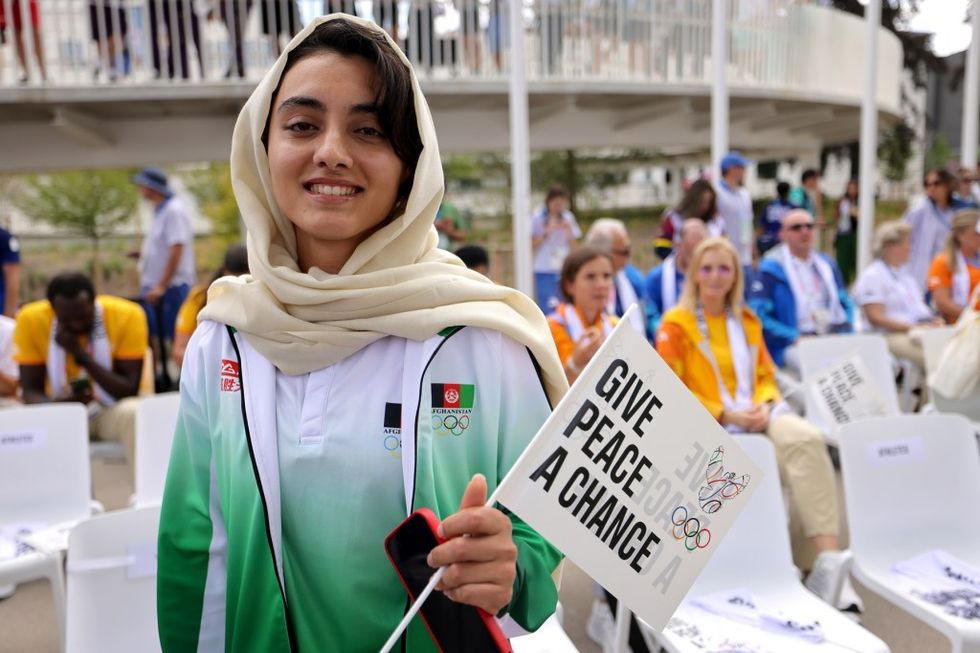
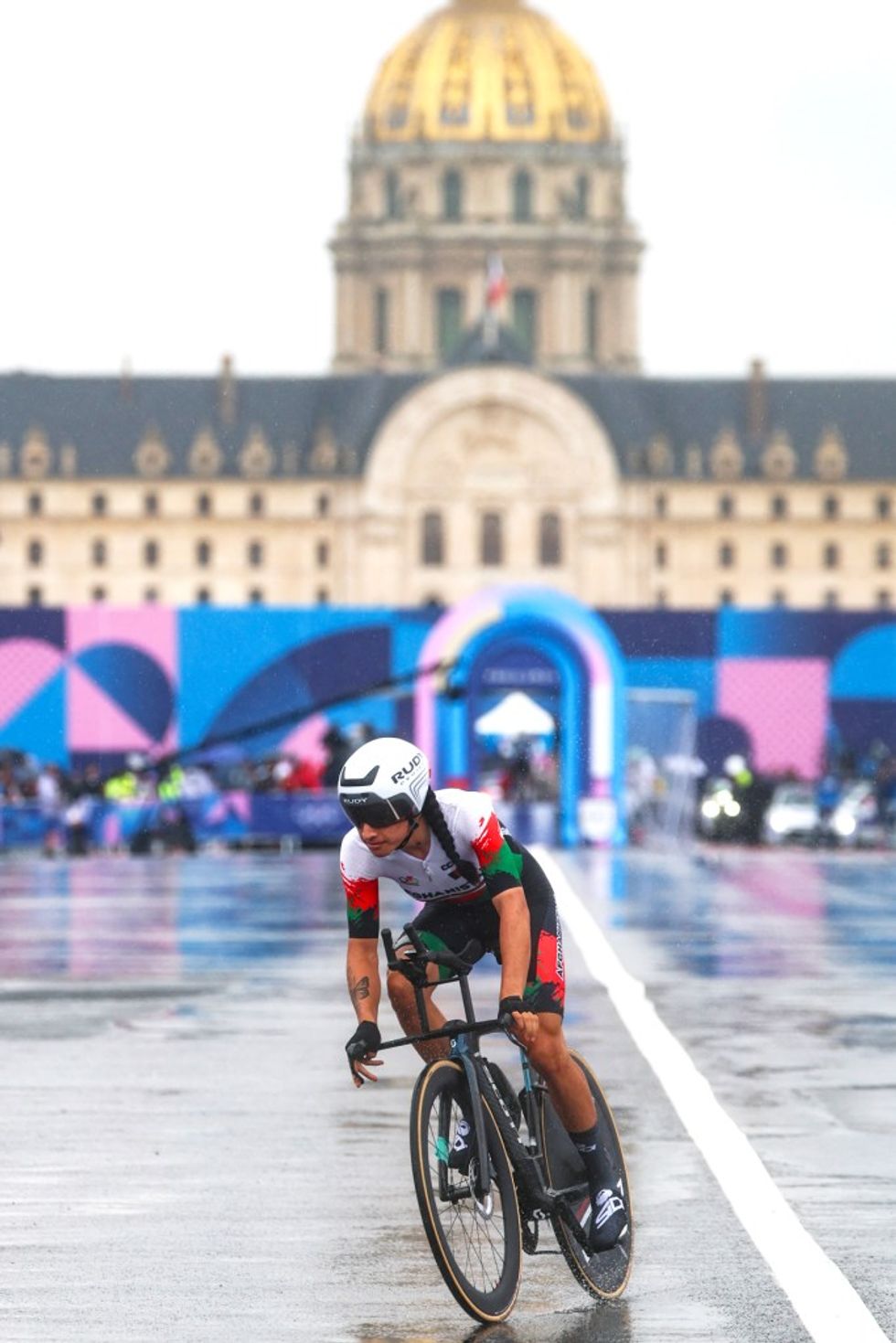
Among the athletes taking a stand are three women now representing Afghanistan in the Paris Games — cyclist sisters Fariba and Yulduz Hashimi, who now live in exile in Italy, and sprinter Kamia Yousufi, who lives in exile in Australia. Three men, two of whom live in exile as well, round out the team. They carry the former Afghanistan flag; Taliban officials are not allowed at the Games.
But not everyone supports the idea of an Afghan Olympic team. Friba Rezayee, one of Afghanistan’s first two female Olympians in 2004, argued in a recent New York Times editorial that the International Olympic Committee should bar the team representing Afghanistan, to demonstrate that it values human rights. She believes Afghan athletes should compete solely on the Refugee Olympic Team, which represents displaced people around the world. (Five Afghan athletes are currently competing on that team as well.)
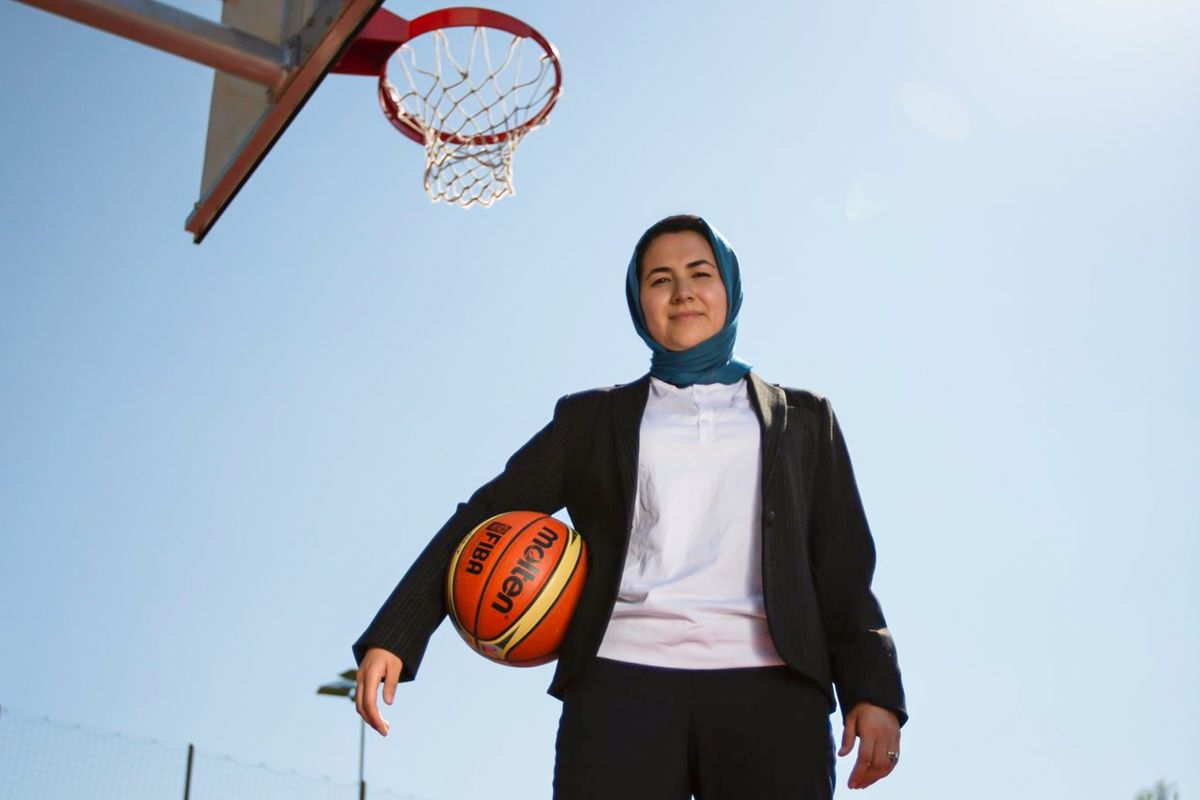
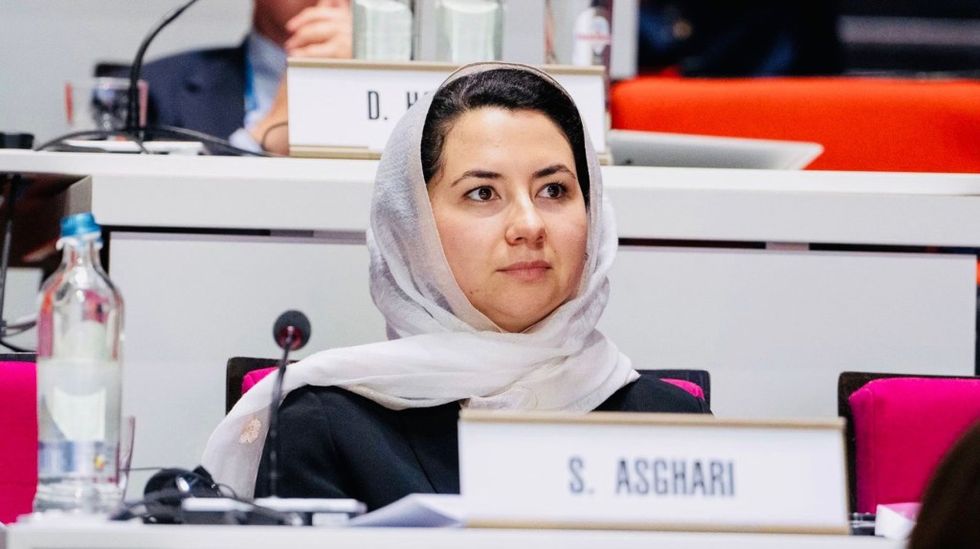
Rolling Stone dug into the issue with Samira Asghari, the first-ever Afghan member of the International Olympic Committee and an athlete herself — she played for the Afghan national basketball team before the Taliban takeover. She discussed her personal path as an athlete, the importance of women’s sports in Afghanistan, the governance of the Games, and life for women under the Taliban.
You’ve had an interesting path to the Olympic world. Your family fled Afghanistan in 1994 — the year you were born — to escape conflict and instability as the Taliban gained prominence. You wound up in Iran, where you began playing sports as a kid, correct?
Yes, when I was in Iran, I went to martial arts, kung fu classes. And then I started with aquatic swimming when I was five years old. I did soccer, skateboarding, many sports.
Your parents encouraged you to pursue sports?
Yes, yes. I grew up with three boys, so I was always playing with them. And my father, he used to be a coach in Taekwondo in Afghanistan. When my parents left the country, it was not safe anymore; there was a lot of discrimination against different ethnicities, restrictions that both women and men were facing. We became refugees.
Your family later returned to Afghanistan, after the Taliban had been toppled by U.S.-led forces. That must have been a strange experience as a young girl.
We returned from Iran in 2003, when I was nine years old. I went from, I would say, from heaven to hell. Imagine that you’re in a battlefield: all destroyed buildings and no clean water. Pollution, poverty, dry weather, no trees, nothing. Not even one single swimming pool. Nothing. It was crazy.
As a teenager, 13 or even 12 years old, I remember that I started wearing my Converse All-Star sneakers in public, to make the point that women and girls, they also have the right to have access to sports, because there was a stigma in Afghanistan. Women wouldn’t dare to wear sneakers or to carry a backpack even, because in the last few years, Afghanistan was run by Taliban, so schools were closed. Women still wore the burka; the Taliban was not there, but still women were wearing it because it became a norm.
Did you face backlash for stepping out in your sneakers?
Of course, we would hear bad words, insults from men, young boys. They would harass us. But I knew that it’s up to us, the young generation, to change, and it requires all this emotional and psychological energy. With the sneakers and with the backpack and my school uniform, when I walked in the streets in Kabul, I tried, in my brain, to say to myself, “Samira, as a young girl in Afghanistan, you should normalize this. It’s a shock for the population, but you should normalize it.” I started biking on a dusty street, not on the main road, but on my home street. As an individual, I started advocating this way.
That takes a lot of courage to go against adults who are saying, “You can’t do this.”
Uneducated adults — people who didn’t know how to speak to a woman or how to treat a woman or a young girl. I want to emphasize that women in Afghanistan and their advocates, they have psychological issues from all of this; for instance, for us athletes, we were fighting in two places: competing on the field of play, and also off the court in society, on cobble streets, fighting for our rights.
Sometimes I hear from Afghan women that this is Afghan culture, or this is Islamic culture, and I say that’s not our culture, that’s not what Islam says. Islam says that the right for education is for men and women. It’s not about religion, it’s about the norm that you create in your society. People establish the norm. I wanted as an individual to normalize something else, which is sport and education.
You fell in love with basketball, eventually becoming captain of the national team, and your march to the International Olympic Committee began.
Yes, I started playing for the youth national team in 2009. A few years later, when I was 18, my birthday gift from my coach was that he added me to the adult team. In 2011, I became a member of the Afghan National Olympic Committee, and then the International Olympic Committee in 2018. I played basketball until the Taliban came in 2021.
Where were you when the Taliban seized power?
I was pursuing my master’s degree in advanced studies in sport administration and technology in Switzerland.
It must have been devastating to see the news.
I saw videos of Taliban with their guns in the middle of downtown in Kabul. Then I heard about the people falling from the wings of the plane, trying to escape the country. I couldn’t believe it; I thought it was a joke. But then I saw the video and I was so sad. I said that I should do something because I’m safe. How about my teammates, who were like my sisters? We grew up together. I spent more time with my teammates and athletes in Afghanistan than my family, playing on the national team together. So I put aside my research paper, and that year I didn’t celebrate my graduation; how I could celebrate my graduation when everything is banned for women in Afghanistan?
I started communicating with athletes; I would listen to not just the sport community from Afghanistan, but people from other backgrounds — social activists, civil activists, they would reach out to see if I could help, because I have connections around the world as a member of the International Olympic Committee. It was overwhelming. I started helping the Equality League and other international organizations to evacuate female athletes. I was working, working, working all the time. I also had to perform as an IOC member, which is a great responsibility. And my family needed to leave the country too; they went from Afghanistan to Iran, from Iran to Turkey, and now they’re in France.
I’m still suffering from trauma that I was facing. And I’m sure a lot still going on in my brain is because we are still struggling with Taliban. Now, with this Olympic Games, you see that all other countries, even Saudi Arabia, they’re promoting sport for women. You see that all countries are promoting sport, and then I see my country.
Olympic teams must include both women and men. How did officials pull together a gender-equal team of Afghan athletes to represent the country?
Olympic athletes are always chosen by national sports federations — the governing bodies for various sports in each country, such as USA Gymnastics, for instance. Then they give the rosters to the National Olympic Committees. So the Afghan national sports federations selected the Afghan athletes for the team, then sent the roster to the Afghan National Olympic Committee — which is operating in exile — and collaborated with the International Olympic Committee and other sports entities to get the women and men to the Olympics in Paris from the countries where they currently live. Now we have the biggest delegation of Afghan athletes ever — three female and three male. We also have five Afghans who are competing on the Refugee Olympic Team.
What’s your response to the argument that Afghan athletes should not be on an Olympic team representing Afghanistan, in a show of support for human rights?
What I think is that, first of all, we do not allow the Taliban, or the Taliban flag, at the Olympics. No country or United Nations body has accepted the legitimacy of the Taliban to govern, largely because of their discrimination against women. The International Olympic Committee has barred Taliban officials from attending the Paris Games. We allow the three-color flag, which is the Afghanistan flag, the previous flag. Millions of Afghans still love the prior flag. And it’s not just about the flag, it’s about freedom. We can show the Taliban that if you do not allow women to represent themselves, to show the world that they exist and that they have passion for sport, we have that platform. So today, in my opinion, it’s beneficial for Afghan people to represent Afghanistan with that flag. The International Olympic Committee can show women that we support you and your rights as athletes.
My message is that sport has given me more than I could ever ask for, with many educational and professional opportunities. And I call on the international community, not just on Taliban, that Afghanistan needs support to restore the human rights to education and sport of 20 million women and girls.
The Olympic athletes serve as an inspiration to the young girls of Afghanistan, who have so many unthinkable hurdles.
Yes, I met with the Afghan Olympic athletes this week and I told them, “We have your back. All Afghans, especially the young generation, are looking at you as an example, and you’re the representatives of the country — ambassadors of peace from Afghanistan. You are going to be the hope for Afghan people and the young generation that they should show resilience and continue with efforts just like we did.” To go back to what I said earlier, it was very difficult to wear sneakers in the streets, but we had to start from somewhere.




 Perry (center) and Hubbard with Gabonese Ambassador Noël Nelson MessoneEthan E. Rocke/Americans for Ibogaine
 The iboga plant produces bright-orange fruit, but it’s the bark that is used to make the sacrament.
 A Bwiti ceremony in Gabon. Iboga is the religion’s sacrament, and a central part of its rituals.AnneClaire Stapleton/Americans for Ibogaine
 Hubbard (seated left) at a Bwiti ceremony.AnneClaire Stapleton/Americans for Ibogaine
 Hubbard in GabonAnneClaire Stapleton/Americans for Ibogaine
 Ibogaine is prepared for use in a guided psychedelic experience at a clinic in Tijuana, Mexico, July 26, 2024.Mark Abramson/”New York Times”/REDUX
 Hubbard and Perry at the Americans for Ibogaine meetingEthan E. Rocke/Americans for Ibogaine