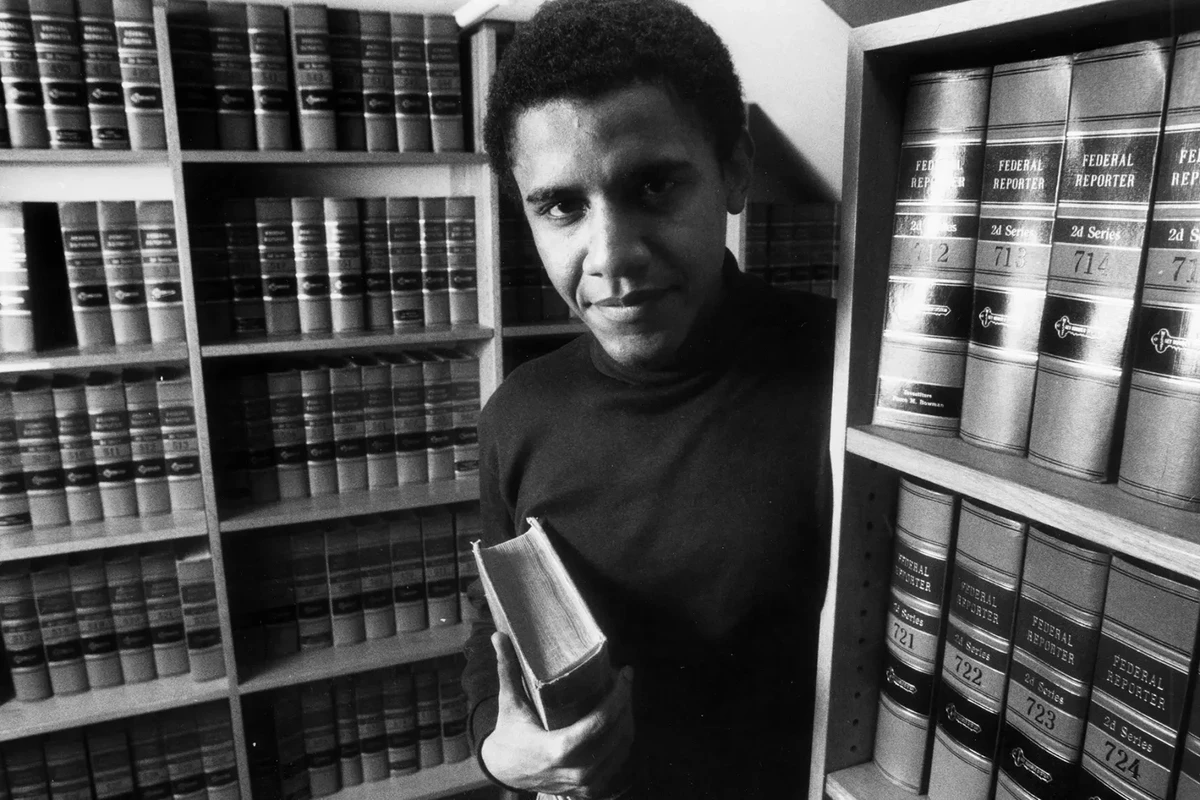

Barack Obama will discuss a half-dozen of his favorite books on a new six-episode podcast coming exclusively to Audible in September.
A Great Book With Barack Obama will find the former president and yet-to-be-announced guests talking about six books that profoundly shaped his worldview and our society. Among the titles chosen by Obama are Cormac McCarthy’s All the Pretty Horses, Toni Morrison’s Song of Solomon, and Robert Penn Warren’s All the King’s Men.
“Great books have always helped me figure out who I am and what I believe. The six books featured in this series have stayed with me throughout my life, and each one has something to teach us about the human experience,” Obama said in a statement.
“For this podcast, I invited some friends to explore why they resonate, how they can shape our understanding of ourselves and each other, and why literature matters now more than ever. I hope listeners will be inspired to discover or rediscover books that change the way they see themselves and the world.”

The other three books featured in the podcast’s first six episodes are John le Carré’s spy novel Tinker Tailor Soldier Spy, James Baldwin’s The Fire Next Time, and the most recently penned book in the podcast series, Marilynne Robinson’s Pulitzer-winning 2004 book Gilead. (Obama has long praised Gilead as one of his favorite books, and even interviewed — while president — Robinson about the book for the New York Review of Books in 2015 when Obama visited Des Moines, where Robinson was teaching at the University of Iowa.)
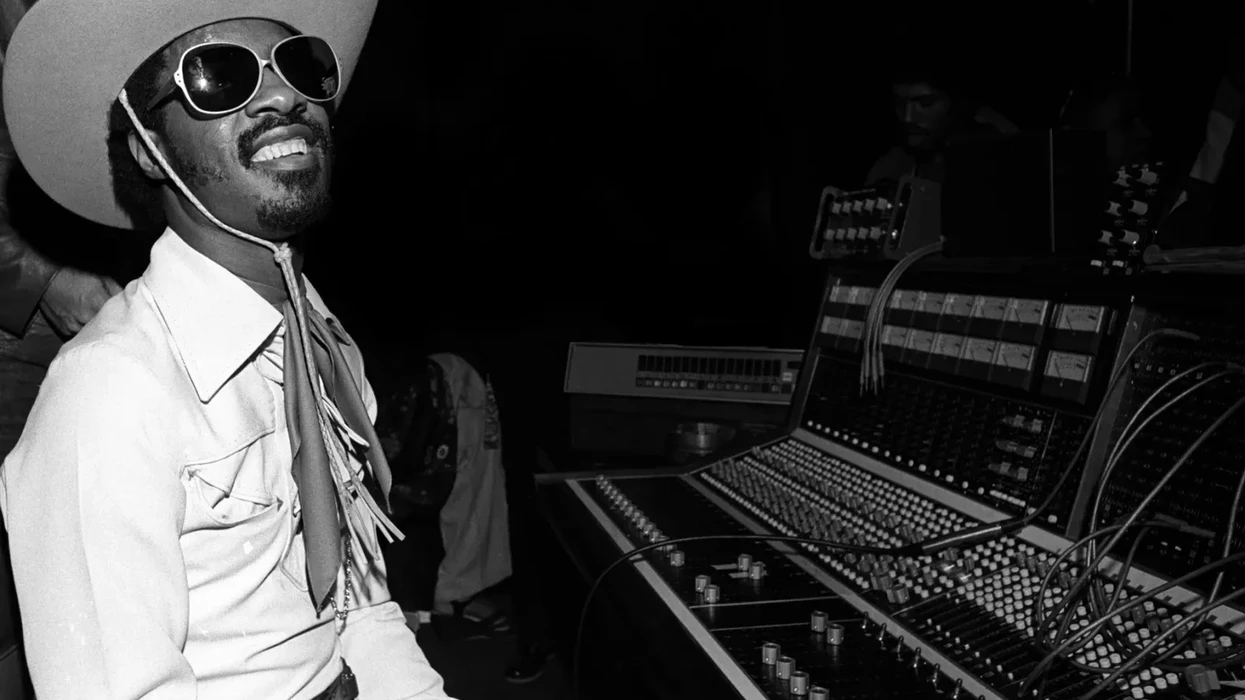
A Great Book, premiering Sept. 24, marks the sixth project between Audible and the Obamas’ Higher Ground, which includes Michelle Obama: The Light Podcast and podcasts dedicated to Stevie Wonder (The Wonder of Stevie) and Fela Kuti (Fear No Man).
“President Obama has a remarkable ability to connect books to the questions of who we are and how we see the world,” Rachel Ghiazza, chief content officer at Audible, said in a statement. “In A Great Book, he invites us into deeply personal conversations about books that have shaped not only a president, but also a person and citizen. This series represents everything we strive for at Audible: connecting listeners with transformative storytelling through the intimacy of audio.”



Romana Didulo and her followers took over a decommissioned school in Saskatchewan and painted it purple. Zander Sherman
Many of Didulo’s followers found her through her videos and other social media channels.
Didulo speaks at a protest of Covid vaccine mandates on Parliament Hill in Ottawa, Ontario, Canada Feb. 3, 2022. Patrick Doyle/REUTERS
Ashley St. Germaine is a senior investigative officer with the RCMP in Regina, Saskatchewan.
Brad Miller was mayor of Richmound, a prairie town of about 120 people, when Didulo and her followers moved into the old school.Zander Sherman
After the encounters with the Kingdom, Miller sleeps with a firearm under his bed.
After Didulo and her followers moved into the old school, a fence was constructed around the property.
Didulo and several followers were arrested in 2025 during a raid on the school.Shawn Mullin/Swift Current Online


Cherry Torres, Jay Armstrong Johnson, Jimin Moon, Ryan Duncan, and Ryann Redmond Matthew Murphy*
Cherry Torres, Jimin Moon, Ryann Redmond, Jay Armstrong Johnson, and Ryan Duncan Marc J Franklin*
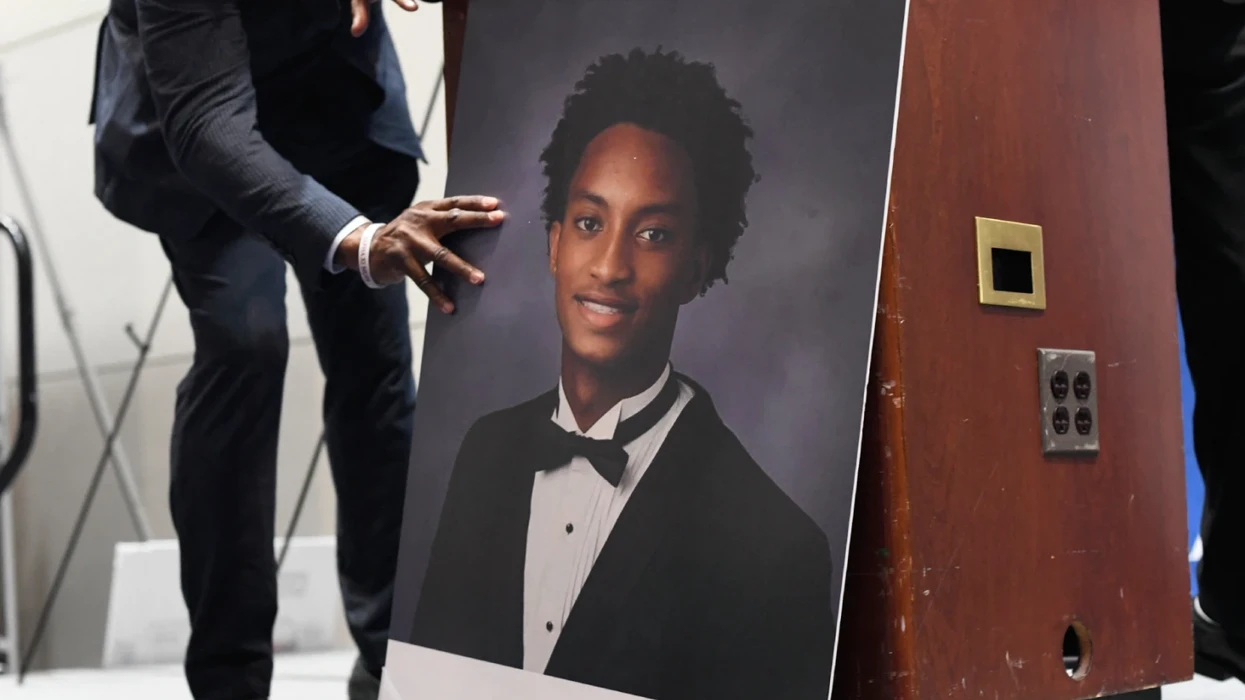
Christine Wonsley with her husband, Elmore (second from left), attorney Ben Crump (left), and Rev. Al Sharpton (right), during a memorial service for her son Nolan Xavier Wells.Gerald Herbert/AP
Donald Trump and FIFA President Gianni Infantino stand as Spain celebrates its World Cup victory, on July 19, 2026.
America Got the World Cup It Deserves — Good and Bad
For the past six weeks or so I’ve been having a recurring fight with my friends. The dispute is over whether or not it’s ethical to support the U.S. national team in the World Cup.
To the vast majority of people reading this article, this is an absurd question: of course you can and should support the United States Men’s National Team, you weirdo. And look, I’m with you. But despite the fact that my friends are pompous dorks who are no fun to watch the game with, the question they raise is valid: Are our national teams avatars of the administration in power, or of the people and promise of that country?
If you believe the former, then yeah, it’s pretty fucking weird to support the USMNT. In doing so, by that thinking, you’d be engaging in a sort of athletic nationalism on behalf of a country run by Donald Trump, the most corrupt president in history, who forced the Iranian national team to flee across the border immediately after the final whistle of each of their games, whose federal police have shot numerous civilians dead in the street during a brutal immigration crackdown, who has started a war and supported a genocide while covering up his close personal friendship with the most notorious pedophile in modern history.
I mean just look at him. On Sunday he waddled down onto the field to present Spain with their trophy, lingering on stage with the victorious team as they tried to celebrate. The presence of Mexican President Claudia Steinbaum and Canadian Prime Minister Mark Carney did little to dilute the image of Trump standing next to his crony Gianni Infantino, grinning at all the trappings of their power, hands caressing a trophy they’d done nothing to earn, lingering well past his cue to leave Spain to their glory. This World Cup, literally, had Donald Trump’s fingerprints all over it.
And yet, this was one of the most thrilling, beautiful World Cups in recent memory. That’s America, baby — contradictions abound.
Over the past five weeks of the greatest athletic competition on Earth, we’ve seen games that will literally never leave my memory. The final, which I attended yesterday in New Jersey, was remarkably forgettable — a 0-0 draw until the 106th minute, with Spain dominating every second of play and yet unable to score, undone time and time again by their insistence on tricksy passing and the personal heroics of Argentina’s goalkeeper Emi Martinez. The rest of the tournament, however, delivered. Cabo Verde, refusing to lose until the very last moments of the first knockout round, battling back again and again against both teams that would eventually play in the final. The sheer dominance of France’s Kylian Mbappe in front of goal, scoring at will, rivaled only by the aging GOAT Leo Messi and the Norwegian warlord Erling Haaland. England’s heroic stand at the Estadio Azteca in Mexico City, 45 minutes in the rain, a man down, holding out for the win and singing “Wonderwall” with what felt like half the stadium when it ended. Off the pitch, too: the Algerian national team being welcomed with open arms by Lawrence, Kansas; Scottish braves drinking Boston dry and partying wildly with Haitian fans that overcame so much just to be at the tournament. In Mexico, of course, the World Cup was everything, and its fans threw joyous South Koreans pumped full of tequila into the air, and celebrated in the streets with opposing fans even after their hard-fought defeat to England.
For the United States, what the 2026 World Cup was — what our team was, what our fans were, what our performance as hosts was — is a reflection of two things at once: what our nation is and what it can be.
Our star striker, Folarin Balogun, was born here by accident, a citizen only because of a birthright system that our president is currently trying to erase. We have Ricardo and Giovanni and Freeman and Zendejas. We have another striker whose name is Haji, for goodness sake. I look at that team and I see the country America can be, one in which any soul born in or living within our arbitrary borders can become part of a great national project that seeks to improve the lives of everyone it can. And yet, I can also look at that team and see a reflection of what the country is, because there is an anchor around its neck. When Balogun was — albeit unjustly — suspended for a crucial match, Trump himself stepped in. Cronyism saved the day and got Balogun reinstated, but ruined the fragile harmony the team had enjoyed. On the pitch against Belgium, they came apart. Temperamental star Christian Pulisic tried to go alone and then quit, aging defender Tim Ream’s legs failed him when he needed them most, a young goalkeeper slipped and fell when he had no good options for support.
What more can you say about a team, about our country? The team is an entity that is capable of more but still has so far to go, that is vulnerable to the same forces of avarice and selfishness and fear that plague our national identity writ large.
It’s possible to end the story there, to say good riddance to another failed year and fractured team. But I think that’s a mistake. I think if you believe that you haven’t really been watching. I think that’s also why it pissed me off so much that some of my friends wouldn’t root for the U.S. Yes, we have flaws, like every country involved in the tournament. Yes, our current team management and political government are filled with morons. But if you won’t put on the shirt you’re essentially opting out of our future. We can’t wait around for a better world, a better team, a better president, before we deign to lend our support. Progress only comes from effort, from caring, from believing in something more.
One of my favorite images of the World Cup was a crowd shot of the opening match against Paraguay in Los Angeles: every race, color and creed of American there is, all covered in red white and blue. It’s corny and trite, sure. But that’s what it’s all about. That’s why we’re here. You have to believe. The U.S. won that game 4-2. In four years, we’ll be even better.