
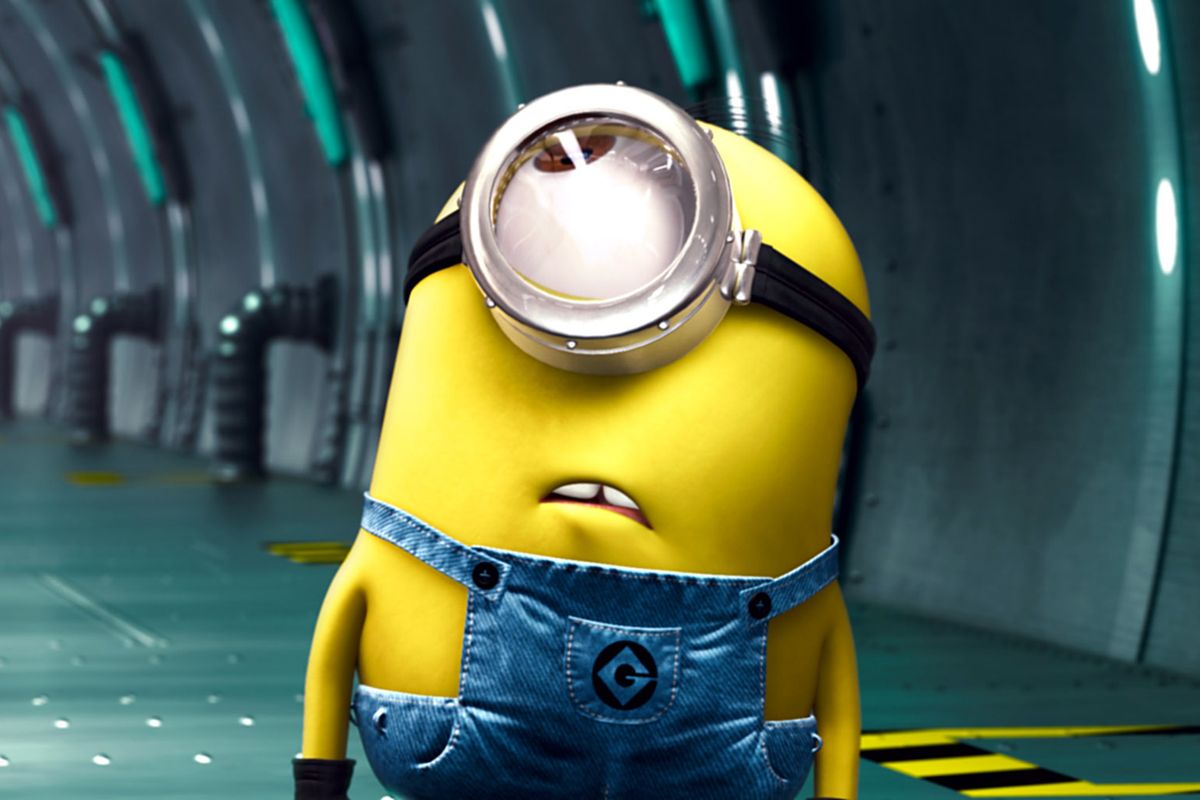

“If you love Minions, don’t scroll,” the woman in the video gently implores. She points to an image of a minion, the bean-shaped, noseless, bespectacled yellow creatures form the Despicable Me franchise, washing the feet of another minion. Both minions are clad in robes and look like extras in Jesus Christ Superstar.
“Right above me is a picture of a minion washing another minion’s feet,” the woman, singer/songwriter Kalkidan Radford, says serenely. “But we both know a minion never did that. But let me tell you who did: Jesus.” Radford goes on to invite her followers to accept Jesus into their hearts and to leave a comment to that effect, encouraging them to subscribe to learn more.
@kalkidanradfordtv No one can do what Jesus did 🥹😇 #christiantiktok #fypシ #jesus #viral #christian #god
To say the purpose of the video is unclear is an understatement. Is it AI engagement bait? An earnest attempt at preaching the gospel? A wildly misguided branded content campaign for Despicable Me 4? Those commenting on Radford’s video are equally befuddled. “How do you know a minion never did that? They are complex,” one comment challenges. Another gets more to the point: “Ok but can I please have the Minion feet in my mouth.”
What’s even more befuddling is the template for Radford’s video — essentially, a creator using an AI-generated photo of a minion made to resemble Jesus Christ on a cross, or washing an acolyte’s feet, or touching the hem of another minion’s garment — has been replicated across short-form video platforms by dozens of other Christian creators, almost word-for-word. Some of the videos introduce the images by explaining that “an animator was fooling around” and accidentally produced the image, as if producing an image of a Universal Studios mascot being crucified is something that happens as easily as tripping on a shoelace. Others take the time to describe the image in almost absurdist detail, such as the nails penetrating the minion’s “three little yellow fingers,” or the crown of thorns encircling his dome. But all of them utilize a similar bait-and-switch: sure, a minion may not have died for your sins, but you know who did? Jesus Christ. And if that message (somehow) resonates with you, then feel free to like, comment, and subscribe.
The rise of the Christian minion memes on TikTok and, to some extent, Instagram, has perplexed many on the internet. Some have attributed the bizarrely repetitive nature of the videos to the “dead internet theory,” or the idea that nothing on the internet is genuine and everything is generated and reproduced by artificial intelligence or bots; others have speculated that all of the influencers may be working in concert to proselytize using the same specific iconography.
The popularity of the crucified Minion videos echoes that of the AI-generated “shrimp Jesus” meme, an unsettling amalgam of Jesus Christ and a crustacean that briefly went viral on Facebook, spawning discourse about the rise of AI-generated spam and engagement farming. Though many commenters have speculated as to whether the Minion videos are similarly AI-generated, they appear not to be, though that’s not to say that AI was not used in the “creation, editing, and post-production” of the clips, a spokesperson for the deepfake detection software company Reality Defender tells Rolling Stone.
What everyone can agree on, however, is the following: 1) the videos get a fair amount of engagement (one, by digital marketer and self-described Christian influencer Traci Coston, has more than 132,000 views on TikTok alone), and 2) they’re very weird. “They’re using this technique that tends to work really well on short-form video platforms where you have some kind of eye-grabbing imagery on the top and the person speaking on the bottom,” says Don Caldwell, the editor-in-chief of the meme explainer database Know Your Meme. These kinds of videos videos, such as the viral clips using footage from the mobile app Subway Surfer, capitalize on viewers’ short attention spans by marrying storytelling with compelling imagery, thus boosting watch time, explains Caldwell: “Then you’ve got something similar going on with the image of a minion being crucified. It’s just so odd.”
According to Caldwell, the most widely circulated image in the minion TikToks — that of a minion expiring on a cross — is not AI, but a 3D rendering made by an artist named Americo Cruz, who posted it on Facebook in 2021 with the caption, “in minions we trust.” The image went moderately viral, in part because it was referencing a rich internet history of Facebook users — mostly boomers — making inane minion memes. “There were all these Facebook posts associated with moms posting some kind of platitude with a minion in the background,” says Caldwell. “And then there were all these ironic memes that came from that.”
What differentiates the crucifixion Minion memes, however, is that they don’t appear to be ironic at all — on the contrary, they seem pretty serious. Though none of the content creators I reached out to responded to a request for comment, the memes appear to be using the iconography of irony-poisoned millennials and zoomers to deliver an earnest message about Jesus Christ, sort of like how your youth pastor might have used Simpsons quotes in his sermons.
The use of mainstream cultural iconography in proselytization is not at all uncommon on social media. (It’s not even uncommon with respect to the Despicable Me franchise specifically: as Slate reported in 2020, there’s a pretty thriving community of evangelical shitposters on Facebook and Pinterest, resulting in the rather jarring experience of seeing a quote from Scripture emblazoned above an image of a Minion in a thong.) Caldwell points out that the crucified minion TikToks are not dissimilar to the so-called “Mormon MomTok” trend, in which young women born in the Church post a mixture of dances, sketches, and implicit or explicit endorsements of the Church.
So are the Minion-on-a-cross videos actually intended as tools of proselytization? If they are, Caldwell speculates, he doesn’t think they’re effective: “I would wager that this isn’t getting any people to convert to Christianity or renew their faith or anything like that. I think it’s mostly based around the attention economy.” But what is the attention economy if not a form of proselytization in itself? And after all, if just one person is moved by the plight of a crucified Minion to stop scrolling and listen to the good word before accepting Jesus Christ as their lord and savior — or, at the very least, is moved enough to leave a horny comment about wanting dirty yellow Minion feet in their mouth — then maybe, for these influencers, it’s worth the effort.








 David Manheim and Hunter Biden Courtesy of David Manheim
Everybody Likes Drake Again. That Means We’re Healing