Skip to content
Search

Is the Return of ‘Shōgun’ a Good Thing?

Is the Return of ‘Shōgun’ a Good Thing?

“Accepting death isn’t surrender. Flowers are only flowers because they fall.”

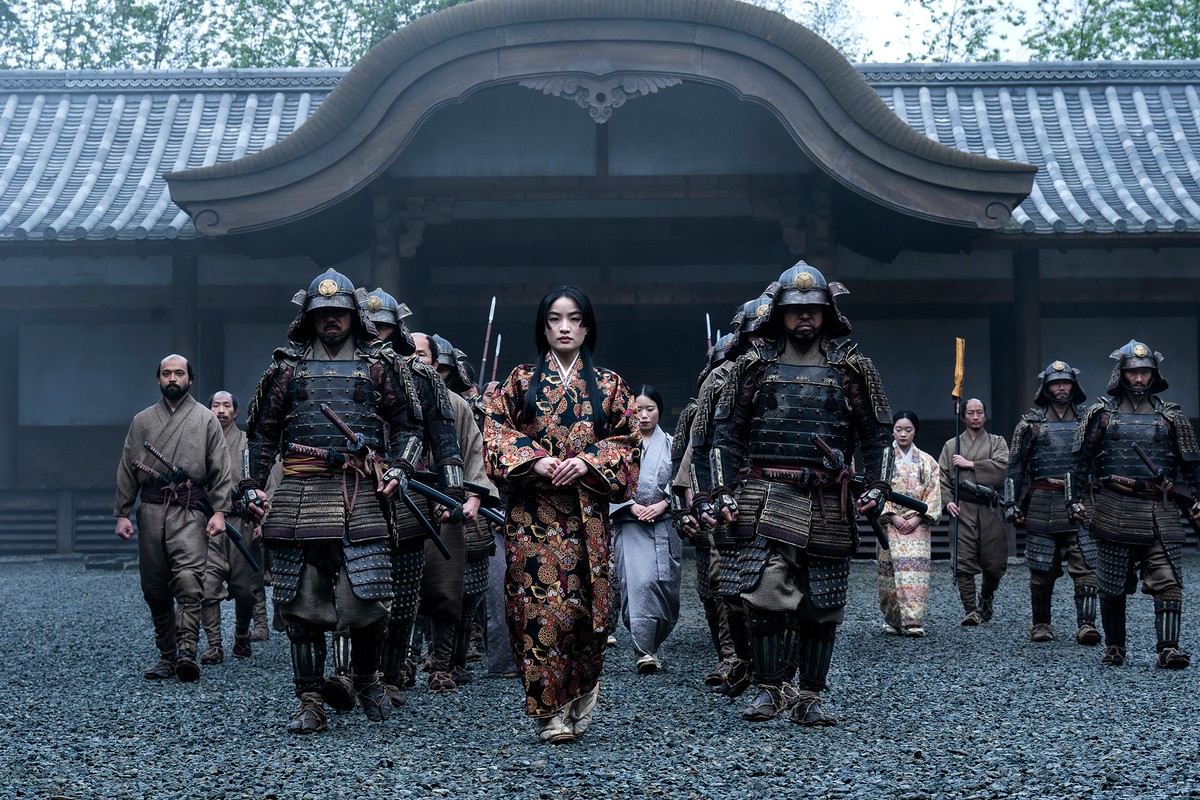
This is Toda Mariko in the penultimate episode of Shōgun, FX’s epic adaptation of James Clavell’s novel about a civil war in feudal Japan. Mariko says this because (spoiler alert) she knows that she is the flower who is about to fall, not only accepting her impending demise, but welcoming it. 


But the people who made Shōgun don’t seem as willing to accept the series’ death. Though its 10 episodes covered the entirety of Clavell’s book, in May, the parties involved put out a statement declaring that “FX, Hulu, and the Estate of James Clavell are working to extend … the saga with two additional seasons of the drama series.” The phrasing suggests these two seasons aren’t guaranteed: Producers Justin Marks and Rachel Kondo are running a writers room this summer to figure out how, or perhaps if, they can continue a story they seemingly finished. 

The announcement qualified as one of the least surprising showbiz developments in recent memory — and one we greet with a mixture of both cautious optimism and faint dread. Shōgun is the early front-runner for best TV show of 2024, and FX says it’s the network’s “most watched show ever based on global hours streamed.” Nobody says goodbye to a hit if they can help it(*), even if there’s no obvious story left to tell. HBO’s Big Little Lies similarly recounted the whole plot of the novel that inspired it, got big audiences, acclaim, and awards, and came back only because it seemed silly not to try. But even with the addition of Meryl Streep, the second season struggled to justify its existence. (There’s somehow still talk of a third season, because who is going to say no to the combined forces of Nicole Kidman, Reese Witherspoon, and Laura Dern?) 

(*) In this case, it also helped that the drama series field at the Emmys was as wide-open as it’s been in decades, while the limited series categories were fairly crowded. By announcing potential future seasons, FX got to submit as a drama, and received a whopping 25 nominations.

TV history is unfortunately littered with series that could have been immortal had they ended after their first years, but instead stuck around long past the point at which anyone had any interest. In a sliding-doors reality, Showtime’s Homeland ends after a single season with Damian Lewis blowing himself up in a terrorist attack, and it goes right to the hall of fame; instead, it was so popular that it galumphed along for seven more seasons — eventually, after a long creative drought, reinventing itself as a slightly classier 24

On occasion, a seemingly unwise continuation turns out to be brilliant. HBO’s The Leftovers also finished adapting a book by the end of its first season; the next two installments, which told new, audacious stories set in the same grief-stricken world as the novel, put it on the short list of all-time greatest TV dramas. The first season of NBC’s high school football drama Friday Night Lights very loosely fictionalized H.G. Bissinger’s book, then followed with one of the worst second seasons you will ever see, including a wildly off-brand subplot where two of the kids covered up a murder. Yet it rebounded with additional seasons that were on par with the first. Phoebe Waller-Bridge used up most of the material from her one-woman stage show in Fleabag’s first season, but was able to eventually write an even more iconic second batch of episodes that felt like a miracle.

Television, by its very nature, tends to defy restraint: If the audience is willing and there’s money to be made, then shows will keep coming back. Some shows benefit from this model, particularly shows with big ensembles and/or ones with some kind of distinct episodic hook, and the gradual but inescapable shrinking of seasons, and series, has cost television a lot of what makes it distinct and special. But with other shows, particularly intensely serialized ones, and/or ones based on close-ended material, the more episodes you make, the harder it is to maintain the quality with which you began. This reality can manifest itself in minor disappointment, like Russian Doll following its immaculate first season with a much messier but still entertaining second. Or it can lead to embarrassing calamities, like everything that followed the first year of Heroes.  

Game of Thrones, one of the few series ever produced on a scale bigger than Shōgun, got into trouble toward the end, when George R.R. Martin ran out of novels for the showrunners to lean on. Some of the show’s best moments in its glory years were a result of the producers going off-book, like Arya Stark and Tywin Lannister meeting in the ruined castle of Harrenhal, or Jon Snow witnessing the White Walkers’ zombie attack on Hardhome. But such memorable scenes were the exception rather than the rule.

Few pop-culture pleasures are more deeply satisfying than a work of art that knows exactly when, and how, to end. Would a Fleabag that continued after the Hot Priest’s exit still have been entertaining? Possibly. But by having Fleabag herself turn to the audience and wave goodbye, it became transcendent.  

Marks and Kondo already told us how Lord Yoshii Toranaga would win the war, and there is a huge risk that showing it to us, rather than adapting one of Clavell’s other Japanese novels, will rob the original ending of its power. But if Mariko can bring down the ruler of Japan with little more than a poem, maybe additional Shōgun seasons can defy TV history, and make us happy the flowers haven’t all fallen just yet. 
More Stories

Marketer Behind Fake Quotes in ‘Megalopolis’ Trailer Dropped by Lionsgate

Marketer Behind Fake Quotes in ‘Megalopolis’ Trailer Dropped by Lionsgate

Eddie Egan, a very real marketing consultant, lost his gig with Lionsgate this week after the studio discovered that quotes he used in a trailer for Francis Ford Coppola’s Megalopolis were fabricated, according to Variety.

The conceit behind the teaser, which Lionsgate recalled on Wednesday, was that critics had trashed Coppola’s masterpieces throughout the decades, so why trust them? Except that the critics quoted didn’t actually write any of the pith. A quote attributed to Pauline Kael that was said to have run in The New Yorker, claiming The Godfather was “diminished by its artsiness,” never ran.

Keep Reading Show less
Can the Best of Star Wars Survive the Worst of Its Fans?

Can the Best of Star Wars Survive the Worst of Its Fans?

When George Lucas debuted his science fiction epic about a galaxy far far away in 1977, Star Wars went from a long-shot space opera into the highest grossing science fiction franchise of all time. Almost 50 years and one sale to entertainment conglomerate Disney later, Star Wars isn’t just a one-off world. There have been prequels, reboots, stand-alone television series, and an in-depth theme park addition. But like most popular culture, the Star Wars fandom, especially online, has become inundated with loud, conservative, and in some cases, incredibly racist voices. While Disney has never said these voices are directly impacting what shows get made, the vocal minority of Star Wars devotees keep limiting what they’ll accept as true Star Wars. These fans say they’re fighting for Star Wars’ future. But if their endless fantasy world can’t accept any stories that they don’t recognize — some of the self-professed biggest fans in all the worlds could be closing themselves off to any future at all. What is crystal (kyber?) clear is that before Star Wars can have another successful show, the loudest voices online need to realize the Star Wars they want to return to never existed in the first place. Will the real Star Wars please stand up? 

Much of the online discourse around Star Wars has centered on the franchise’s most recent live action projects. First premiering in 2019, these include The MandalorianThe Book of Boba Fett, Ahsoka, Obi-Wan Kenobi, Andor, and The Acolyte. The market has been oversaturated with stories, especially many that occur within the same time frames, with fans frankly, getting tired and in some cases — outright bored. Each of the projects has had its own reception — and own problems. However the low audience scores, angry YouTube rants, and long Reddit threads can really boil down to one question: who determines what’s real Star Wars? First as a film, and then a trilogy, Star Wars established early on to viewers that even when they were focused on a set of powerful twins and a dark Empire, shit was going down on literally every other planet. This freedom has allowed for endless story arcs across decades. But while opportunities have been endless — the patience of fans hasn’t. 

Keep Reading Show less
Bob Mould and Fred Armisen Help the 8G Band Sign Off ‘Seth Meyers’ With Hüsker Dü Cover

Bob Mould and Fred Armisen Help the 8G Band Sign Off ‘Seth Meyers’ With Hüsker Dü Cover

Bob Mould and Fred Armisen helped the 8G Band close out their tenure as the Late Night With Seth Meyers house band last night.

Mould fronted the group as they tore through a cover of Hüsker Dü’s classic, “Makes No Sense At All,” from the pioneering punk group’s 1985 album Flip Your Wig. Armisen, meanwhile, took his spot behind the drums and belted backing vocals alongside keyboardist Eli Janney, guitarist Seth Jabour, and bassist Syd Butler.

Keep Reading Show less
J Balvin to Make Acting Debut in Crime Drama About a Fishing Village-Turned-Smuggling Hub

J Balvin to Make Acting Debut in Crime Drama About a Fishing Village-Turned-Smuggling Hub

J Balvin will make his big screen debut as an Interpol investigator digging into a drug smuggling operation in the upcoming film, Little Lorraine, according to Variety

The film appears to be loosely based on real events in the Eighties, and will chronicle how a far-flung fishing and mining village in Nova Scotia became a hub for cocaine smuggling. Balvin’s Interpol investigator is drawn up north while investigating a Colombian drug ring suspected of moving product through the area.

Keep Reading Show less
Watch Jon Stewart Recap the Democratic National Convention: ‘What a Night for Kamala Harris’

Watch Jon Stewart Recap the Democratic National Convention: ‘What a Night for Kamala Harris’

Kamala Harris accepted the Democrats’ nomination for president last night at the Democratic National Convention in Chicago, but not without some commentary from Republican nominee Donald Trump. Jon Stewart had some thoughts about all of it as he broadcast The Daily Show live from the DNC, ultimately concluding that Trump has “morphed into a poor man’s cat turd.”

During the episode, Stewart started off by addressing the disappointment from fans that Beyoncé didn’t show at the convention. Joking that there would be a special guest, he showed a clip of Michigan rep Elissa Slotkin at the DNC. “You thought it was Beyoncé because everyone thought that it was going to be Beyoncé coming out there, but it was Slotkin all along,” Steward confirmed. “Everybody knew.”

Keep Reading Show less