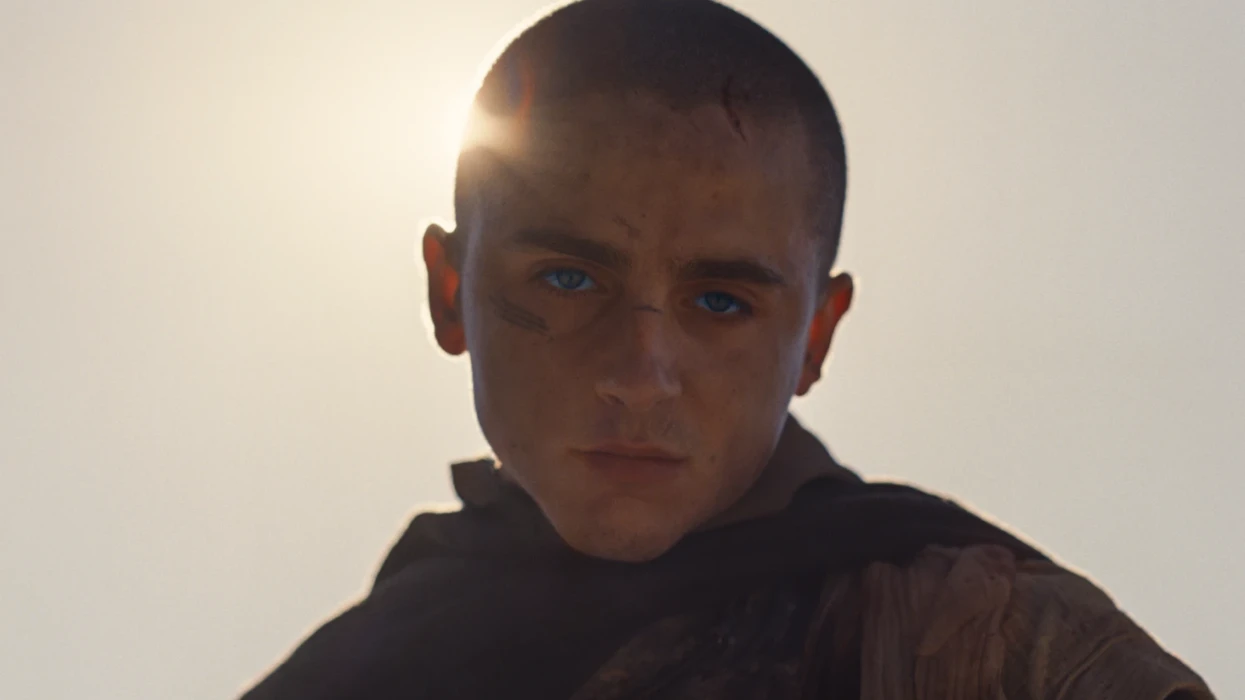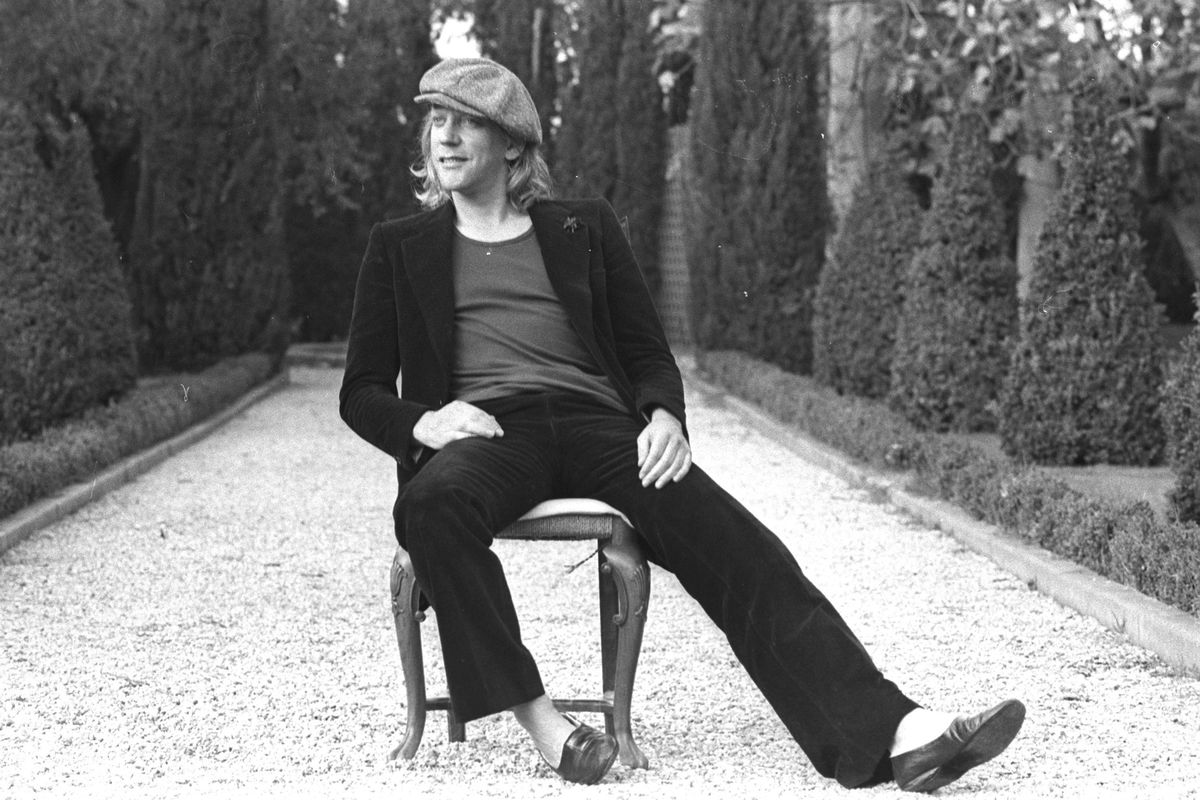

Donald Sutherland, a beloved film presence for more than 50 years whose warm, rich voice was as distinctive as the regal bearing he brought to so many of his roles, died Thursday at the age of 88.
Sutherland’s agency CAA confirmed the actor’s death to the Hollywood Reporter, adding that he died in Miami following a long illness. Sutherland’s son Kiefer also revealed his father’s death on social media, writing, “With a heavy heart, I tell you that my father, Donald Sutherland, has passed away. I personally think one of the most important actors in the history of film. Never daunted by a role, good, bad or ugly. He loved what he did and did what he loved, and one can never ask for more than that. A life well lived.”
The epitome of a first-class character actor — always reliable, yet often surprising — Sutherland represented several Hollywood eras, coming up during the 1960s when the industry was entering a period of existential uncertainty, becoming a star during the 1970s counterculture renaissance, and then transitioning into a respected elder statesman, his effortless authenticity enlivening every film in which he appeared, whether it was as the mysterious whistleblower in JFK or the scheming President Snow in the Hunger Games films.
But his greatest stretch of performances started with 1970’s MASH, in which he introduced the acerbic Hawkeye Pierce to the world, and continuing with his work as Detective John Klute in Klute and the troubled husband John Baxter in the psychological horror film Don’t Look Now. Each character terrific yet very different from one another, they set in motion the range of roles (and films) Sutherland would tackle throughout his career. (Few actors can lay claim to being part of a signature generational comedy and then a somber, Oscar-winning family drama within the span of two years, but he pulled off that feat with National Lampoon’s Animal House and Ordinary People.)
Not bad for a man who initially thought he’d pursue a different art form before realizing it would be a mistake. “I knew I wasn’t going to be a sculptor,” he told Rolling Stone in 2018. “I needed the response. I needed an audience.”
Born in July 1935 in New Brunswick, Canada, Donald McNichol Sutherland was a sickly child, battling polio, pneumonia and scarlet fever, among other diseases, as a boy. (He claimed that, because of spinal meningitis, “I died for four or five seconds.”) Sutherland studied engineering at the University of Toronto, but he developed an interest in acting, becoming involved with the student theater troupe UC Follies at Hart House Theatre before heading to London and Scotland to hone his craft.
His earliest film roles included a 1964 Christopher Lee horror flick called Castle of the Living Dead, but his first real break came when he was cast in the war film The Dirty Dozen, where he played one of the titular 12 commandos, Vernon Pinkley. It was supposed to be a small part, but he got promoted when costar Clint Walker, who was Native American, objected to doing a scene where he impersonates a U.S. general, prompting director Robert Aldrich to give the memorable moment to Sutherland’s character instead.
The scene-stealing sequence paved the way for him being cast in an anarchic 1970 war comedy called MASH, where he was paired up with Elliott Gould as Korean War surgeons trying to stay sane amidst the insanity, blood and death. One of the early landmarks of the so-called New Hollywood era, Robert Altman’s bruising satire captured Sutherland’s exquisite sardonic side — not to mention his ability to wield his lanky 6’4” frame with an almost balletic grace.
The film, which was set in the past but clearly meant to comment on the contemporary Vietnam War, eventually became a popular, long-running sitcom, and years later, Sutherland still fondly remembered meeting Alan Alda, who played Hawkeye on the show. “He said, ‘My name is Alan Alda and I want to thank you for my life,’” Sutherland recalled. “And I thought, ‘That’s about as charming and as lovely and as generous as you can be.’”
His subsequent work in Klute and Don’t Look Now found him working alongside two of the most iconic actresses of the age — Jane Fonda and Julie Christie — in complicated, grownup relationship dramas that doubled as tense, intelligent thrillers. The latter contains one of the most sensual of all sex scenes, but Sutherland forever insisted that there was nothing voyeuristic or tawdry about the way he and Christie played it.
“Don’t Look Now was a depiction of married intimacy,” he once said, later adding, “You don’t watch people making love. What happens when you watch it is you remember having made love, having been in love yourself.” Even so, his portrayal of a grief-stricken husband reeling from the tragic drowning of his son remains one of his most piercing, leading to as shocking a finale as any in all of cinema.
It was Sutherland’s ability to convey a common touch that served him so well in his many everyman roles — which only heightened the horror in the 1978 remake of Invasion of the Body Snatchers and the hilarity of Animal House, where he played a groovy, pot-smoking professor, which came out the same year. (Speaking of Invasion of the Body Snatchers, the film’s chilling ending, where it’s revealed that Sutherland’s character has become part of the Pod, pointing and shrieking, decades later turned the actor’s frozen scream into a ubiquitous internet meme.)
Constantly working, Sutherland seemed to tap into something deeply personal for the Best Picture-winning Ordinary People, where he played Calvin, an emotionally distant father rendered inert by his son’s death and the growing clash between his domineering wife (Mary Tyler Moore) and his suicidal surviving son (Timothy Hutton). Sutherland drew from his own difficult relationship with his salesman father.
“He was hard to deal with,” Sutherland admitted in 2014, calling him “possibly the most self-centered individual I’ve ever met. … The problem is, he was my father and I wanted to please him. But yes, the minute I found success — pretty much after MASH was released, he didn’t do anything but complain about me.”
In subsequent decades, he focused more on supporting roles, and by the ‘90s, he began to establish himself as a favorite of casting agents looking for warm paternal figures, playing business leaders, bosses and mentors. His one-scene appearance in Oliver Stone’s jittery conspiracy thriller JFK, portraying a government man with insider information for Kevin Costner’s Jim Garrison, was a highlight of that hallucinatory Oscar-winner, but he was equally sterling in the underrated 1998 Steve Prefontaine biopic Without Limits, in which his Bill Bowerman is the platonic ideal of the tough-love coach, pushing the long-distance runner to greater glory.
Sutherland’s Without Limits co-star Billy Crudup said in a statement to Rolling Stone, “I had the rare and memorable opportunity to work with Donald Sutherland early in my career. His passionate, articulate care for the work was special. Watching Donald and Robert Towne and Conrad Hall labor over how best to find the truth of any given moment, was a lesson that has grown ruthlessly in my imagination for 25 years. I will forever be grateful to have been in such close proximity to a determined master of his craft. And his laugh was as piercing as his stare.”
By this stage of his career, Sutherland’s notoriety was being slightly eclipsed by his eldest son Kiefer’s. (He has two other sons, Rossif and Roeg, who are also actors.) But during that decade, Sutherland won his first Golden Globe, for the HBO movie Citizen X, and appeared in the 1996 courtroom drama A Time to Kill alongside his son Kiefer. (Not growing up around Sutherland, Kiefer only started watching Donald’s more adult films when he was 18, calling his dad in tears: “I was so embarrassed that I didn’t know what an important actor he was. And I considered myself a serious actor. So that was very embarrassing and I apologized for that and he was so sweet, he said ‘Oh my God, that’s okay, it’s not your fault, how would you know?’”)
Although Sutherland famously claimed not to watch his movies after he shot them, he amassed a formidable résumé, working with everyone from Paul Mazursky to Bernardo Bertolucci to Federico Fellini to Nicolas Roeg to James Gray. Collaborating with director John Frankenheimer, he earned his second Golden Globe for his role in the 2002 Vietnam War-era HBO drama Path to War, and his soothing voice provided the narration for Simply Orange television commercials. He also co-starred alongside Kate Bush in the music video for that singer’s “Cloudbusting”:
As for Katniss Everdeen fans, they adored him for his portrayal of the evil President Coriolanus Snow in the popular dystopian YA franchise. (He got the part by reading the script for The Hunger Games and writing the producers a letter. “I thought it was an incredibly important film, and I wanted to be a part of it,” he later explained. “I thought it could wake up an electorate that had been dormant since the ’70s.”)
Politically outspoken and a supporter of left-leaning causes, Sutherland was a forceful advocate for the dangers of climate change. But he also had an endearing penchant for ribald humor, once affectionally calling his wife of 52 years, Francine, “one of the great farters of the world.” In his 80s, he was asked about his thoughts on mortality. “I am old, but I don’t feel old,” he replied. “I feel very, very young actually, but my sphincter may be a little old.”
Shockingly, he never received an Academy Award nomination, although he was presented with an honorary Oscar in 2017. “I wish I could say thank you to all of the characters I’ve played,” he said humbly at the ceremony. “Thank them for using their lives to inform my life.” But despite the immense joy he brought to so many moviegoers, Sutherland didn’t consider his work to be fun.
“It’s joyful, it’s passionate, it’s rewarding, it’s a pursuit of truth, but I don’t think of it as fun,” he said in 2016. “It’s not a game. It’s a very serious endeavor for me. It’s not for a lot of people. It was a wonderful job.”