
At a TED talk in 2012, Angela Patton, the CEO of the nonprofit organization Girls for Change, told a story. She was running a summer immersion program in Richmond, Virginia, called Camp Diva. Patton asked the dozen or so attendees if there was something the camp could do to foster a bond between them and their fathers; the goal of the program was to empower young women, and Patton knew that a healthy relationship between girls and their dads was a big part of that. One suggested a dance. The event was such a success that Patton and her team decided to do it annually.
When it came time to plan the gathering the next year, one young woman bemoaned the fact that her father could not attend. He was currently incarcerated, and the idea of watching her campmates dancing with their dads was depressing. One of her fellow Divas wondered: What if we held the dance at the jail? The question became a solution, and the first “Date With Dad” event was born. It was a huge success — so much so that, nearly a decade later, a correctional institution in Washington D.C. decided to try the program out as well.
Patton is also one of the documentarians behind Daughters, along with filmmaker Natalie Rae, and you can see why they’d want to capture this for posterity. A winner at this year’s Sundance Film Festival that was quickly snatched up by Netflix (where it’s now streaming), it presents the perfect opportunity to examine the effects of mass incarceration from a highly subjective viewpoint. Yet neither Patton nor Rae seem interested in preaching, stumping, or simply presenting a vérité infomercial version of that TED talk. They’re less concerned with chronicling a sociological experiment from afar than capturing the experience of — and the need for — human connection up close and personal, with special attention paid to the young women’s side of the equation. It’s called Daughters, and not, say, The Dance or Father’s Day, for a reason.
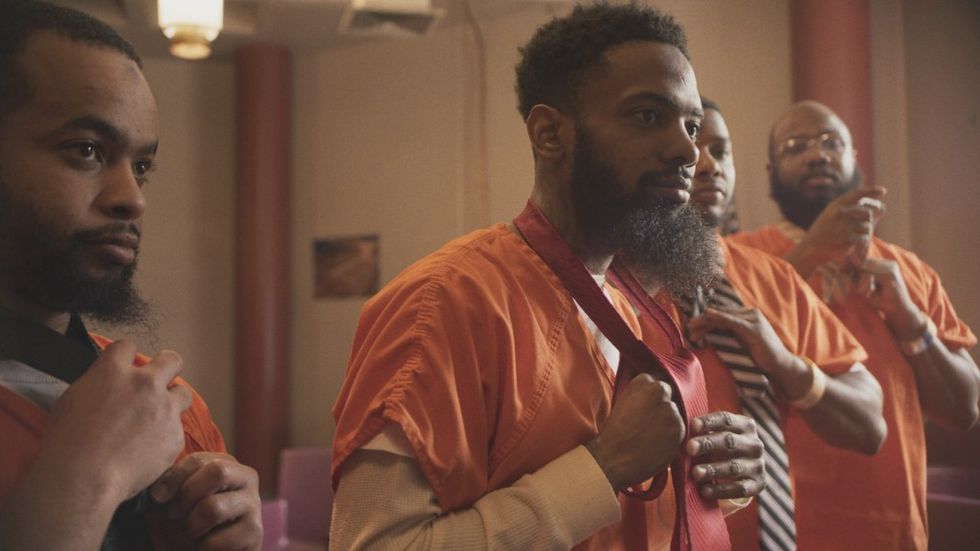
There’s equal time paid to both the men serving time and the family members who’ve had to deal with their absence, for sure. We get to sit in on the mandatory 10-week program, led by a “fatherhood life coach” named Chad, that the dads attend to prep them for the event. We get to hear their stories of regret, sorrow, shame and anger over not being able to be present for their children. How they ended up in the penal system isn’t discussed. Their feelings about all of it, especially concerning their kids, and how they’re determined to make amends are. Some iteration of “Why does my daughter also have to pay for my mistakes” is uttered by almost all of the participants, in one form or another.
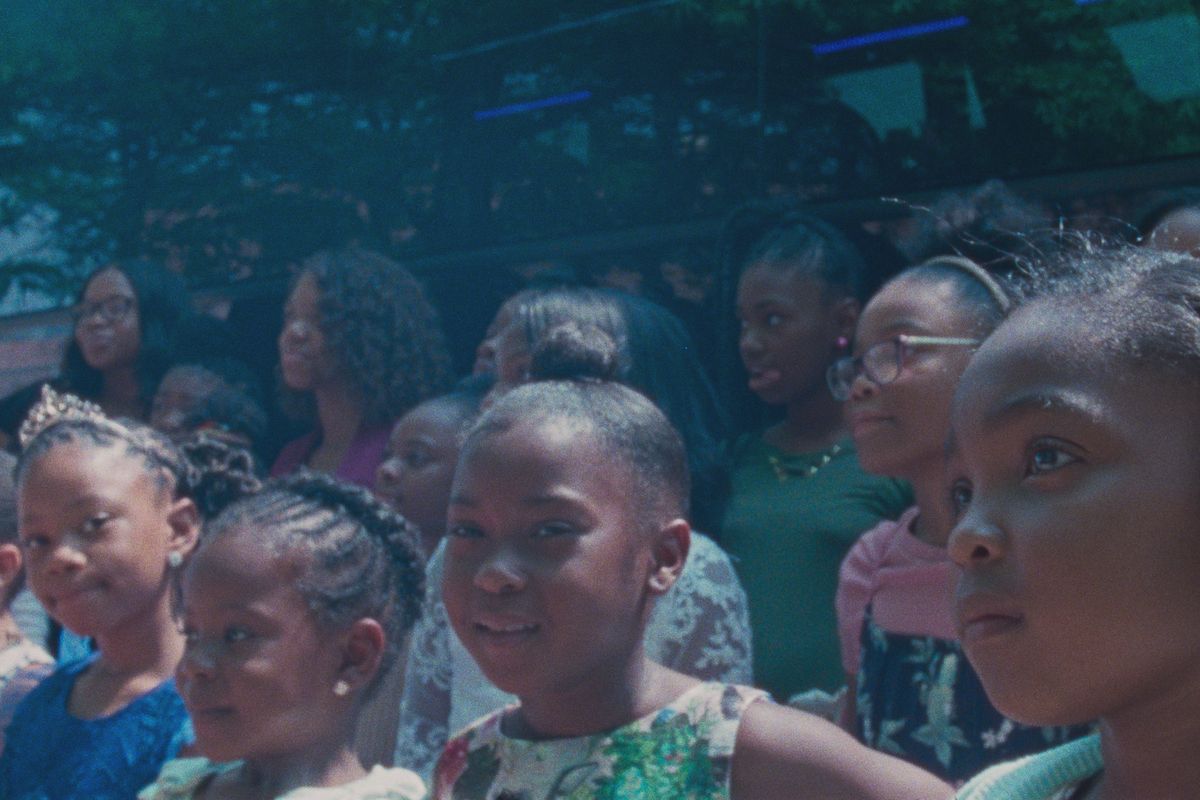
Yet it’s the young women of Daughters, ranging from 5 to 15, that viewers get to meet first in most cases, and that’s the perspective that Patton and Rae want you to focus on first and foremost. Aubrey is a precocious kindergartener who brags about being the smartest kid in her class and knowing her times tables; if her daddy says he loves her, she says, her response will be “I love you more.” Santana is resentful that her father isn’t around to balance out her mother’s mood swings. Ja’Ana is introduced dancing jubilantly in the streets with her friends, yet when the subject of her dad gets brought up, she gets pensive. “I don’t remember his face. I don’t remember nothin’ about him at all.” Raziah, a teenager, is old enough to feel the absence more keenly, noting that “it doesn’t feel like home” without him there.
The filmmakers spend the first third cutting back and forth between these young women and their dads, with an occasional countdown subtitle letting folks know how long until these family members get an actual physical reunion. We finally get to the moment where the men, dressed in suits and ties instead of state-mandated coveralls, nervously wait in the hallway for their dates to arrive for the big night. Daughters knows that this is going to be dramatic, and that emotions will run high. That still doesn’t prepare you for the shot of these kids coming down the corridor and rushing into the dads’ arms. “Overwhelming” doesn’t begin to describe it. Boxes of tissues can’t stem the tide of tears — onscreen or in your living room. Even the toughest viewer will be reduced to a puddle.
The scenes of the dance go by in a rush, as we imagine the night itself did for those involved. Some daughters pout, some are mad with joy from the outset, others come in cold and wary before thawing out and enjoying the company of their dads. We get to briefly eavesdrop on snatches of conversation, and if there’s one major complaint to be leveled at Daughters, it’s that we don’t spend nearly enough time getting to witness the ins and out of the actual dance, or take in the forgiveness and first step toward repairing injuries. That, and the film’s nagging tendency to pad things out with lyrical inserts of young women staring moodily toward skylines and/or doing things in slow motion. (Rae was primarily a music video director before this, which may explain why the film goes to that well way too often.) It’s a common documentary misstep, trying to stylistically gild the lily when the subject itself is rich enough to hold our focus on its own.
Were Patton and Rae to end their movie at the long farewell at the event’s close, it might have been misread as equating the dance with closure: Dad and daughter got one magical night together, and every rift was magically repaired. Wisely, they keep going, and devote the last third to what happens next. Some dads are paroled and released, making good on their promise to be there for their children on the outside. Others are moved into facilities even further away from their families. The idea of repeat physical visits becomes a pipe dream for many. In some cases, phone calls are limited to 15 minutes every so often. Time passes.
This is where Daughters forgoes the easy route and gets more big-picture philosophical about how incarceration affects more than the person behind bars, and who tends to be on the receiving end of severe, punitive sentencing. (It’s worth noting that every family we follow is Black.) Again, however, this isn’t a moving-picture lecture. Rather than telling you how young women are affected by this, Patton and Rae show you. And to watch one of the interviewees go for being a joyous, giddy, chatty child to being a slightly older, more distant and jaded tween is heartbreaking. Yes, these dads and daughters had a great evening together, and the program deserves to be adopted on a national level. What the doc takes great pains reminds to us is, however, that the pain remains after the the music stops.




 McCollough in Los Angeles, 2023 Pete Lee


 Reggie Watts during The Late Late Show With James Corden in 2016 Terence Patrick/CBS/Getty Images
 McCollough with sister Colleen Courtesy of Colleen McCollough