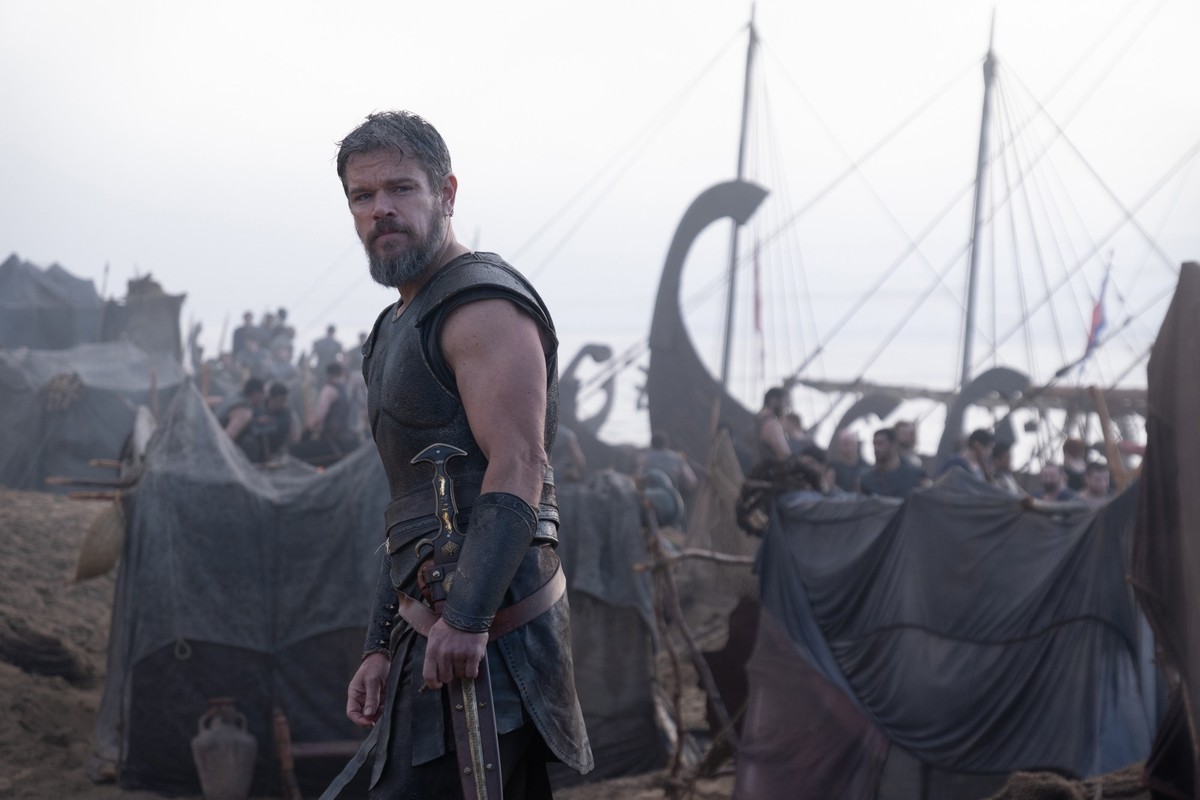

When Christopher Nolan set out to adapt Homer’s The Odyssey, he wanted to throw the audience headfirst into the mud, salt and chaos of the ancient world. “I'm very much a fan of trying to create that very visceral, very direct connection with an audience,” he says in an interview with Rolling Stone Canada in support of the home entertainment release of the film.
Bringing that to life required every department – from music and sound to the visual and special effects to makeup and hair – to abandon their comfort zones and embrace a practical and often improvised style of filmmaking. As The Odyssey makes its own journey home on Digital, 4K Ultra HD and Blu-ray, audiences can view more than 90 minutes of exclusive behind-the-scenes special features across all departments.
"I think opening the film with Travis Scott and trying to drill a connection between oral-formulaic poetry, which is what The Odyssey is thought to have been developed through, and rap music – just trying to live in the moment for the audience and have them really, really thrown into this world," Nolan explains. "The film was going to live or die by how the audience felt about that. Fortunately, the audience has enjoyed being in this world and feeling like they can touch it and taste it and smell it and relate to it."
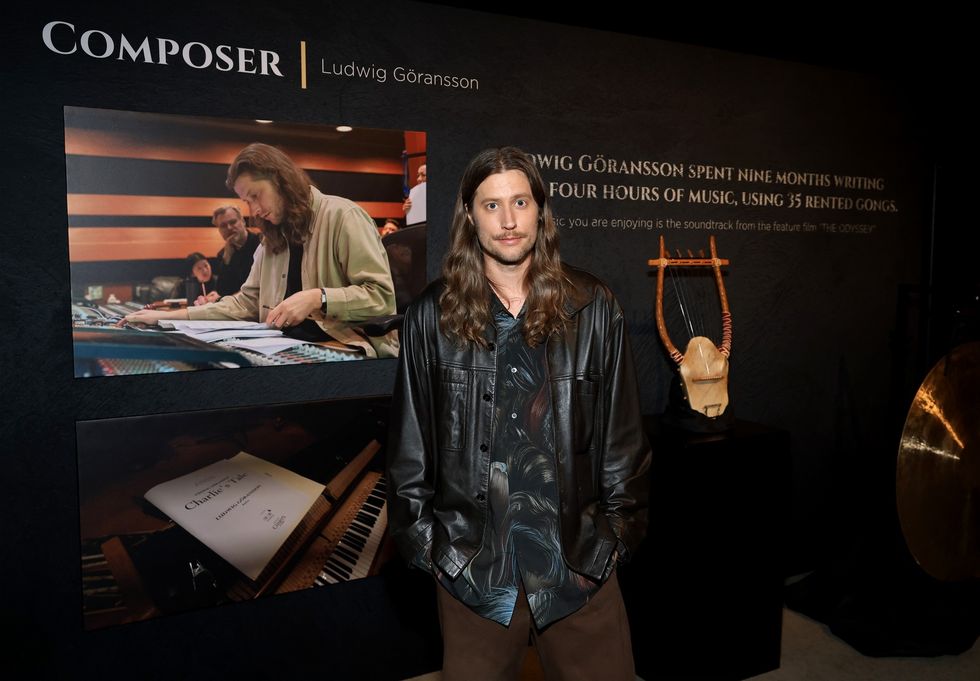
For composer Ludwig Göransson, Nolan’s approach to music as a visceral narrative engine began before a single frame was scored. "Chris understands the importance of music in his storytelling, and it's pretty obvious from where we are now. How he brought in Travis, not just musically, but as an actor, and wrote the opening lines of the movie for him to sing out as a bard," Göransson says. "Then Chris and I also brought in James Blake all the way into the score. He's all over the film, and a big part of why you have goosebumps is because his voice is just so powerful in so many moments. Carrying those elements right into the end song, When I'm Home, is a very immersive way of using music in storytelling, and Chris is really good at that."
For Travis Scott, the initial pitch caught him completely off guard. "He [Nolan] called me and was like, 'Yo, this is kind of like rap,'" Scott recalls. "I'm like, 'Bro, what are you talking about?' But he was like, 'Nah, it's just the way it's delivered.' It's all about delivery and attitude." For James Blake, the connection clicked immediately. "It's a passed-down spoken word genre," Blake notes. "It's almost like folk passed down from generation to generation, and that's how the original story of The Odyssey was passed down. There's that commonality there, which I find really quite beautiful."
That musical through-line became one of the film’s most potent narrative engines, orchestrated by composer Göransson. Rather than treating the score and the closing credits as separate worlds, he wove Blake’s haunting vocals directly into the fabric of the film, from the chilling sequences in Hades to the emotional trek of Odysseus’s journey, before carrying those exact sonic motifs straight into the closing song, When I’m Home.
"Having all that in the film, and then continuing the storytelling right when the film ends with the song, carrying those elements with Travis’s voice and James Blake into the song, it's a very immersive way of using music in your storytelling," Göransson says.
 Universal Pictures
For Blake, writing the track meant avoiding a recap of the hero’s journey and instead tapping into the dread of returning after a decade of mistakes. "Lyrically, it's a compassionate look at somebody who has lost his way and is not proud of what he's done in totality, but also won't know how he feels about it until he's actually grounded and back with his family," Blake says. Scott heard Blake’s soaring vocals as a kind of siren, a voice "screaming from the heavens, or from the hells, trying to get you to come back,” and responded with a verse written as Odysseus’s own secondary conscience, reckoning with how a three-day trip spiraled into a 10-year exile.
If the music was designed to make the myth feel immediate, the physical production was engineered to make it feel painstakingly real. On a Nolan set, visual effects supervisor Andrew Jackson and special effects supervisor Scott Fisher operate less like separate disciplines and more like a unified duo, a shorthand forged across years of shooting massive, dialogue-free IMAX sequences together since Dunkirk.
"I think he kind of has always viewed us as one department," Fisher says. "He'll tell me things to tell Andrew or vice versa, and he's just like, 'Go figure it out and come back with your ideas, and then we'll build something.'"
That trust led to a major breakthrough for the film's Cyclops, played by Bill Irwin. Initially, the plan was to build a full prosthetic headpiece with a remotely controlled animatronic eye. The pivot happened during an informal script read in a dark Los Angeles office. As Irwin crawled around on the floor getting into character, Jackson grabbed a camera and a desk lamp, placed them on the floor, and filmed Irwin’s face. Later, Jackson did a quick 2D composite, moving one of Irwin's actual eyes onto his forehead just to test the look.
 Universal Pictures*
"Immediately, it was like, wow, that's pretty compelling," Jackson recalls. "I showed Chris, and he immediately said, 'Forget about the prosthetic, we're doing that.'" By transplanting Irwin's real eye from the exact same frame of footage, the creature’s close-ups retained every micro-expression of Irwin's physical performance.
Still, Nolan insisted that the creature remain grounded in physical reality. Makeup department head Luisa Abel and her team built a full-body prosthetic makeup for Irwin so that he was physically present in the cave, giving the other actors something terrifying and tangible to play against before Jackson and Fisher scaled him up.
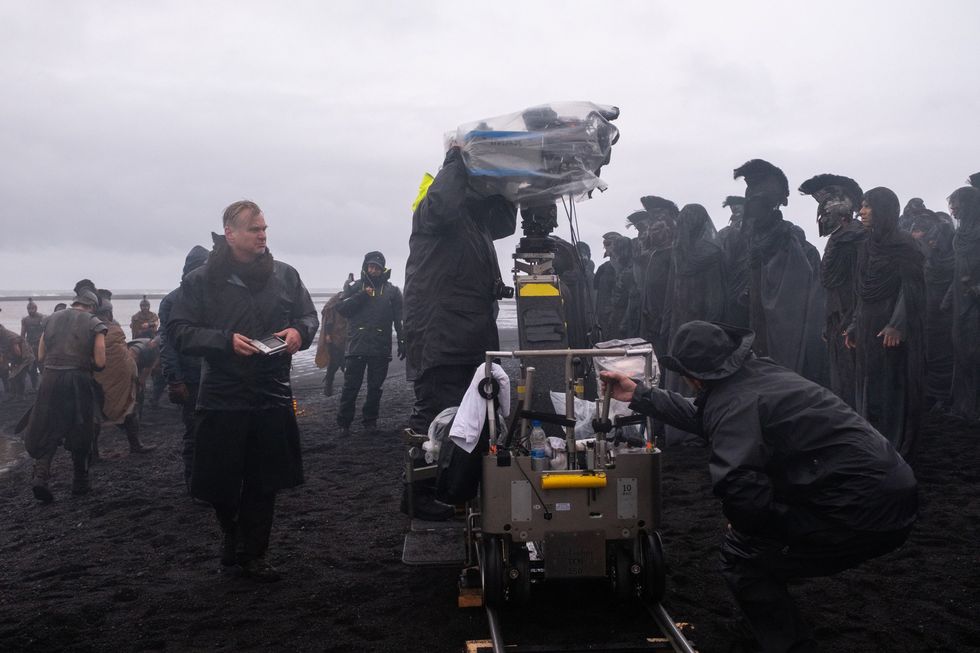
That commitment to practical, in-camera reality extended to the elements themselves. Whether filming in open water or staging storms with roaring jet engines and relentless water cannons, the cast was pushed to the brink. "They were just dripping wet at the end of every set," Jackson says. "And in those outfits, there was no room for wetsuits or any of that kind of stuff. They were worn out."
For Abel and hair department head Gloria Cassny, those jet engines, combined with the unforgiving clarity of IMAX film cameras, turned every single day into a high-wire act. With no digital cleanup, there was zero margin for error.
"For IMAX, the scope of what you're going to see, you can't afford to make any mistakes," Abel says. "When you're doing prosthetics or beard laying, you have to be perfect all the time, and there's no CGI fixing."
Cassny faced the exact same pressure with hairlines. Because IMAX lighting can easily expose the edge of a lace-front wig, she relied almost entirely on natural hairlines, using only two wigs across the entire production.
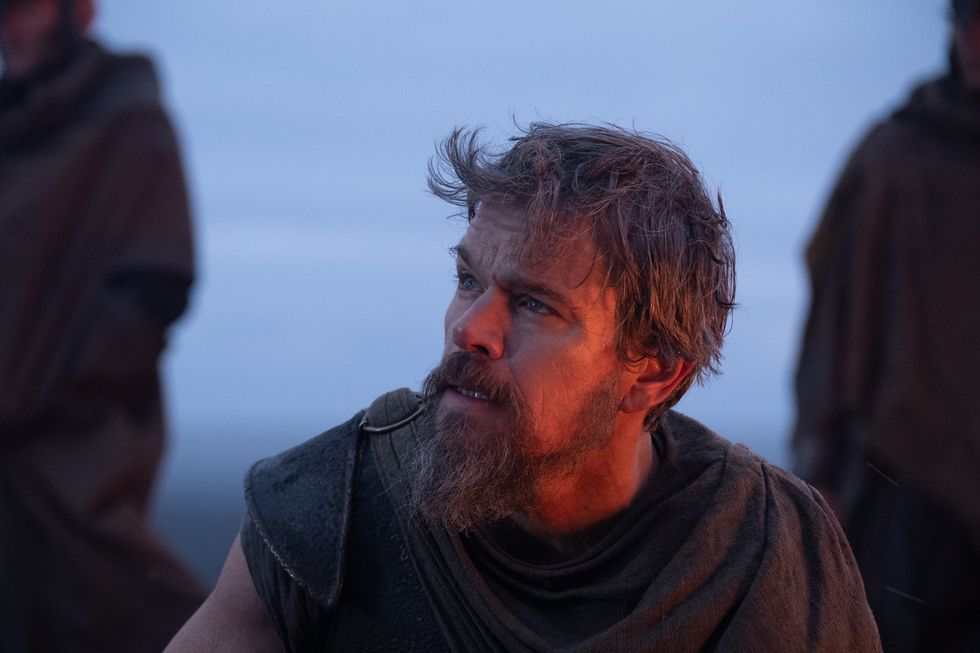
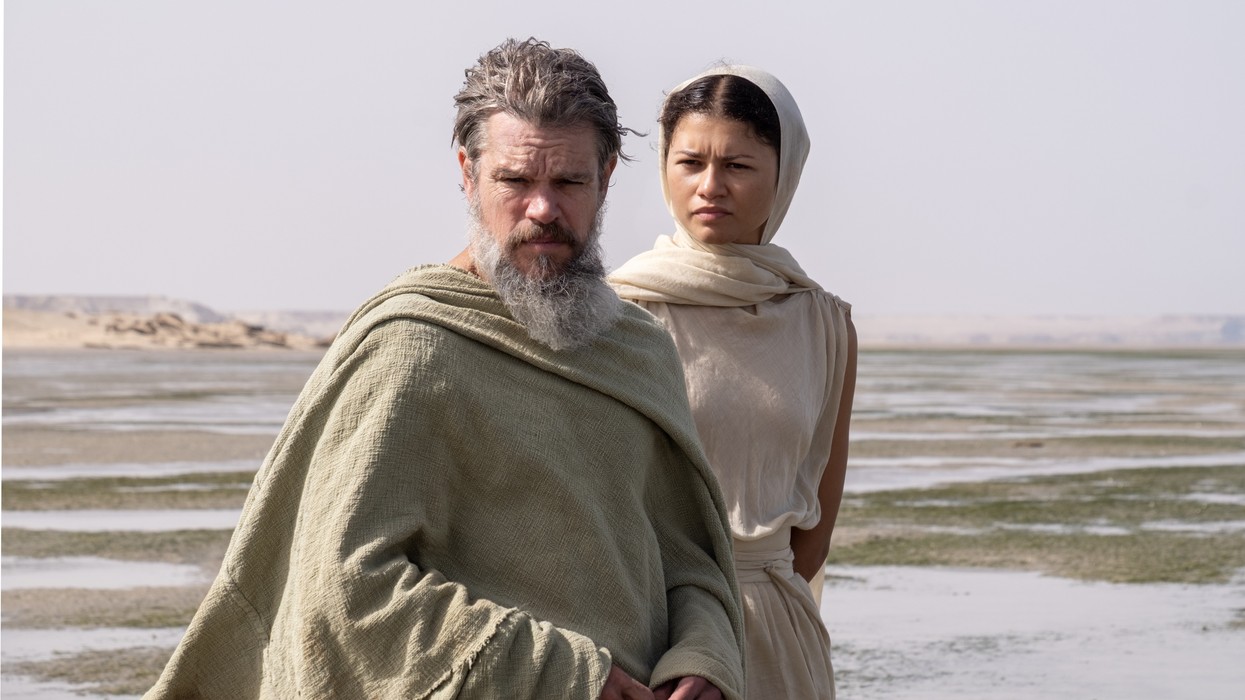
Nowhere was that ingenuity tested more than on Damon’s evolving look as Odysseus. To track the hero’s decade-long weathering, Abel pioneered a lace-free "floated beard" technique, pre-making half- and three-quarter-length beard extensions in varying shades and lengths, gluing them directly into Damon’s own beard with saltwater-proof adhesive, and laying loose hair over the top.
 Universal Pictures
Cassny matched the effort on Damon’s head, gluing individual loose hairs without a base so they would move naturally underwater and in strong winds. Once the jet engines fired up, there was no going back in to fix a stray strand. "There was no such thing as 'last looks,'" she says. "That was not in our vocabulary ever. We just had to make it so that it would last and it would be natural."
The practical craft extended to the film’s mythological horrors. Working alongside colleague Connor Sullivan, Abel’s team built animatronics and pig-face prosthetics for Circe’s transformation sequence, including Himesh Patel’s prosthetic ears and laid beard hair designed to come out on camera when struck by Circe. This scene still lives rent free in audiences’ minds and is often one that fans and critics have noted after multiple viewings of the film – there’s a feature of this on the Blu-ray.
The Odyssey is available now on Digital, 4K Ultra HD, Blu-ray, featuring over 90 minutes of behind-the-scenes bonus content, including 12 in-depth special features taking audiences behind the epic production plus the IMAX exclusive prologue and the "When I'm Home" music video.




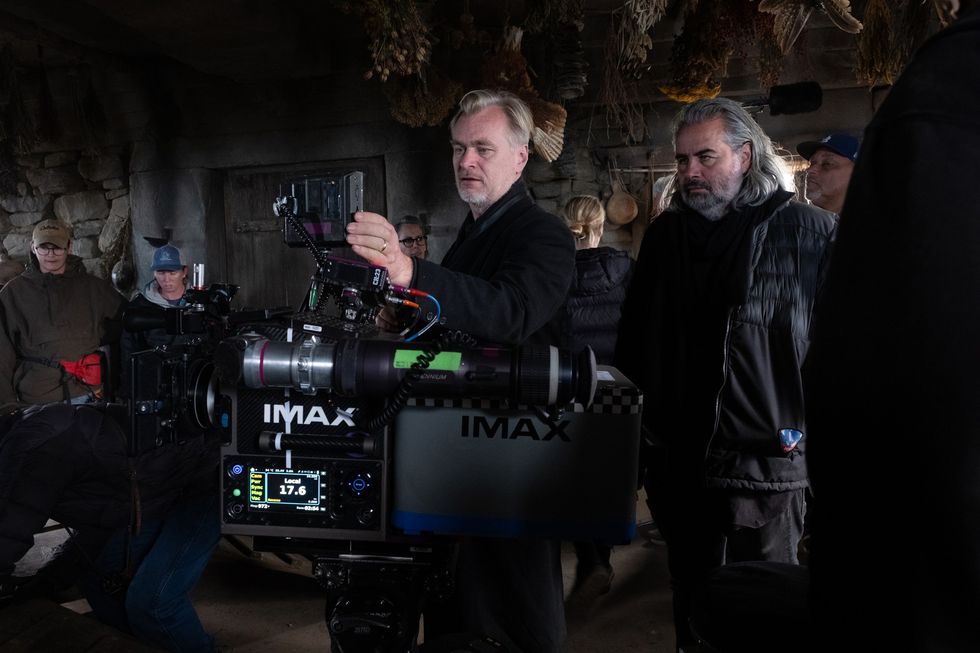 Christopher Nolan on the set of 'The Odyssey'Universal Pictures*
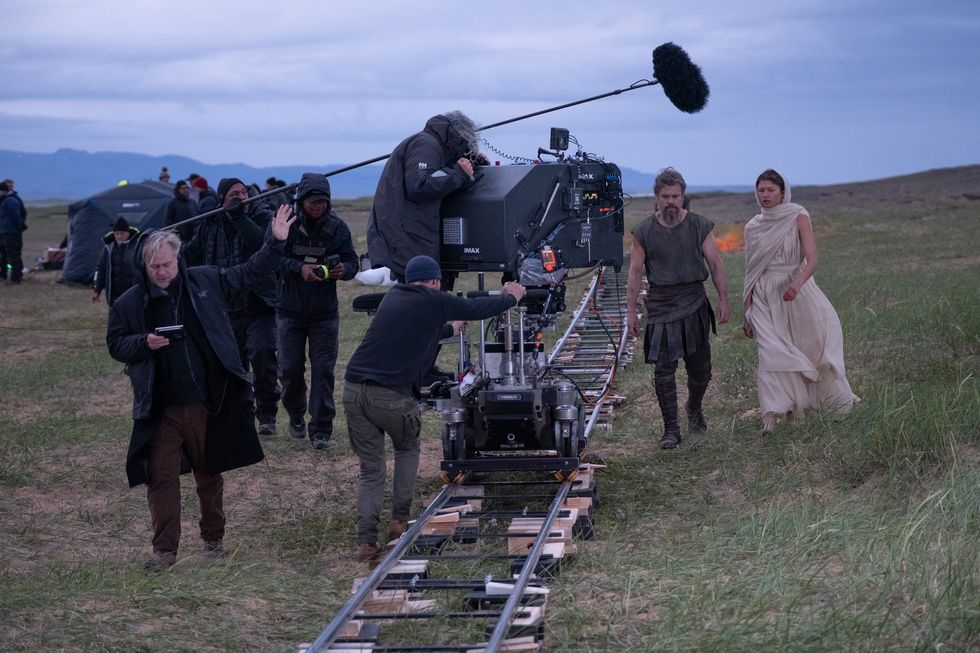 Universal Pictures*
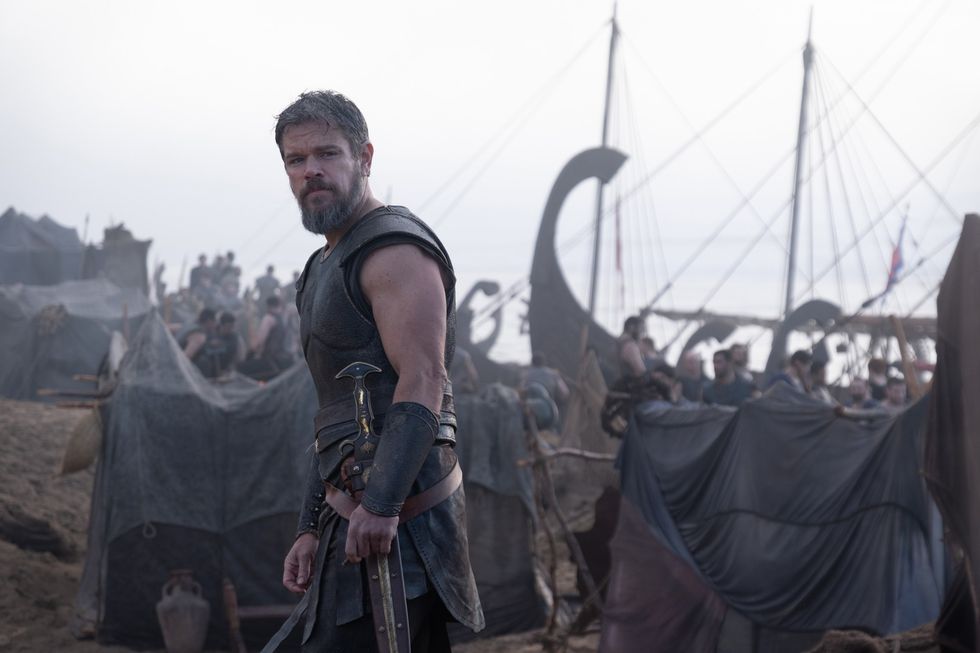 Universal Pictures*