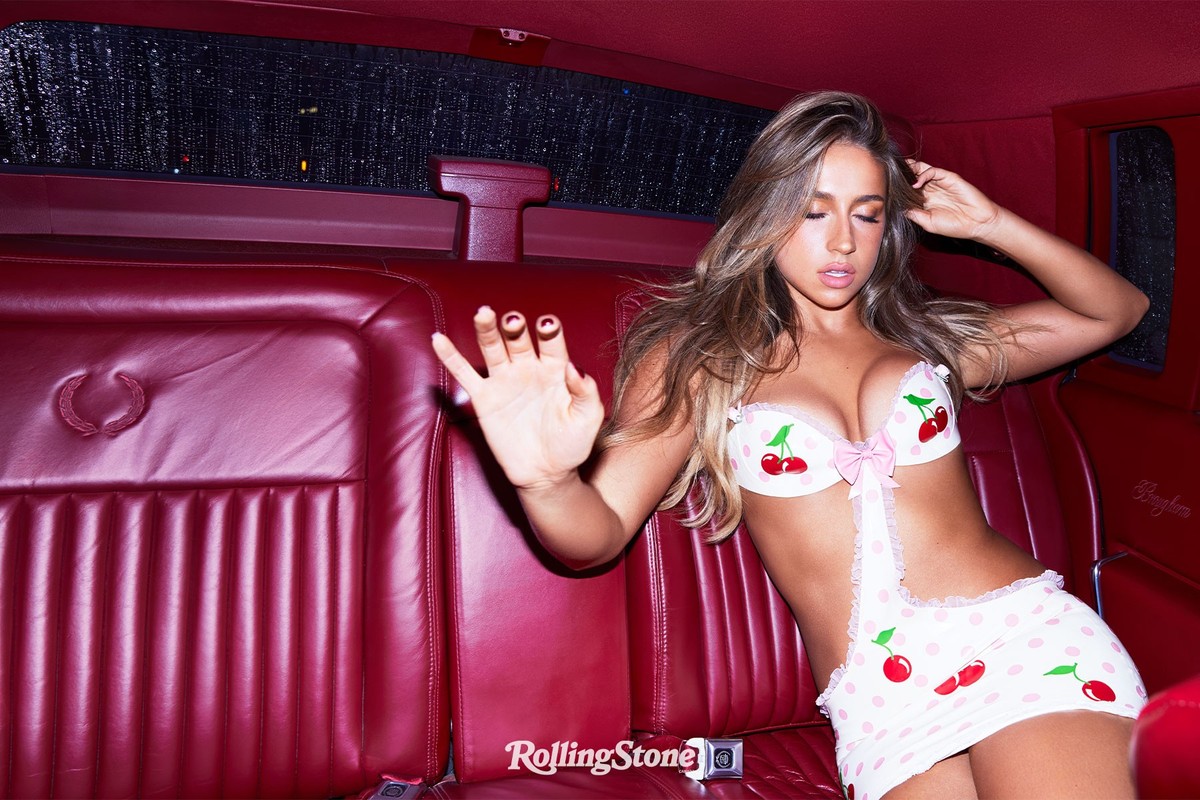

“Fix your fuckin’ self!” Tate McRae demands, her hips circling, dark-blond hair flipping. The Canadian pop star is onstage at Madison Square Garden in New York, performing her new breakup anthem “Tit for Tat” to a sold-out crowd of roughly 15,000 fans. She’s wearing cherry-red micro shorts, a matching bra — the same shade that Britney Spears wore in the “Oops! … I Did It Again” video — and black knee socks. She joyfully skips down the catwalk and smiles before resuming her fierce, kinetic choreography, throwing her head back, tossing each leg out to the side in a lunge, her abs glistening with sweat. Toward the peak of the song, pyro explosions go off, timed to the exact second that McRae and her backup dancers all toss their hands into the air. The crowd is transfixed, screaming while they document the entire show on their phones. They just about lose their minds when McRae plays her hit “Sports Car” in the encore, as she crawls on all fours before doing a standing split in a chair (in the ballet world, they call that a penché).
These fans, adorably called Tater Tots, are all dressed in micro shorts too — theirs are predominantly leopard print — and jerseys with “T8” on the back. Many of them are here because they’ve grown up with McRae, having followed her since she began posting viral videos of her songs back in 2017. But the person they’re worshipping is someone else entirely. Onstage is Tatiana, McRae’s alter ego — a badass, sexy, fearless superstar who has been sneakily dominating the pop world all year, one freakishly flexible dance move at a time.
Her dance-pop gems are simultaneously club-ready and packed with introspective lines about womanhood. They’re also the kind of songs that can make you lose all inhibitions, if you let them. “I started to black out onstage and become this person that I couldn’t explain, nor could my family or my friends, and I needed a reason for it,” McRae says of Tatiana. “And I think it helps me grasp the strange theory of why I’m not nervous in front of 15,000 people, and why I can be nervous at a dinner party with four people.”
I’m sitting down with Dinner Party Tate when she tells me this, although technically we’re at lunch, inside the swanky restaurant Dante, on the ninth floor of a Beverly Hills hotel. A month has passed since that show at Madison Square Garden — which, by the way, was her third time selling out the iconic arena this year, part of her Miss Possessive Tour, which stretched for 88 dates and grossed $111 million. We’re sitting on the terrace, staring out at gloomy clouds that briefly provide rain, right when the pianist starts to wade through “Yesterday,” by the Beatles, a band McRae has been listening to recently. She gazes at the hills and palm trees from behind her tortoise-shell eyeglasses, which she notes are not prescription. “I feel like we just entered heaven,” she says, taking a sip of her Diet Coke.
McRae is wearing a Sex Pistols sweatshirt (“I don’t know what it is,” she admits) and white sweatpants with brown paint splattered across. A black Chanel handbag sits by her feet, which are sporting silver Ghost Sprint Adidas. The hair that’s constantly inspiring online tutorials is currently tucked away, in a slicked-back bun. She has minimal makeup on, trying not to inflame the acne she’s self-conscious about (she’s considering trying Accutane). “I’ve had piles of makeup on my face the last nine months, and then I got acne all of the sudden,” she says. “I’ve never had acne in my life. I think it’s hormones, too. My body’s like, ‘Where are you?’”
McRae has lived here in Southern California for six years, but is mostly based in New York now, having bought an apartment in Manhattan over the summer. She doesn’t want to shit on Los Angeles, but says she feels like a lost alien when she’s here. Her fridge is empty, and most of her clothes have been shipped to the East Coast, so she was worried about her wardrobe for our interview. “I literally was like, ‘I look insane!’” she says. “I was like, ‘I’m going to show up, and she’s going to be like, What the fuck is she wearing?’”
This is what it’s like to hang with the real Tate McRae, a 22-year-old Alberta native, born the same year as the pumpkin-spice latte. (This is fitting, because she loves the holiday season: “I believe fall and Christmas is so special,” she confides to me later.) She’s nibbling on sourdough and talking about how she wants to take up baking, and how she has to get blood work later today. “My mom was like, ‘You’ve never gotten your blood work done before,’” she says, “and I was like, ‘That’s really scary, I should do that.’” She couldn’t be more different from the pop star who, 48 hours from now, will be referenced on Saturday Night Live (a familiar stage for McRae, who has been the show’s musical guest twice in the past two years). But she has no problem with that duality. In fact, she embraces it.
“It’s so funny,” she says. “Tate is this very introspective, very sensitive, very introverted, awkward Canadian. Maybe more on the shy side. I’m observant, and I feel very internal, all the time. And then, this persona that I’ve created is my way of being this confident pop girl. The contrast between the two is such a great way of showing how a person can be so multifaceted.”
“I definitely get to see both sides,” says her frequent collaborator Amy Allen, who has also written hits with Sabrina Carpenter, Selena Gomez, Harry Styles, and more. “We’re sitting on the floor and it’s very intimate, and we’re really digging into her innermost heartfelt, hard experiences. And then there’s moments, even within the same song sometimes, where she’ll just stand up after having said something so heartbreaking, and she’ll, like, do a spin and some choreo in the corner. The fact that those two people exist in the same body is so unique.”
I’m meeting McRae at the tail end of a wildly successful year. Before starting the grueling Miss Possessive Tour, the singer released her third album, So Close to What, in February. It debuted at Number One on the Billboard 200, knocking Drake and PartyNextDoor’s $ome $exy $ongs 4 U out of the top spot (coincidentally, that album features “Small Town Fame,” on which Drake sings, “Bitch, I feel like Tate McRae”). McRae went on to perform at the VMAs in September, and released “Just Keep Watching,” off the F1 soundtrack album, which earned a Grammy nomination — her first — for Best Dance Pop Recording. In November, a week after we meet up in Los Angeles, she will release the deluxe edition of her album, cheekily titled SO CLOSE TO WHAT???.
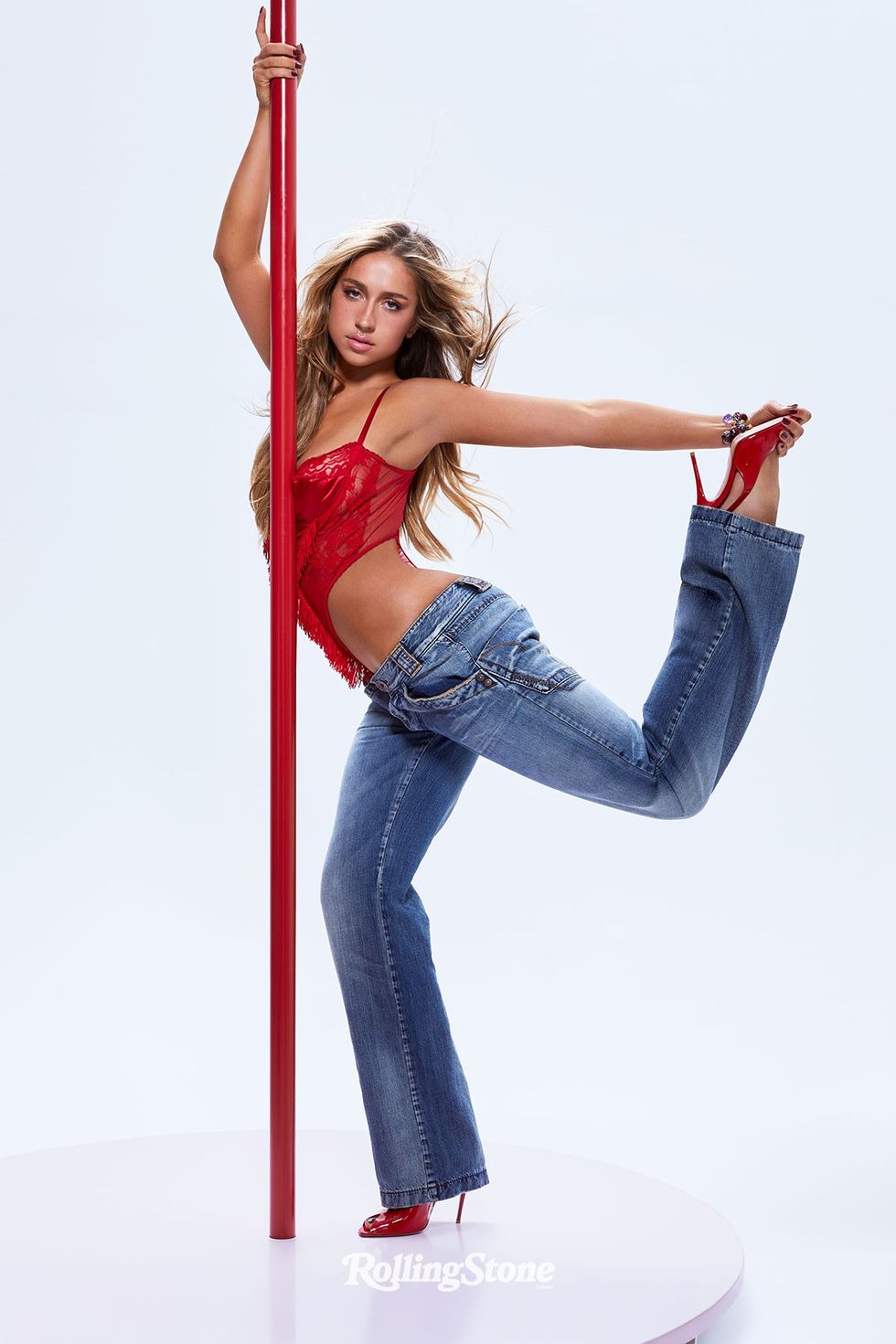
And so, as raindrops sprinkle down and the pianist launches into Billy Joel’s “Vienna,” how is McRae feeling right now? “Physically, exhausted,” she says. “Mentally, the most myself I’ve felt in six years.”
WHEN MCRAE DOES HAVE to be in California, she likes to take evening drives to the ocean, listening to music with the windows down. “I’m such a sucker for nighttimes on the beach, the moon and the water,” she says. “It’s so water sign of me, but I really feel connected, and I can dream and manifest there.”
She often returns to something that the French diarist Anaïs Nin once wrote: “I’m restless. Things are calling me away. My hair is being pulled by the stars again.” Quoting that line, she says it defined “the vibe” of her entire year — and the concept of the deluxe album’s visuals. “I was feeling like I was getting pulled by this external force,” she says, “and I needed the deluxe to feel like that.” She brings this image to life on the album cover, where she is seen lying on a beach at dusk, wearing a mahogany sarong. Her right arm is leaning on a rock, while her left fingers are gripping the sand. “It’s very ethereal and mystical,” she says.
McRae was inspired to write the So Close to What deluxe material — five new songs, including “Tit for Tat” — after she toured Europe. She knew she had a vision for it, when she made her phone screen saver an image of a glowing angel. “When I was sitting in my dressing room every single day, bored out of my mind, I realized just how magical creating music is, and how I get to literally be a real-life fairy and angel,” she says. Angels made their way into the deluxe, particularly on the shimmering track “Nobody’s Girl,” where she sings lines from a poem she wrote: “And when I ask, the angels sing/They say, ‘Real love doesn’t clip your wings.’” That motif extends to the trippy video, where McRae dons angel wings, like a Gen Z version of Claire Danes in Baz Luhrmann’s Romeo + Juliet.
When she wasn’t performing in Europe, McRae spent her time reading poetry, journaling, and listening to a lot of Lana Del Rey (“That was the soundtrack to my life,” she says), wandering around parks in Prague, or sitting by a lake for six hours in Zurich. She’d stay up late, usually until 6 a.m., just thinking. Looking back, it might have been an existential crisis. “I had been traveling so much, and I felt like I was spreading myself thin, and I had no idea what was going on in my core,” she says. “I was going through a lot emotionally.”
She’s referring to her breakup with the Kid Laroi, the Australian musician she had been dating since early 2024. Despite McRae telling me that I can ask her anything, she tenses up when I inquire about their split, which she confirms happened in June. She released “Tit for Tat” three months later, and it’s been widely speculated to be a response track to Laroi’s “A Cold Play.” Laroi sings “Fix you, I wish I could,” while McRae keeps it simple and spicy: “Fix your fuckin’ self!” It’s a far cry from “I Know Love,” the So Close to What cut Laroi guested on just a few months earlier, where McRae likens falling for someone to drugs. The internet erupted when “Tit for Tat” dropped; suddenly, lots of adults cared about a twentysomething pop star’s relationship, and it weirded out McRae deeply.
“It was really scary and overwhelming,” she tells me over lunch. “I would never talk that way, even about my friends’ lives. I didn’t realize how much it would affect me, the public knowing my private life — because no one knows the full story of anything, ever. I also hate people painting a situation that’s worse than it is. But what I’ve had to realize is that he’s going to write songs and I’m going to write songs, and that’s our way of expressing ourselves. That’s our art, that’s our job. And once it’s out there, it’s not mine anymore.”
One person who can relate to this is Taylor Swift, who praised “Tit for Tat” while promoting The Life of a Showgirl, telling Jimmy Fallon that she listens to the kiss-off track with “full volume, over and over again on repeat.” When I bring this up to McRae, she says, “My mom is so witchy. She said the week before, ‘I feel like Taylor Swift is in your ether right now.’ And I was like, ‘What? That’s so random.’ I’m such a massive fan, and I adore her. So when I pulled up my phone and saw that she had talked about it, it was one of the coolest moments ever. She is such an inspiration for me as a writer and, obviously, as a woman in the industry. For her to acknowledge that was really special.”
McRae’s mom, Tanja Rosner, isn’t the only witchy one in the family. Not only did McRae famously predict the 2025 Super Bowl — she got the final score and the winning team exactly right — she also describes herself as “the most woo-woo person ever.” She regularly sees healers, one of whom is her friend’s aunt. “She will see who’s attached to you or what energies have stuck to you, which is really important,” she says. “You can carry on 10 people’s energies and be depressed, and they cleanse all that.”
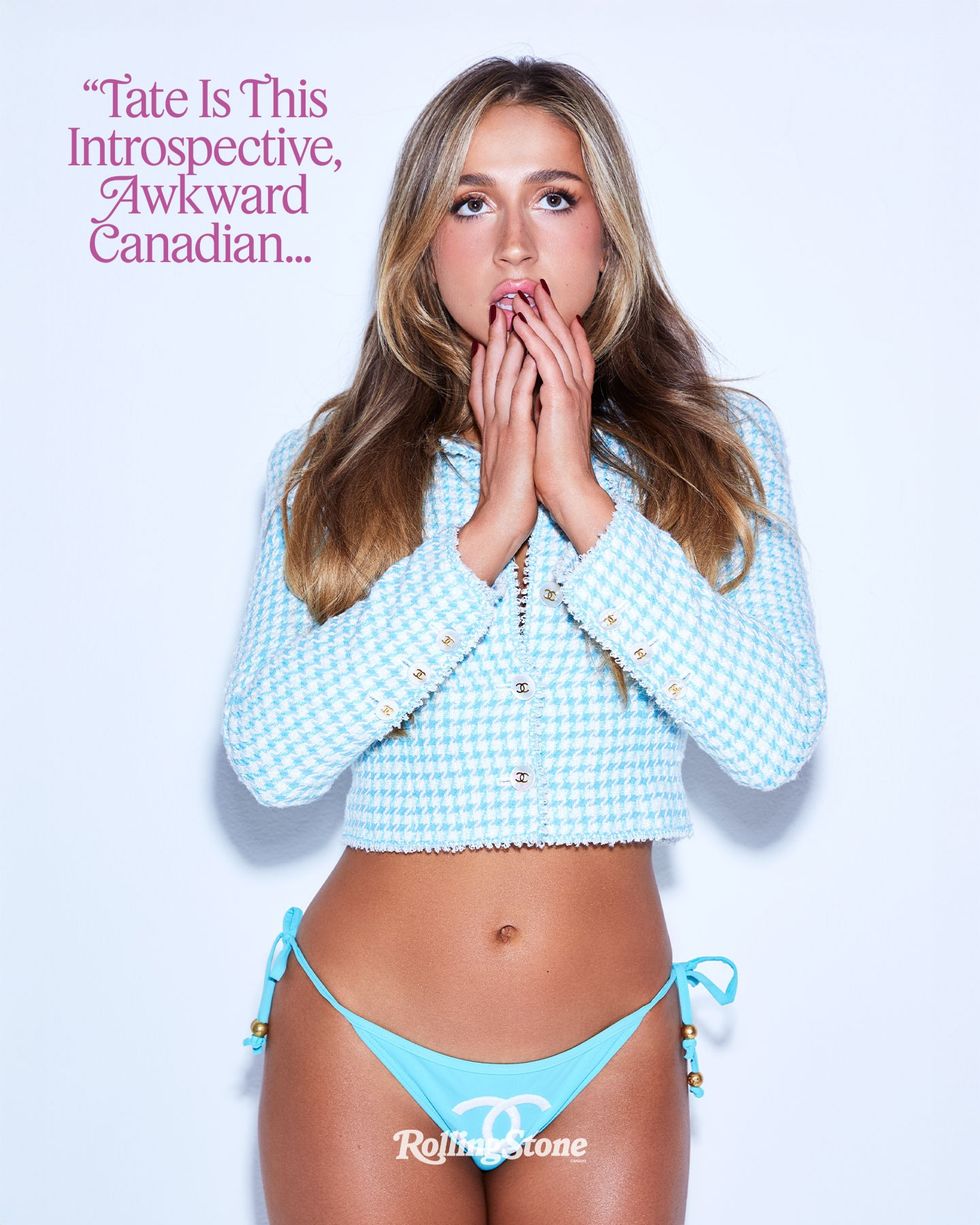
-Vintage 1997 Chanel Blazer and Vintage 1994 Chanel Bikini from Cafe Society Archive. -Vintage Chanel Necklace from the Archive x Yana.
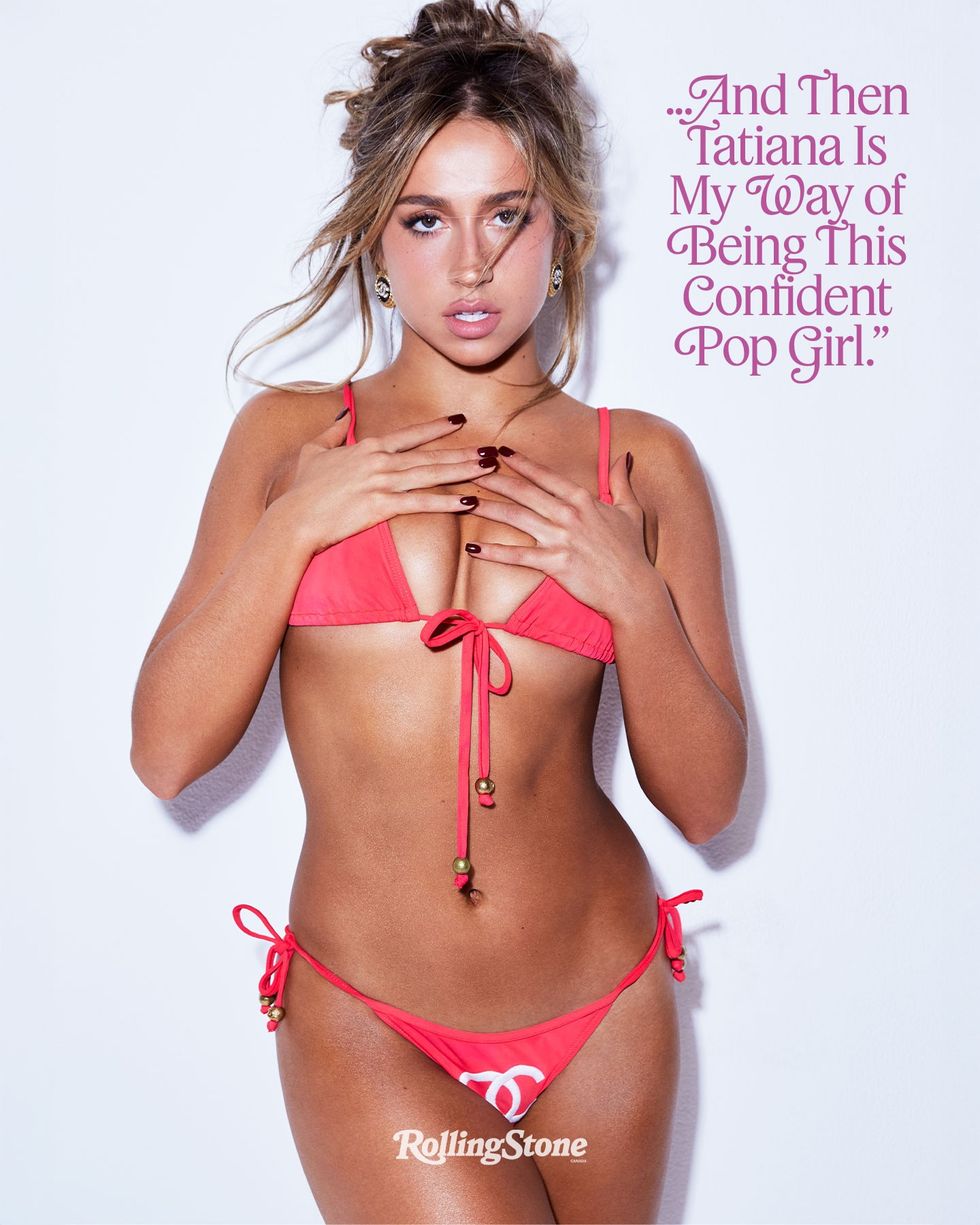
Vintage 1994 Chanel Bikini from Cafe Society Archive. Vintage Chanel Earrings from the Archive x Yana
The day before our lunch, McRae consulted a psychic, who told her she might get married at 28. When I ask her if she wants this to happen, she says “Maybe.” “I believe in manifesting so hard,” she adds. “I believe your physical field can change at any second if you change your vibration towards it. And I believe everything happens for a reason. Everyone has a fate and a life that is already painted out for them, and if you want something, it’s already there. Maybe that’s unrealistic optimism, but I think it’s a beautiful way to look at life.”
Swift isn’t the only one listening to McRae on repeat; within the first 48 hours the deluxe songs were out, I heard them everywhere — on the streets of Manhattan, in my Pilates studio, on subway trains. This is particularly true for the savage “Anything But Love,” where McRae doubles down on her bitterness (“My dad hates you, my dog hates you, my brother hates you, and I do too”), and even recruits her alter ego for support: “And if you hate me, then why you keep on jacking off to Tatiana?”
“There’s a part of my writing that’s funny,” McRae says, crediting her co-writer Julia Michaels with bringing out that side of her. “That was written from a place of strength and empowerment, and that fearlessness when you’re in a studio and when you’re joking about things. When you’re like, ‘I will never ever release this,’ is usually when you find gold.”
But there’s also a lot of heartache here, particularly on the highlight “Nobody’s Girl.” McRae celebrated her birthday on July 1, in the aftermath of her breakup, and she reflects on turning a year older during this confusing time, singing, “At 22, it’s a little sad/But it’s fun.” She digs even deeper on the melancholic, R&B-tinged “Horseshoe,” where she confesses, “I’m not a pop star when I’m all alone.”
That line is no joke, she says. “I was feeling so strange, because I was experiencing things that I’d wished for my whole life. Playing shows and getting to exist in this career makes me feel like the luckiest girl on the planet. And I was not letting myself be sad, because I can’t live a life like this and be sad. That song is about how I feel so grateful, but I feel like I’ve never felt more alone and more alienated from everything. When all the makeup and clothes come off, it’s just you in your bedroom. You’re like, ‘OK, who am I?’ And that’s a really daunting thought. I’m just an insecure, sensitive person who has to figure out what she wants.”
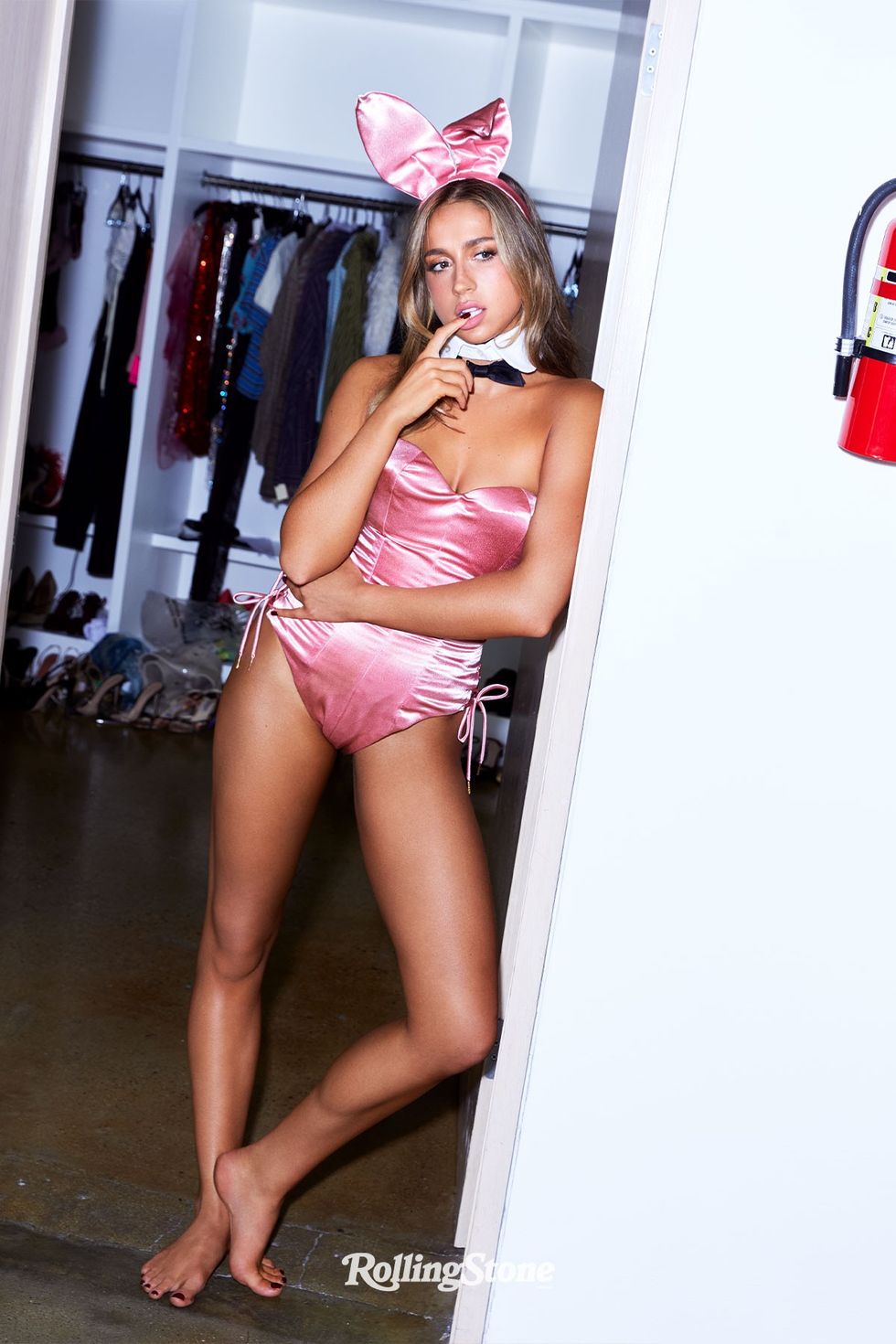
When McRae moved to Manhattan in July, she brought the deluxe songs to Electric Lady Studios, during her first week as an official New Yorker. “That was maybe the longest time we had gone in a while without working and seeing each other,” says Allen. “She came in with such a new invigorated energy. Like when you see a friend and you’re like, ‘Oh, something just happened, and you’re ready to go.’ Even though it’s the deluxe, I think it’s the beginning of Tate’s next chapter.”
McRae titled the initial album So Close to What because it reflected how she felt amid her burgeoning fame: being on the verge of something new without knowing what it is, and at times wondering if she was losing her sense of self. She explores this on the deluxe opener, “Trying on Shoes,” a slow-burner about grappling with her identity. “It’s the idea of trying on different people and different versions of yourself,” she says. “Especially on tour, it was me finding myself in a position of feeling so heartbroken and not knowing how to get over that, and feeling like I had to try on anybody else’s personality or body to feel good about myself. Putting on this mask to feel like I’m not fucking heartbroken onstage right now.”
McRae titled the deluxe SO CLOSE TO WHAT??? because she’s still wrestling with this question. “The intensity feels ramped up,” she says. “It was crisis mode for a little bit — more painful than the album. And I haven’t gotten any further in my answer to my question ‘So close to what?’ I’m feeling it more intensely now. Nothing has been solved.”
But that’s not entirely true. McRae has seemingly healed from her heartbreak, and gives an honest, deeply vulnerable response when I ask her how she looks back on it. “I’m a very reminiscent person,” she says. “When someone’s in your life for a long time, I’ll never, ever, ever forget them, or not feel them. I feel every person who’s ever been in my life. I love, love, love people, and I want to make sure they’re always good. That’s a hard thing, when breakups happen, not knowing when someone’s good or not. But we’ll see what happens in time.”
WHEN I FIRST MEET MCRAE at the deluxe-album photo shoot in October, it’s two days after the Madison Square Garden show. Her mom introduces herself, as does McRae’s entire team, which includes her new creative directors, Ludovic de Saint Sernin and Ignacio Muñoz, who have dressed Miley Cyrus, Lindsay Lohan, and others. In addition to the beachy sarong look, she poses in several outfits, including a white beaded minidress she worries is too flapper (I assure her it’s not). Her crew encourages her every few minutes, shouting “Stunning!” and “Yas!” to the extent that I begin to worry that I should also be hyping her up. Standing in front of the camera, McRae poses a question: “What’s our story here?”
McRae loves a good story. She would tell them to herself as a child dancer, to mentally prepare for competitions. “I would write essays on what my story was, like such a fucking nerd,” she says. “I would sit in my room and I’d be like, ‘Here’s my whole story of who I am and how I feel: I’m a young girl who is distressed by her parents.’ And then it would go into my two-minute solo at a competition.”
McRae was born in Calgary in 2003 to Rosner and Todd McRae. Todd is a lawyer, while Rosner is a dance instructor, which inspired McRae to start training at the age of six. “I was like, ‘Put me in, coach. I’m obsessed with this,’” she recalls. “My mom’s my fairy godmother,” she says. “She believes anything is possible, and I think that’s why I’ve gotten where I’ve gotten. If I wanted to drop everything right now and become a dentist, I could. She’d be like, ‘Hell, yeah. You’re awesome.’”
McRae would wake up at 6 a.m. and get home at 9 p.m., spending 40 hours a week at the dance studio, dabbling in everything from modern to ballet, while her older brother, Tucker, played hockey. “I was just constantly training, in and out of school, homeschooling, not homeschooling. We just were such passionate kids that we were just working all the time.”
McRae attended the training school for the Alberta Ballet company and competed in dance competitions every weekend. In 2016, she moved to Los Angeles for two months to join the cast of So You Think You Can Dance: The Next Generation, performing on live television every Monday to millions of viewers. “I felt like a full-blown adult, living my professional dance career at 12, and that sounds insane now to think,” she says. “We were getting judged. It was the first time I was exposed to criticism.” She ended up placing third on the show; later, she contemplated moving to Germany to train at the Berlin State Ballet.
McRae knew she wanted to dance in some capacity, whether she was a ballerina, a backup dancer in L.A., or a member of a modern company. She also went beyond dance, doing voice-over for an animated children’s show called Lalaloopsy. “When I was younger, I did so many things,” she says. “I was just a fucking menace. I was attacking everything I could possibly attack. One side quest was doing pas de deux [a dance duet]. I was just like, ‘Wow. I really wanted everything.’”
But with time, she began to only want one particular thing. As a preteen, McRae was active on YouTube, uploading videos of her dancing (and covering John Lennon’s “Imagine” at the ripe age of eight). By 2017, she was posting videos of songs she’d written, in a series she called Create With Tate. In one video, a 14-year-old McRae appears in front of her keyboard in a burgundy velvet pullover, her silver hoop earrings peeking out from under her hair. “If you guys do not know, I’m a singer, and I love to write songs,” she says. “I’ve really found that it’s something I truly love to do. So, yeah, this song that I’m about to sing for you guys is something that I whipped up last night in, like, an hour.” (Her parents, she jokes, were three feet away from her: “They were like, ‘You’re such a loser! Go have friends!’ And I’m sitting at home, making love songs.”)
That video, for the somber ballad “One Day,” launched McRae’s career. Suddenly, the first song she’d ever written began to attract a wide audience (it now has more than 42 million views). Despite finding these old videos cringey, McRae won’t delete them. “I’ve learned to accept that that’s what got me somewhere,” she says. “There’s something endearing about it.”
Labels came calling, and McRae signed with RCA in 2019. The stormy “You Broke Me First” arrived a year later, when McRae was 16, and went viral on TikTok. She moved to L.A. and completed high school online. In 2022, she released her first full-length album, I Used to Think I Could Fly. Though the album proved McRae was capable of more than just TikTok moments, it shows her navigating her sound in real time, dipping her toes into bedroom pop and club bangers. She ended up working with so many different producers — from Greg Kurstin to Finneas — that the result lacks cohesion.
“Everyone was in my ear like, ‘This is who you need to be, and these are the songs you need to write,’” she says. “I needed to recalibrate and figure out where I wanted to go with my career.”
In 2023, she had an epiphany. “I’m going to be a dancing pop star,” she told herself. “I will make this happen.” Up until then, she’d never considered merging her dancing and musical sides. “I had this expressive-dancer side that felt like such a different part of me than the writer side. I didn’t think that they could coexist.”
To prepare, McRae became a student of pop culture, immersing herself in music she’d missed out on during her dancing career. “I had spent so many years in dance history, watching Fred Astaire and ballerinas like Sylvie Guillem,” she says. “When I hopped into the music industry, I was like, ‘What the fuck is this? I don’t know any of this.’ It opened up a whole new world.” She watched “every single pop video ever”: Beyoncé tearing through “Get Me Bodied” at the 2007 BET Awards, Madonna’s documentaries, Lady Gaga’s “Paparazzi” moment at the 2009 VMAs, a performance so iconic that McRae says it reshaped her brain chemistry. “You start to see pop stars as superheroes,” she says.
McRae’s dancing and vocals — sometimes associated with the “cursive” style, a vowel-heavy technique — often get her comparisons to another pop star: Britney Spears. Some fans are desperate to see her star as the pop icon in a biopic, but when I ask McRae if she’d be into that, she demurs. “I need to take an acting lesson before I’d even consider ever doing anything,” she says. “And also, I feel like I look nothing like her or sound nothing like her, so I don’t know if I’d be a great fit.”
Tate McRae the Pop Star made her first appearance on the hypnotic “Greedy,” released in September 2023. In the sporty video, McRae is seen dancing in a hockey rink, doing splits at the front desk and riding around on a Zamboni. It’s very Canadian — only anything but awkward. She essentially runs the place, tossing her hair back, dangling her diamond heels in the air, and sucking on a lollipop, leading a crew of dancers through the locker room as she charges through the halls, thrashing her hips and flashing her abs. “I feel it changed people’s perspective on who I was,” she says. Allen, who co-wrote the song with McRae, Ryan Tedder, and Jasper Harris, agrees: “Once ‘Greedy’ came out, it felt like the world was her oyster, and people were falling head over heels,” she says. “That cemented her as this powerhouse to the world.”
“Greedy” peaked at Number Three on the Billboard Hot 100, and McRae followed it up with the equally addictive “Exes.” Both were featured on 2023’s Think Later, the album that signaled her arrival — and the dawn of Tatiana. “I get onstage, and this beast unlocks,” she says. “If I ever felt horrible or had a bad day, I would just be like, ‘Well, OK, I don’t need to be myself. I can just be her.’”
IN JANUARY 2025, a month before its official release, a batch of demos for So Close to What leaked — along with more than 600 other songs of McRae’s, some of which date back to when she was 12. It’s unclear how it happened, but McRae was devastated. “Ninety percent of those songs are awful,” she says. “They’re all personal things that I have grown up with, and my style and taste have changed, so it’s so vulnerable. It’s like having your whole phone released. It made me want to go into a hole and not do anything ever again.”
But McRae made light of the situation, releasing a “Leak this” T-shirt (the Tater Tots, steadfast in their dedication, refused to listen to the album until its official release last February). “The only way you can move on from things is try to flip it on its head and look at it as a blessing in disguise,” she says. “That’s the only way to navigate through this career, because those things happen all the time. Like, ‘All right, this sucks. How can I use this to my advantage?’”
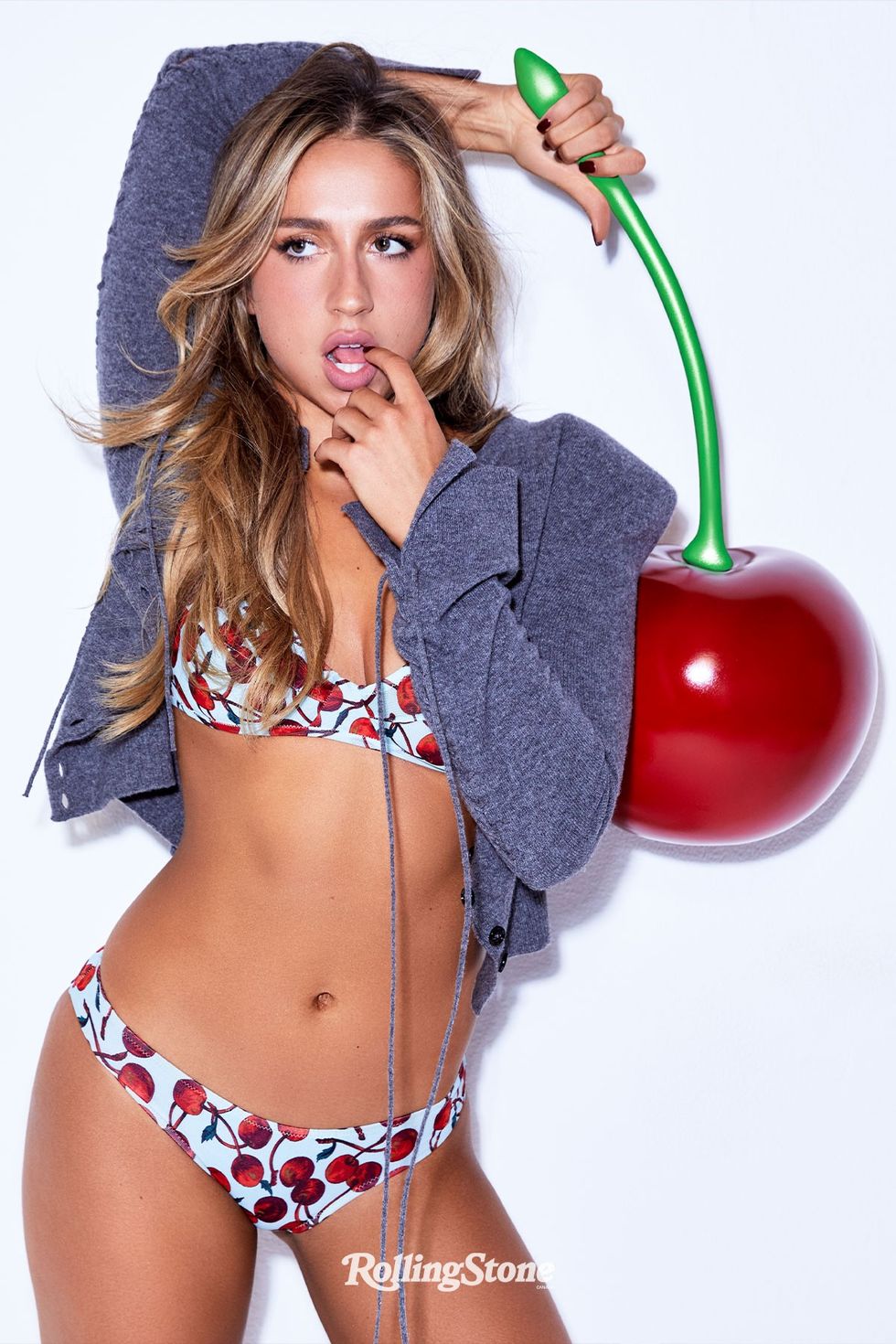
She had the same outlook in November, when a video of her accidentally singing into an upside-down microphone onstage blew up online, leading to speculation that she was lip-synching (like many pop acts, McRae sings live over a backing track). Days later, she posted a TikTok of her belting the So Close to What gem “Purple Lace Bra” with the caption “Cuz apparently I don’t sing in my shows,” followed by a smiley face.
“I think there’s just so much that gets misconstrued online,” she tells me. “You have to have humor with it, otherwise you would go insane. It’s just funny because I’ve put so much effort into my shows and am really impassioned about singing the whole time, unless I’m obviously walking or doing a dance break, as any person does in their shows. I sang two seconds later, and they cut the whole clip off. I’m just like, ‘Oh, this is a joke. There’s nothing I can do to defend this, because there’s too many things to defend.’” (Asking if she’d ever ban phones to prevent viral videos like this, McRae says she’d consider it for future shows.)
Another thing McRae had to defend: her work with the problematic country superstar Morgan Wallen, who featured her on his sultry single “What I Want” in May 2025. The duet appeared on Wallen’s album I’m the Problem, and it became her first chart-topping hit. Wallen has received backlash for using a racial slur in 2021, throwing a chair off the roof of a Nashville bar in 2024, and other incidents — and though he’s become more massively popular in recent years, McRae came in for her share of criticism for collaborating with him.
When I ask McRae about the controversy, she tells me about her lifelong love of country music, which stems from the annual Calgary Stampede in her hometown. “Honestly, country music is huge where I’m from,” she says. “My brother’s always been a rabid country-music fan. I’ve always wanted, at some point in my life, to do folk music or country, and I probably still will in the future. But I honestly just got the opportunity to do a country song, and I was like, ‘Oh, this is cool.’ And I wanted to cross genres really bad. It was just about the song for me. I didn’t realize how much a song would be connected to all the other factors, and it really shocked me.”
McRae stresses that she never met Wallen in person, but she doesn’t regret their duet. “I don’t think you should regret anything in life, because it gives you so much clarity,” she says. “I think controversy and criticism is a way of learning and figuring out what you want to move forward with, and how that shapes you as a person. I think it’s all important.”
It’s a response that’s both honest and unapologetic, and I can’t tell if it’s coming from Tate or Tatiana. Perhaps it’s both, and the entities aren’t as separate as McRae thinks. This is most evident on “Purple Lace Bra,” which she co-wrote with Allen and Emile Haynie. It’s a seductive stunner on the surface, but it’s layered with deeper meaning, as McRae describes how feeling confident — and wearing provocative clothing that empowers her — can lead to being shamed by the media. “You only listen when I’m undressed,” she sings on the bridge.
“People always want girls to put themselves out there. And the second they do, they get ripped apart for it,” she says. “I was feeling sexual and confident for the first time in my life, and then I would release something and feel sexualized, and feel like all of my work and effort was taken away from me. The scrutiny towards women is getting worse and worse. It’s just wild that people pay so much attention to us girls for little things that a man wouldn’t be scrutinized for.
“And they’re not thinking about the great things that are happening onstage,” she continues. “They’re not thinking about their vocals, or the way that they’re performing or putting themselves out there or being vulnerable, spreading a very specific message. They’re thinking about what shorts they’re wearing, or what their makeup looks like, and that’s annoying.”
McRae always looks forward to performing “Purple Lace Bra,” particularly that line in the bridge. “I see the girls in the front row screaming that,” she says. “It gives me full-body chills because I’m just like, ‘Oh, we’re all experiencing this. This is not just me. It’s everybody who feels this frustrating feeling that it’s gone on for so fucking long.’”
For Allen, this kind of deeply relatable songwriting is part of McRae’s appeal. “Tate is the most obvious triple threat I’ve ever seen, in terms of songwriting, vocals, and dancing,” she says. “I feel like she’s a god in real life. But honestly, a huge reason why it’s so easy for the world to fall in love with her is because she’s just a kind, humble, real person. She feels like one of my sisters when I meet up with her, and I just want to spend more time with her. Which is how I feel like her listeners are, too. They’re like, ‘I just want to have her in my ears all the time.’”
The most devoted Tater Tots get to attend McRae’s VIP soundchecks before every show, watching her perform one song acoustic, whether it’s from her catalog or a cover — from Coldplay’s “Fix You” to Sabrina Carpenter’s “Don’t Smile.” Backstage before showtime, she’s often listening to podcasts, getting her makeup done, meditating, and having a cold brew with almond milk.
She tried to take care of her body on tour, rarely drinking, taking trips to the sauna, doing Pilates (she also likes celebrity fitness coach Tracy Anderson), and getting lymphatic drainage massages. But at some shows she’d be sick or exhausted, sometimes with her period, and she’d perform on antibiotics and steroids. For the last nine shows, she was completely burned out. “I feel like I’ve been hit by a bus a little bit,” she says. “My body has no idea how to comprehend what just happened.”
She plans to spend 2026 hanging with friends, the “hearty, grounded girls and gays,” and being single. “I’m really bad at flirting,” she says. “No apps. That stuff literally gives me a heart attack, and thinking about meeting people makes me nauseous.” At the very least, she’s going to relax. “I hope that she just sits on a couch for a couple of weeks, personally,” jokes Allen.
What does the future hold for McRae? She might release a Miss Possessive Tour documentary, or publish a book of poetry. But when I ask her about decades from now, and if she sees herself still onstage in her seventies, singing “Sports Car,” she’s not so sure. “Hopefully there’s a cap and then I peace out, move to Italy, and just chill,” she says. “I hope that’s what I do.”