


MAGA Republicans are subjecting Vice President Kamala Harris to a barrage of racist and sexist attacks as she has stormed out in front as the likely 2024 nominee in the wake of Joe Biden’s decision to withdraw from the race.
In just the past 48 hours, Harris has been targeted by resurgent “birthers” who claim she’s not a natural-born citizen and by Trumpy Bible-thumpers who claim she’s a biblical “Jezebel” — a reference to a temptress who misled the faithful into idolatry and sexual depravity. GOP Rep. Tim Burchett of Tennessee said that “100 percent, she was a DEI hire” insisting of Biden’s choice of Harris: “When you go down that route, you get mediocrity.”
The attacks from the far right are as predictable as they are distasteful — reflecting a “based” far-right culture that sees unvarnished expressions of bigotry as a virtue. The attacks center on Harris’ race and gender, and frequently include the claim, as Burchett did, that she is a “DEI” candidate. While technically shorthand for “diversity, equity, and inclusion,” DEI has taken on the function of a coded slur that right wingers can now hurl at minorities. (As the journalist Eric Kleefeld puts it: “DEI is pronounced with a hard-R sound.”) While primarily wielded against people of color, it’s also used to attack women and LGBTQ Americans.
Republicans began tripping over themselves to promote racist tropes about Harris as soon as Biden withdrew.
Trump White House veteran Kellyanne Connway blasted Harris on Fox News as lazy (“doesn’t work hard”) and inarticulate (“she does not speak well”). Wyoming GOP Rep. Harriet Hageman claimed Harris is “intellectually … the bottom of the barrel,” while also insisting she was chosen for vice president as a “DEI hire.” Other Republicans have claimed Democrats would rather rally around another standard bearer, but are supposedly saddled with Harris out of demographic obligation: “A lot of Democrats feel they have to stick with her,” said Rep. Glenn Grothman (R-Wis.), “because of her ethnic background.”
In truth, the attacks on Harris began soon after Biden’s debate faceplant jump-started public debate about his fitness for reelection. Sebastian Gorka, a former Trump administration deputy who remains a star in the MAGA orbit, went back to the 1950s with his appraisal of Harris, referring to her with a word that would have been posted on segregated facilities in the Deep South: “She’s a DEI hire, right? She’s a woman. She’s colored. Therefore, she’s got to be good.”
Other attacks have centered on the vice president’s sexuality, with some on the right picking over Harris’ well-documented romantic relationship in the mid-1990s with Willie Brown, the far-older, larger-than-life California machine politician, or the fact that she once dated the famous talk-show host Montel Williams.
Jackson Lahmeyer, the head of Pastors for Trump and a former GOP candidate for U.S. Senate in Oklahoma posted on July 3 on X that “Both Joe + the Ho gotta go.” He responded to critics of his sexist attack with rejoinders like: “The biblical term is whore if you feel safer with that word,” adding that “harlot is also another option haha.”
The Murdoch-owned New York Post dressed up its DEI broadside at Harris in the form of a business column. The author of the book Go Woke, Go Broke, Charles Gasparinio, wrote under the screamer headline: “America may soon be subjected to the country’s first DEI president: Kamala Harris.”
Gasparino, whose bio reportedly used to falsely claim that he was a Pulitzer nominee, also took aim at the VP’s intelligence. He called Harris — the Howard University and U.C. Hastings Law graduate, former San Francisco DA, former California attorney general, former U.S. senator, and current vice president — “the most irrepressibly fatuous politician in America,” and claimed her rise to the nomination would only come because the “Democratic Party is unable to break its DEI stranglehold.”
More recently, Lance Wallnau — a Christian nationalist who is tight with the MAGA movement — jumbled up both race and sexuality to blast Harris for embodying “the spirit of Jezebel” — a jab that members of the religious right have long used against female Democratic politicians. But Wallnau warned that Harris will be “even more ominous than Hillary” Clinton, because, he said: “she’ll bring a racial component and she’s younger.” For his part, Donald Trump’s running mate J.D. Vance is laughing off — or perhaps laughing at — what he paints as Democratic oversensitivity to the bigoted behavior of the right.
“Democrats say it’s racist to believe … well they say it’s racist to do anything,” Vance said at a rally in his hometown suburb of Middletown, Ohio, on Monday. “I had a Diet Mountain Dew yesterday, and one today. I’m sure they’re gonna call that racist too.”

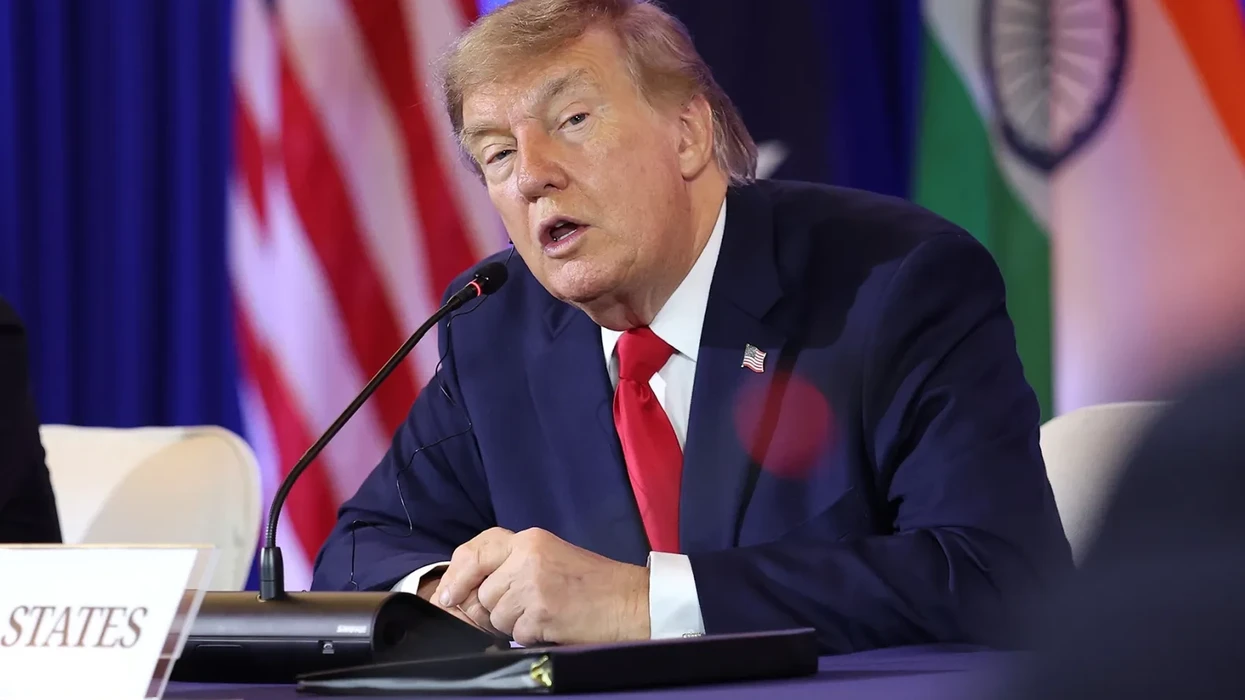
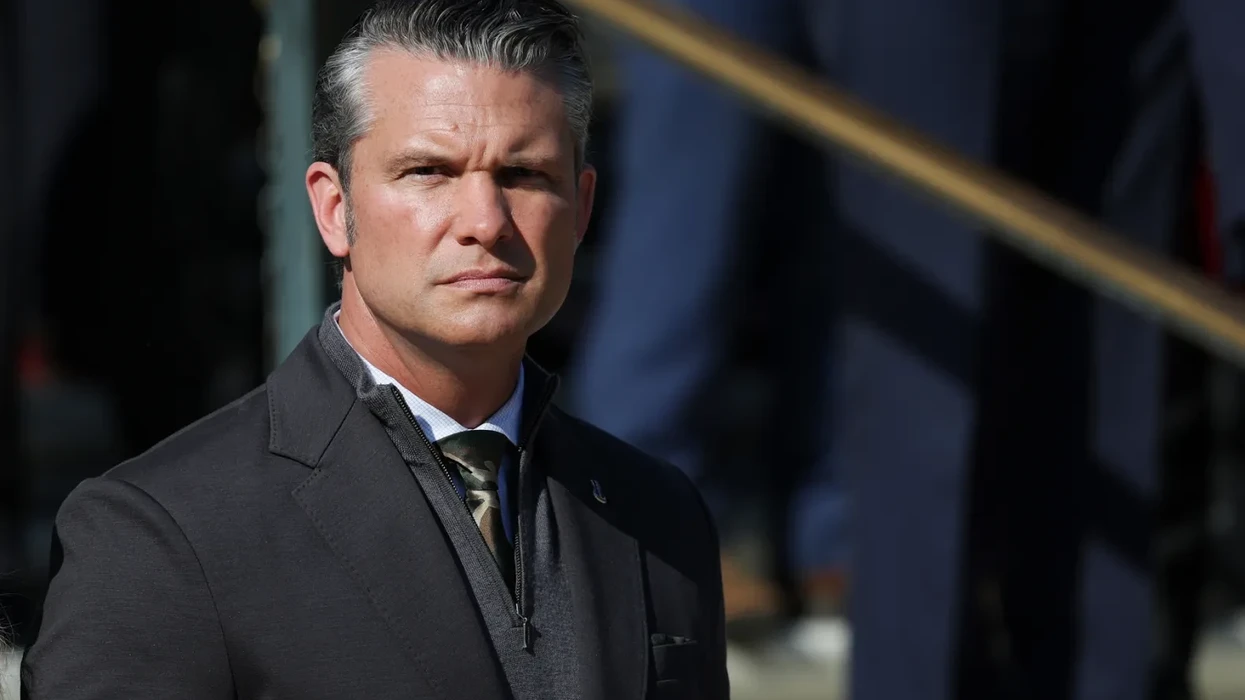

Stephen Miller in Washington, D.C., on Oct.21
Stephen Miller Wants to Win Back Young Men. It Might Not Be So Easy
Stephen Miller is not much of a man, at least by the right wing’s increasingly Herculean standards. Gawky, bald, and pasty, Miller has nevertheless ascended during Donald Trump’s second administration, most recently climbing from an advisory role to the lame-duck leader’s chief of staff.
In that role, Axios reports, Miller has one priority: win back America’s young men to the MAGA cause.
The right sees young men as one of its most important demographics, as they have been less susceptible to the overall leftward shift of young people over the past 20 years. But after making massive gains with the group in the 2024 cycle, Trump’s MAGA Man project stumbled, its support drying up faster than the lawn in front of a Texas frat house. In the 2026 midterms, young men swung 38 points in favor of the Democrats compared with how they voted in 2024. Why this happened is a complex puzzle, but the biggest piece in it is clear: American men are sick of war. In Iran, they faced the existential threat that America would revert to the warlike nation that sucked their older brothers’ and parents’ generation into 20 years of futile bloodshed in the Middle East.
Miller appears to have identified this early. The New York Times reported last week that Miller’s pitch to Trump when he was angling for the chief of staff job involved direct advice to wind down the Iran war, which Miller thought — correctly — had alienated supporters he couldn’t afford to lose.
But Iran is only part of the picture. I’ve reported on masculinity in America for years, and the anxieties that young voters face are more holistic than just a fear of being sent to die in a foreign land. That’s part of it, of course — while Generation Z was mostly too young to fight in the peak of the Global War on Terror, plenty of them remember older siblings or parents who spent years away in Iraq or Afghanistan. But what they remember even more were the economic effects of 20 years of American war. For many young men I’ve spoken to over the past few years, their childhood political memories aren’t Clinton getting a blowjob or the all-encompassing trauma of 9/11. Those on the older side remember their parents losing jobs in the 2008 crash; those on the younger side left high school or college and walked right into the Covid pandemic.
Now, with missiles flying over the Persian Gulf, young men see it happening all over again: gas prices going up, food costs rising, and the promise of owning a home and one day retiring slipping even further down the drain, even if they aren’t drafted to fight for a cause they don’t support.
In 2016, and to a much greater extent in 2024, Donald Trump effectively harnessed young men’s anxiety about their place in the world. In both those campaigns, he met men where they were: in 2016 on social media and in 2024 in a new-media world of podcasters and influencers. Both of these places gave a generation of adrift young men a culture they felt at home in — and in Trump, they had a leader there with them.
This had a profound effect. Some young conservatives, at least, still see their futures as directly linked with Trump, likely because the MAGA movement was the first time they’d ever felt a sense of political agency or control. But for those less ideologically linked with Trump, the relationship is more transactional. Sure, young men may get a kick out of Trump shimmying around on TV and talking trash. But what his successful campaigns have done is promise those men something concrete: their prices coming down, their fortunes going up, a leader who will fight for their place in the world. A few years back, at a UFC fight just after Trump was elected for the second time, a pair of twentysomethings told me that they loved that Trump “comes out like a fighter,” which they said “resonates with a lot of people that are hurting.” “When they see a strong figure like that, it gives a sense of hope,” one said.
The difference, now, is that Trump doesn’t represent that hope anymore. And that means Miller has a very, very tall hill to climb. He can’t, as he did in 2024, just tell men to “show that you are not a beta” and vote for Trump. Axios reports that Miller is expected to focus on more of this culture-war chum, cracking down on “woke” policies at schools and offices.
But all of that is window dressing. In the midterms, young men swung toward Democrats in record numbers because that party offered them something: an end to foreign wars, a better shot at the future. Even if Miller is successful and gets Trump to roll back the Iran war, young men aren’t stupid: you barely get credit for “ending” a war that you started in the first place.
Axios reports that Miller also plans to push other economic reforms the Trump administration has mentioned but not delivered on in the past, like prescription-drug prices, but also that they will continue to focus on fraud and eliminating the federal bureaucracy. The latter points sound like a rehash of DOGE, an idea that may have initially sounded good on paper but yielded unclear, if not disastrous, actual results. Still, it’s a sign that Miller has identified some of the core issues he believes lost Trump votes with every demographic, not just young men. Democrats have their own ideas of what Americans voted on this month, though, and heavy majorities in both houses of Congress they can use to push them.
The next two years, then, will determine which party is able to persuade young men that it’s fighting for them. Miller has taken this task upon himself, which Democrats should see as an opportunity. After all, he doesn’t look like that hard of a guy to beat.