
Skip to content
Search

Shaboozey is Honoring Country Tradition and Moving It Forward

Shaboozey is Honoring Country Tradition and Moving It Forward

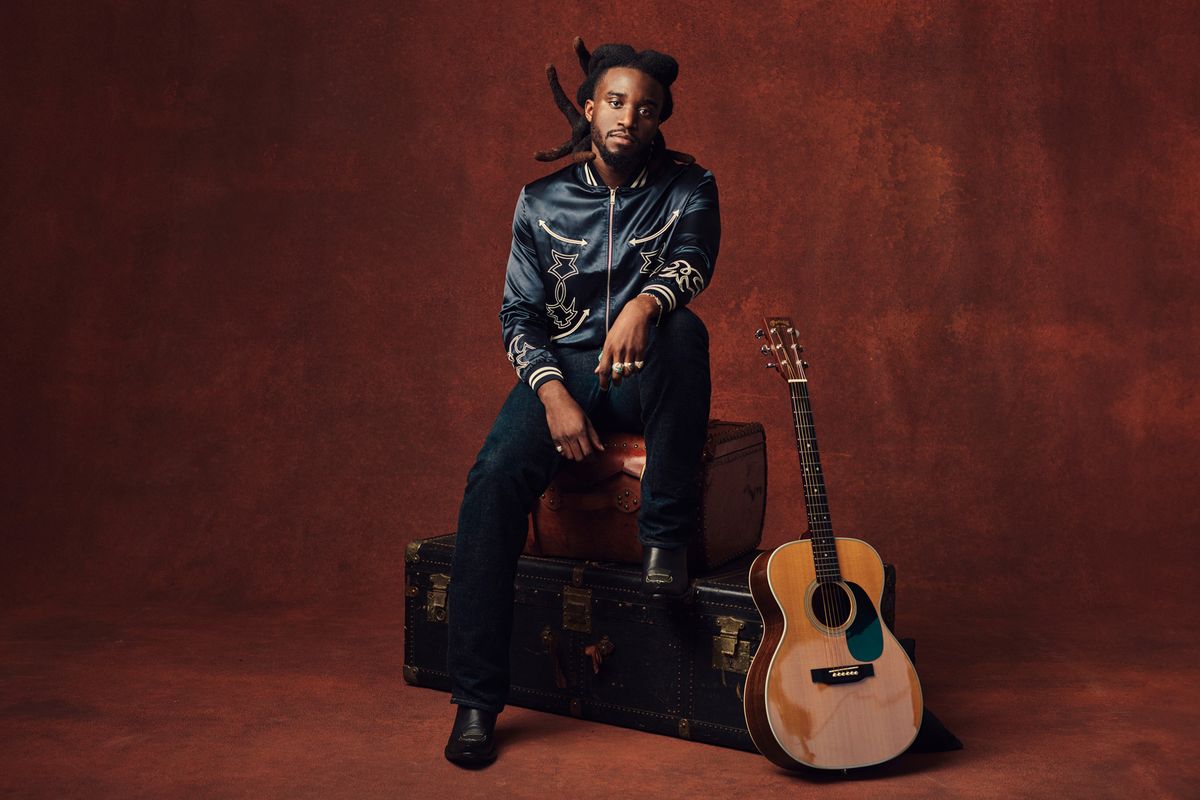
A crowded bar, copious drinking, a strummed guitar and a chorus that will make even abstainers want to shout along: Shaboozey’s “A Bar Song (Tipsy)” has it all, which explains why it’s vying for summer-mainstay status with Kendrick Lamar’s “Not Like Us,” Sabrina Carpenter’s “Espresso” and Post Malone and Morgan Wallen’s “I Had Some Help,” It’s easy to categorize those songs, but what exactly is “A Bar Song (Tipsy)”? Hip hop with country flavor? Country with rap trimmings? Or some ingenious melding of the two that portends a new genre?

“A Bar Song (Tipsy)” isn’t the Virginia-born, Nigerian American first rodeo. His 2022 debut, Cowboys Live Forever, Outlaws Never Die, dipped its toe in country waters, leaving behind his sulking first single, “Jeff Gordon.” But Cowboys still felt very much steeped in hip hop. On its follow-up, Where I’ve Been, Isn’t Where I’m Going, he comes across like someone raised on country who also appreciates hip hop. In doing so, he’s effectively changed the game. Cowboy Carter (where he made two cameos) lobbed the first volley in redefining and modernizing country, but Shaboozey’s second album is a full-on barrage of all those possibilities.


Country traditions are embedded in the album at nearly every turn, and not merely when the occasional banjo or guitar twang pop up in one of its songs. Throughout the record, Shaboozey taps into time-honored Nashville imagery: freight trains, getting loaded and asking Jesus for redemption. In “Vegas,” a town that serves as a metaphor for his life, he’s “sipping on whiskey,” drinking himself to sleep and ultimately apologizing to his mom for disappointing her. Like a modern country outlaw, he’s “ducking cops in the dirty hills” in “Last of My Kind,” an outlaw ballad in slow-grind motion. 

But his melding of hip hop and country is ultimately even deeper and richer, and never a novelty act. When he sings, which is often, Shaboozey reveals a weary baritone imbued with Nashville heartache. Working with producers Sean Cook and Nevin Sastry, he crafts songs that effortlessly blend the deep-bottom sonics  (and occasional sense of dread) of hip hop records with the beefy choruses of post-Shania country-pop. “Let It Burn,” his advice to a woman in a toxic relationship, is a sublime example; it’s a song that will get both country and rap heads on the dance floor. And he sounds ready to headline the Ryman on “Finally Over,” where he wards up despondency by way of a pedal steel and a melody with a wide-open-spaces beauty to it. 

Just as some country can overdo the mopiness, so can Shaboozey. “My Fault” finds him and duet partner Noah Cyrus in sweet-nothing pop. And when he complains about his life, he verges on modern-careerist self-parody: “All my friends have got careers/And mine just might be over/If I don’t sell my soul again/For another viral moment,” he laments at one point, about .. his biggest song? 

But there’s no better example of his lofty goals than “Annabelle,” his own variation on the time-honored cheating song. Here, he’s accusing a woman of philandering and admit he’s “looking for revenge.” Its most cutting line — “Now that we speak less, you filled with regret/And you drink till I’m no longer stuck in your head” – is the country-rap version of Stevie Nicks’ chorus in “Silver Springs.” For all its gloom, though, the song is an out-right country banger. It’s a downer, but an uplifting one. If that’s not continuing the country tradition, then nothing is. 
More Stories

Ikky

Ikky

Warner Music

Ikky

If you’ve been anywhere near Punjabi music over the last few years, you’ve already heard Ikky’s work. The Toronto-born producer, Ikwinder Singh, has been behind some of the records that pushed the sound well beyond its core audience — from Shubh’s “Baller” to his long-running collaboration with Karan Aujla across Making Memories and P-Pop Culture, along with crossover records like “Tell Me” with OneRepublic.

What’s changed over time isn’t just the scale, but where the music is landing. His records are now moving between Punjabi audiences and global pop spaces without feeling like they’ve been reworked to fit either. That comes from how he’s built his sound — rooted in Punjabi music, but shaped by growing up in Toronto, where those influences naturally overlap.

Keep ReadingShow less
Kuzi Cee

Kuzi Cee

Patrick Duong

Kuzi Cee

Born in Zimbabwe and raised across cities like London, New York and Toronto before eventually settling in Calgary, Kuzi Cee doesn’t come from one fixed scene—and you can hear that in the music. His approach to R&B feels shaped by movement: different cities, different influences, all landing in one place.

Over the past couple of years, he’s been building steady momentum, first catching attention online with early snippets of ‘Rather Be,’ a track that went on to pick up millions of streams and views across platforms. That moment translated offline too—festival slots, opening sets, and a growing audience that’s been following him from social media into real rooms. He’s shared stages with artists like Mario, Nelly and Ashanti, while also performing at spaces like the Calgary Stampede, slowly building a live presence to match the online buzz.

Keep ReadingShow less
Cameron Whitcomb

Cameron Whitcomb

James Baker

Cameron Whitcomb

Before the music started landing, Cameron Whitcomb was back home in Nanaimo, B.C., figuring things out as he went. His run on American Idol in 2022 put him in front of a bigger audience, but it didn’t immediately translate into a clear next step. What followed was slower — writing, releasing, and building a connection online through songs that felt direct and unfiltered.

That’s the space his 2025 album The Hard Way comes from. The project is built to play straight through — concise, intentional, and rooted in his own experiences, including addiction and recovery. It moves across folk, country and alternative, but never really settles into one, which lines up with how he approaches writing in the first place.

Keep ReadingShow less
Ruby Waters
Photographs by Lissyelle Laricchia

Ruby Waters

Ontarian singer-songwriter Ruby Waters has built momentum in a way that feels increasingly rare: through constant motion, word of mouth, and live shows that turn songs into something sweatier, louder, and less fixed than their recorded forms. While streaming and social media helped widen the audience, Waters’ music still carries the energy of someone figuring things out in real time, letting instinct outrun polish.

Her songs move easily between rock, pop, folk, and something harder to pin down, but genre rarely feels like the point. There is looseness in the writing, chaos in the delivery, and a refusal to flatten personality into something easier to package. Even as her audience has grown, Waters continues to make music that feels emotionally immediate, sometimes messy, and entirely uninterested in sanding itself down for mass approval.

Keep ReadingShow less
Connor Price

Connor Price

Megan Clark

Connor Price

Connor Price didn’t come up through the usual music industry system. The Markham-born artist spent years working as an actor before the pandemic brought that side of his career to a halt, pushing him to take music seriously and build something of his own. What followed was a fully independent run shaped by consistency, sharp instincts for digital storytelling and a close partnership with his wife and manager, Breanna.

Together, they’ve built a hands-on operation that controls everything from releases to visuals, allowing Price to move quickly and stay directly connected to his audience. His Spin the Globe series expanded that world further, turning global collaboration into a format while introducing listeners to artists across countries.

Keep ReadingShow less