
Search
Don’t Miss Out
Journalism that matters. Music that inspires.

Most Popular
More Stories
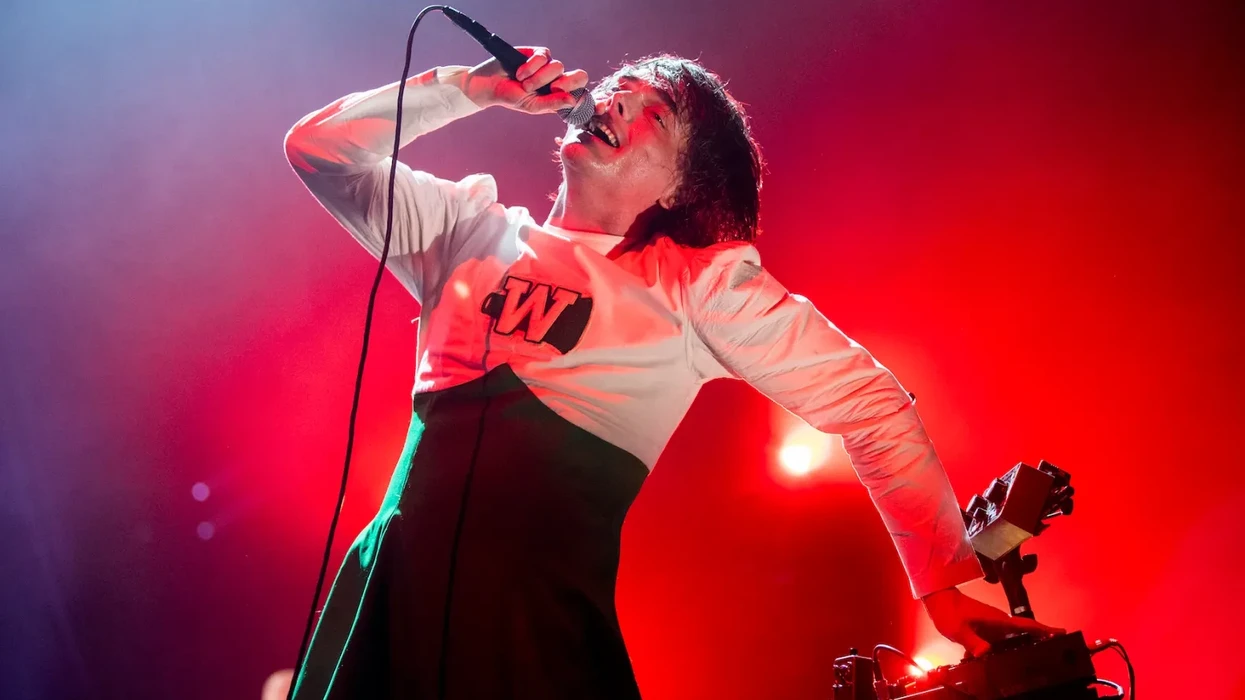
My Chemical Romance
Allen J. Schaben / Los Angeles Times via Getty Images
Gerard Way Hints at New My Chemical Romance Album: ‘You Guys Deserve Another Record’
Sep 14, 2026
Gerard Way revealed at My Chemical Romance’s concert Saturday in San Antonio that the band plans on recording a new album, their first LP in over 16 years.
My Chemical Romance has spent the past year on tour celebrating the 20th anniversary of 2006’s The Black Parade. The group released one more LP — 2010’s Danger Days: The True Lives of the Fabulous Killjoys — before disbanding for a half-decade in the mid-2010s.
The group reunited in 2019 for a series of tours but only one new song, 2022’s “The Foundations of Decay.” However, at Saturday’s show, Way revealed to fans that MCR hopes to start work on their long-awaited next album.
“We should probably make more songs. [“The Foundations of Decay”] was really awesome when we kept doing it,” Way told fans at the Alamodome. “And then you know, stuff happens, life happens. But, just know that, we kind of always wanted to make another record, so we hope to. Because you guys, honestly, kept us alive for so long that you guys deserve another record.”
Saturday’s concert marked the official end of the North American leg of the Long Live the Black Parade Tour, though the band will remain on the road for a pair of festival appearances — Louisville’s Louder Than Life and Sacramento’s Aftershock — before My Chemical Romance play a five-night residency at Los Angeles’ Hollywood Bowl that concludes on Halloween, October 31.
After that, MCR will embark on a monthlong tour of southeast Asia that ends in late-November, at which point the band hopefully can get back in the studio.
Keep ReadingShow less
Featured Stories

Don’t Miss Out
Journalism that matters. Music that inspires.
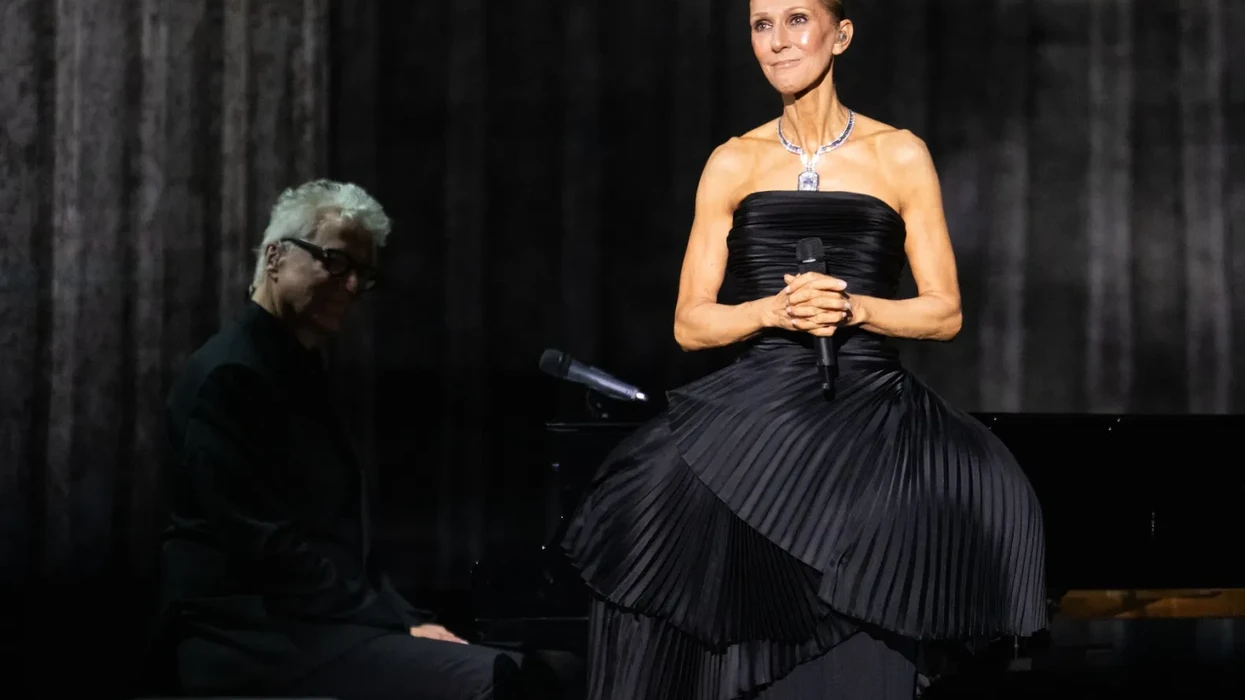
NANTERRE, FRANCE - SEPTEMBER 12: Celine Dion performs on the opening night of her residency at Paris La Defense Arena on September 12, 2026 in Nanterre, France. (Photo by Samir Hussein/WireImage)
Samir Hussein/WireImage
Céline Dion Returns to the Stage in Paris With Elegance and Emotion
Sep 13, 2026
Announced for 8 p.m. with no opening act, Céline Dion finally appeared at 8:48, after a wait that had only intensified the fever inside Plenitude Arena. By then, the chants had reduced one of the world’s most famous singers to the only name Paris seemed to need: “Céline! Céline! Céline!”
For days, the city had been speaking the same language. A nearby transit station had been temporarily renamed for her; businesses had joined in, sometimes enthusiastically enough to blur the line between celebration and marketing. Even the sushi restaurant across from the arena had a papier-mâché Céline holding its menu. Paris had not simply welcomed Dion back. It had appropriated Céline affectionately, commercially, and almost everywhere.
Then, with almost no fanfare, the enormous stone structure at the center of the stage slowly opened. A narrow light appeared. Dion appeared alone in black and remained silent, letting the wave of applause and affection from the arena wash over her. She barely moved, almost in contemplation. The ovation kept building, and eventually the tears came.
When she began the stripped-down opening lines of “On ne change pas” — “We Don’t Change” — her voice was already trembling with emotion. This title suddenly meant something more on this particular night. Jean-Jacques Goldman wrote the song. The album D’eux remains their most important collaboration. It came out in 1995, with Goldman as its writer and producer, and went on to become the best-selling French-language album of all time. “On ne change pas” came later, but opening with a Goldman song immediately brought Dion back to the French repertoire that has bound her to this audience for decades. The emotion soon overtook her. At one point, Dion had to stop singing altogether and let the audience carry the song for her. She had promised herself she wouldn’t cry, she told them, but those were tears of joy. Then came the words the arena had been waiting years to hear.
“I am standing here in this town I love,” Dion said. “It was a promise that I made to come back — and we made it.”
 Nicolas Gerardin
It was Dion’s first full concert since March 8, 2020, when her Courage World Tour stopped in Newark, New Jersey, just as the Covid-19 pandemic was bringing live music to a halt. For French audiences, the wait had been even longer: Dion had not performed a full concert in France since her Live 2017 tour, which ended its French run in Nice that July. Her performance of Edith Piaf’s “Hymne à l’amour” from the Eiffel Tower during the 2024 Paris Olympics had marked a spectacular return to public performance, but sustaining a full concert — and now a Paris residency — while living with stiff-person syndrome was something else entirely. Dion described the road back as “rocky” and longer than expected, with stops along the way. She had held onto a ray of light, she said, because she believed in it. Now, “the sun is here in front of me.” That night, she said, she wanted to sing “for you, for me, and sing life.”
There was no disguising the effort behind the triumph. Dion sometimes seemed vulnerable, sometimes completely in control, and the audience could see her moving between the two.
Montreal-born creative director Willo Perron divided the show into four acts. Stone was everywhere: huge grey monoliths, brutalist arches and slate surfaces against a largely black-and-white stage. The structures rotated, parted and opened like theatrical scenery, gradually revealing a pianist, strings, musicians and, eventually, a gospel choir. Even the massive screens often extended that same architecture, multiplying arches and walls of stone until the physical stage and its projected landscape seemed to merge.
Between acts, films directed by French filmmaker Thibaut Grevet developed that visual language into something more narrative. In one of the most striking, Dion walked alone across a desert landscape toward an enormous stone structure, somewhere between the otherworldly scale of Dune and the immaculate elegance of a fashion film. For someone whose own body has imposed new limits on movement, the landscape carried an obvious resonance. She was walking through a world made almost entirely of stone. And then the stone began to move. Walls shifted, arches opened, and musicians emerged from structures that had seemed immovable only moments before.

Nicolas Gerardin
A later film offered an almost opposite image. Dion appeared with a contemporary dancer and moved with him, the emphasis now on the body rather than the landscape, on contact, gesture and physical freedom. After years in which illness had imposed new limits on her movement, the image inevitably suggested a reclamation of the body. That idea then spilled onto the stage itself: later in the show, during a playful disco sequence, Dion danced.
This was not Vegas transplanted to Paris. The visual language owed as much to contemporary opera and Paris fashion culture as to the arena spectacular. Fashion runs through Perron’s work, from projects with Beyoncé and Rihanna to Chanel. It showed here. Black and grey couture, diamonds and sequins dominated Dion’s looks. Even the gospel choir entered with the precision of a runway procession. At times, the 35,000-seat arena almost disappeared; some scenes had the intimacy of opera. But intimacy was precisely its gamble.
And then there was the voice. It was not always predictable, nor did Dion behave as though it should be. At moments it wavered; elsewhere she seemed almost startled by the sustained notes and high reaches she could still command. Her intricate vocal runs could still make the human voice sound almost like a wind instrument, a display of formidable technique. Live performance has always contained risk. For an artist who has spent much of her life demanding almost impossible perfection from herself — and whose audience has learned to expect it — perhaps the more radical gesture was allowing that risk to remain visible. At one point, Dion forgot the words, laughed softly, apologized and simply started again.
“I’m going to tell you three words,” she later announced in French. “I am well.”
She had learned to live with this fragility, she explained. By living alongside it, she had learned to tame it and turn it into her “life force.”
Throughout the night, Dion moved between two parallel careers: the global superstar of “The Power of Love,” “My Heart Will Go On” and “All By Myself,” and the French-language collaborations with songwriters including Goldman, Michel Berger and Luc Plamondon that are woven into the cultural memory of the francophone world.
“My Heart Will Go On” arrived after “Hymn to the Sea,” as another section of the set opened and a giant chandelier descended overhead, evoking the grand salons of Titanic. Later, a playful sequence moved from Donna Summer’s “I Feel Love” through “I’m Alive” and “That’s the Way It Is” into Eurythmics’ “Sweet Dreams (Are Made of This).” Dion danced. Across the seated floor, people rose and moved together like a wave.
Then “Un garçon pas comme les autres (Ziggy),” the Michel Berger-Luc Plamondon song from the landmark French-language rock opera Starmania, became one of the night’s great communal singalongs, a reminder that some of Dion’s biggest emotional touchstones in France are not necessarily the songs by which America knows her best.
The final act moved toward gospel and opera. A choir filled the stage before Dion stood alone on a stone promontory to sing “Ebben? Ne andrò lontana” from Alfredo Catalani’s La Wally, an aria famously associated with Maria Callas, while snow fell through the arena.
Then came “All By Myself.” Dion reached for its formidable high note and landed it. For an instant, she looked almost astonished herself. She wasn’t only proving it to the audience. For a moment, she appeared to be proving it to herself.
After “Pour que tu m’aimes encore” and “S’il suffisait d’aimer”, bringing Goldman back into the story at the very end, Dion gave an almost operatic company bow, stepping aside so each section of the troupe could receive its applause before kneeling toward the audience on either side. Something about that final bow captured the evening. Dion has spent a career giving her audience everything she had while demanding an almost impossible level of perfection from herself, a standard the world eventually came to demand from her, too. In Paris, she seemed to be freeing herself from some of that weight. Not from discipline or ambition, both of which remain formidable, but from the idea that every effort must remain invisible and every performance immaculate.
There was something liberating in watching her allow the tears, laugh at a forgotten lyric, test the limits of her voice, move her body again and occasionally appear surprised by what it could still do. The stage has always seemed central to Dion’s life; now, returning to it also seemed like a way of reclaiming that life on different terms.
Around the stands, conversations were already turning to what would happen after the show. A group of young women who had spent night after night waiting outside the Royal Monceau hotel were debating whether to head straight back there. Since arriving in Paris, Dion has repeatedly come down late at night to spend time with fans waiting outside, talking with them, dancing with them, sometimes simply staying for a while. When she has needed to preserve her health and her voice, she has asked them to leave records with security for her to sign instead.
Later in the night, outside, some of them were already heading back to wait for her again.
Céline Dion’s Paris residency includes 26 performances at Plenitude Arena: 16 shows from Sept. 12 through Oct. 17, 2026, followed by 10 additional dates from May 8 through May 29, 2027, added in response to exceptional demand.
SETLIST — Plenitude Arena, Paris — Sept. 12, 2026
Act I
• “On ne change pas”
• “Destin”
• “Because You Loved Me”
• “Encore un soir”
• “Les derniers seront les premiers”
• “Tout l’or des hommes”
• “The Power of Love”
Act II
• “Hymn to the Sea”
• “My Heart Will Go On”
• “Beauty and the Beast”
• “The Chase”
• “J’irai où tu iras”
• “Ne bouge pas”
• “Dans un autre monde”
• “I Feel Love / I’m Alive / That’s the Way It Is / Sweet Dreams (Are Made of This)”
Act III
• “Dansons”
• “Un garçon pas comme les autres (Ziggy)”
• “Courage”
Act IV
• “Love Can Move Mountains”
• “The Prayer”
• “It’s All Coming Back to Me Now”
• “Je chanterai”
• “Ebben? Ne andrò lontana”
Encore
• “All By Myself”
• “Pour que tu m’aimes encore”
• “S’il suffisait d’aimer”
• “Des milliers de baisers” (snippet)
Alma Rota is publisher and chief digital editor at Rolling Stone France.
Keep ReadingShow less

Skratch Bastid*
Skratch Bastid’s BBQ is Bringing a Stacked Canadian Lineup to Toronto
Sep 11, 2026
Hometown legend Skratch Bastid is bringing his annual summer party back to Toronto this weekend, with Bastid’s BBQ taking over The Bentway on Saturday, September 12.
The Toronto edition of the annual outdoor gathering takes over The Bentway on Saturday, September 12, bringing Bastid together with an expansive roster of Canadian and international talent. The bill includes Canadian standouts Raz Fresco, Nicholas Craven, Mike Shab, Brandan Duke, DJ Rena, DJ Vanessa, Laura K and Finn, with Bastid himself anchoring the day.
They'll share the stage with some legendary names from south of the border, including M.O.P., Havoc of Mobb Deep, Cormega, Big Noyd and Conductor Williams.
Raz Fresco, the Brampton-born rapper and producer behind BKRSCLB, has built an extensive catalogue that connects Toronto's underground with artists across the international rap scene. Nicholas Craven, the Montreal producer known for his sample-heavy work with some of hip-hop's most respected MCs, including Westside Gunn, Mach-Hommy and Montréal's SeinsSucrer.
Bastid's BBQ began in 2011 to bring together his passion for music, food and community, eventually expanding into a touring event series. The Toronto edition continues giving a particularly strong platform to artists from Canada's hip-hop and DJ scenes.Born Paul Murphy in Nova Scotia, the three-time Scribble Jam DJ battle winner has spent decades moving between turntablism, production and live events, and has become one of the country's most recognizable DJs in the process.
Keep ReadingShow less

Dolly Parton performs on Nov. 18, 2023 in Knoxville, TN.
Jeffrey Vest/Icon Sportswire/Getty Images
Vote to Rename Nashville International Airport After Dolly Parton Passes Unanimously
Sep 11, 2026
All six board members from the Metropolitan Nashville Airport Authority have voted to rename Nashville International Airport after Dolly Parton. The unanimous decision is the first step in the rebranding process, which will continue to unfold in the coming months, the MNAA said.
“While a final name has not yet been determined, we are working closely with the appropriate parties to thoughtfully determine how Dolly Parton’s name and legacy will be incorporated,” the MNAA said in a statement. “This vote represents the first step in a multifaceted process. In the coming months, we anticipate having more definitive plans to share regarding the next steps and implementation.”
The state of Tennessee first announced plans to rename the location after Parton died in late August. “Dolly Parton’s extraordinary life is forever woven into the fabric of our state,” Gov. Bill Lee said in a statement at the time. “At a place where Tennessee welcomes the world, it is fitting that Nashville International Airport would bear the name of our state’s favorite daughter and greet travelers with the enduring legacy of Dolly’s music, generosity, faith, and kindness.”
Officials hope the act of renaming Nashville International Airport in Parton’s honor will be a lasting tribute to the country legend. The decision came sooner than expected. The proposal wasn’t scheduled to be heard until Sept. 17.
“Dolly’s remarkable legacy reminds us that what makes Nashville special is our ability to welcome people from every walk of life. She understood that dignity, kindness and opportunity should never be defined by where you come from or your socioeconomic status,” said Doug Kreulen, president and CEO, Metropolitan Nashville Airport Authority.
More than a year before Parton’s death, two Tennessee natives launched a Change.org petition to rename Nashville International Airport after her. The petition has received an influx of signatures over the past two weeks.
“Dolly’s philanthropic efforts, her outstanding influence in the music industry, and the love she has instilled in our hearts through her actions and songs, truly make her a deserving candidate to have the Nashville International Airport named after her,” the original petition description read. “We request that the airport’s name be changed to Dolly Parton International Airport to honor an icon who has given so much to our state and to the world. Sign the petition to make this change a reality. We could all be Departin’ from Parton!!”
Keep ReadingShow less

Slayyyter at Lollapalooza 2026 in July.
Sacha Lecca for Rolling Stone
The War on Drugs, Slayyyter, This is Lorelei, and All the Songs You Need to Know This Week
Sep 11, 2026
Welcome to our weekly rundown of the best new music — featuring big singles, key tracks from our favorite albums, and more. This week, The War on Drugs are back with their first song in four year (and it rocks), Slayyyter issues a warning to her ex on a threatening rework of “Crank,” and This is Lorelei wags his finger at a shifty friend on a jaunty highlight from his latest album. Plus, new tunes from Rema, Jhené Aiko, Tinashe, Dolly Parton, and Quavo.
The War on Drugs, “Who’s That” (YouTube)
Slayyyter, “Crank 2” (YouTube)
This is Lorelei, “The Kid With the Crown” (YouTube)
Rema, “Oh No” (YouTube)
Jhené Aiko feat. Kendrick Lamar, “So Good” (YouTube)
Dolly Parton, The First Ladies of Bluegrass, “Bound to Ride” (YouTube)
Lucy Dacus, “No Thank You, I Love You, Goodbye” (YouTube)
Tinashe, “Pillow Fight” (YouTube)
Robi, Arón Piper, “De Sueño En Sueño” (YouTube)
Quavo feat. T.I., “Backwards” (YouTube)
Rachel Chinouriri, “Make Believe” (YouTube)
Eric Church, “On the Road” (YouTube)
Sierra Ferrell, “Pair of Dice” (YouTube)
Rio Da Yung OG, Veeze, “Superstar” (YouTube)
Haruomi Hosono, “Ayurveda” (YouTube)
Shygirl, “Lucky (Hymn)” (YouTube)
Eem Triplin, “Funny Games” (YouTube)
Ibibio Sound Machine, “Chopping Mountain” (YouTube)
Teenage Fanclub, “Be With You Tonight” (YouTube)
M(h)aol, “Scam Manifesto” (YouTube)
Cooper Kenward, “Ya Buddy” (YouTube)
DJ Suzy feat. Nourished By Time, “So Sw33t” (YouTube)
Anamanaguchi, “Yeah I Guess” (YouTube)
Daine, “Product of Profit (P.O.P.)” (YouTube)
Computer Kill, “Must Have Been a Dream” (YouTube)
Sophia Stel, “I Do” (YouTube)
Elderbrook “Never Get Enough” (YouTube)
Keep ReadingShow less
Load More
Rolling Stone Canada
ROLLING STONE CANADA is a registered trademark of ROLLING STONE, LLC, a subsidiary of Penske Media Corporation.
©2026 ROLLING STONE, LLC. Published under license.
©2026 ROLLING STONE, LLC. Published under license.
Everybody Likes Drake Again. That Means We’re Healing