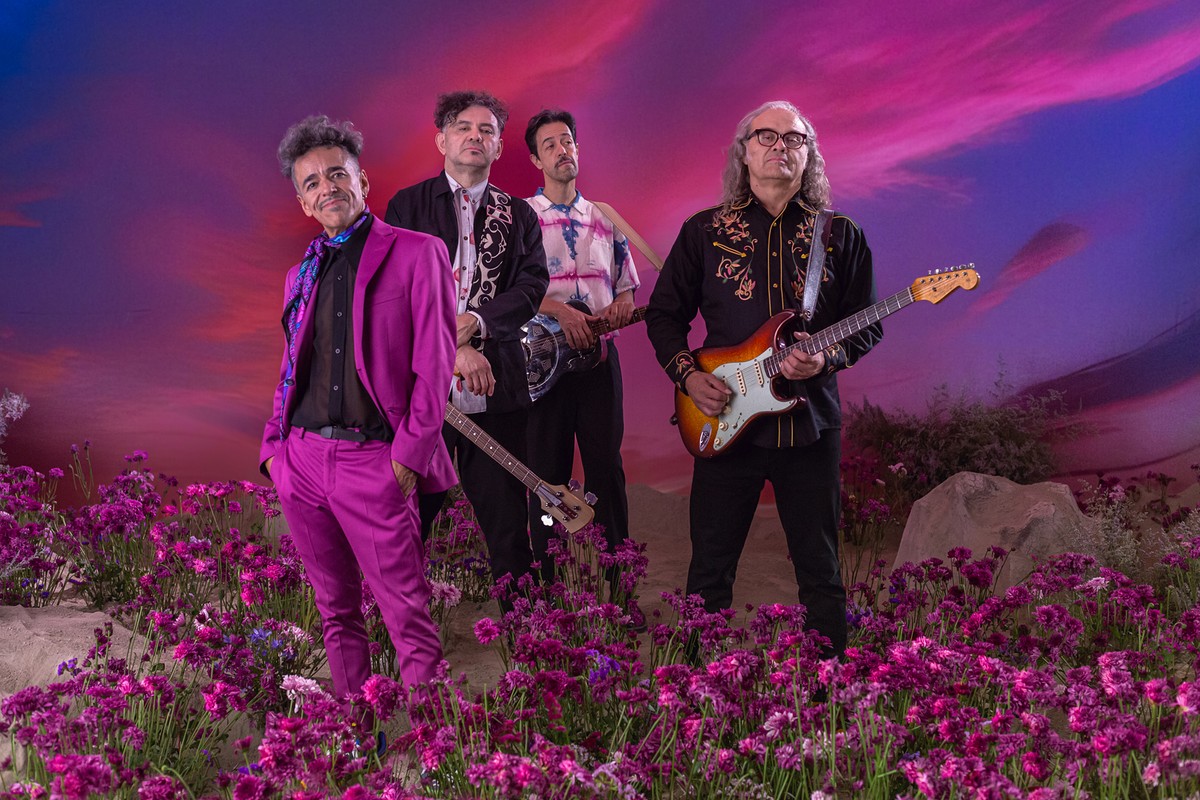

Thirty years ago, the boundaries of Latin American rock were forever expanded with the release of Re, the second album by Mexican quartet Café Tacvba. At the time, other bands were also fusing mainstream rock idioms with the vast tapestry of traditional Latin folk. Tacvba outdid them all with Re — a sprawling, manic collection of 20 tracks that mirrors life in Mexico City and, by extension, the reckless energy around the continent.
Singer Rubén Albarrán (nicknamed Cosme on this particular session), keyboardist Emmanuel del Real, guitarist Joselo Rangel, and his bassist brother Quique dive gleefully into a mosh pit of punk, ska, funk, and grunge, but also pay fleeting tribute — both ironic and reverential — to mambo and bossa nova, huapango and norteño, bolero and balada. Re is unapologetic about its own whimsy: Its brand of magical realism is instinctive — even unconscious, perhaps. Not surprisingly, it sounds just as fresh and prescient as it did in July 1994; tracks like “La Ingrata,” “Las Flores,” and “El Baile Y El Salón” are still some of the band’s biggest hits.
After Re, Tacvba’s albums became even more ambitious: The experimental, double LP Revés/Yosoy (1999) is also the band’s most achingly beautiful. In 2007, Sino relished the chance to embrace progressive rock. The group is currently working on a new album, but Re remains the one that is the easiest to love.
Rolling Stone caught up with Del Real and Quique Rangel to reminisce about the making of this timeless classic.
Re made history and single-handedly changed the sound of an genre. What was the recording process like?
Del Real: Everything happened so fast. In January [of that year], we started rehearsing the new songs in a room at my grandmother’s house. By March, we were already recording in L.A., and we mixed it in May. It was all so spontaneous. We did strive to express everything that we had learned from our first album. We left our neighborhood and found ourselves playing all over Mexico, also visiting other countries and getting to know their culture. I get emotional remembering those long-gone moments of innocence. But we didn’t think much about it. Everyone brought his batch of songs, and we got to work.
Rangel: I remember being 24, filled with doubts, worried about my upright bass arriving to the studio in time. Part of the greatness of that record boils down to how innocent we all were: “This is what we want to do. Can it be done? Is that even possible?” It didn’t really matter. There were no limits to our quest. We also realized that the recording studio could be an additional creative tool.
It’s such a delirious, frantic record. So many ideas packed into those 20 songs.
Del Real: It’s all connected to Mexico City — the permanent hysteria and chaos. The miracle entailed in surviving this place filled with marvels and disasters. Not every single song references the city, although “Madrugal” and “El Metro” do. But the energy of the record as a whole mirrors the beginning of our career: going to take a test at college directly after a post-show party, then taking the bus to Guadalajara and returning at night for another day of studying — unlike today, when you stay late one night and it takes you 800 weeks to recover [laughs]. There was so much chaos, and so much enjoyment, too. The songs weren’t always high voltage, but the feeling of perpetual motion left a mark on the record.
Is Re a concept album?
Rangel: It definitely is. As soon as we began to work on it, we realized that we needed a unifying thread. Many songs were inspired by the concept of returning, as depicted by Rubén with the image of the snail on the cover. We also gave a lot of thought to the sequencing.
Del Real: [Producer Gustavo Santaolalla’s] vision made us believe that we could have fun and explore our musical ideas without any further expectations. He was the one who proposed that the album should include the 20 tracks that were brought to the sessions.
The melodica solo on “Las Flores” is an iconic rock en español moment. It reminds me of Bach.
Del Real: You may be right. I was taking piano lessons at the time, and I remember a book of Bach’s Inventions lying around. I was also listening to XTC’s Oranges & Lemons a lot, and I recently realized that my solo references the track “Mayor of Simpleton.”
Rangel: “Las Flores” could have been a pop song — but then we added the jaranasin to the intro, the melodica, and the 6/8 section. It wasn’t a theoretical experiment — it happened intuitively. On the upright bass, I’m playing lines inspired by Paul Simon’s Graceland, the South African fretless bass players who make the notes sound like drums. We never imagined the solo would become iconic. Meme [del Real] is a genius at finding ideas that stray from the obvious.
Something I love about Re is the ambiguity with which it tackles the venerable Latin genres of the past. It zigzags between parody and heartfelt tribute.
Del Real: Re has something very playful and absurd about it, without becoming clownish. There were so many references at play: Is this a bolero, or a bossa? Is that bit like a Ministry song? It is, but at the same time, it isn’t. I think that aspect of it is cultural, like our Día de los Muertos. How can you turn death into a colorful celebration? It makes no sense.
Rangel: There’s an implicit homage in parody. “La Ingrata” takes romantic love to the most absurd level. A caricature can be flattering, or an aberration. Like Mexico City: such a beautiful place, yet it can be shit.
What was recording in Los Angeles like?
Del Real: We got to L.A. and the label got us a car and a two-bedroom apartment. So we had to share rooms, and spent every single moment of the day together. That would never happen again — it was like a Café Tacvba Big Brother. Whenever we had a free day, we would drive to the market and buy provisions for the week. We were tired, there was a lot of friction in the air, and all that tension found its way into the record.
Rangel: I remember driving from the studio at night in the freeway and listening in complete silence to a cassette tape with the day’s work. We took turns driving, but for some reason I believe Joselo never got behind the wheel [laughs].
What happened after its release?
Rangel: We listened to the finished album with Gustavo, [associate producer] Aníbal Kerpel and [sound engineer] Tony Peluso and all of us agreed that we had made a great record. Then we took it to the label and the doubts began. They had the brilliant idea of releasing two singles simultaneously, and they ended up canceling each other. I notice a lot of bitterness in me when I talk about Re. In Mexico, it went largely unnoticed.
Del Real: Warner knew that we had something special, but they didn’t know how to market it. Nothing was happening, but then we got a call from the label. “El Ciclón” had become the biggest summer hit in Chile, and there was a demand for live shows. We arrived in Santiago and were shocked to see that suddenly we were big in Chile. This tour gave us the opportunity to play Argentina, and also gain more respect in Mexico after we returned.
All of your recent albums are strikingly different. You never attempted to replicate Re.
Del Real: The premise of the band is to be on the lookout for new creative outlets. This turned our career into a series of challenges. As time went by, people began to talk about Re in more positive terms. I’m very moved by the fact that I was there when it all transpired. That album didn’t happen by chance — but it was almost a happy accident.



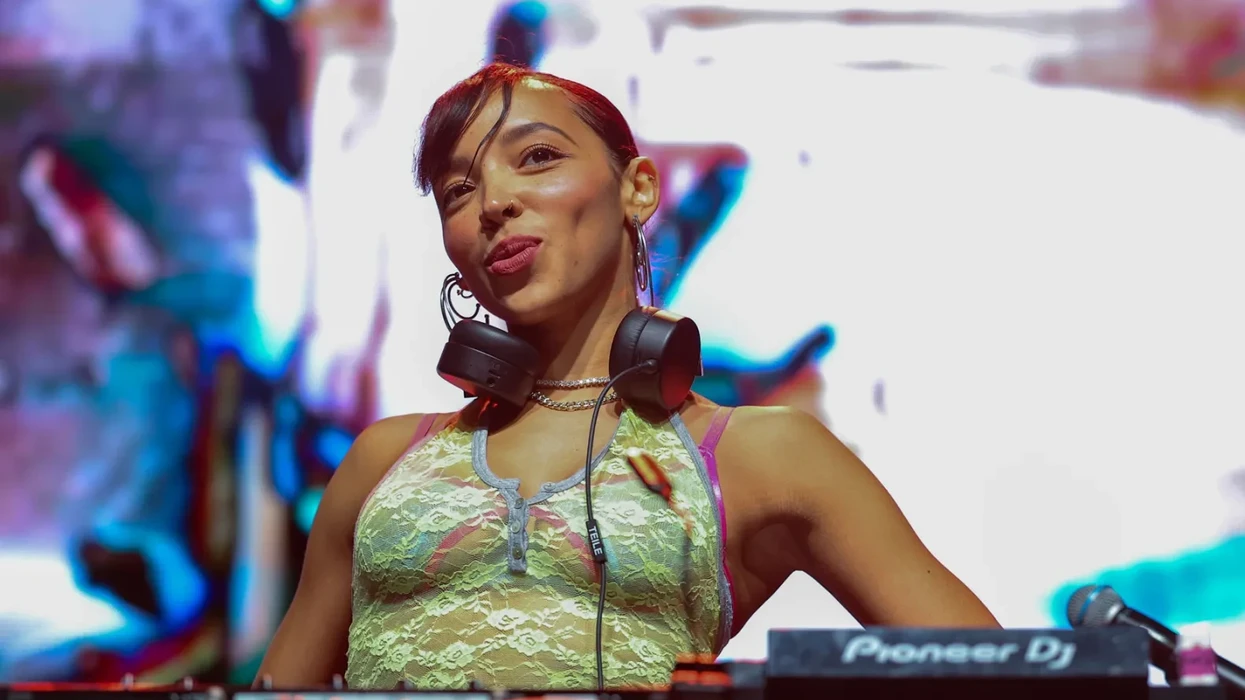



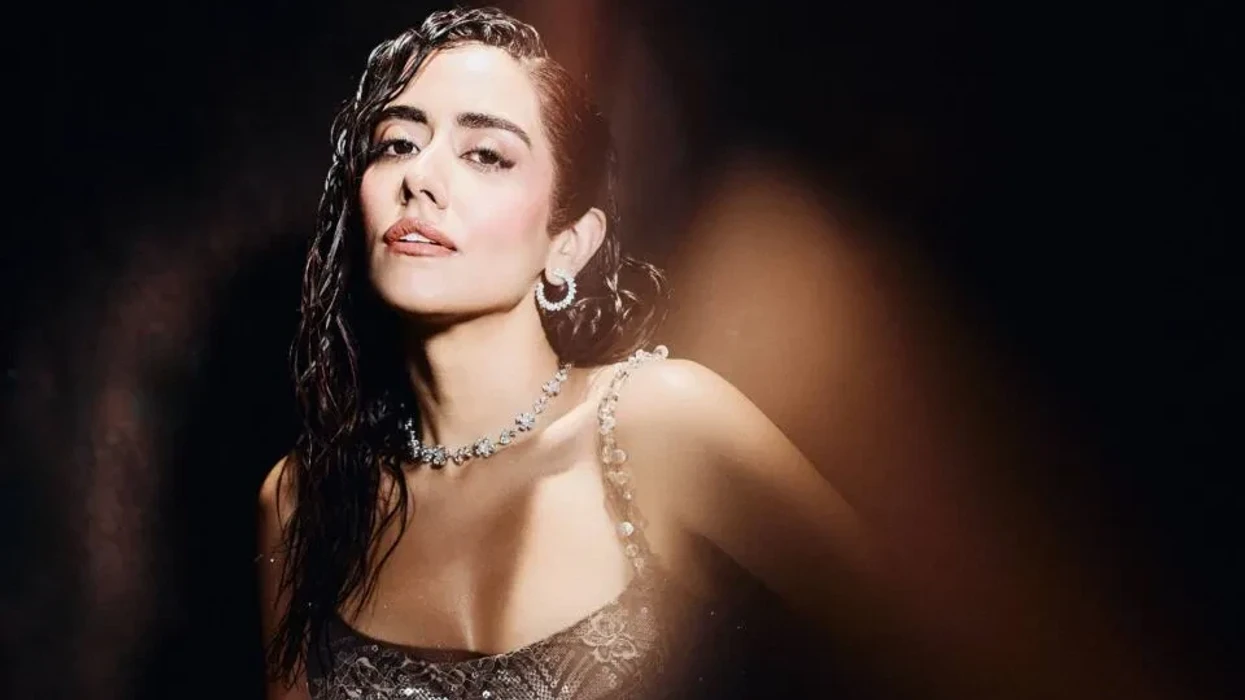
 Jonita starred in the Tamil film Idhayam Murali alongside the likes of Fahadh Faasil. Photo: Courtesy of the artist
 Jonita was recently on tour with Anirudh Ravichander in North America. Photo: Courtesy of the artist