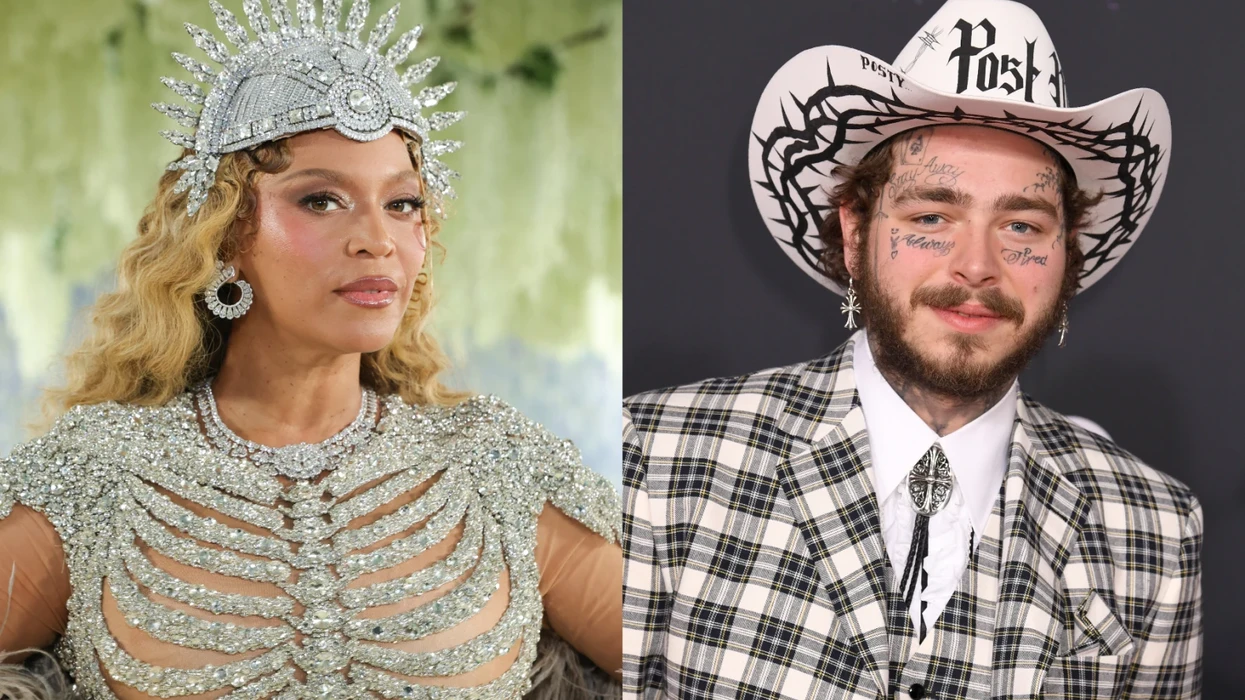
When Beyoncé unveiled a poster homage to country jamborees to announce the track list to Cowboy Carter, the project’s country tie-ins became even more clear. The artwork included references to Willie Nelson, Dolly Parton — and Linda Martell, a name that may have only resonated with country scholars.
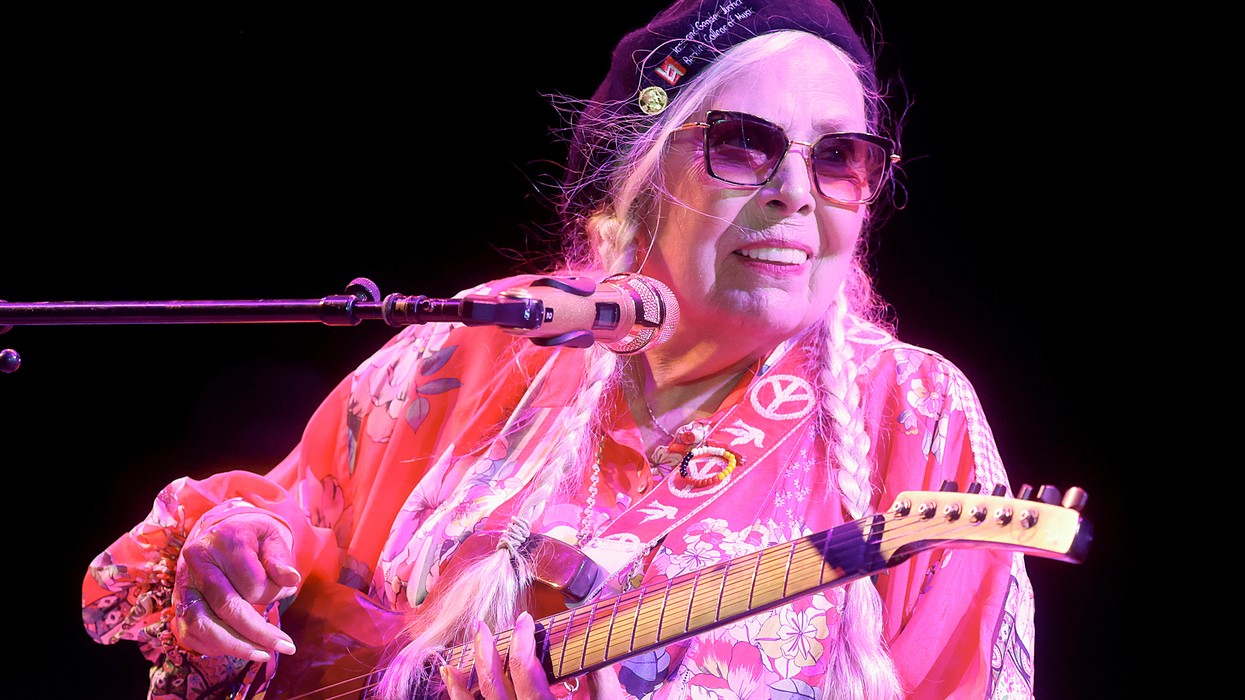
Although she isn’t a star on the magnitude of the other names Beyoncé included, Martell, now 82, left a sizable mark on country music. Released in 1970, her sole album, Color Me Country, was the first major release by a Black female artist in country. A mix of honky-tonk spunk and heartbreak balladry, all infused with her roots in gospel and R&B, the album spawned three country hits and led to Martell becoming the first solo Black woman country artist to play the Grand Ole Opry. During that time, she also appeared on the hugely popular syndicated country variety show Hee Haw and shared stages with country artists like Hank Snow and Waylon Jennings.
Those may not seem like huge victories in the context of 2024, but back then, Martell’s mere presence was historic. Although Nashville had previously welcomed a small number of Black artists, including Charley Pride, Martell was one of the first women of color to enter the field. But, as she told Rolling Stone in an exclusive interview in 2020, she also paid the price on many levels.
“I am proud that Beyoncé is exploring her country music roots,” Martell said in a statement on the day of the album’s release. “What she is doing is beautiful, and I’m honored to be a part of it. It’s Beyoncé, after all!”
Here’s what you need to know about a pioneer who’s heard introducing two tracks on Cowboy Carter (“Spaghettii” and “The Linda Martell Show”) and helped set the stage for the album.
Martell didn’t start out in country at all.
The daughter of a sharecropper, Martell was born Thelma Bynem and raised in Leesville, South Carolina, which was so segregated that it had separate churches for whites and Blacks. With a sister and a cousin, she formed a Southern girl group, the Anglos (later the Angelos), who recorded several singles for small labels.
The songs weren’t hits and the group broke up, but a local entrepreneur heard her sing country songs during a gig at an Air Force base and offered to fund a demo tape. Martell was soon introduced to Shelby Singleton Jr., a Nashville label owner and producer, who suggested she ditch pop for country (and become, in essence, the female Charley Pride). “I looked at him, like, ‘Really?’” Martell recalled to RS in 2020. “I was a little bit shocked! I was mostly doing pop. But he said, ‘You gotta go country.’” She was also taken back when she learned the name of the label that would be releasing her music: Plantation Records. Although the name troubled her, Martell felt she had no choice but to sign with them.
Color Me Country had a promising start, but her Nashville career was shockingly brief.
As much as Martell shattered a glass ceiling in country, her moment would prove to be fleeting. She relocated to Nashville, but on the road, she endured occasional taunts from country fans unaccustomed to seeing a Black woman onstage, singing country songs. As Martell told RS, she felt she couldn’t shout anyone down: “When you’re playing to an all-white audience — because Lord Jesus, they are prejudiced — you learn to not say too much.”
Offended when Singleton and his companied shifted their focus to the white country pop singer Jeannie C. Riley, Martell parted ways with Plantation. She tried to record for another label but claimed she had been “blackballed” (her term) as a result of parting ways with Singleton.
Her career never recovered from that setback.
Over the next two decades, Martell moved back to South Carolina and played clubs and bars, sang on a cruise ship in California, and even ran a record store in the Bronx in New York. By the Nineties, she’d returned once more to South Carolina, where, to support herself, she drove a bus for the Batesburg-Leesville school district. She sang periodically, sometimes in a local band called Eazzy, but as she told RS in 2020, she has no memory of ever singing her country material with that group. The door had closed.
Several years ago, Linda Martell wasn’t easy to find.
When Rolling Stone went in search of Martell in 2019, all roads did not immediately lead to her. She had no remaining music industry contracts. The record company that had recently reissued Color Me Country on CD had licensed the music from a larger conglomerate and didn’t have a direct contact for her; they didn’t even know if she was still alive.
RS only learned Martell had been a South Carolina bus driver thanks to a newspaper interview she’d given in the Nineties to help promote a compilation of Black country music. Since Martell had long retired by 2019-20, a Batesburg-Leesville town official wasn’t aware she was living there until after being contacted by RS. After asking around and finding people who remembered a school worker named “Thelma,” the official tracked down a phone number for a family member and passed it along to us.
In the last few years, Martell has finally started receiving her due.
Now 82, Martell still lives in South Carolina with her family, who were equally taken aback by the Cowboy Carter track reveal: “Just seeing my grandmother’s name on a Beyoncé post is absolutely bonkers!” posted Martell’s granddaughter, Quia Thompson. For the last few years, Thompson has been working on a documentary about Martell, Bad Case of the Country Blues, raising money for it by way of a GoFundMe campaign. Maren Morris, who gave Martell a shout-out at the CMAs in 2020, donated $5,000, and CMT gave $10,000.
Morris isn’t the only name who’s given Martell props lately. Country artist Rissi Palmer’s podcast, Color Me Country, was named in honor of Martell’s album. At the CMT Awards in 2021, Martell was given an Equal Play Award for artists who “use their platform to advocate for change in the music industry.” During that ceremony, Rhiannon Giddens (who plays on Cowboy Carter), Darius Rucker (who carved out his own country career post-Hootie and the Blowfish), and new Black country artist Mickey Guyton all paid tribute to Martell. With Cowboy Carter, Beyoncé now joins that list.